
GPR Concrete Scanning for a Commercial Plumbing Trench (120 LF, 8" Slab)
Cutting a trench in a commercial concrete floor is rarely “just a cut.” If you miss an embedded electrical line, a low-voltage run, or a pipe crossing the route, you don’t just lose time—you create a shutdown, an inspection issue, and a repair you didn’t budget for. That’s why this job started with GPR concrete scanning and route verification before any saw work began.
Project overview
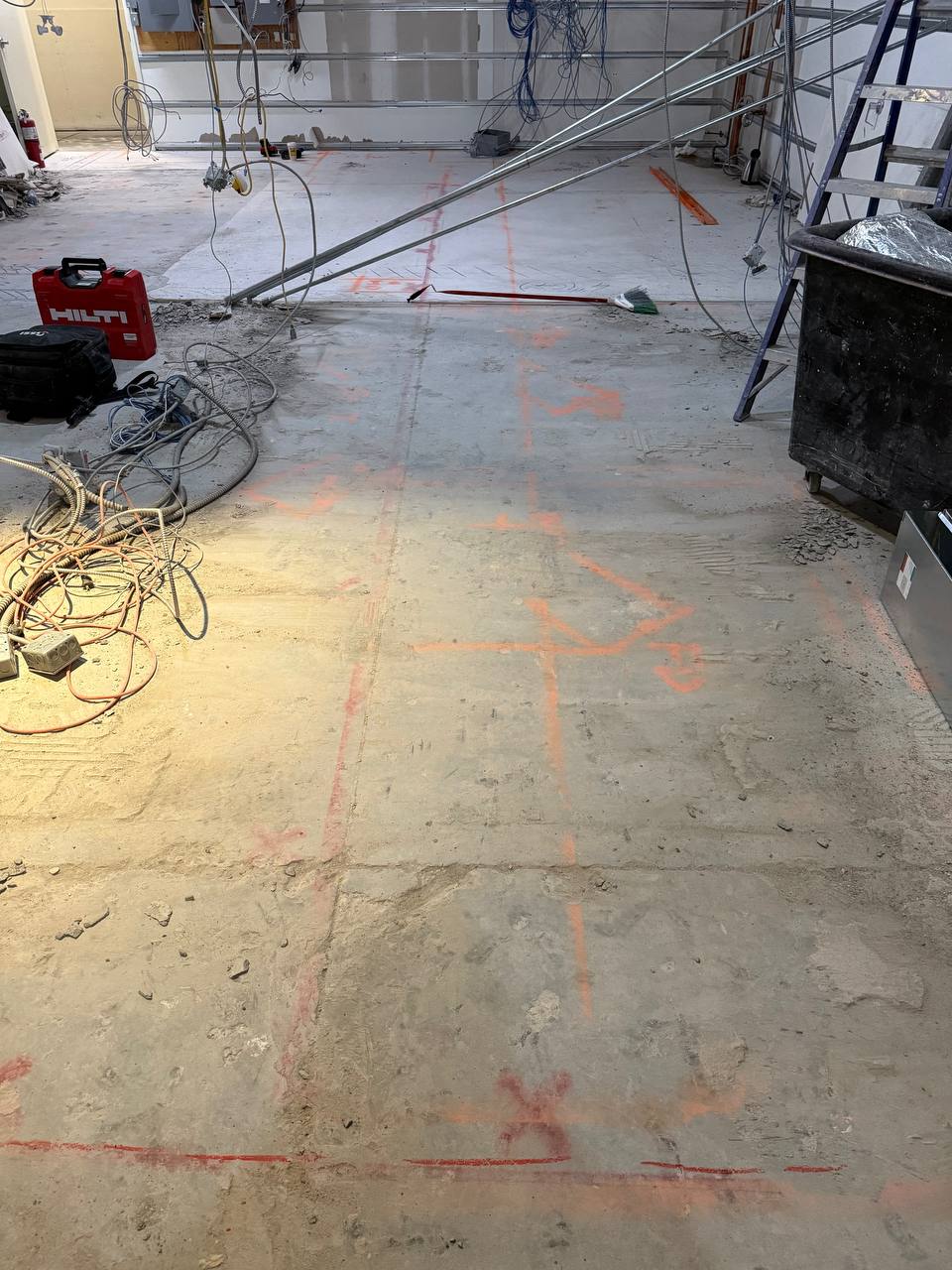
A plumbing contractor needed a trench in a commercial unit to install a new plumbing pipeline. The route was already conceptually planned, but the slab contained unknowns: reinforcement, legacy conduit, and typical commercial low-voltage systems. Our scope began with GPR concrete scanning of the planned corridor, followed by floor marking, route adjustment recommendations, and a formal report that could be handed to the building owner and inspector.
The slab and the trench route
- Trench length scanned: ~120 linear feet
- Trench width: typically 1 ft; sections widened to 2 ft where required
- Slab thickness: ~8 inches
- Reinforcement: rebar and mesh encountered within the scan depth
- Time on site (scanning + marking): one full shift
In commercial units, slab layouts often include multiple generations of work—patches, tenant improvements, abandoned conduits, and rerouted lines. Even when drawings exist, field reality can differ. The goal of this scan was simple: confirm a safe trench corridor and document it.
What we scanned for
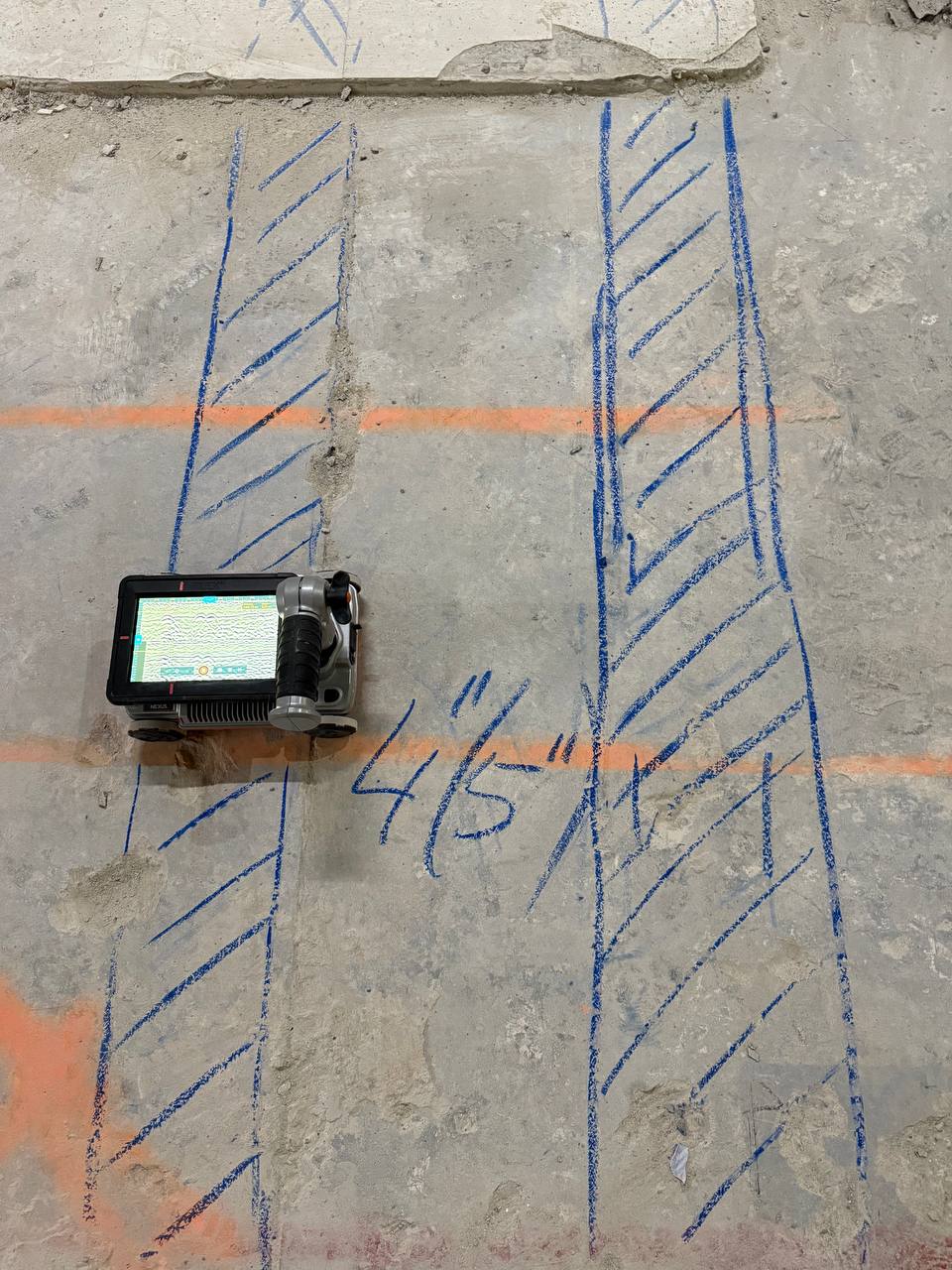
This gpr concrete scanning scope focused on the risks that turn trenching into a problem:
- Electrical conduits and cables (power and feeder runs)
- Existing piping (water and other building services)
- Low-voltage lines such as fire alarm, security, and communications
- Hydronic/heating lines where present in commercial slabs
- Reinforcement density (rebar + mesh) to anticipate cutting and removal behavior
- Route conflicts under or immediately below the slab that could affect trench depth and method
We scanned the full corridor, not just isolated “spot checks.” Trench work is linear—risk is linear too.
How we executed the GPR concrete scanning
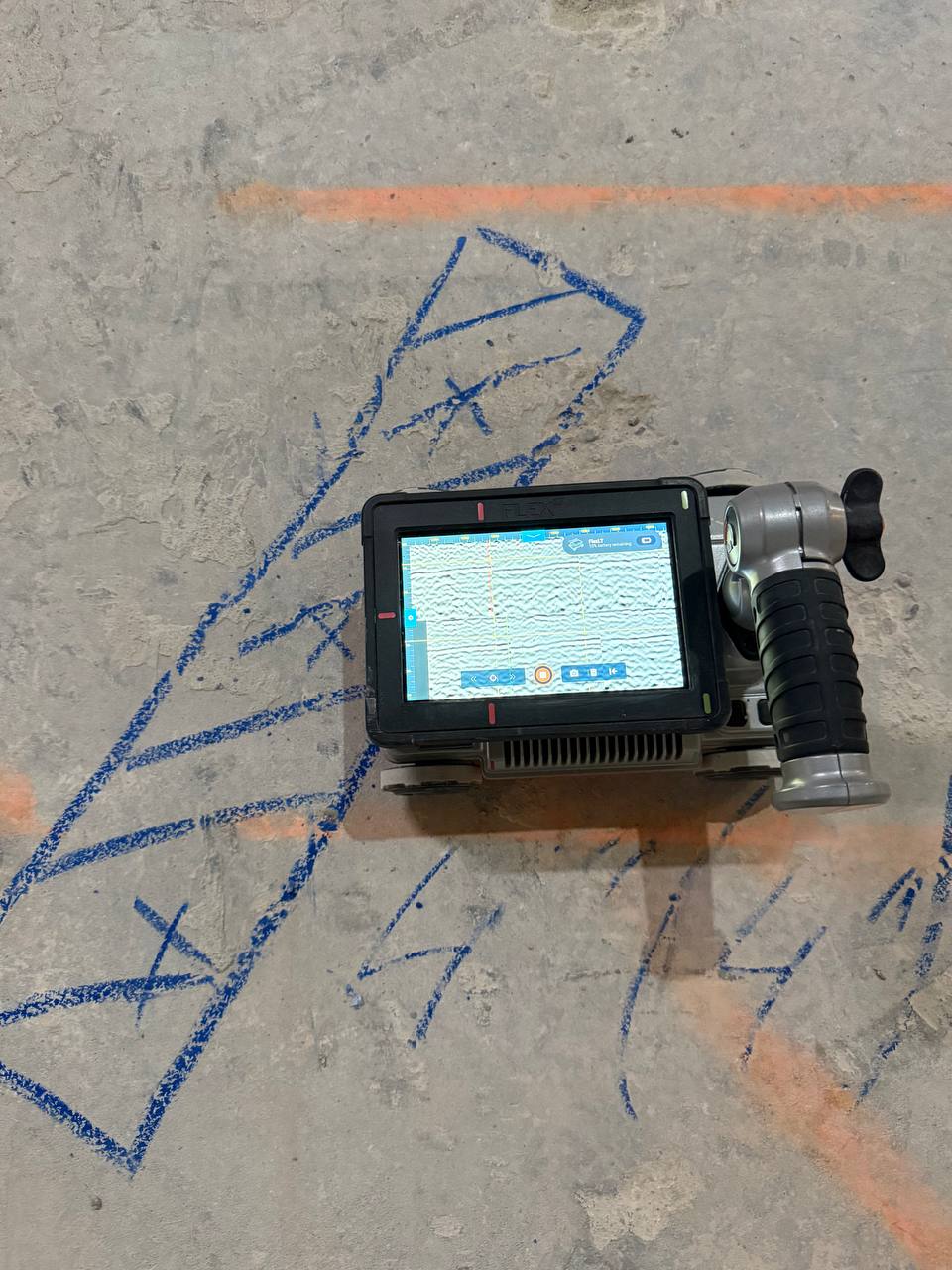
We used a professional GPR unit from GSSI and scanned the full trench path at a controlled pace to maintain consistent data quality. The work sequence followed a straightforward, field-ready logic:
- Confirm the intended route and corridor width
We aligned on the trench path and the areas that might require widening to 2 ft. This matters because a “1 ft plan” often becomes a “2 ft reality” once tie-ins and fittings are considered. - Scan the corridor to full slab depth and beyond
We scanned through the slab thickness and checked below the slab where necessary to identify any anomalies that could be affected by trench depth, breakout, or removal. - Identify and map embedded items and anomalies
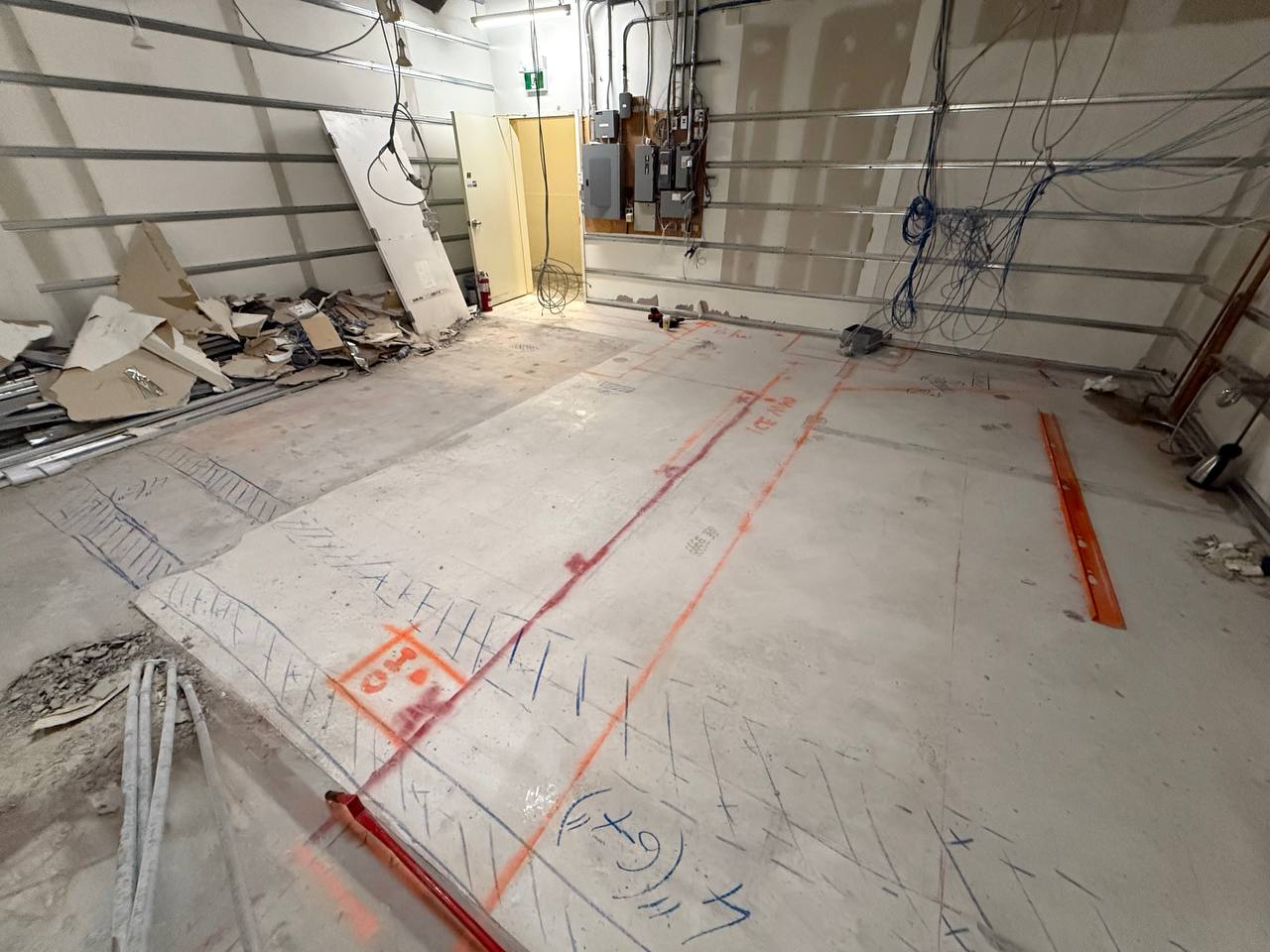
Where we detected likely conduit/cable signatures, piping, or risk zones, we flagged them immediately for relocation or avoidance. - Mark the floor clearly for the cutting phase
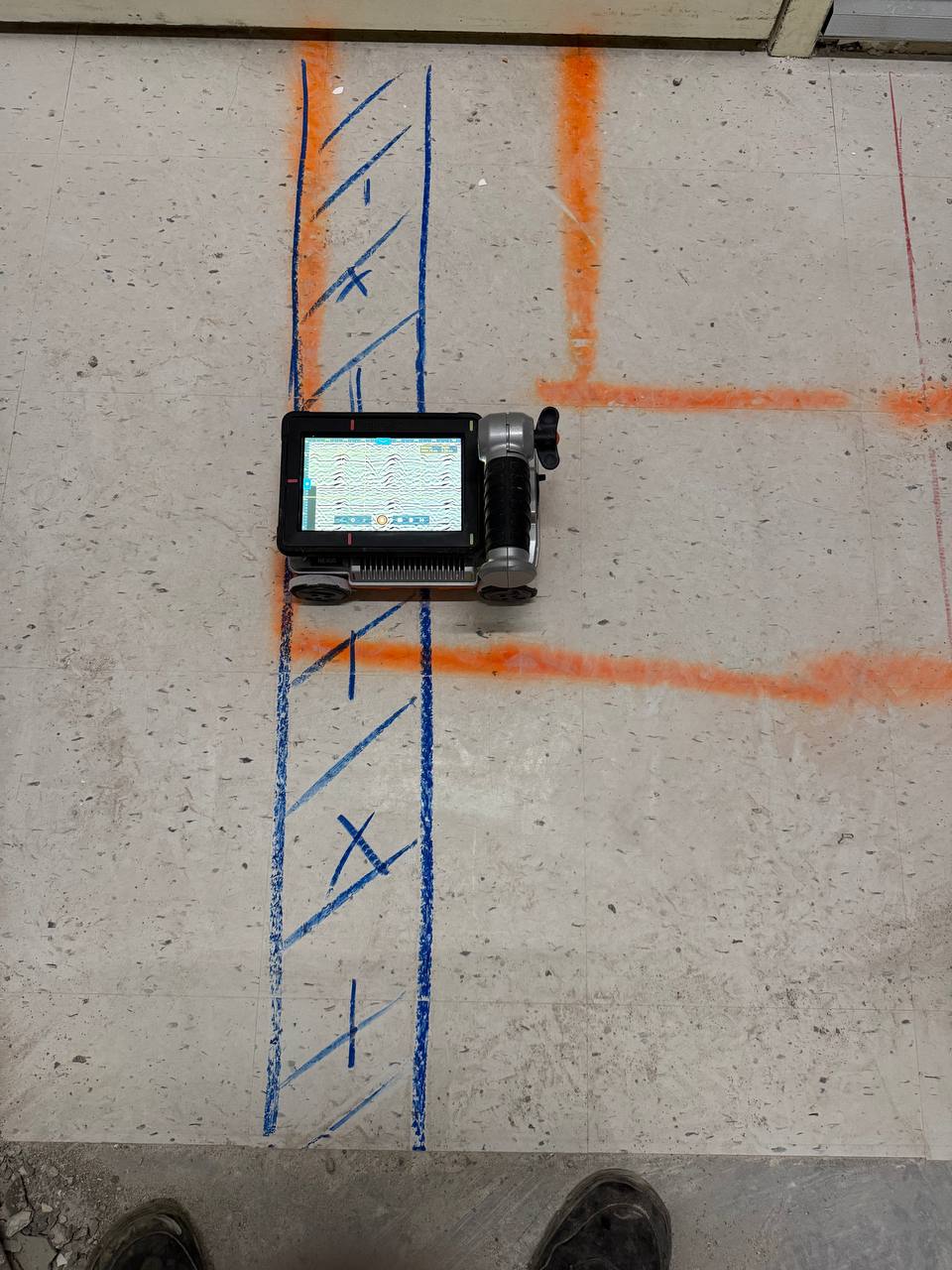
We marked the slab with visible field markings directly on the floor—so the plumber and cutting crew had a “go/no-go” map on site, not just a verbal summary. - Make route recommendations, then re-confirm
When we detect a conflict, the point isn’t to “report a problem.” The point is to adjust the plan and keep the job moving safely. After route changes, we re-verified the revised corridor.
The key finding: an electrical conflict in the original route
During the scan, we identified an electrical cable/conduit conflict in the planned trench path. This is exactly the kind of issue that creates expensive downtime if it’s discovered by a saw blade instead of a scanner.
We stopped, reviewed the location with the plumber, and recommended a route shift to bypass the risk. The revised alignment was agreed on site, and we marked the updated route so the cutting phase could proceed with confidence.
Why this step mattered (and why it helps inspections)
On commercial sites, it’s not enough to “do it safely.” You often need to prove you did it safely.
That’s why we prepared an official scan report after the field work. For the trade contractor, this becomes a handoff document:
- the plumber can show the owner/building management what was checked,
- the owner can demonstrate due diligence,
- and if an inspector asks how the trench route was validated, there’s documentation to support the decision.
In practice, this reduces friction during inspections and keeps the project from turning into a back-and-forth about “who approved the cut.”
What happened next: cutting and removal
Once the corridor was confirmed and marked, we returned for the next phase:
- Concrete cutting for the trench
- Removal and haul-out of the cut concrete
That phase took two additional shifts. The point here is important: the cutting work went smoother because the scan phase eliminated the biggest unknown—embedded infrastructure risk—before the first cut.
Takeaway: scan first, cut second
This project is a clean example of what gpr concrete scanning is supposed to do on real job sites:
- prevent utility strikes,
- prevent schedule blowups,
- give the trade a safe route they can actually follow,
- and produce documentation that stands up to owner/inspector questions.
If you’re trenching a commercial slab for plumbing, electrical, or mechanical work, the fastest way to stay on schedule is usually not “move faster with the saw.” It’s to remove uncertainty first—then cut with a confirmed plan.
GPR Concrete Scanning FAQ
Fast answers for trenching, coring, and slab cutting on commercial sites.