
Cutting Cement Slab: 10-Inch Commercial Floor Trenching in Mississauga
“Cutting cement slab” sounds simple until you’re doing it indoors, through a 10-inch slab, on a live schedule, with plumbing rough-ins that can’t be damaged and a client who needs the next trade moving right behind you.
This project was inside a large commercial unit in Mississauga (GTA). The scope was cutting cement slab for plumbing trenching—and our role was cutting only. The client handled removal and disposal.
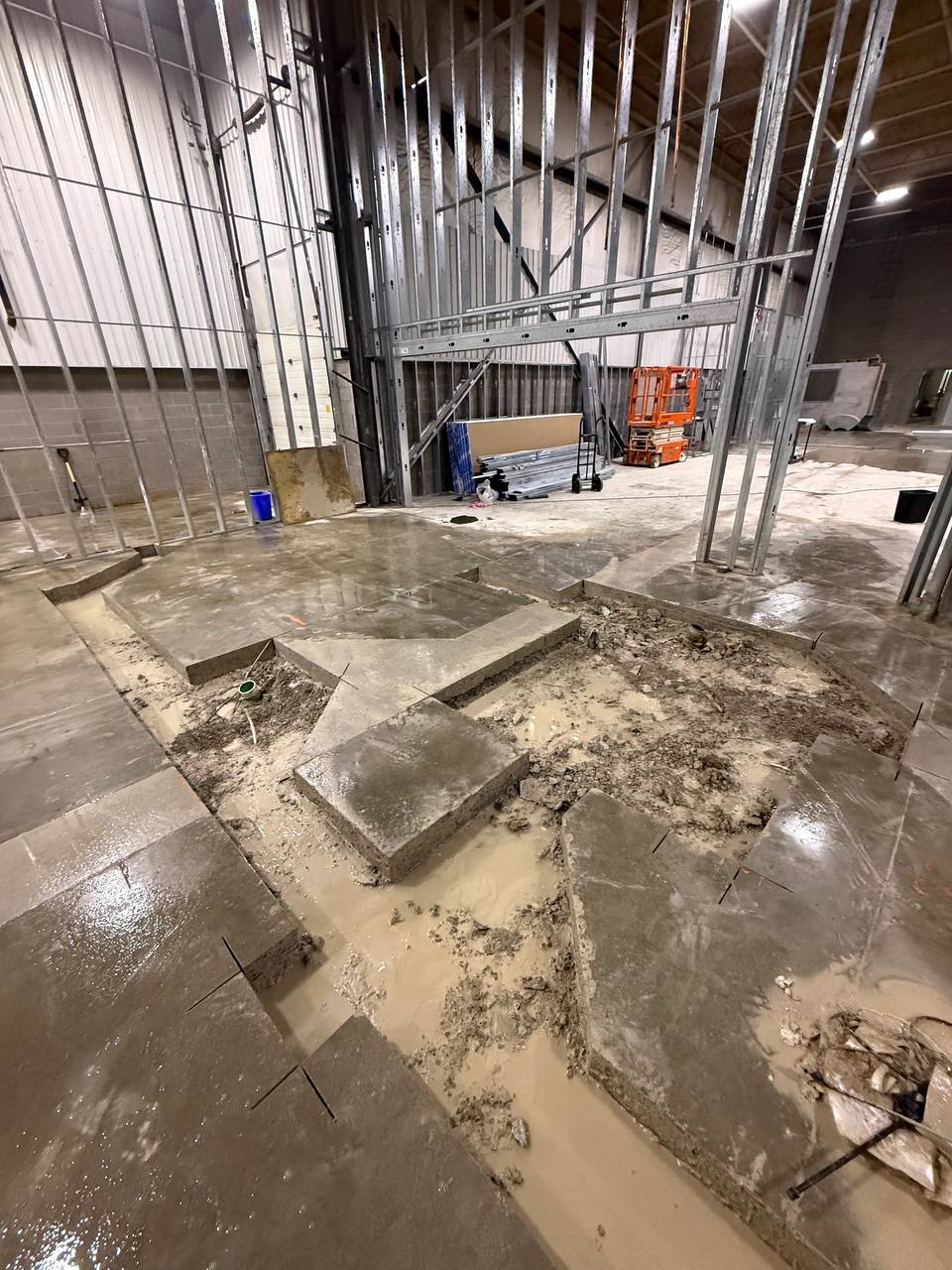
What we delivered: 530 linear feet of slab cuts, completed in 2.5 days, with a 2-person crew, using wet cutting and electric power to keep the work zone clean and indoor-friendly. This is the difference between “breaking concrete” and controlled cutting—defined lines, defined pieces, predictable progress. That’s the core DRM approach.
Project Overview
Location: Mississauga, ON
Site type: Commercial unit (interior renovation)
Goal: Cutting cement slab for plumbing routes and box-outs
Slab thickness: 10 inches
Total cutting: 530 linear feet
Crew: 2 people
Duration: 2.5 days
Scope boundary: Cutting only (client removed and disposed)
The Challenges
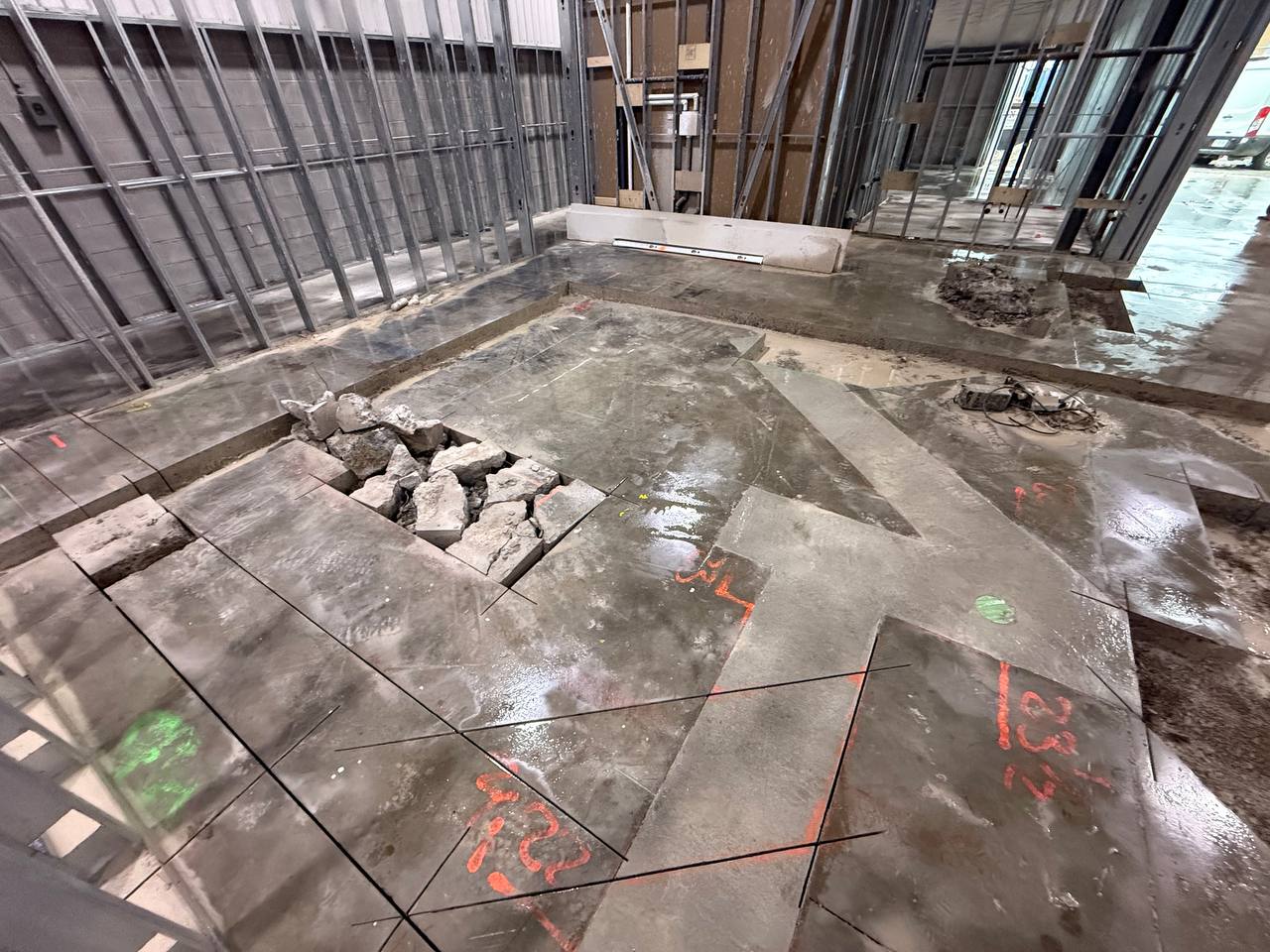
10-inch slab indoors.
At this thickness, the job isn’t “just saw it.” It’s power, water, sequencing, and keeping the site workable for everyone else.
Complex layout, not a straight trench.
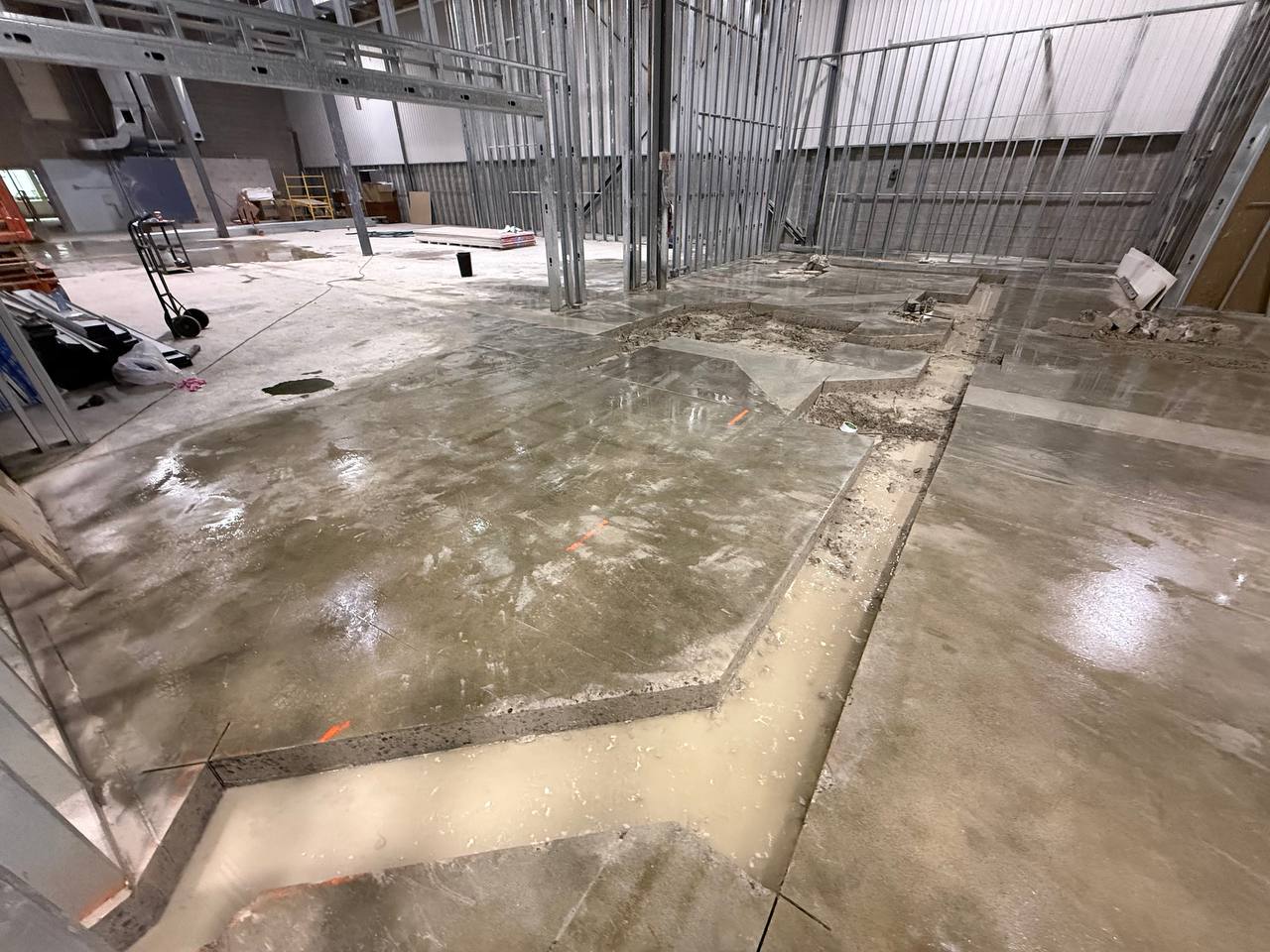
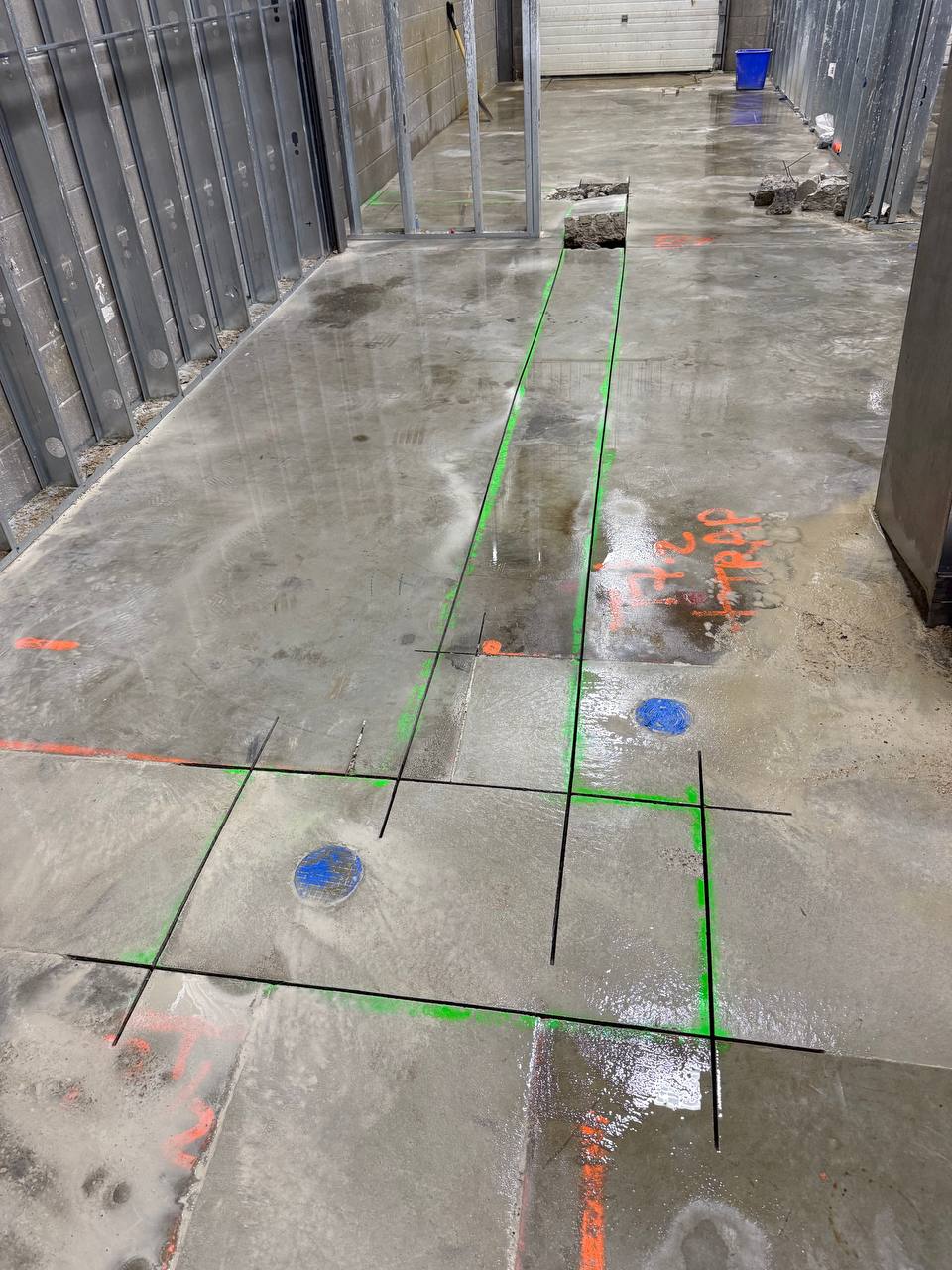
Photos show multiple turns, offsets, and box-outs around new walls and plumbing points—plus tight cuts near framing lines and penetrations.
Indoor air and dust control.
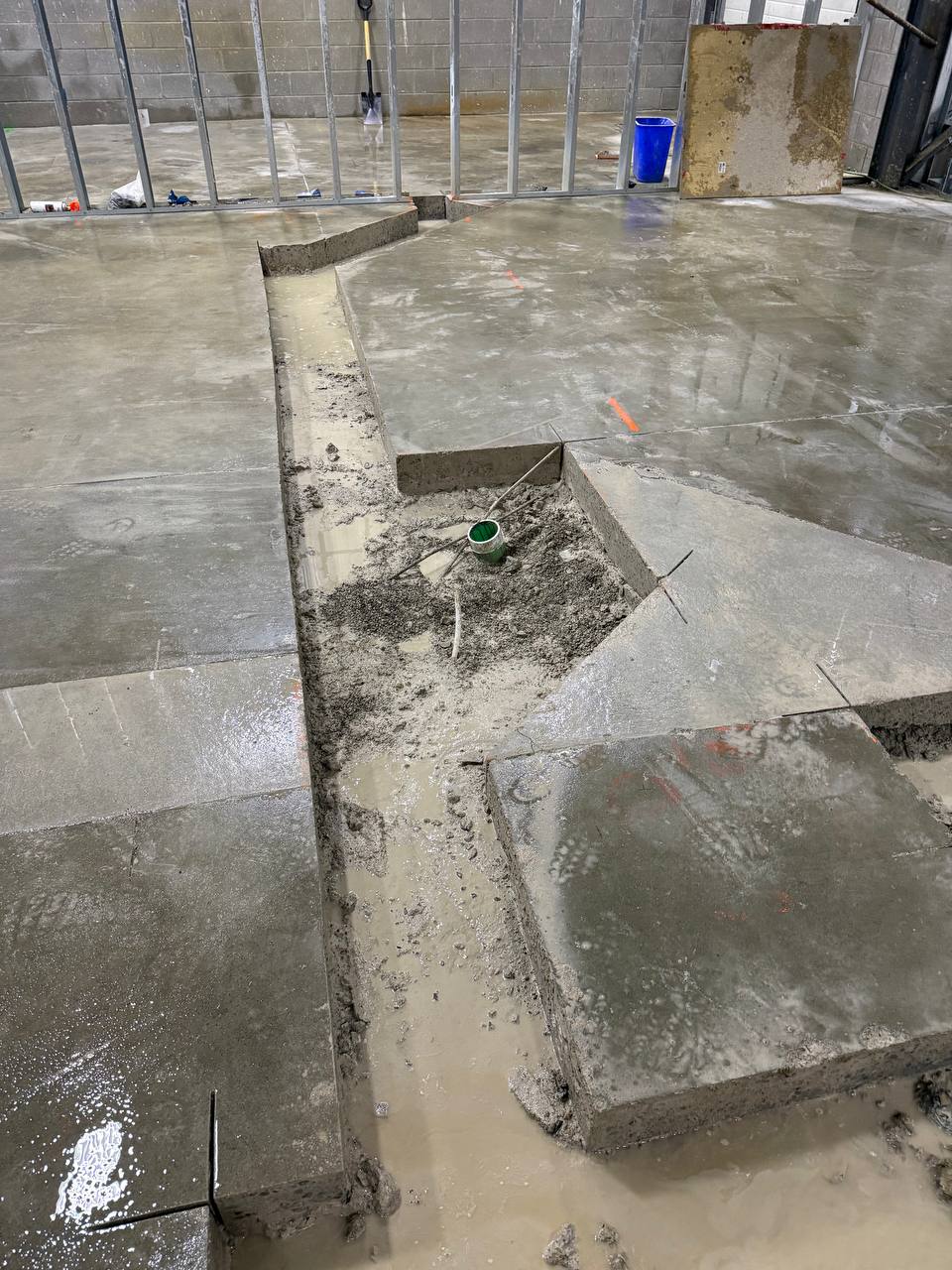
Diesel exhaust and uncontrolled dust aren’t acceptable in a sealed commercial interior. Cutting cement slab had to stay clean, wet, and electric-powered.
Our Work
1) Layout confirmation and cut planning
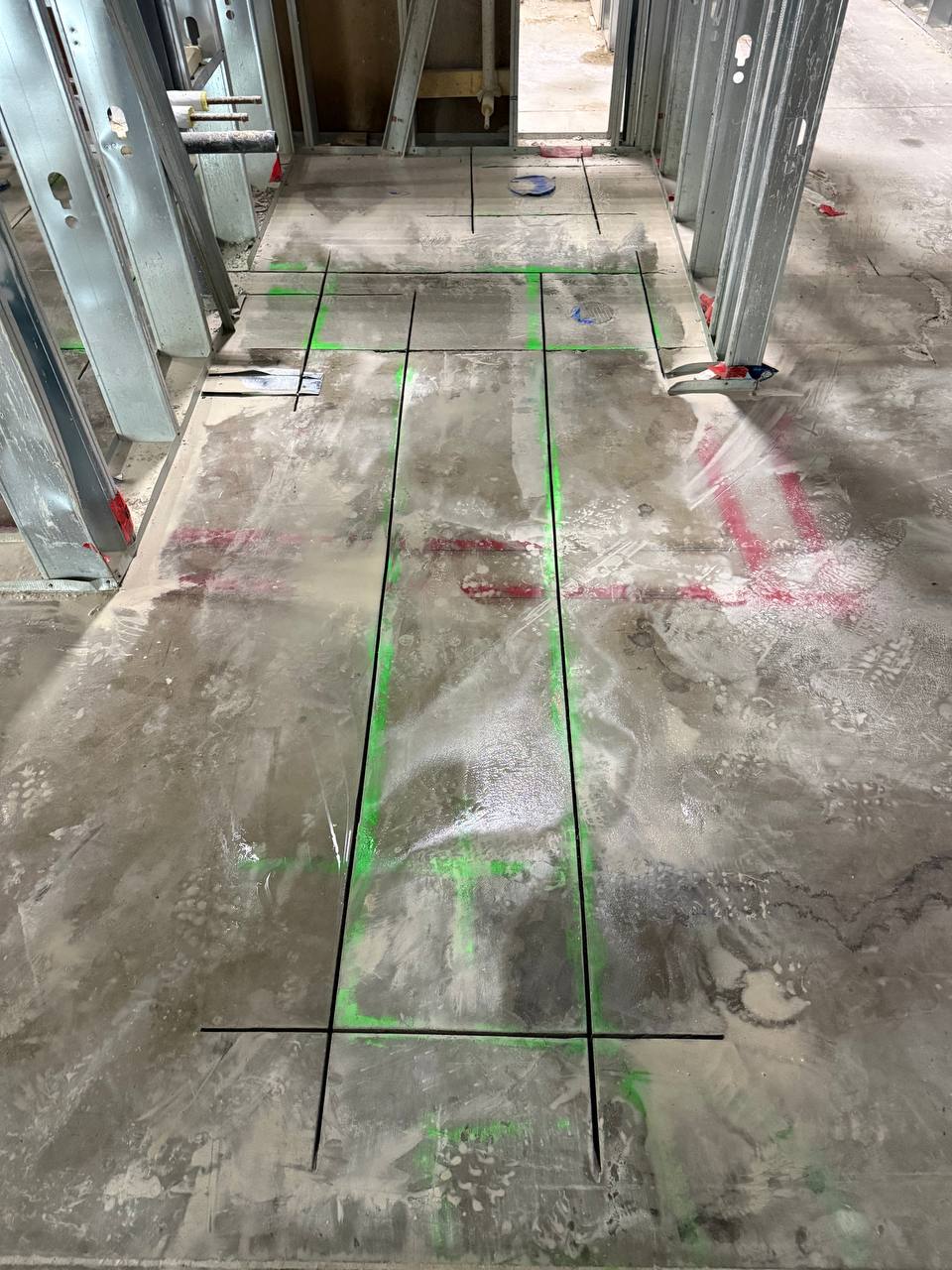
We confirmed the route and staged the work so the client could pull sections as we progressed. You can see marked rectangles and lines around plumbing points and trench runs—this is what keeps removal predictable.
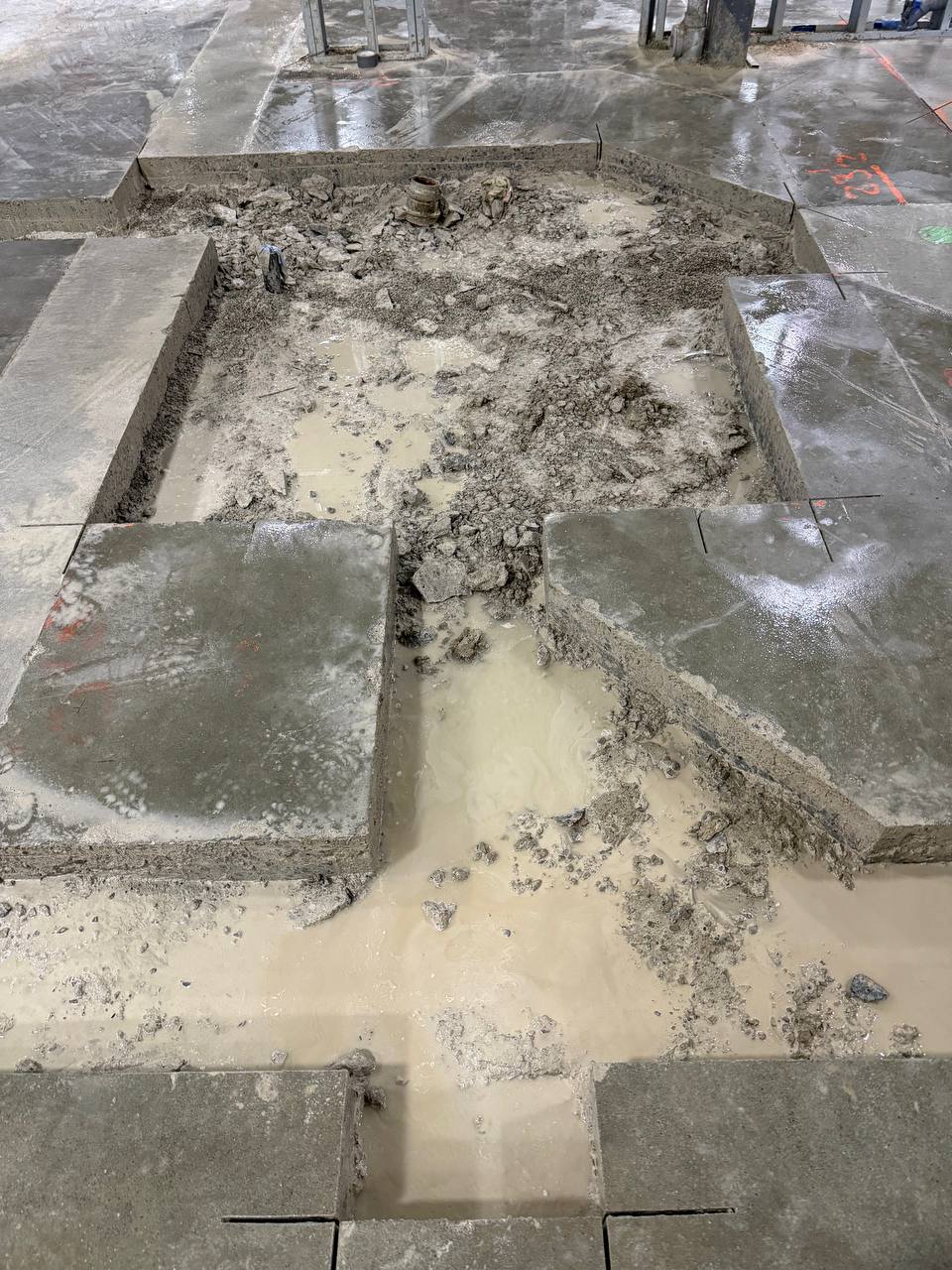
(Where embedded risk is present, we recommend scan-first planning before cutting. The goal is never to work “blind.” )
2) Cutting cement slab with wet cutting (minimal dust)
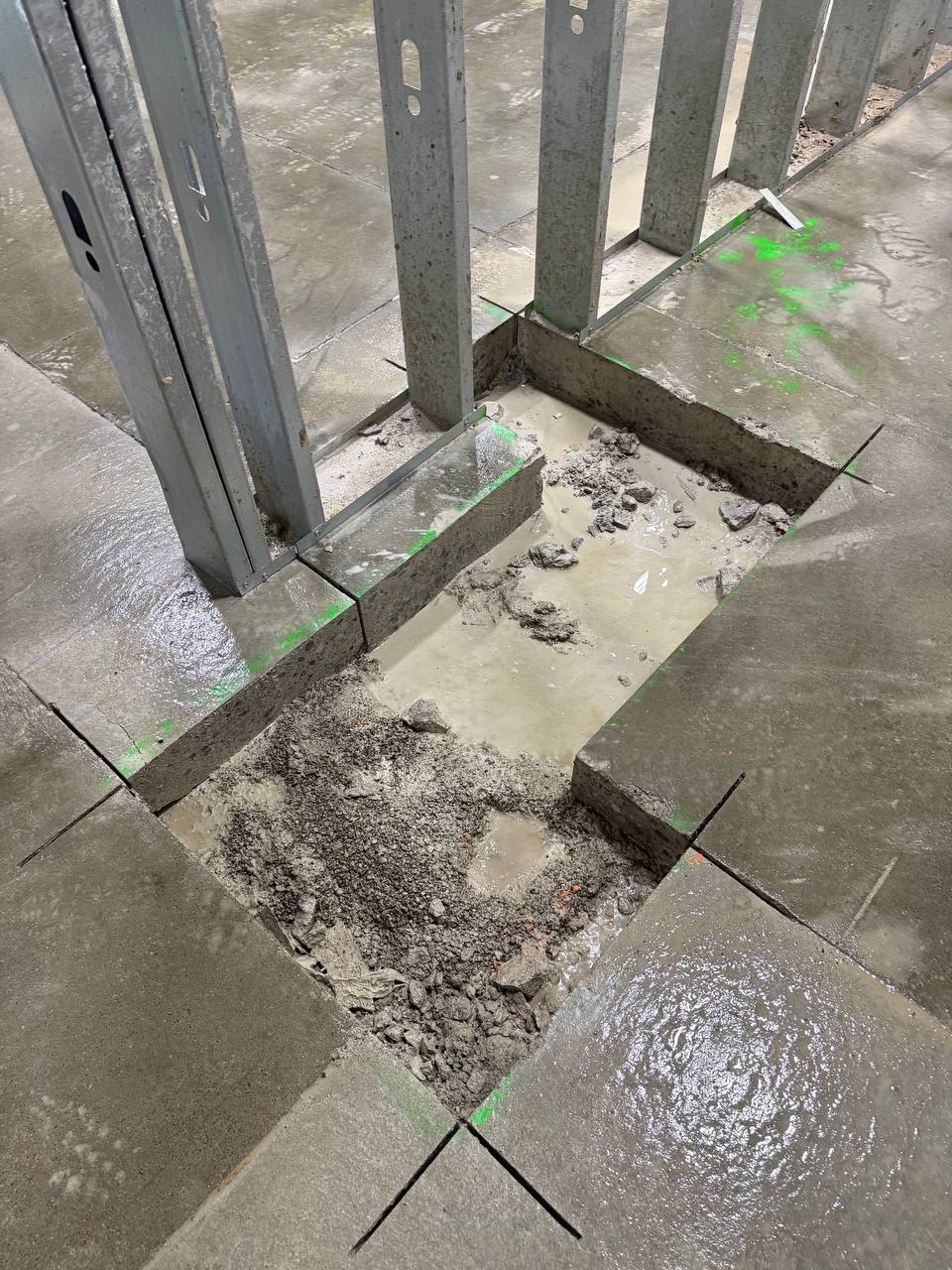
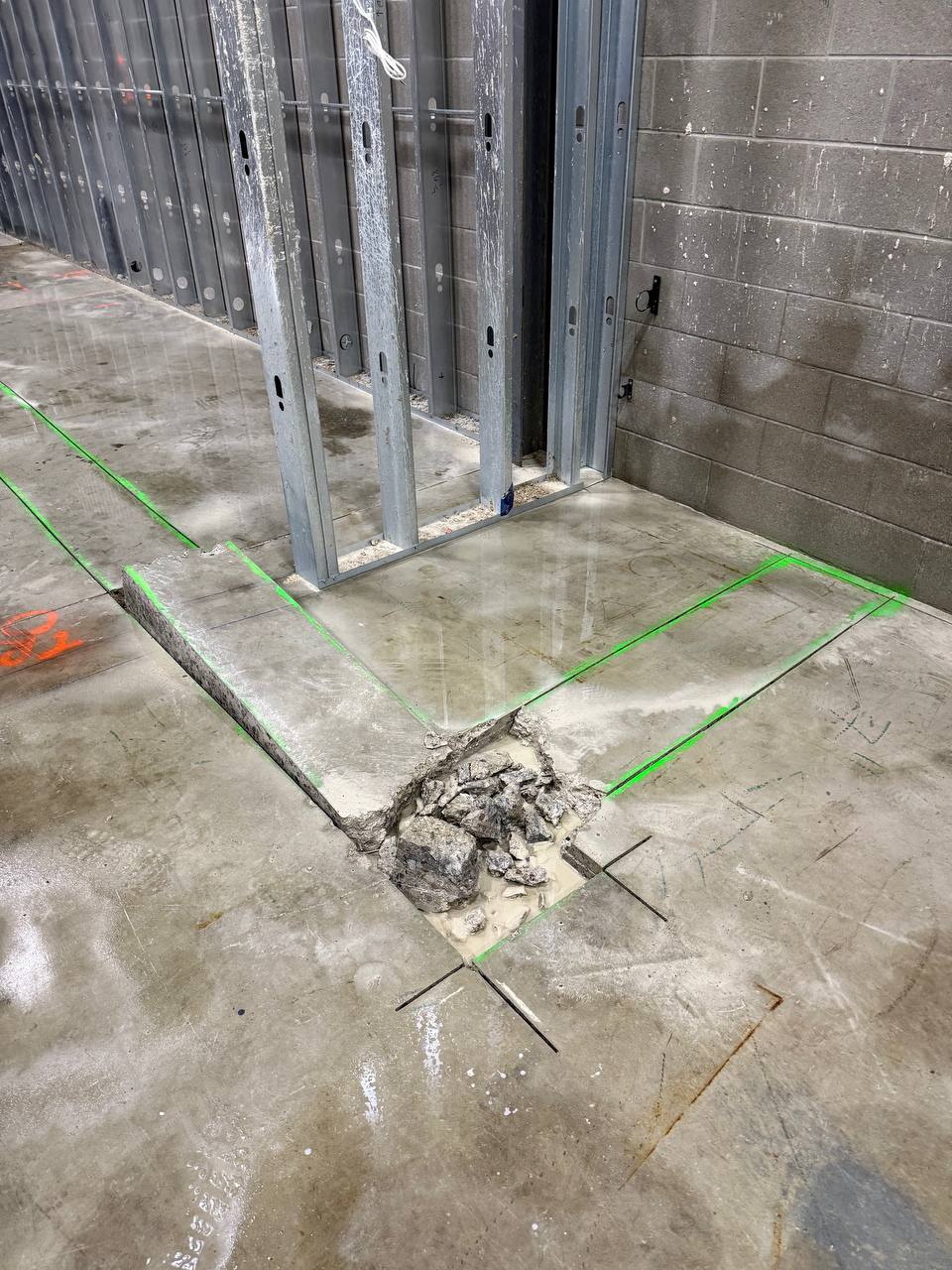
All cutting was performed with water feed to keep dust down and stabilize the blade in heavy concrete. The photos clearly show wet slurry and clean kerf lines—typical of controlled wet cutting on thick slabs.
3) Equipment selection: hydraulic + high-power electric
We used a 24-inch hydraulic saw (24” blade) for the deep, heavy cuts and an electric Floor-100 (22 kW motor) to keep indoor operations efficient.
To support electric tools indoors without diesel fumes, we ran a 90 kW generator—power outside the slab is part of doing slab work inside a building without turning the air into a problem.
This matches the DRM principle: the client brings the concrete problem; we choose the method and stack that keeps the site predictable.
4) Sectioning for removal (client handled haul-out)
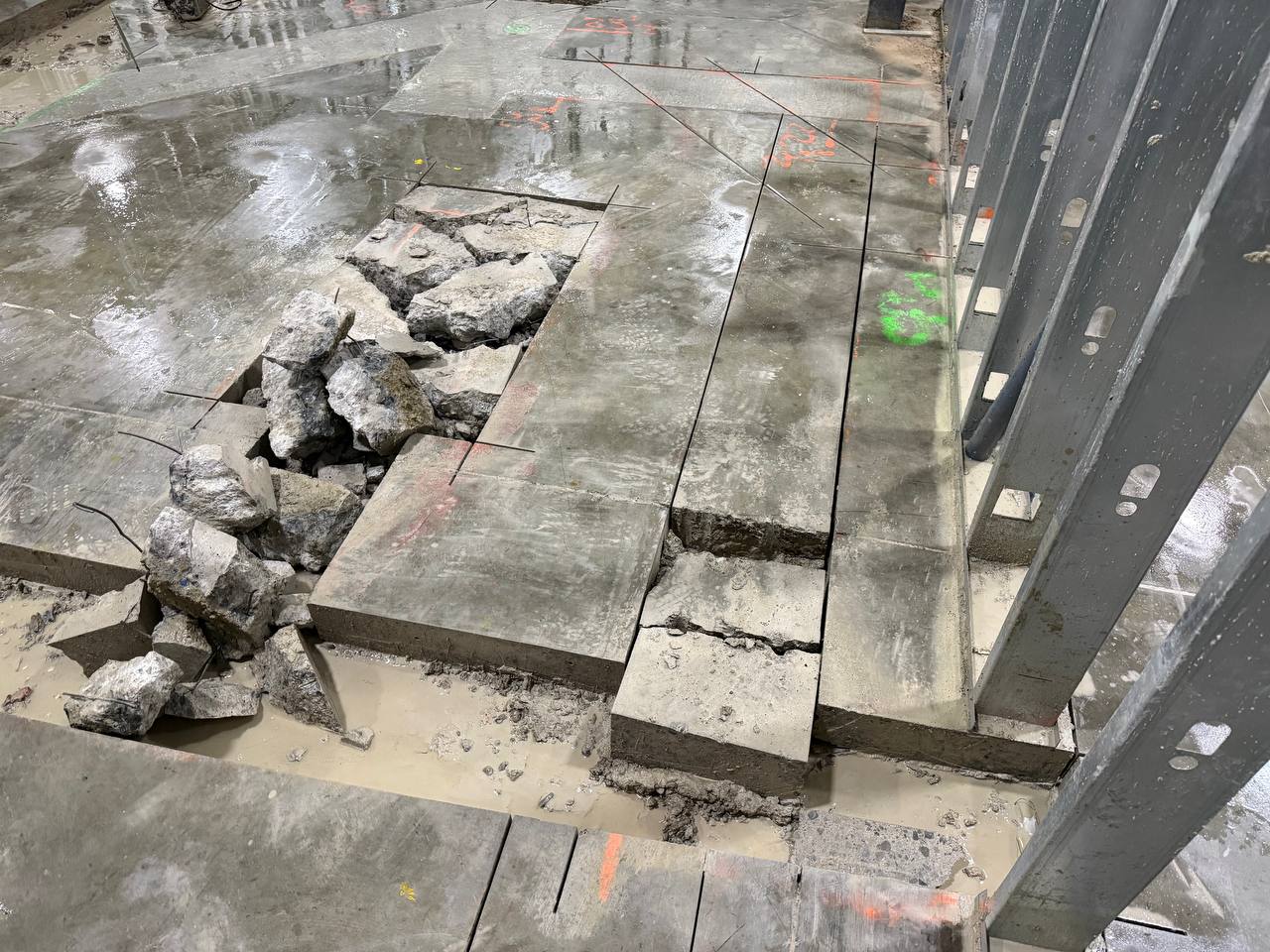
We didn’t just “cut lines.” We cut the slab into manageable sections based on the removal flow. The photos show panelized pieces, broken-out zones, and trench runs staged for pickup.
Important scope note: removal/disposal was handled by the client. We invoiced for cutting only (clean boundary, no confusion).
Results
- 530 linear feet of cutting cement slab completed
- 10-inch slab cut cleanly for plumbing trenching and box-outs
- 2-person crew, 2.5 days
- Wet cutting + electric strategy kept indoor conditions controlled
- Client was able to remove and dispose sections immediately, keeping the renovation moving
Why cutting cement slab beats impact demolition on projects like this
If you’re trenching for plumbing in a thick commercial slab, impact demolition creates the same predictable problems: uncontrolled cracking, messy edges, slower cleanup, and more patch work.
Cutting cement slab gives you:
- clean edges for reinstall and patch
- defined section sizes for removal
- less “surprise damage” to what stays
- better control of indoor dust and workflow
That’s the “precision over force” mindset we build our work around.
Cutting Cement Slab FAQ: 10-Inch Commercial Trenching
5–7 practical answers for PMs, plumbers, and GCs planning indoor slab cutting for plumbing routes.