
Slab Sawing Service in Ontario — University of Toronto Lab
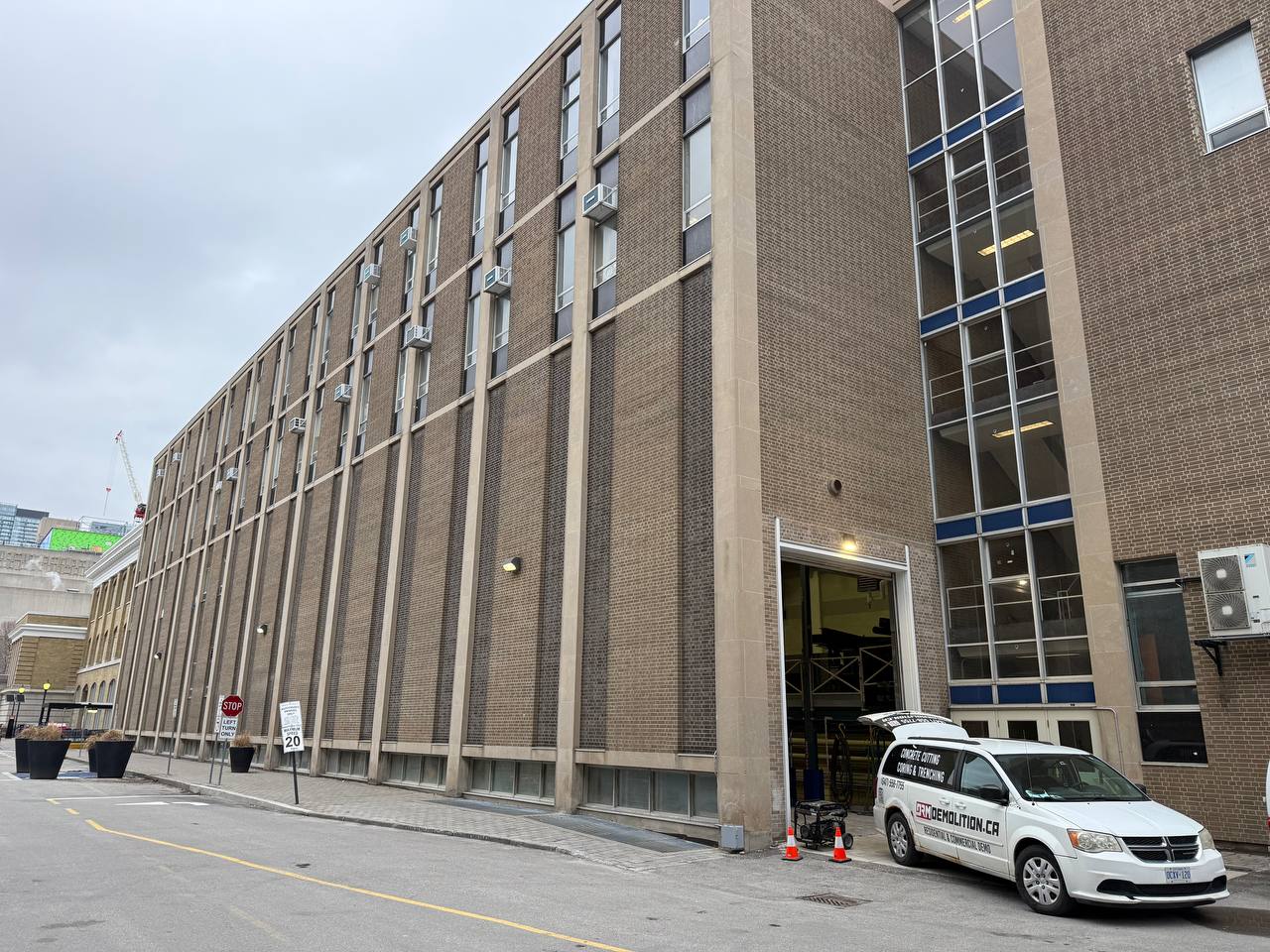
Project overview
DRM completed a slab sawing service in Ontario for a University of Toronto industrial testing laboratory. The lab runs concrete/material performance testing, and required two large test slabs to be cut into manageable sections for removal.
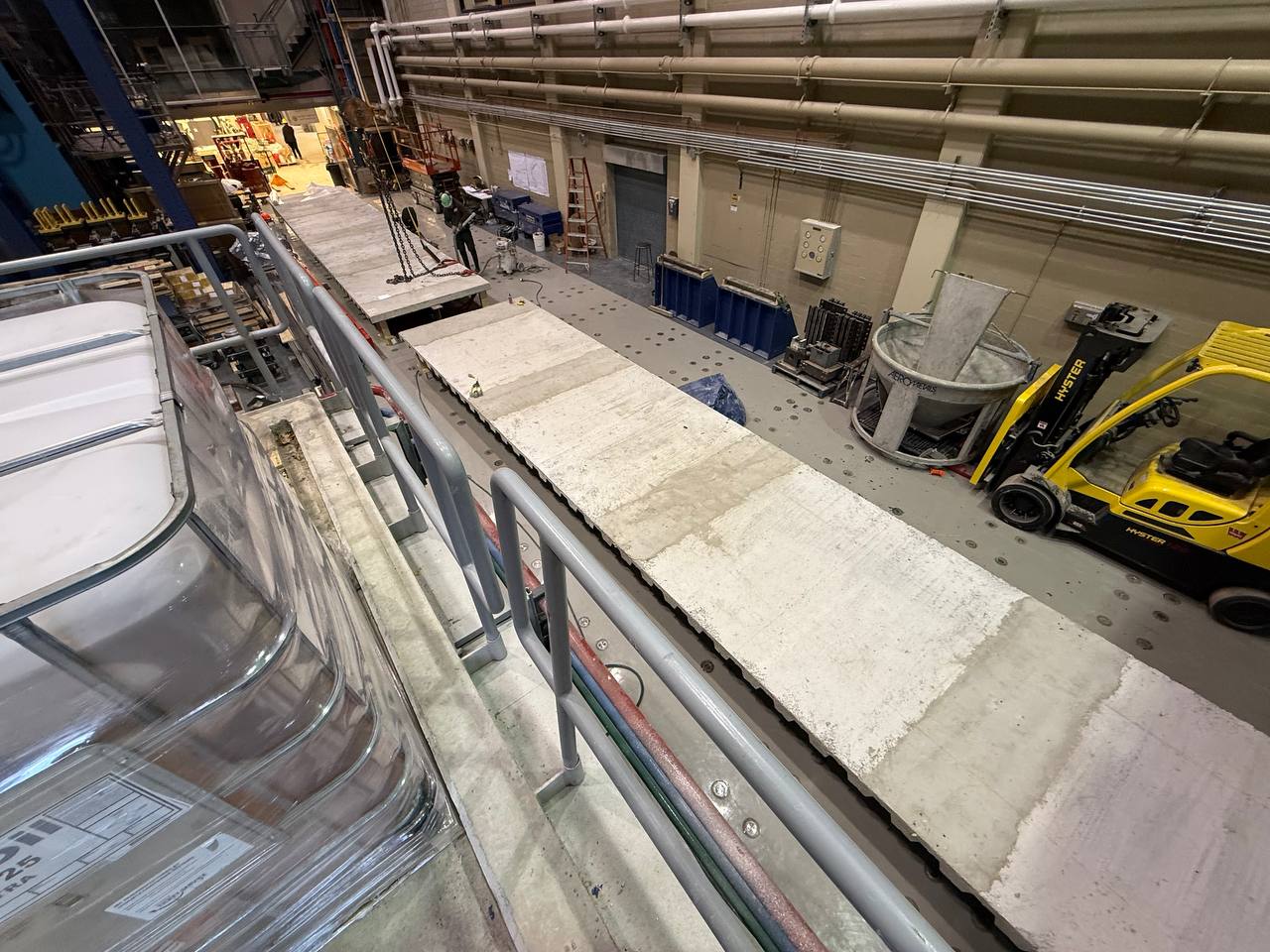
- Location: Downtown Toronto (University of Toronto lab)
- Scope: Cut two test slabs on a lab test stand
- Approx slab size (each): ~20 m × 6 m (≈ 65.6 ft × 19.7 ft)
- Approx area (each): ~120 m² (≈ 1,292 sq ft)
- Total area (two slabs): ~240 m² (≈ 2,583 sq ft)
- Duration: 2 days
- Crew: 2 people
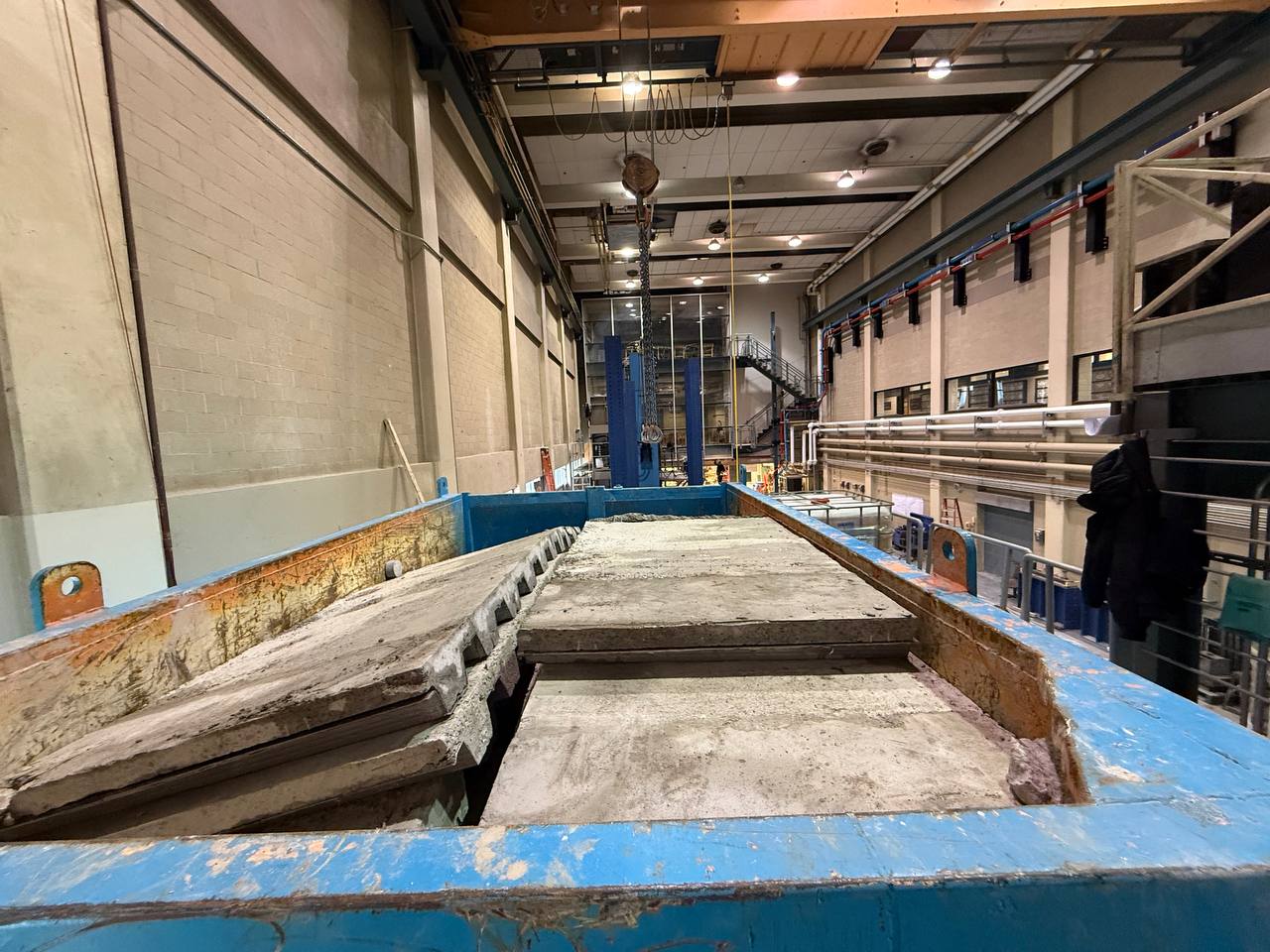
- Removal: Client handled rigging/strapping and staged sections into a concrete bin
- Cleanliness: Slurry collected by wet vacuum and disposed properly
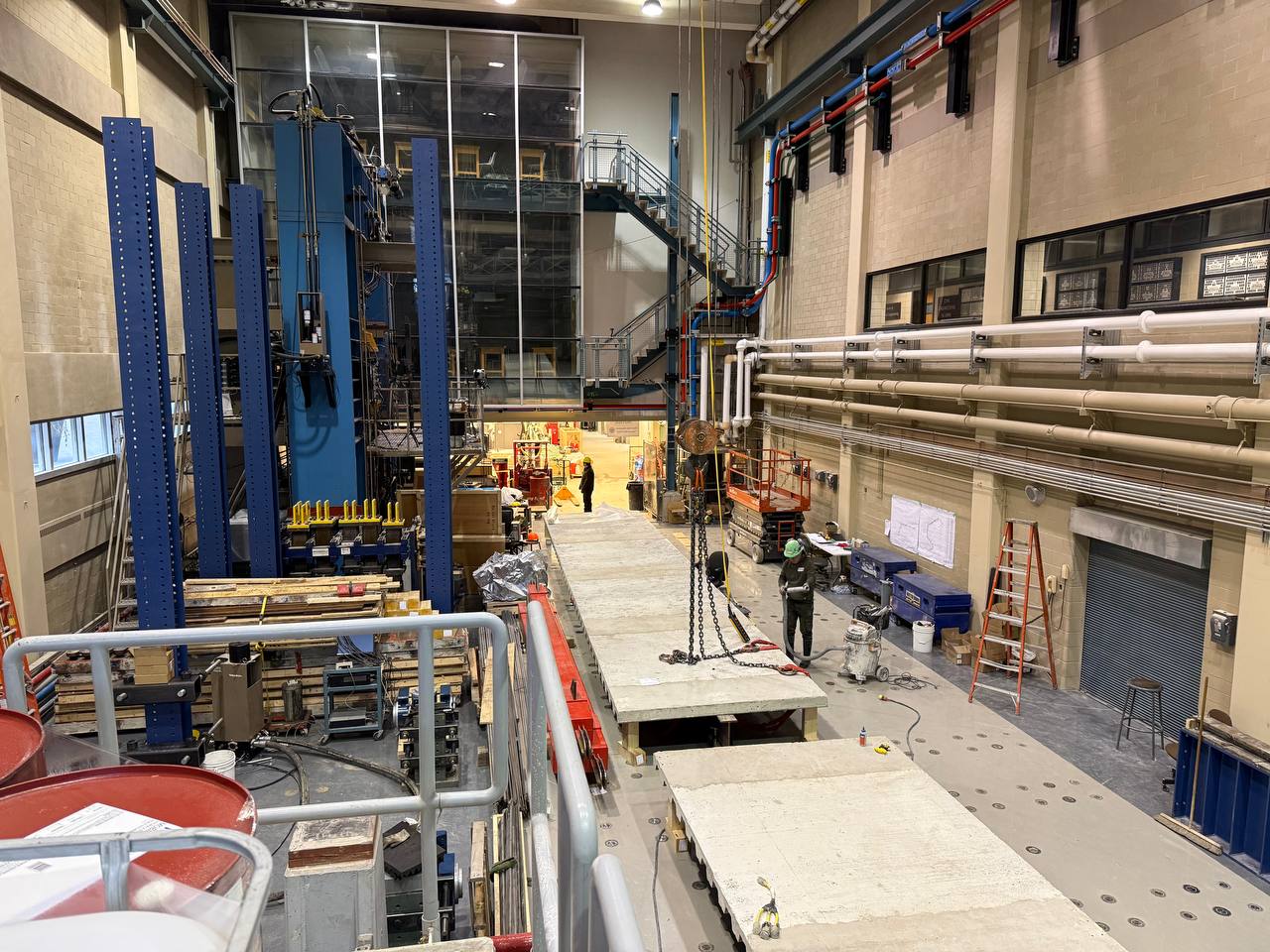
The challenges
Reinforcement and mix variability. The slabs contained metal fibre and mixed concrete compositions, which can slow cutting and increase wear.
Steel deck below. The slab was poured on profiled (corrugated) steel deck, so the cutting plan had to account for what’s underneath.
Downtown logistics. Limited parking and tight access meant the job depended on coordinated deliveries, bin placement, and a clear route for equipment.
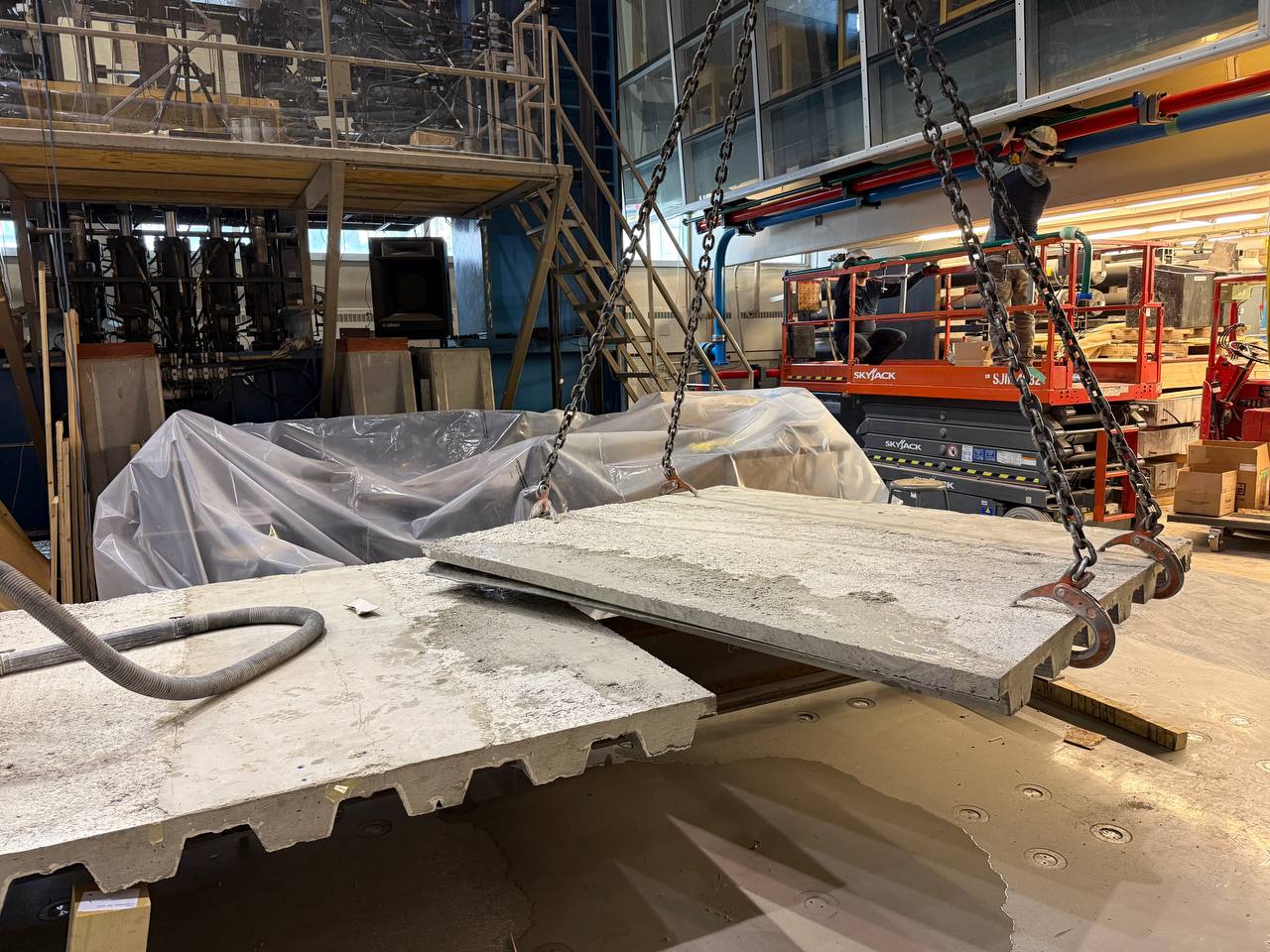
Our work
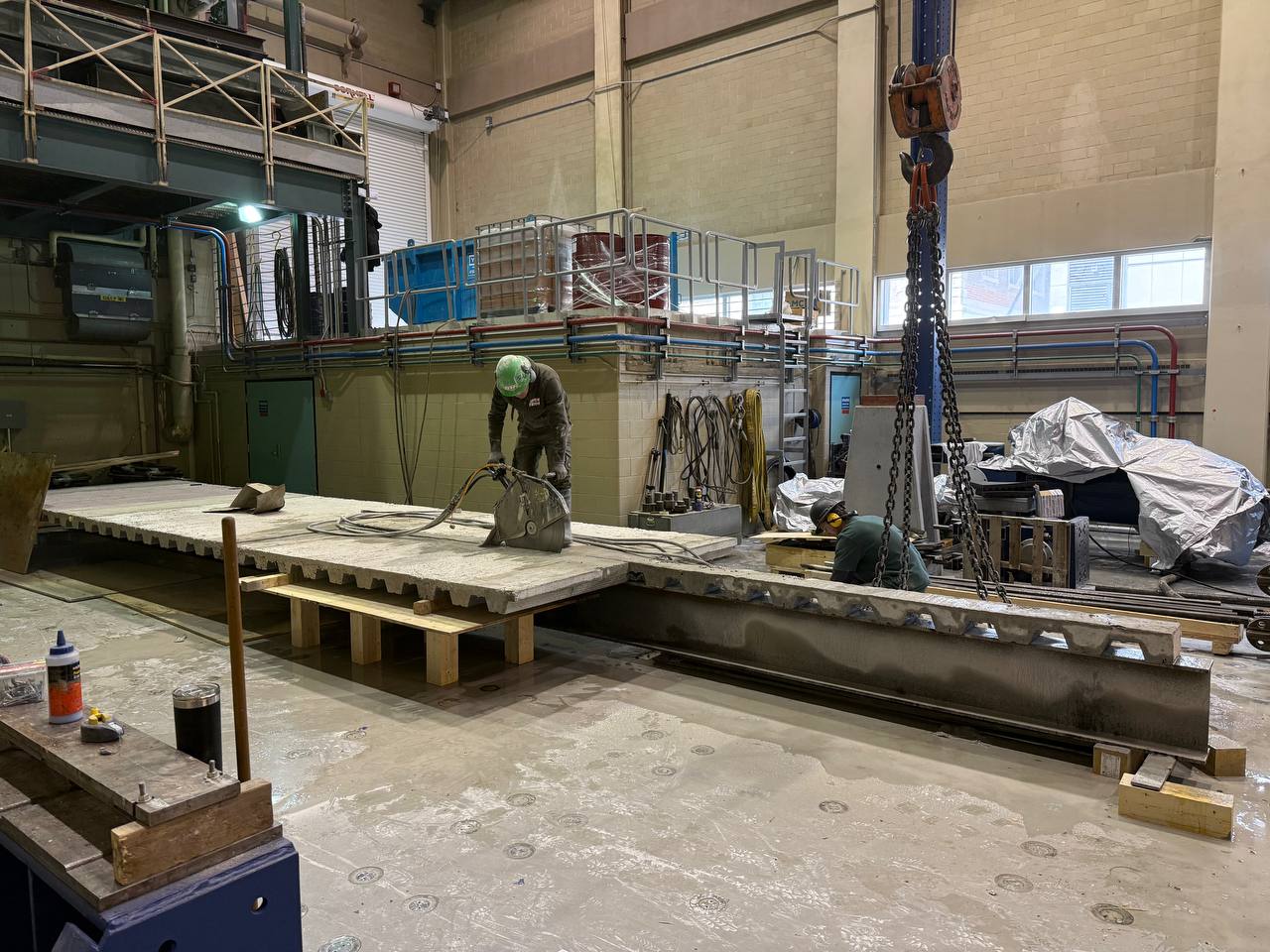
- Used high-power hydraulic slab sawing equipment to maintain stable cutting performance through fibre-reinforced sections.
- Sequenced cuts so the client could rig and move sections efficiently into the bin without bottlenecking the work area.
- Managed slurry end-to-end: wet vacuum collection, containment, and proper disposal (no uncontrolled runoff).
- Coordinated access with the client — gates opened for equipment entry and bin placement to keep the schedule intact.
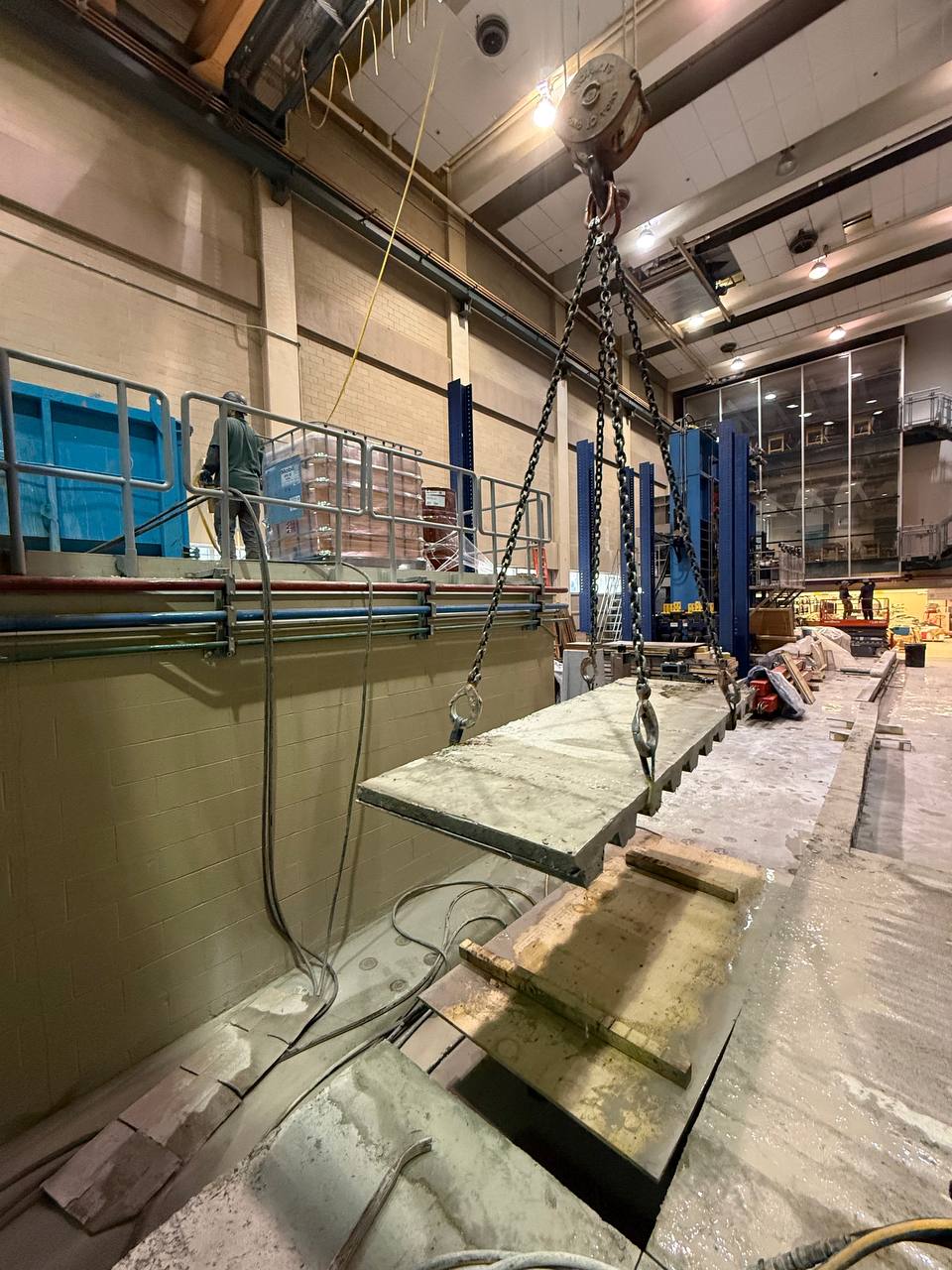
The result
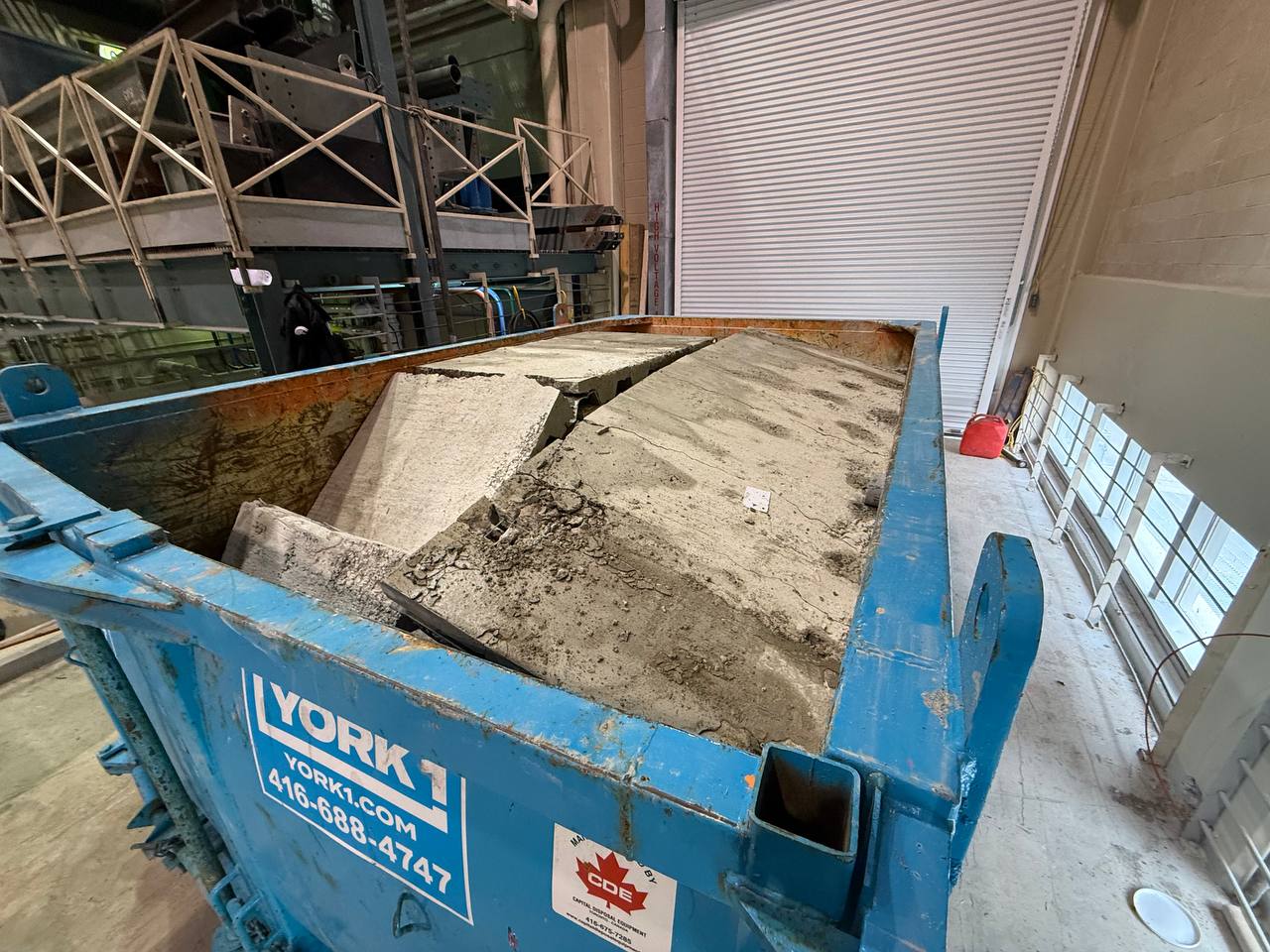
- Two large lab slabs cut and sectioned in 2 days with a 2-person crew.
- Cutting stayed controlled despite metal fibre and variable concrete mixes.
- Work area remained clean — slurry was fully collected and disposed properly.
- Client handled rigging smoothly; sections were staged directly into the bin with no chaos.
Slab Sawing Service in Ontario
Quick answers for PMs, facility teams, and labs planning controlled concrete cuts.
Yes. Fibre-reinforced slabs cut differently than standard reinforced concrete because the fibre can increase resistance and wear. We plan for it (equipment choice, blade strategy, sequencing) so production stays stable—like on this University of Toronto lab scope where the slabs contained metal fibre.
A slab-on-deck setup adds a “what’s underneath” constraint. The cutting approach must account for the profiled steel deck to avoid unnecessary damage and to keep the sectioning controlled. We treat it as a controlled cutting scope, not a brute demo situation.
We run wet cutting for dust control, then collect slurry continuously with a wet vacuum, contain it, and dispose of it properly. On this job, slurry was fully collected and removed—no uncontrolled runoff, no “mud everywhere”.
It depends on access, reinforcement/fibre density, and disposal logistics. In this case, two slabs (~65.6 ft × 19.7 ft each) were cut and sectioned in 2 days with a 2-person crew, with the client handling rigging into the bin.
Minimum: address, slab size/area, thickness (or best estimate), what’s below (deck/void/space), access/parking/bin placement rules, and any time windows. Downtown logistics often decides the schedule as much as the cutting itself.