
Concrete Saw Cutting Case Studies: Live Clinic Trenching in Vaughan + Heavy Curb Cutting at 100 Jameson Ave, Toronto
“Concrete saw cutting” is the controlled way to open slabs, curbs, and heavy concrete elements without shock-loading the structure and without turning the jobsite into uncontrolled breakage. The method matters most when:
- you’re cutting over suspended or sensitive structure (like an underground garage),
- you’re working inside an active business,
- you need clean edges for rework and new pours,
- you can’t risk hidden services—so you scan first.
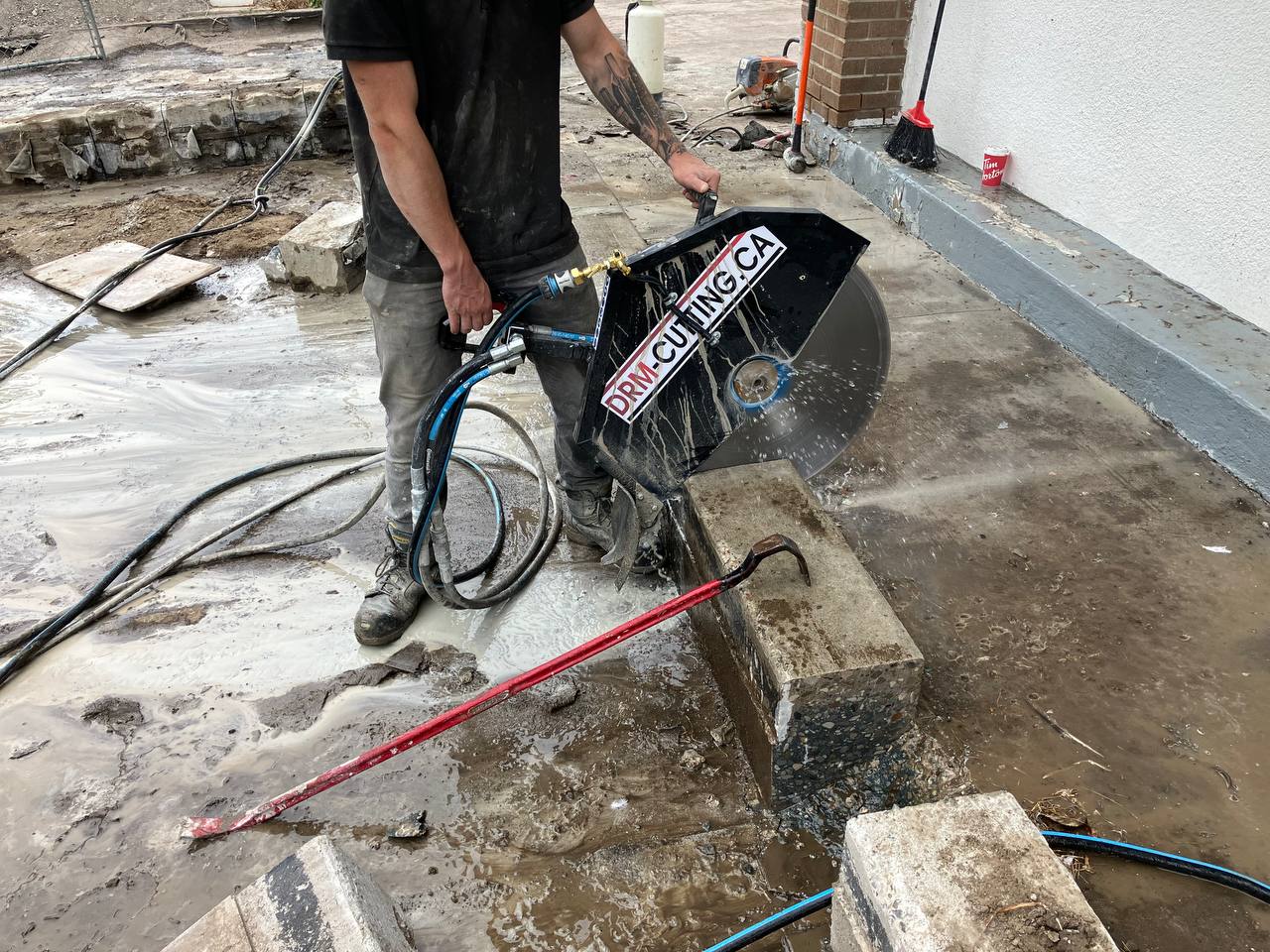
Below are two real scopes completed by DRM Cutting (Diamond Rope Machines Inc.) that show where concrete saw cutting is the right tool—and why.
Project Snapshot
Case 1 — Live Massage Clinic Trenching (Vaughan, ON)
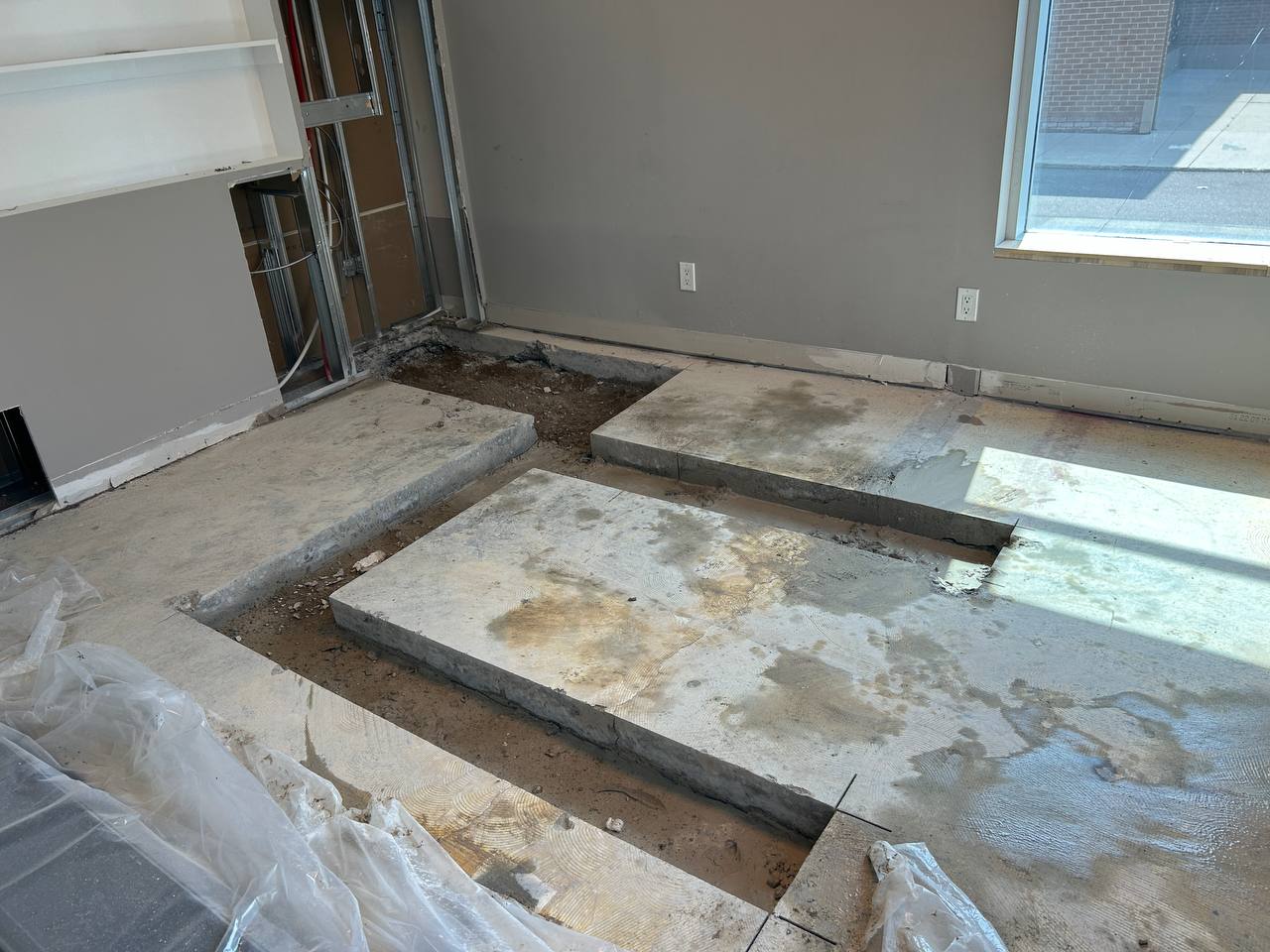
Goal: Saw-cut a trench for new plumbing runs in an operating clinic.
Scan-first: Yes (marked route before any cutting).
Slab thickness: 6 in (152 mm)
Trench length: 50 linear ft (15.2 m)
Trench width: 1 ft (12 in / 305 mm)
Saw method: Hydraulic concrete saw cutting (wet)
Blade: 24 in (610 mm)
Conditions: Rebar encountered; concrete cut into liftable sections; all debris hauled out.
Case 2 — Rental Building Front Yard Reconstruction (100 Jameson Ave, Toronto)
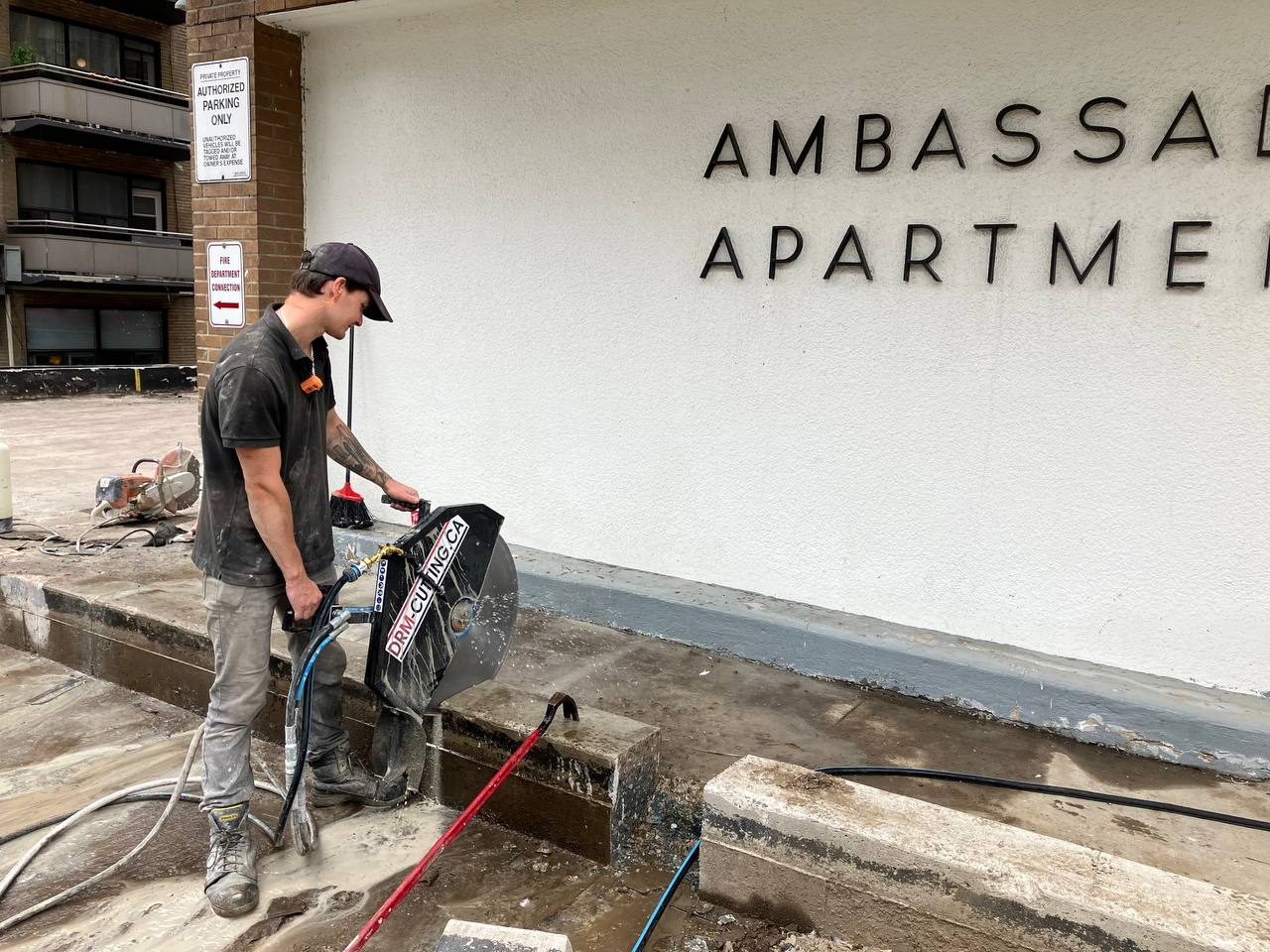
Goal: Remove deteriorated concrete apron and heavy curbs over an underground parking garage.
Why saw cutting: Avoid shock/vibration damage to the structure below.
Curb thickness: ~14 in (355 mm)
Curb height: ~1.5 ft (18 in / 457 mm)
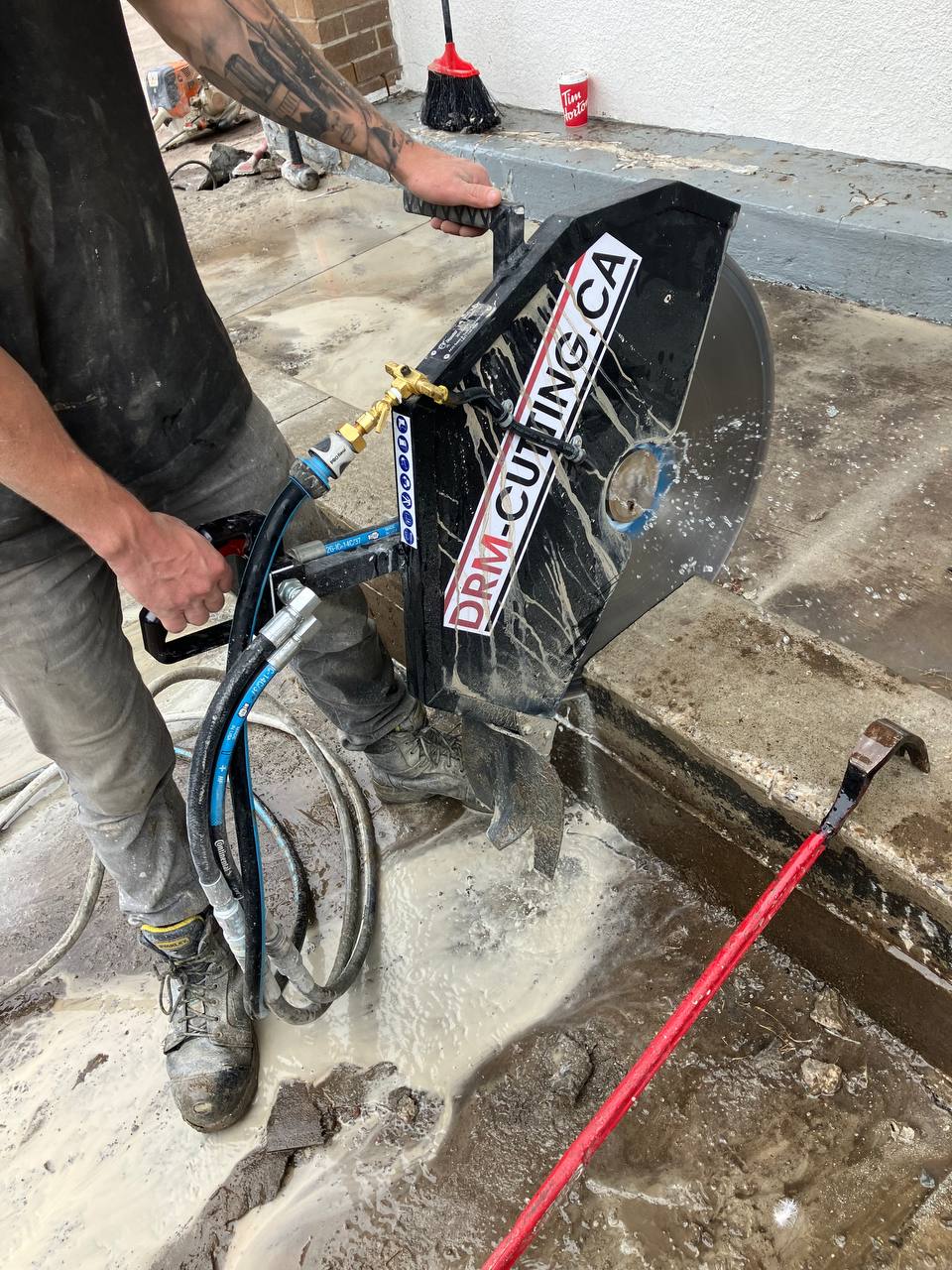
Saw method: Hydraulic concrete saw cutting (wet)
Blade: 24 in (610 mm)
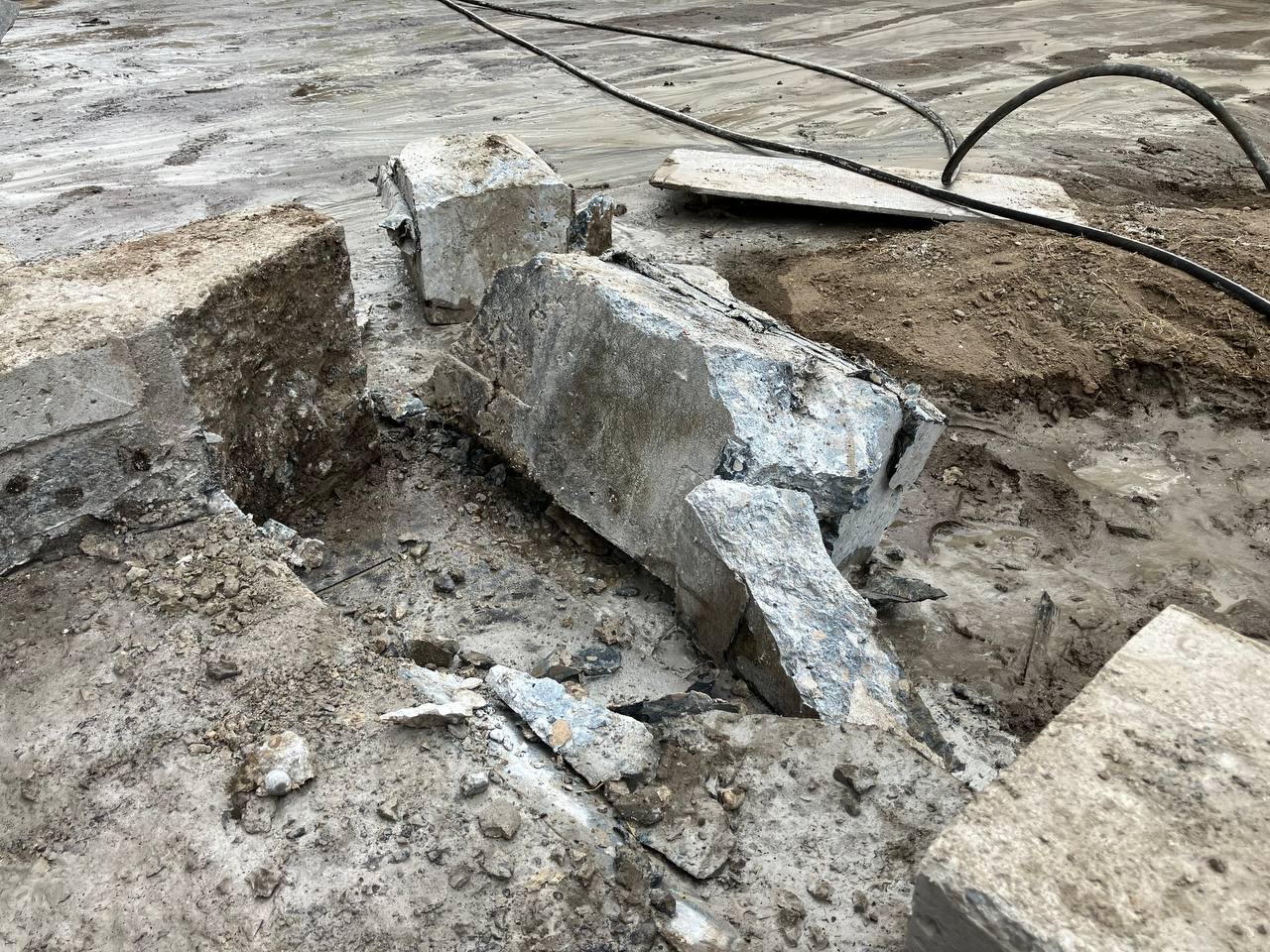
Output: Cut into liftable sections for controlled removal.
Why Concrete Saw Cutting Instead of Breakers or Heavy Equipment
On both sites, “break it out” wasn’t the right move.
- Live clinic: you need predictable dust control, clean edges, and fast containment—not uncontrolled cracking and debris spread.
- Over underground parking: shock and vibration from breakers can transfer into the slab/structure below. Saw cutting isolates sections so removal stays controlled.
Concrete saw cutting gives you what structural and renovation scopes actually need: defined cuts, defined pieces, defined handling.
Case 1 — Concrete Saw Cutting a Plumbing Trench in a Live Vaughan Clinic
Constraint: operating business + embedded risk
This scope happened inside an active massage clinic. That means two things immediately:
- You don’t guess where you cut. You scan and mark first.
- You don’t “smash and pray.” You cut clean, lift clean, and haul out clean.
We scanned the floor, confirmed the cutting path, and laid out the trench line before any saw work.
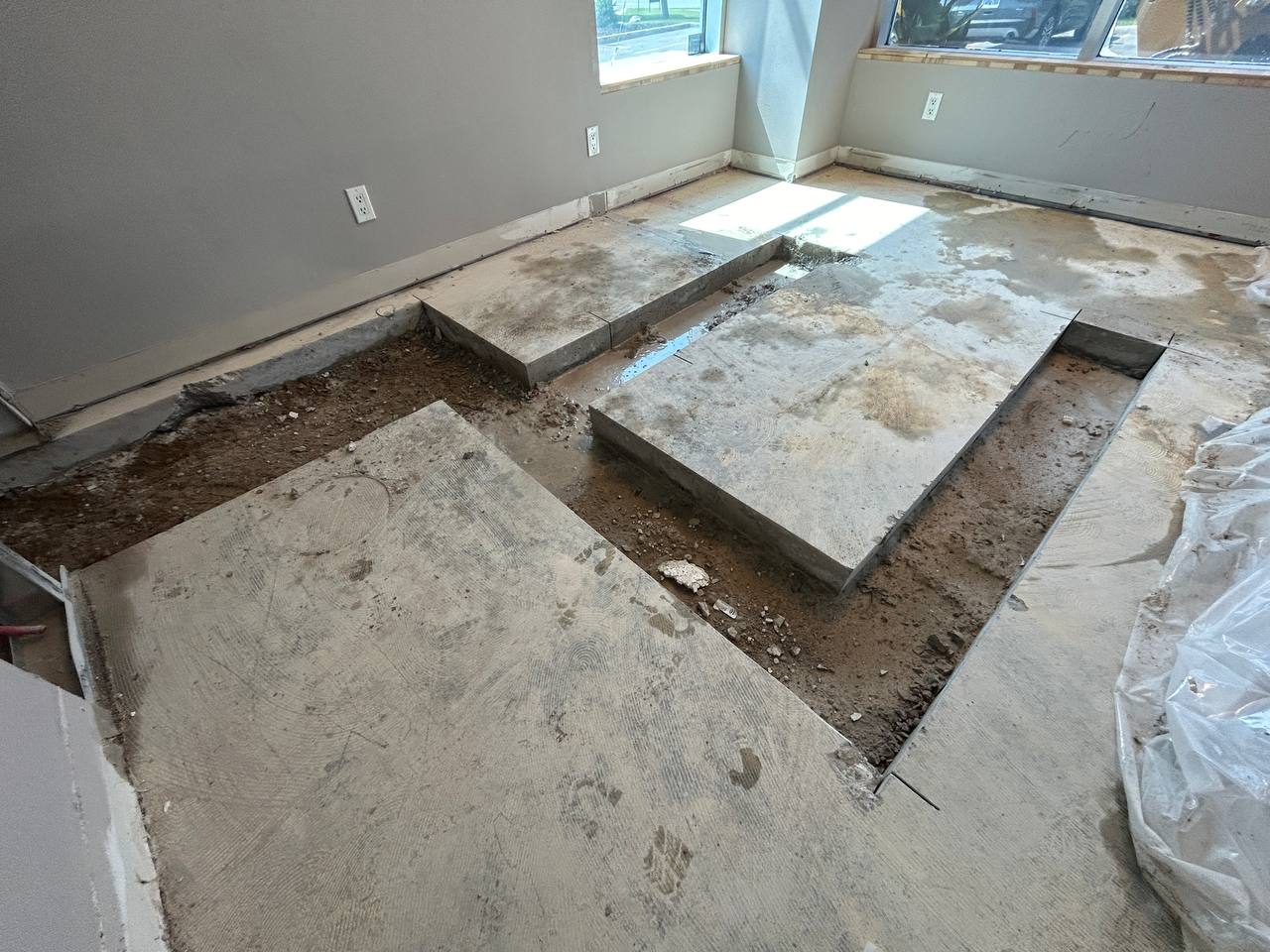
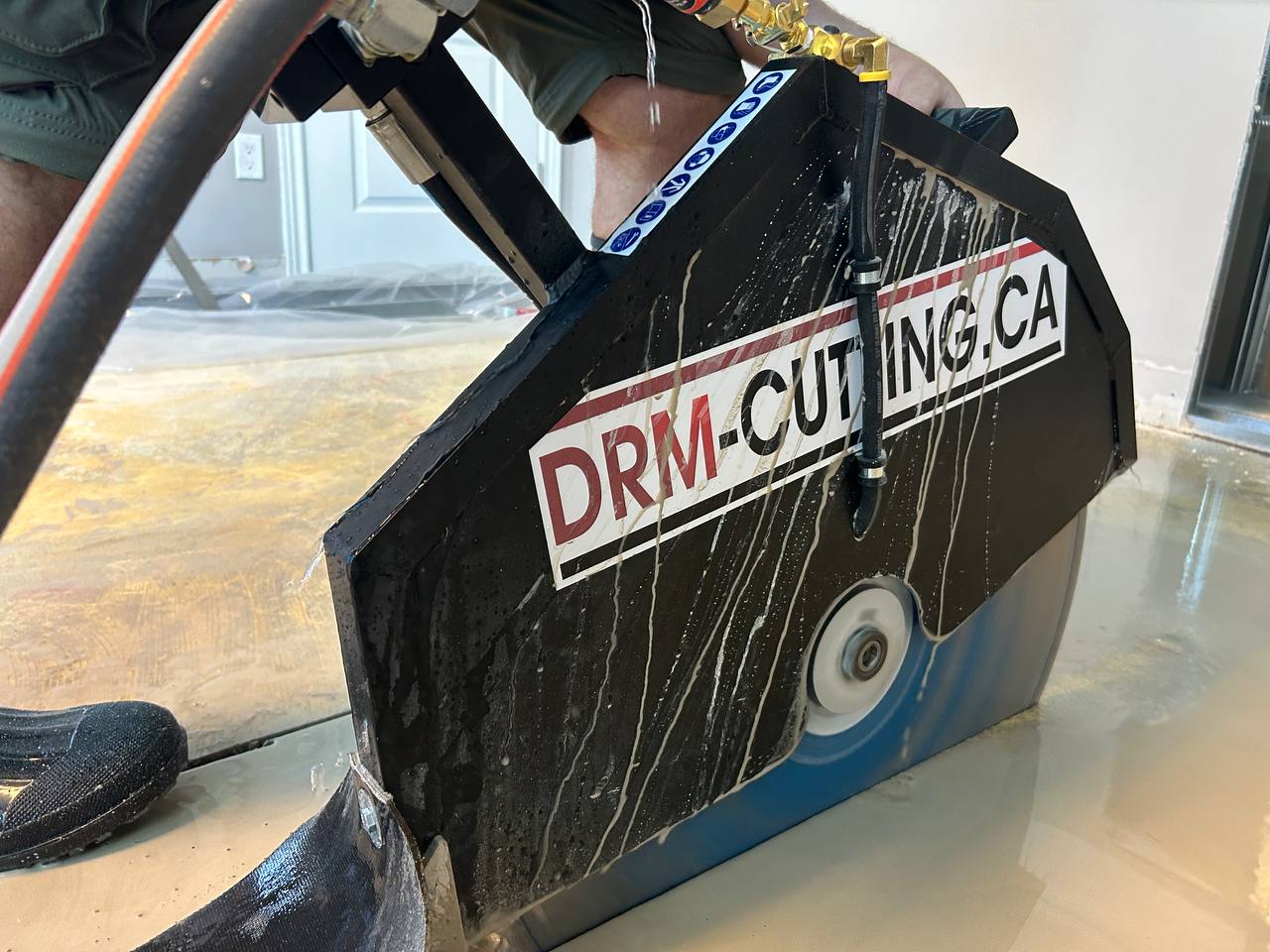
Method: wet hydraulic saw cutting with a 24" blade
The slab was 6 inches thick, so we used a 24-inch hydraulic saw with water feed (wet cutting). Wet cutting kept dust under control and stabilized cutting through reinforced concrete.
Scope details (field):
- 50 linear feet of trench
- 1-foot trench width
- Rebar encountered during cutting (expected in slabs); handled in sequence during sectioning
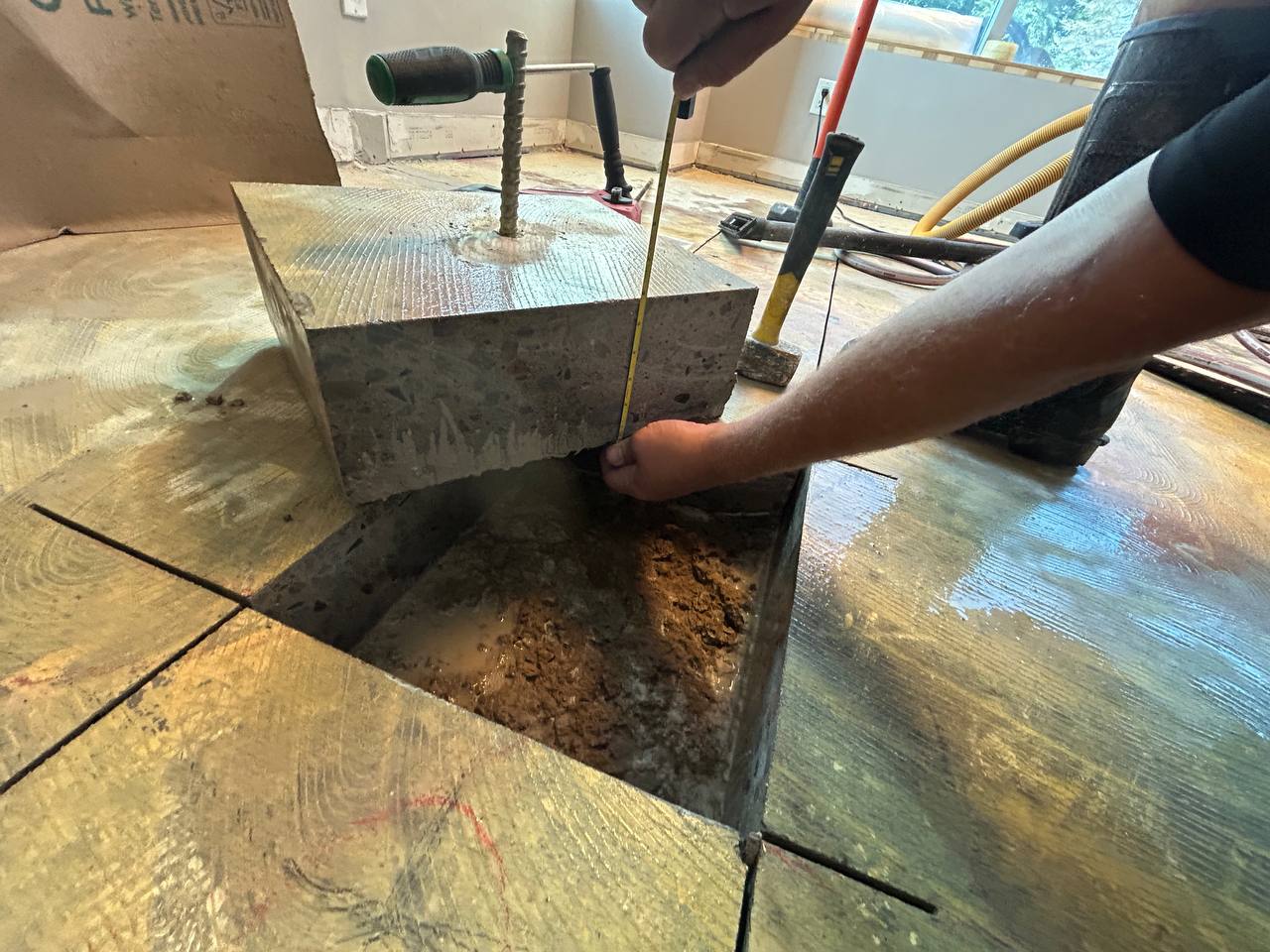
Handling: liftable sections + full haul-out
Once the saw cuts were complete, we segmented the trench into manageable liftable sections, removed the concrete, and hauled out the debris. That left a clean, open trench line ready for plumbing installation.
Result: a new plumbing route enabled without disrupting the structure and without turning an active clinic into a demolition zone.
Case 2 — Concrete Saw Cutting Curbs and Apron at 100 Jameson Ave (Over Underground Parking)
Constraint: the slab sits over an underground garage
This is the key reason concrete saw cutting was the correct tool here: under the front yard/apron area was underground parking. A breaker-heavy approach risks shock transfer and uncontrolled cracking.
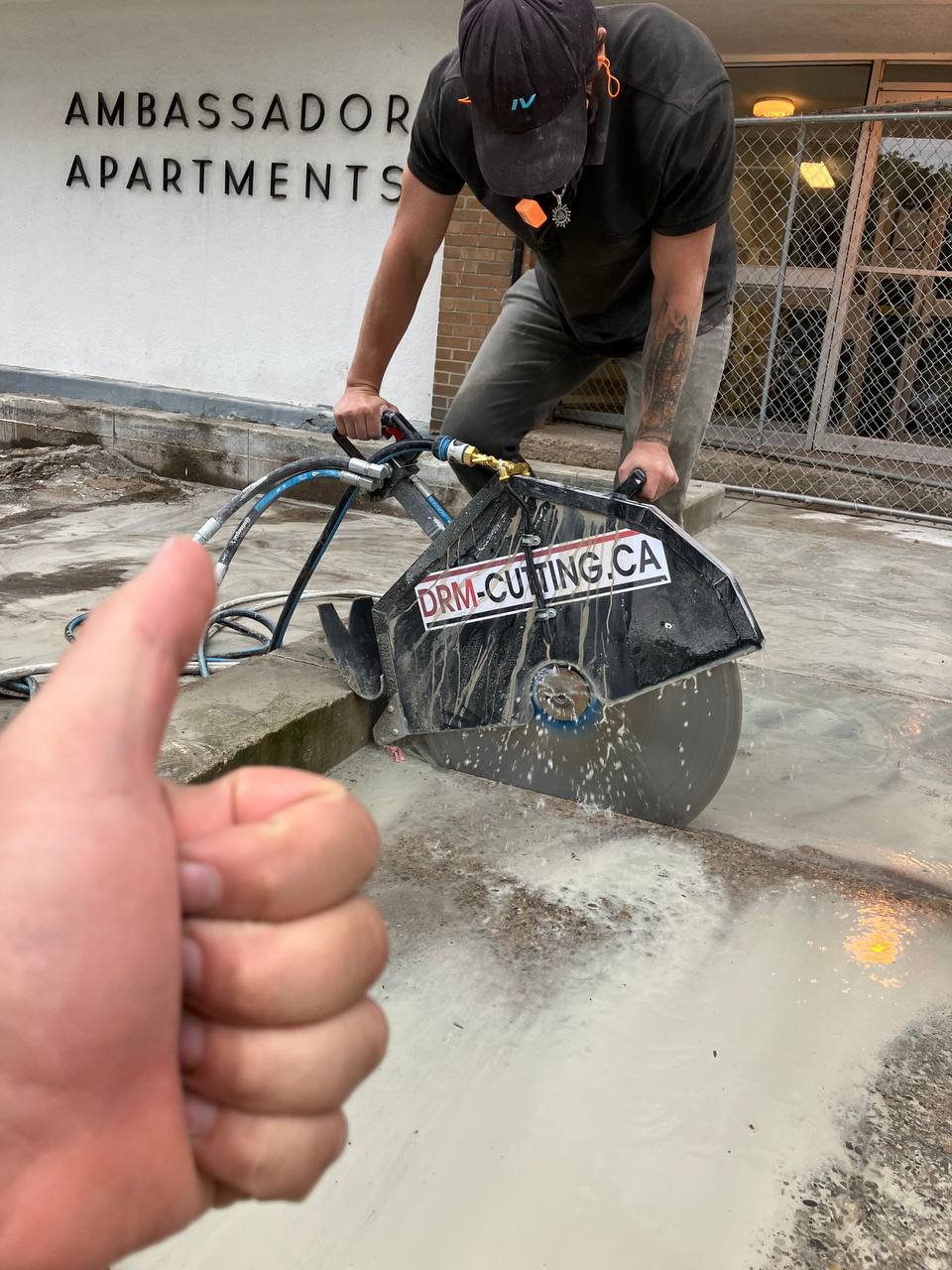
Method: hydraulic saw cutting to isolate heavy curbs and apron sections
We used the same high-control approach: wet hydraulic saw cutting with a 24-inch blade. The curbs were heavy—about 14 inches thick and 1.5 ft high—so the plan was to cut them into liftable pieces for predictable removal.
Why this matters on “over-structure” scopes
When there’s structure below, you’re not just removing concrete—you’re protecting what’s underneath. Saw cutting creates controlled separations so demolition becomes handling, not impact.
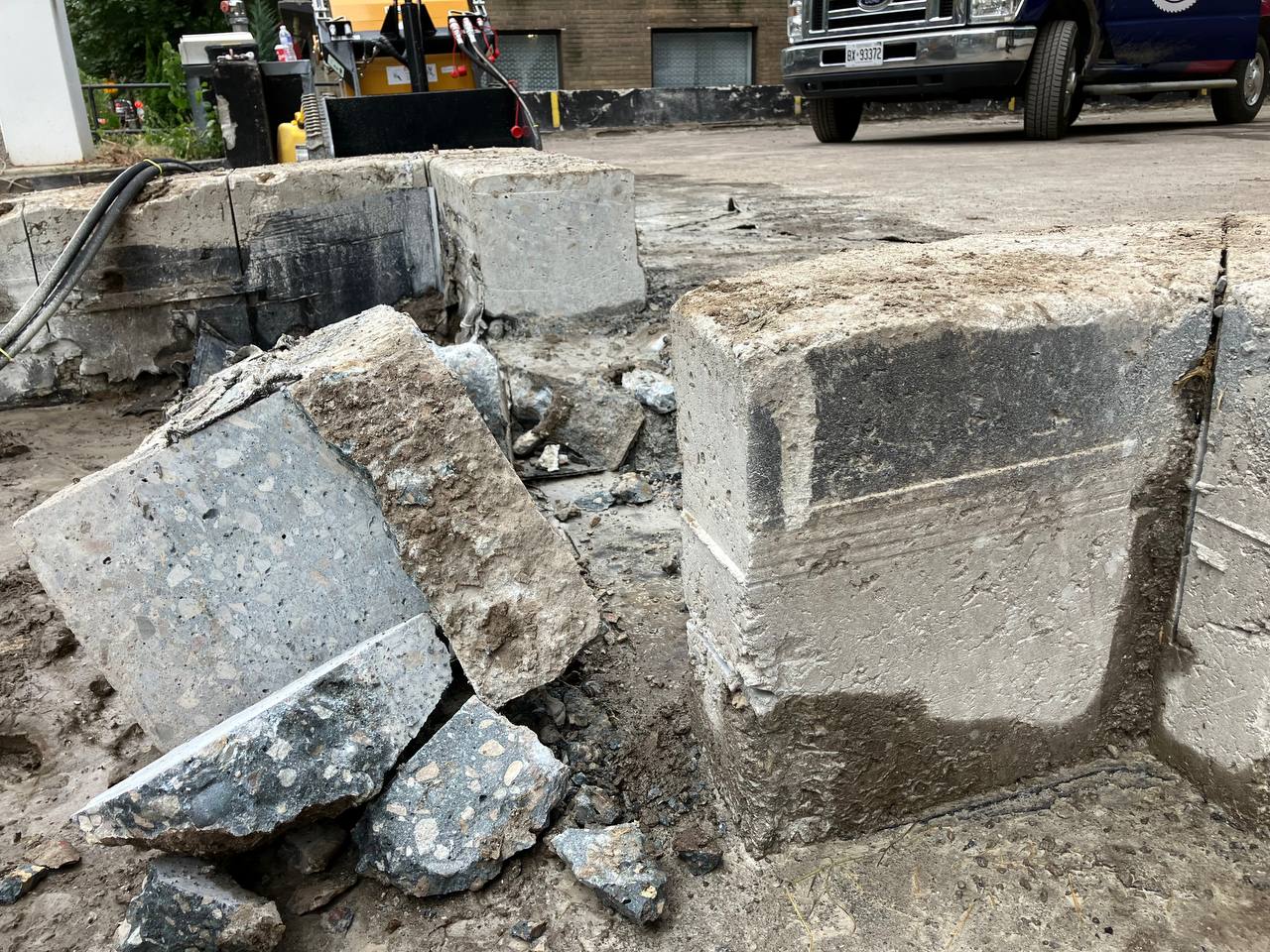
Result: deteriorated concrete and curbs removed cleanly, with the site prepped for reconstruction and new concrete placement.
What These Two Projects Show About Concrete Saw Cutting
Concrete saw cutting is a method selection problem. The tool is only part of it.
The execution is what protects schedule and structure:
- Scan-first when embedded risk exists.
- Use wet cutting when dust control matters.
- Cut into defined sections so removal is handling—not chaos.
- Choose saw cutting when vibration and shock can’t be tolerated (especially over garages/suspended slabs).
Need Concrete Saw Cutting in Toronto or the GTA?
Send: photos, address, slab thickness (if known), total linear feet, and access constraints. If embedded risk is possible, we’ll scan first and confirm the safest cut plan.
Concrete Saw Cutting FAQ (Clinic Trenching in Vaughan)
Answers to the most common questions about concrete saw cutting for indoor trenching in a live commercial space.