
Concrete Cutting in a Toronto-Area Mechanical Room: GPR Scanning, Wire Sawing & Controlled Segmentation
In critical infrastructure environments, concrete cutting is never just “cut and remove.” Access is limited, embedded utilities are non-negotiable risks, and vibration-heavy demolition methods are often not an option.
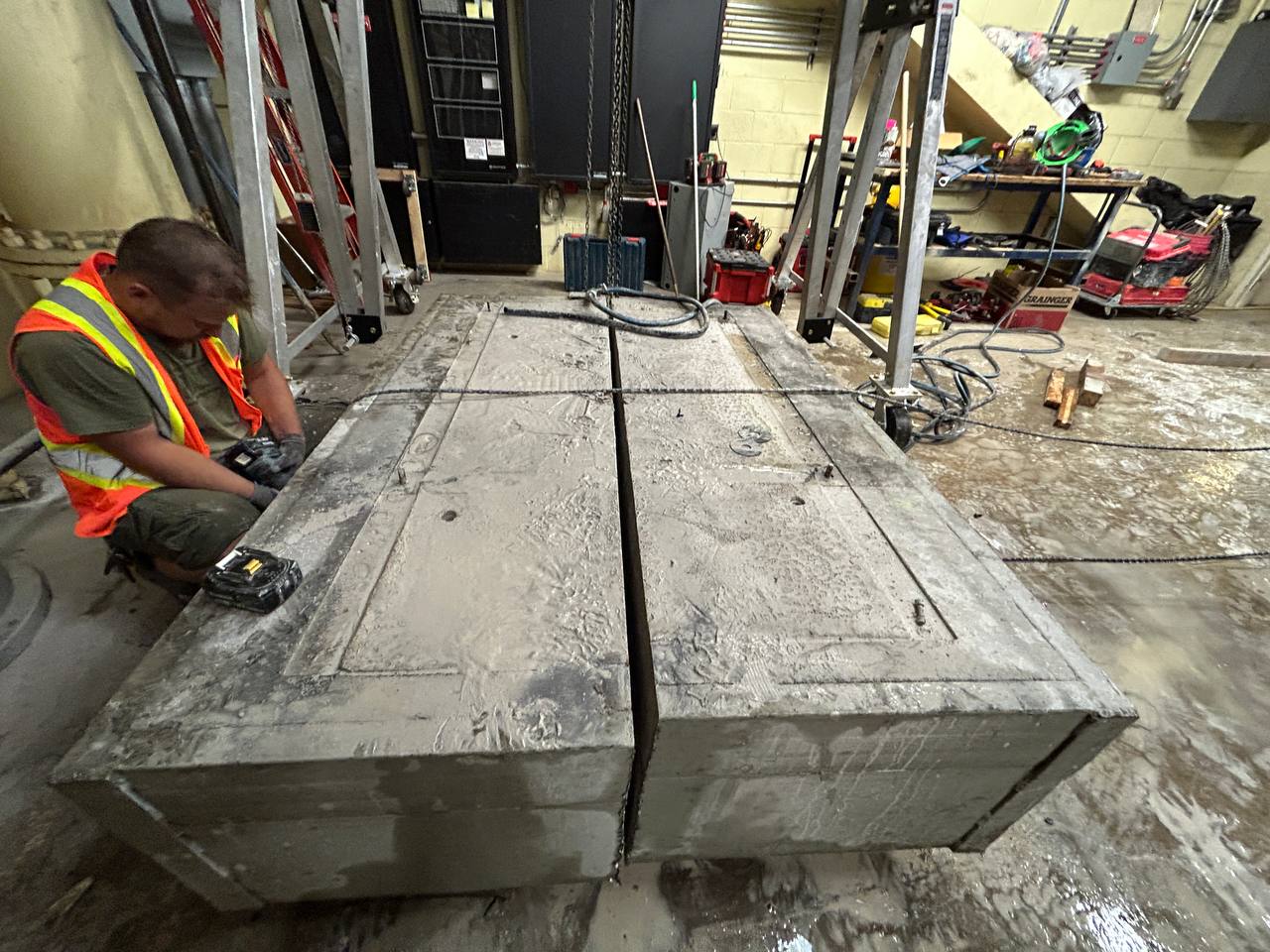
In August 2025, DRM Cutting (Diamond Rope Machines Inc.) was brought in to perform concrete cutting inside a mechanical room at a Toronto-area (facility name withheld for confidentiality). The scope was the removal of five reinforced concrete foundations:
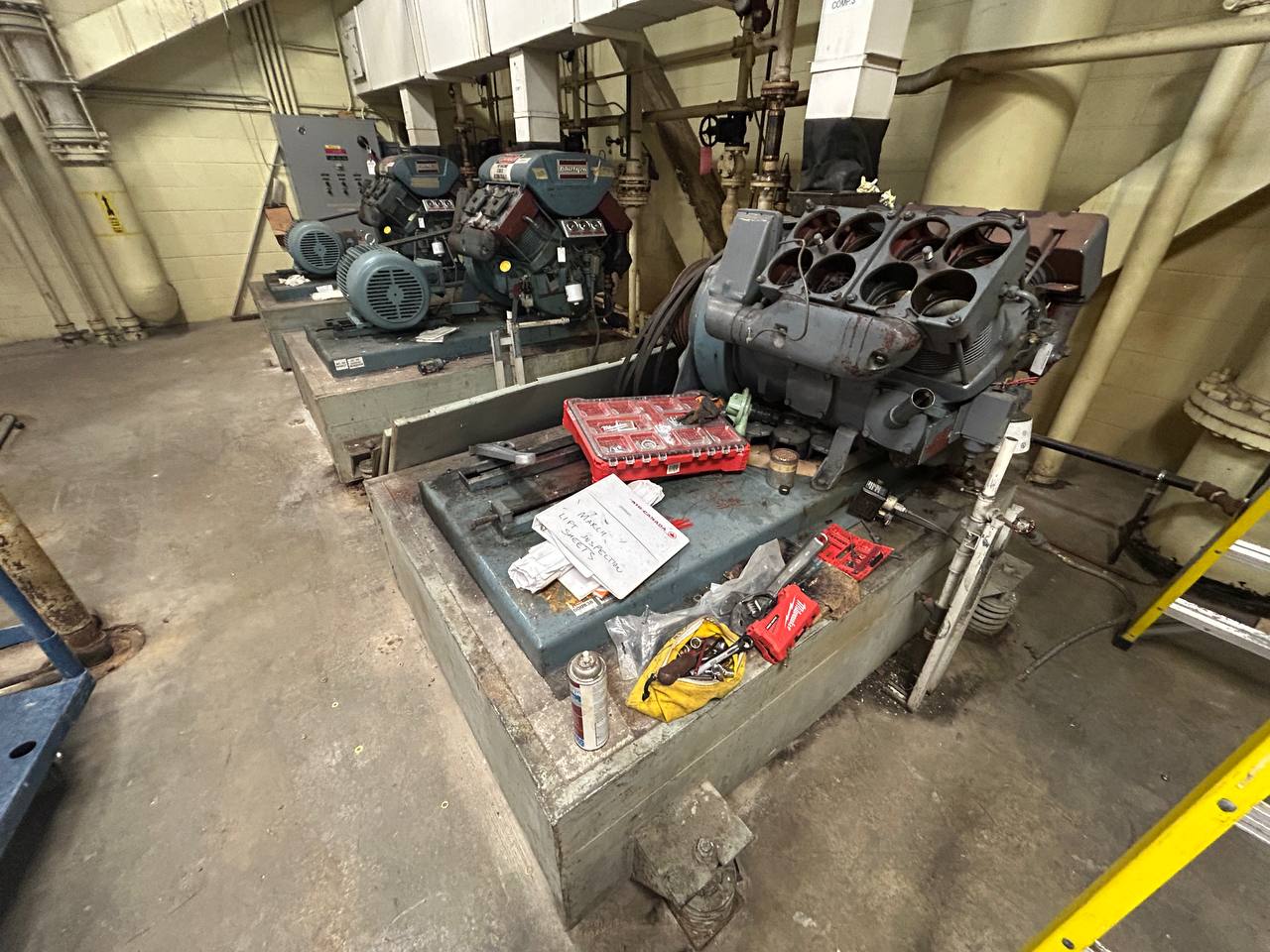
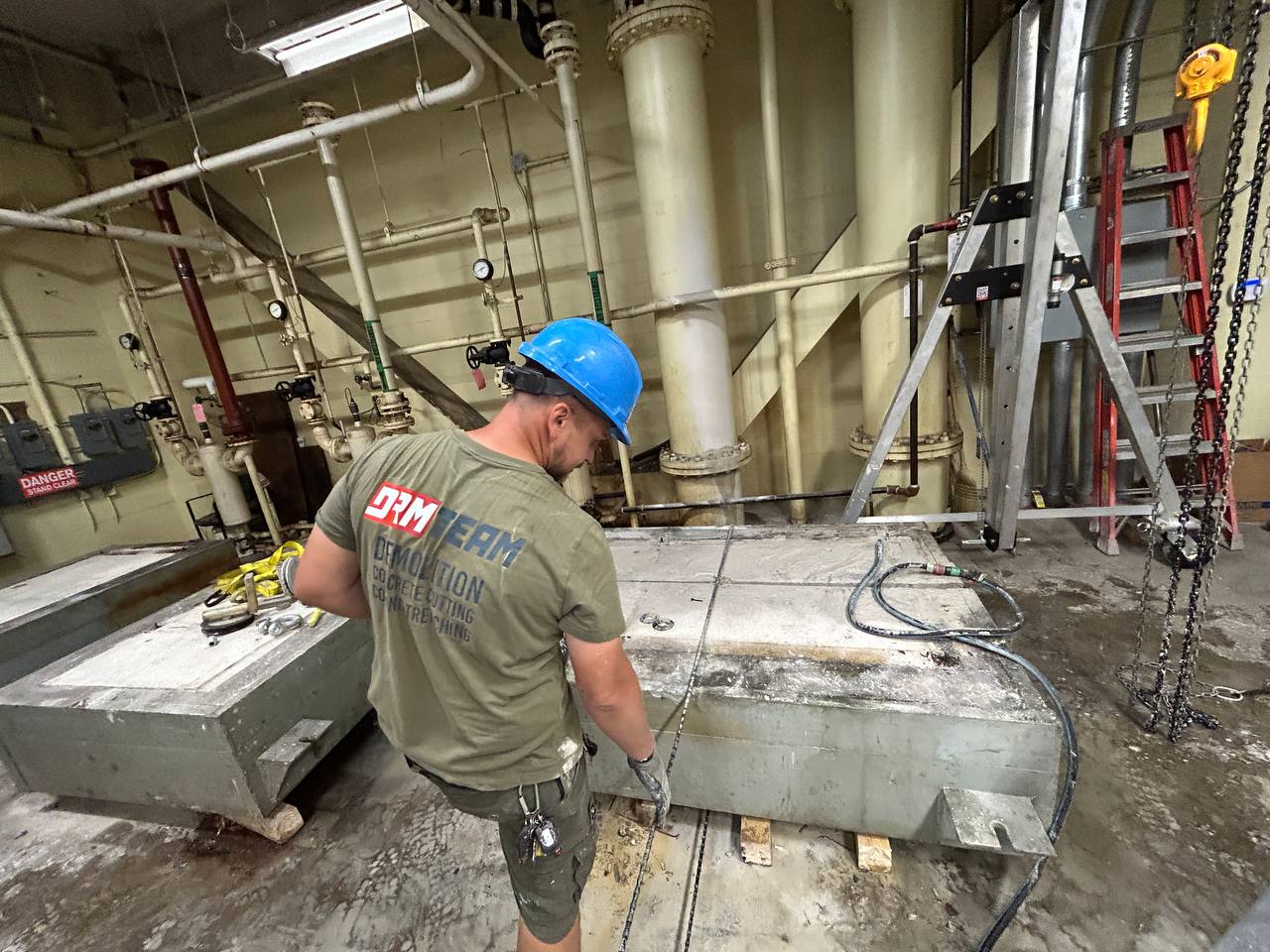
“Mechanical equipment bases prior to demolition—vibration-duty foundations in a live airport mechanical room.”
- Three large, vibration-duty equipment foundations (heavily reinforced and steel-encased)
- Two low-profile pads with a large footprint, requiring controlled segmentation and hand-removal
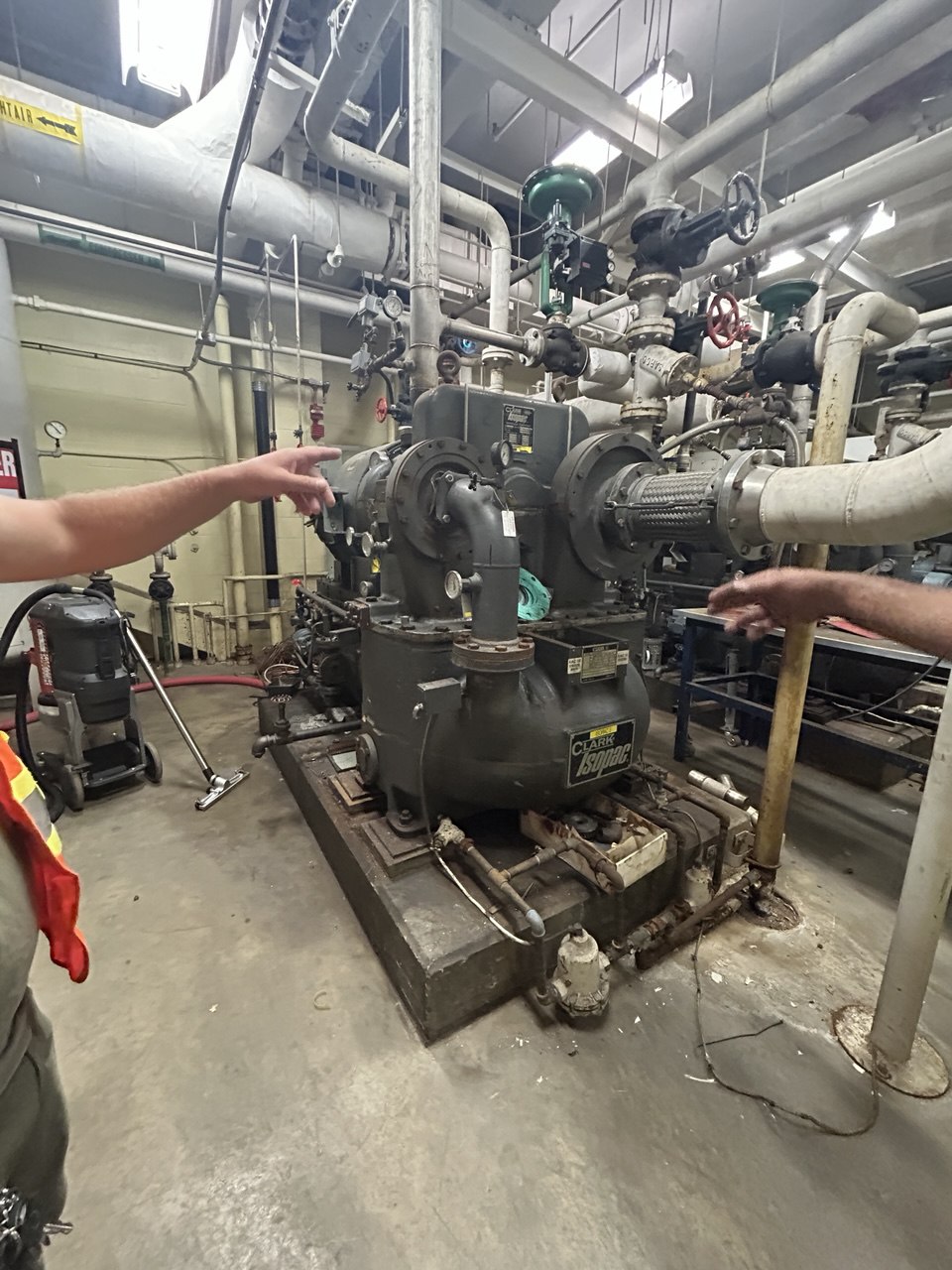
Airport procedures required GPR scanning before any drilling, anchoring, or cutting—even a single anchor hole is not permitted without scanning. With that constraint in place, we executed a method plan that matched the structures: diamond wire sawing for the heavy foundations, and a hydraulic blade cutting approach for the low pads.
Project Snapshot
Date: August 2025
Location: Toronto, Ontario (name withheld)
Work Area: Mechanical Room
Site Visits: 3 day-shift visits (2 visits wire sawing + 1 visit hydraulic blade cutting)
Crew: 3 workers (Day 1) | 2 workers (Day 2–3)
Services: GPR scanning, concrete cutting, diamond wire sawing, controlled segmentation
Methods Used: Diamond wire sawing + hydraulic blade cutting (wet cutting)
Wire Sawing Output: 173 linear feet (≈ 52.7 m) of diamond wire cutting
Low-Pad Segmentation Output: ~110 hand-removal pieces total (≈50 + ≈60)
Disposal: per client scope — client handled haul-out and disposal (DRM scope was cutting/segmentation)
The Constraints: Why This Concrete Cutting Scope Required a Different Playbook
This was not a typical demolition environment. Several realities dictated the plan:
- Critical infrastructure rules: GPR scanning was mandatory before any penetration or cutting.
- Tight access and staging: equipment had to move through corridors/elevator routes—large machinery and power sources couldn’t be staged inside.
- Heavy reinforcement + steel encasement: the large foundations were designed for vibration loads under mechanical equipment and were wrapped with steel components that had to be cut through.
- Water and slurry control: wet cutting was required; water management had to be clean and predictable.
- Floor protection: the existing slab and surroundings had to remain serviceable—no collateral damage from wire movement or uncontrolled debris.
Step 1 — GPR Scanning (No-Blind-Cuts Planning)
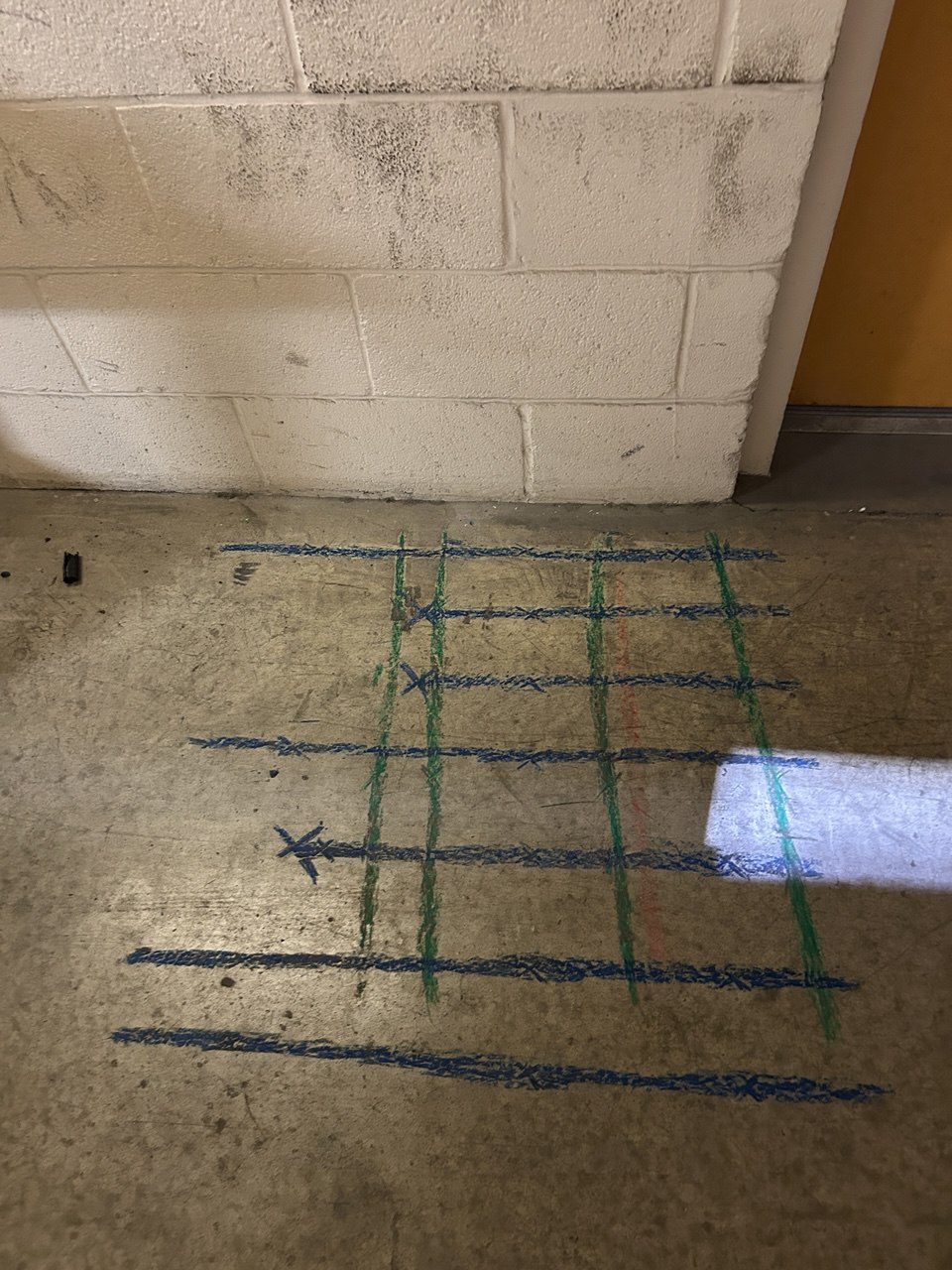
“Several locations GPR scanning was mandatory before any drilling or cutting—no blind penetrations in critical infrastructure.”
We began with GPR scanning, including a test zone and the required scan areas in the mechanical room. The objective was straightforward: confirm what was present inside and around the concrete before starting any concrete cutting.
In sensitive facilities, unknown embeds (conduits, piping, sleeves, anchor zones) are not a theoretical risk—they are the reason projects derail. Scanning allowed us to validate safe penetration points and confirm a cutting sequence that aligned with airport rules and real site conditions.
Time on scanning: ~2 hours.
Step 2 — Diamond Wire Sawing the Three Heavy Equipment Foundations
Why wire sawing was the correct method
The three large foundations were heavily reinforced, steel-encased, and built for vibration duty. In that scenario, diamond wire sawing is often the most controlled option because it can handle thick reinforced concrete and steel components while minimizing vibration.
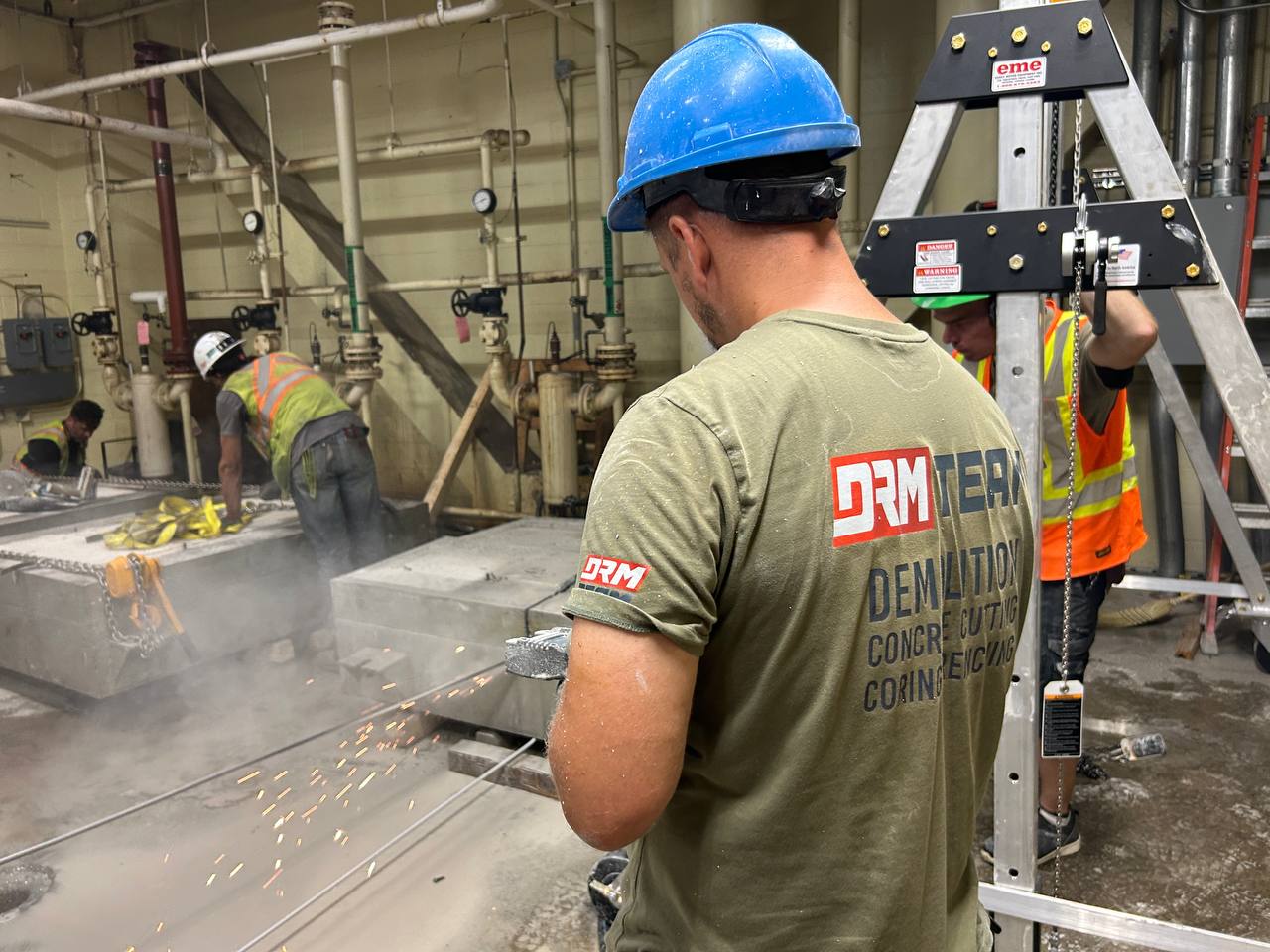
“Diamond wire installed and tensioned—wet cutting setup for controlled segmentation.”
We planned each foundation to be segmented into four sections to match rigging limits and removal logistics.
Foundation dimensions (with conversions)
Each large foundation measured approximately:
- Length: 2.0 m (≈ 6 ft 7 in)
- Width: 1.5 m (≈ 4 ft 11 in)
- Height: 2 ft (24 in)
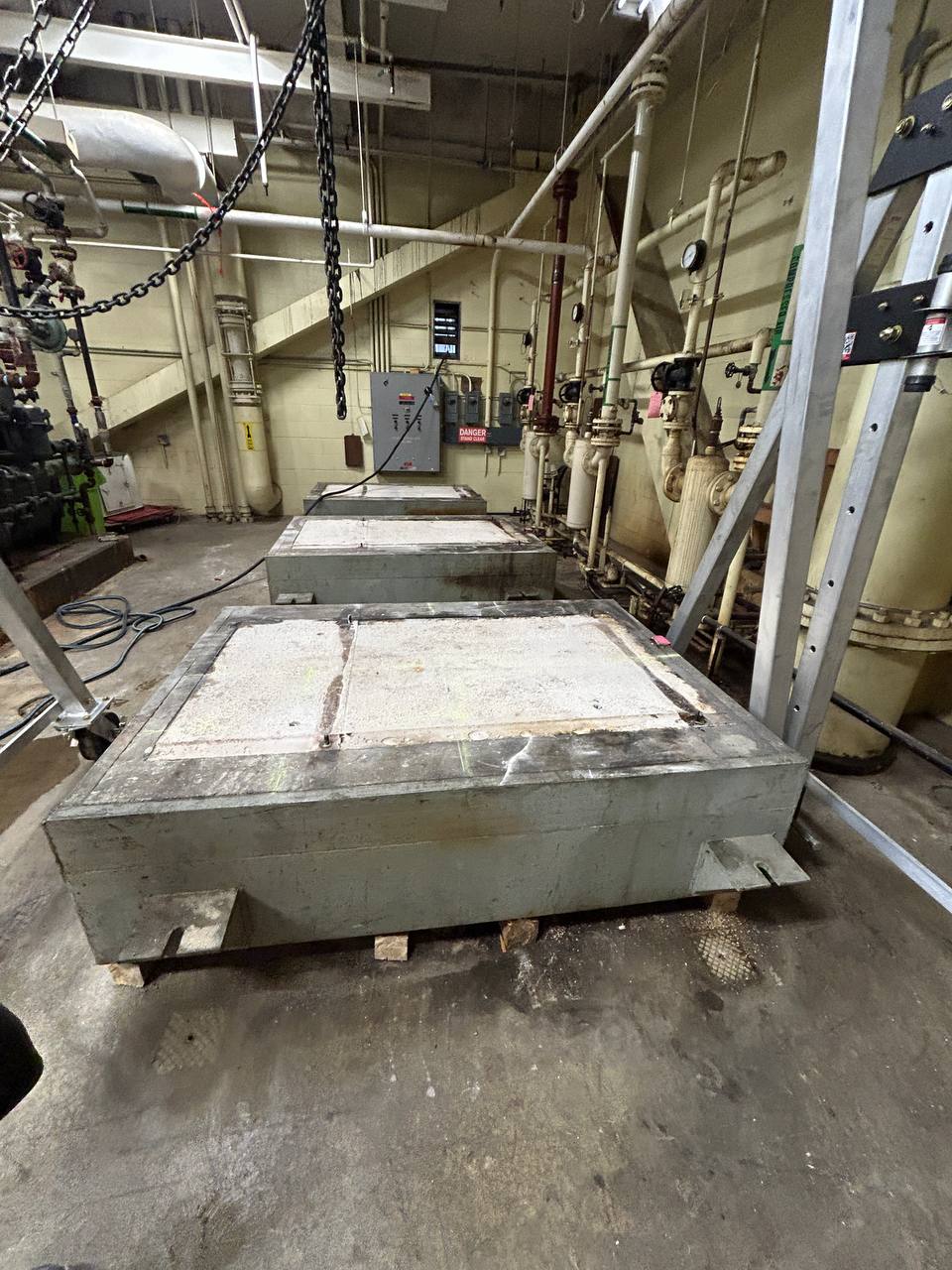
“Three large reinforced foundations prepared for segmentation after equipment removal.”
Footprint area: ~3.0 m² (≈ 32.3 sq ft)
Estimated volume per foundation: ~1.83 m³ (≈ 64.6 ft³)
Estimated mass per foundation (concrete only): 4.39 metric tonnes (4.84 US tons)
These weights are estimates based on typical reinforced concrete density and exclude steel encasement. They are included here to illustrate handling/rigging scale.
Across three foundations, the total estimated concrete volume was ~5.49 m³ (≈ 7.18 yd³) before steel is considered.
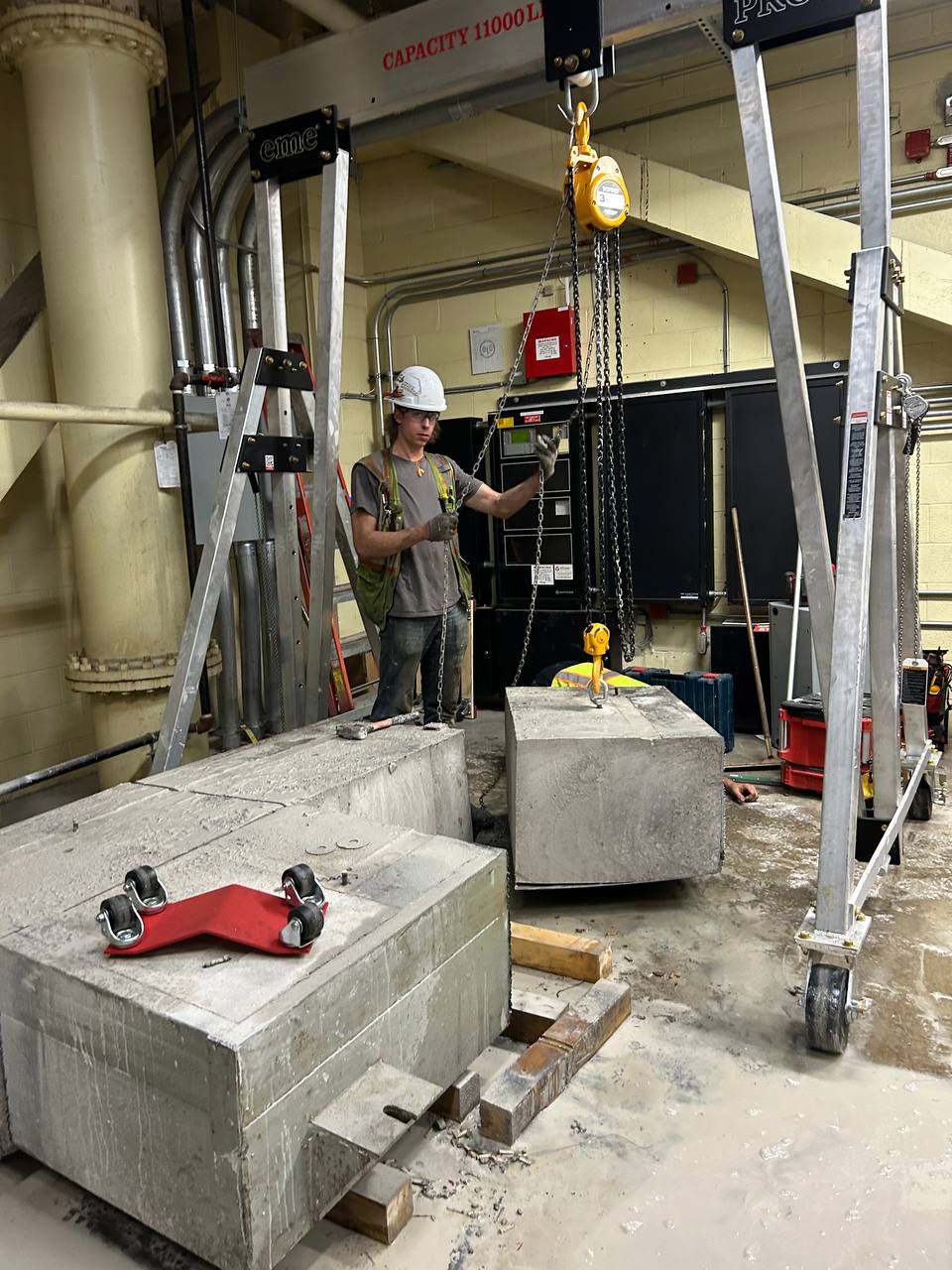
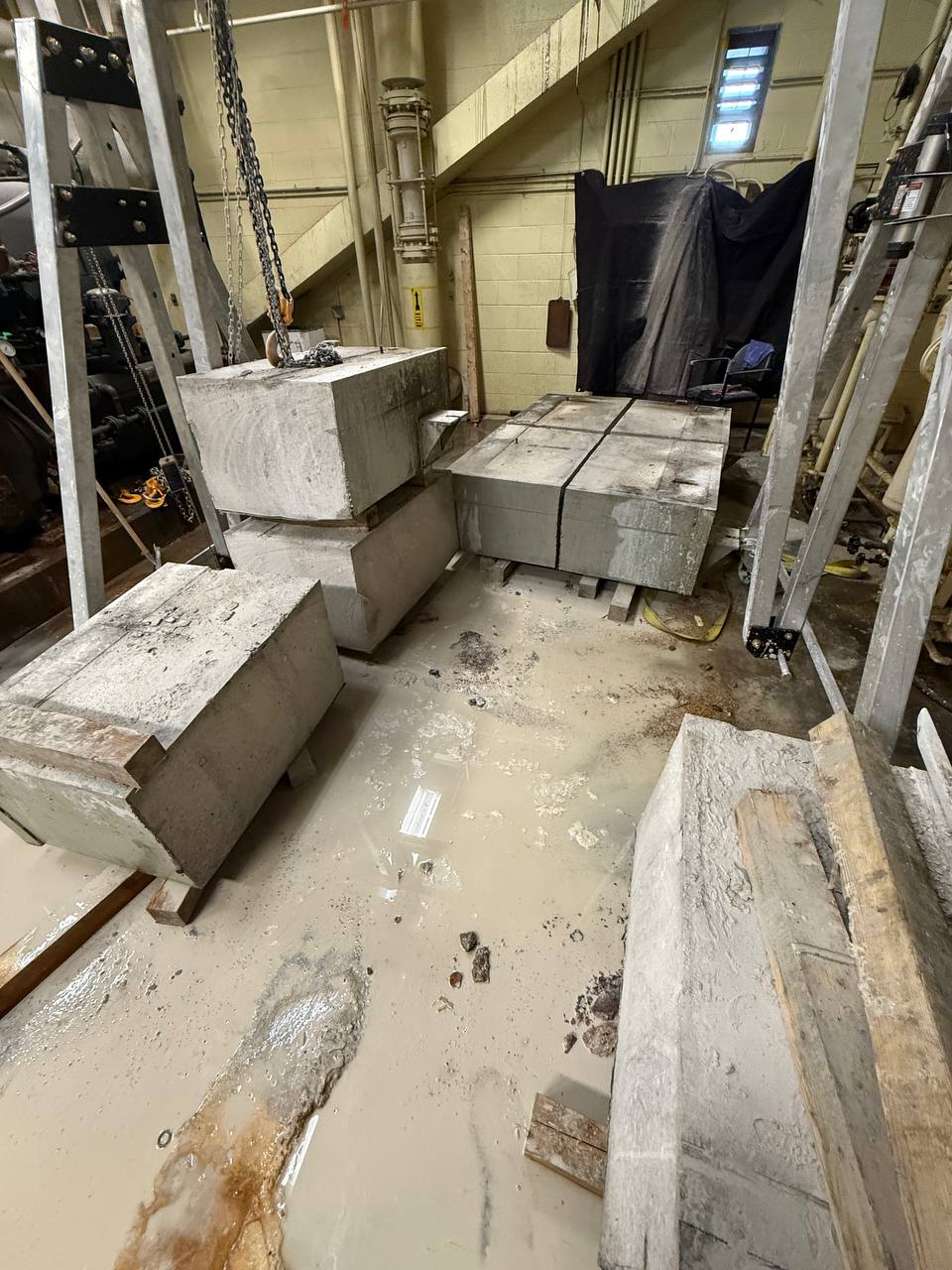
“Heavy sections staged for removal—predictable logistics in confined access conditions.”
Setup: power, water, and controlled entry
We mobilized an electric wire saw system and set up wet cutting. Due to staging constraints, the generator remained outside the building, and we routed the necessary cabling to the work area.
A key challenge was that the foundations had steel angle/steel casing. Wire entry began through steel, then continued through reinforced concrete. That transition is normal for this scope—steel cutting can produce visible sparks during the early pass.
To help the wire establish the cut efficiently, we temporarily used an additional guide configuration to increase the wire’s effective wrap/attack angle during entry. Once the cut was established, we removed the extra element and continued with a clean, stable geometry.
Floor protection: preventing wire contact damage
Wire cutting inside a finished facility adds one more risk—wire movement can damage floors if it drops or drags. We placed a timber barrier beneath the wire path to eliminate direct contact with the slab surface.
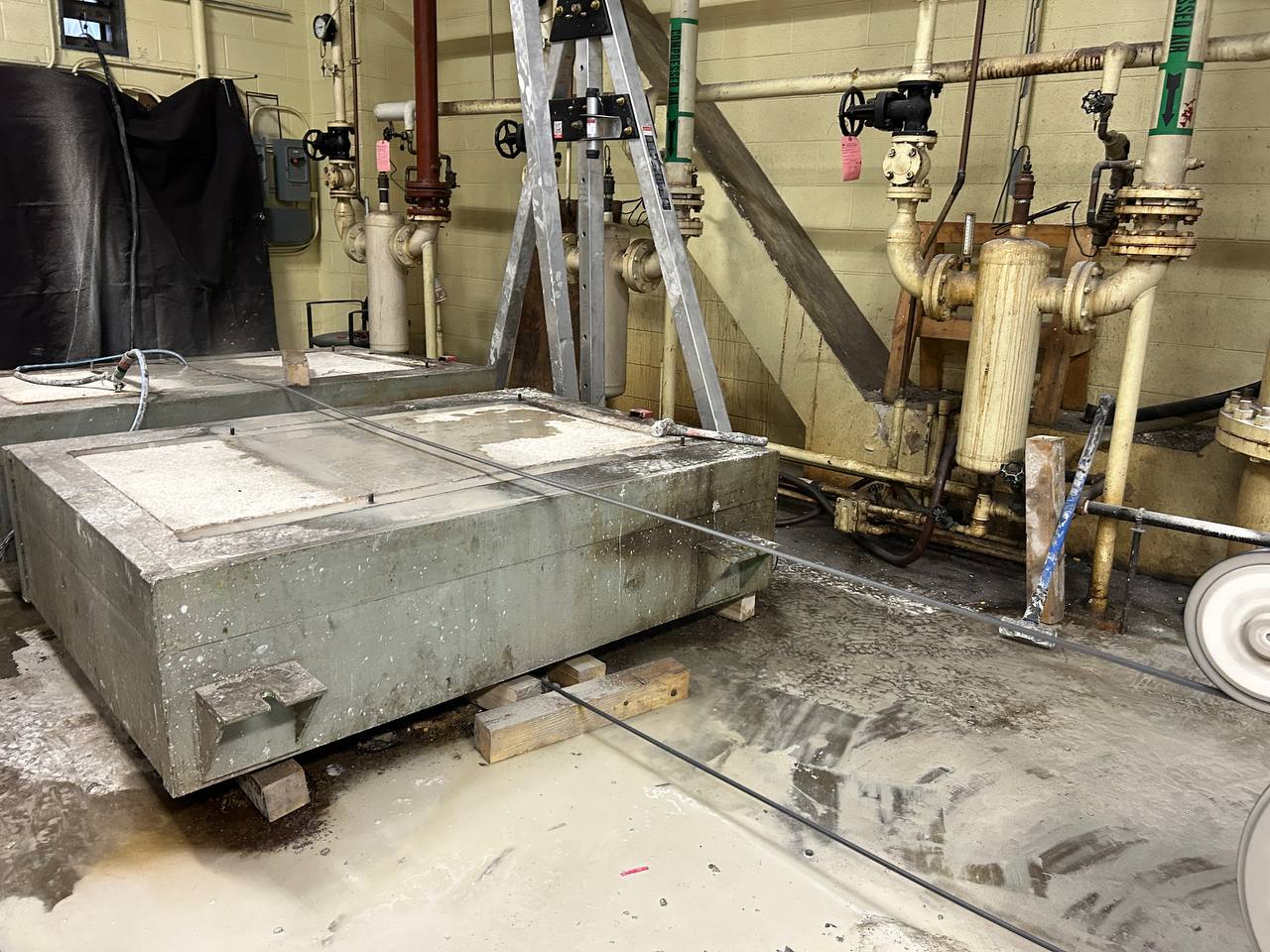
Sequencing: long cut first, then rotate the mass to avoid re-setting the rig
We started with the most complex/long-direction cut first for efficiency in confined conditions.
After completing the first cut, we used the client’s lifting setup to rotate the foundation sections and complete the cross cut without re-positioning the wire saw machine:
- Chain hoist capacity: 3 tons
- Frame rating: 5 tons
- Provided and certified by the client (airport-side team)
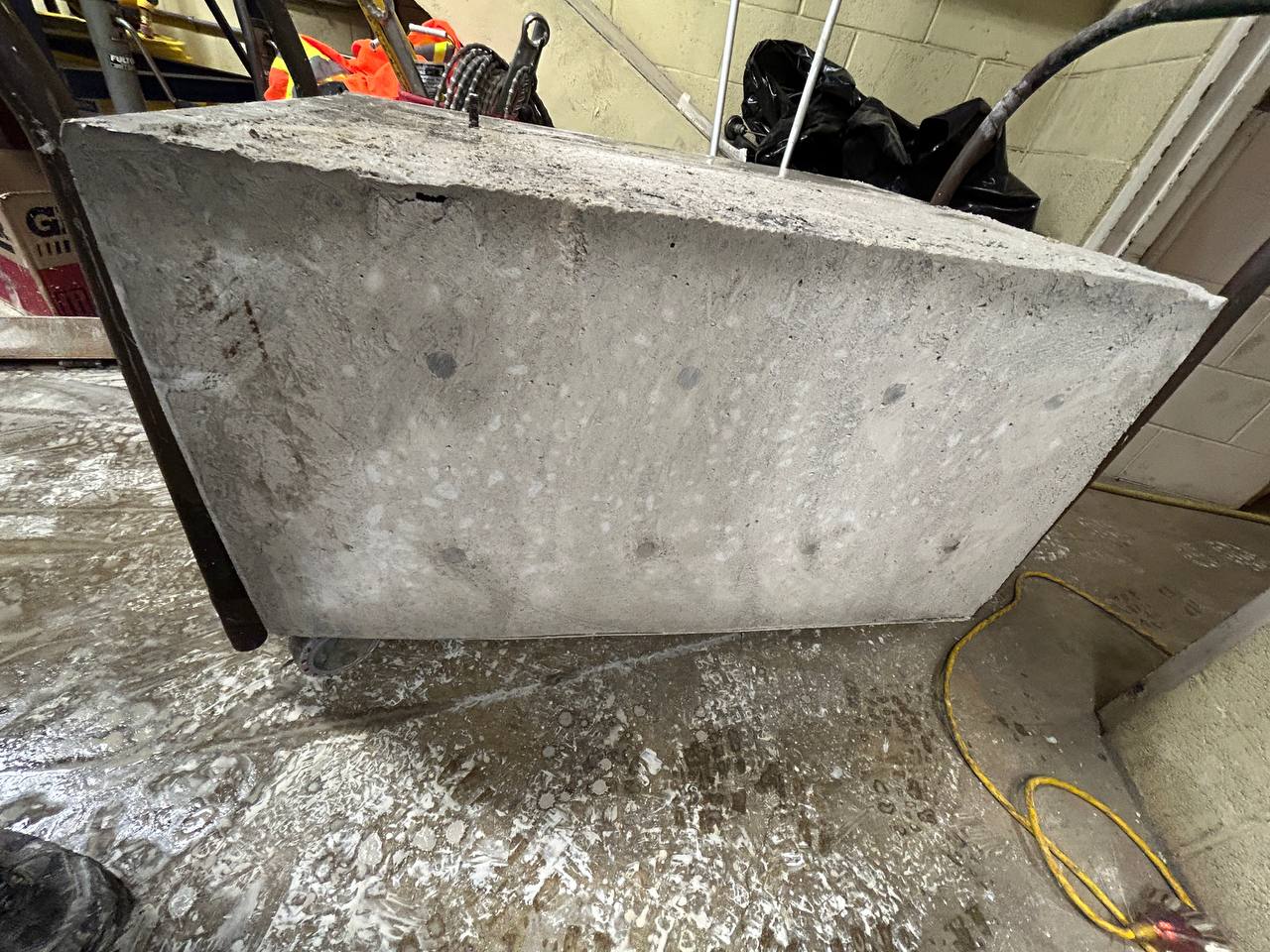
“Foundation segmented into four blocks for controlled handling—rigging coordinated with the client’s certified frame.”
Each foundation was segmented into four heavy blocks (12 total across three foundations). The client team handled haul-out/disposal per scope, and we coordinated segmentation to make removal predictable and safe.
Time on wire sawing
Wire sawing spanned two day-shift visits:
- Day 1: site access + setup + cutting
- Day 2: approximately 2–3 hours to complete the remaining cut work
Total cutting time for wire work was approximately 8+ hours of active cutting, excluding security/safety access and staging.
Step 3 — Hydraulic Blade Cutting for the Two Low-Profile Pads
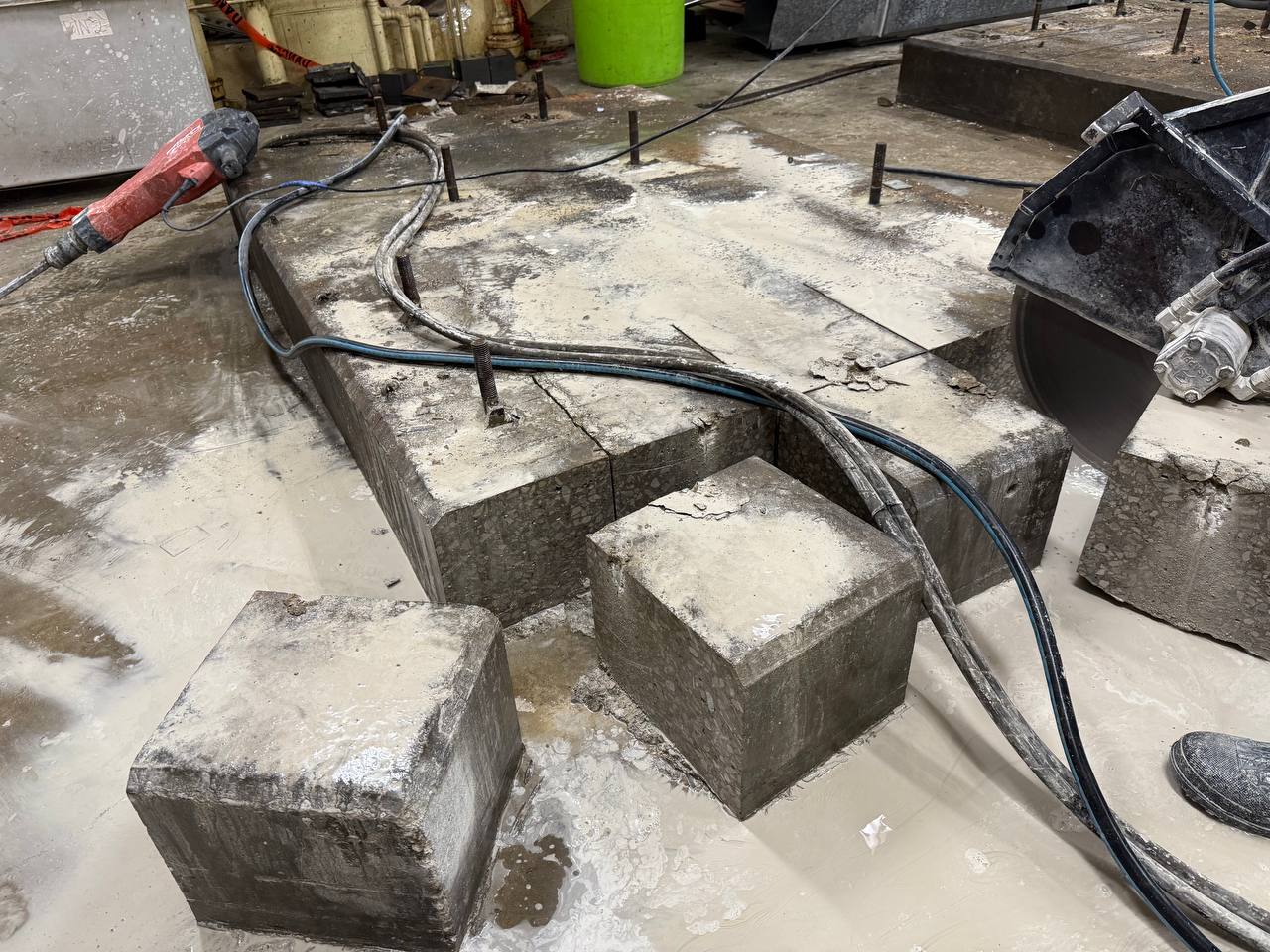
“Hydraulic cutting with a 24-inch blade—controlled grid cuts for hand-removal pieces.”
Why we changed methods
The two remaining foundations were lower profile but had a large footprint. In that geometry, wire sawing isn’t the efficient tool. We selected a hydraulic cutting setup with a 24-inch blade, achieving about 10 inches of cutting depth, which was sufficient for the pad thickness.
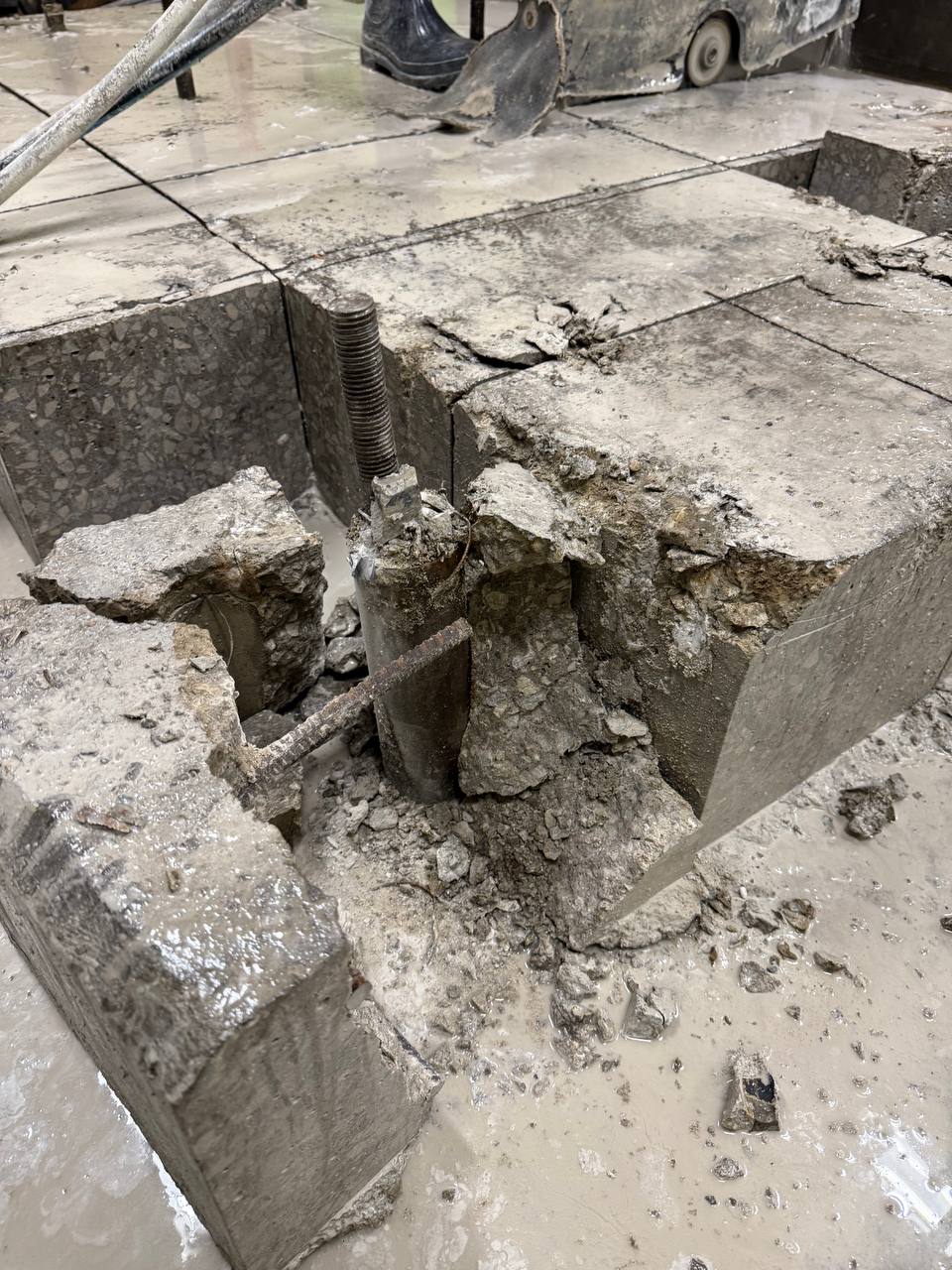
“hydraulic concrete cutting grid segmentation”
GPR scanning also confirmed these pads were not fully tied into the base slab the way a monolithic pour would be—another reason a controlled segmentation approach made sense.
Controlled grid segmentation (hand-removal pieces)
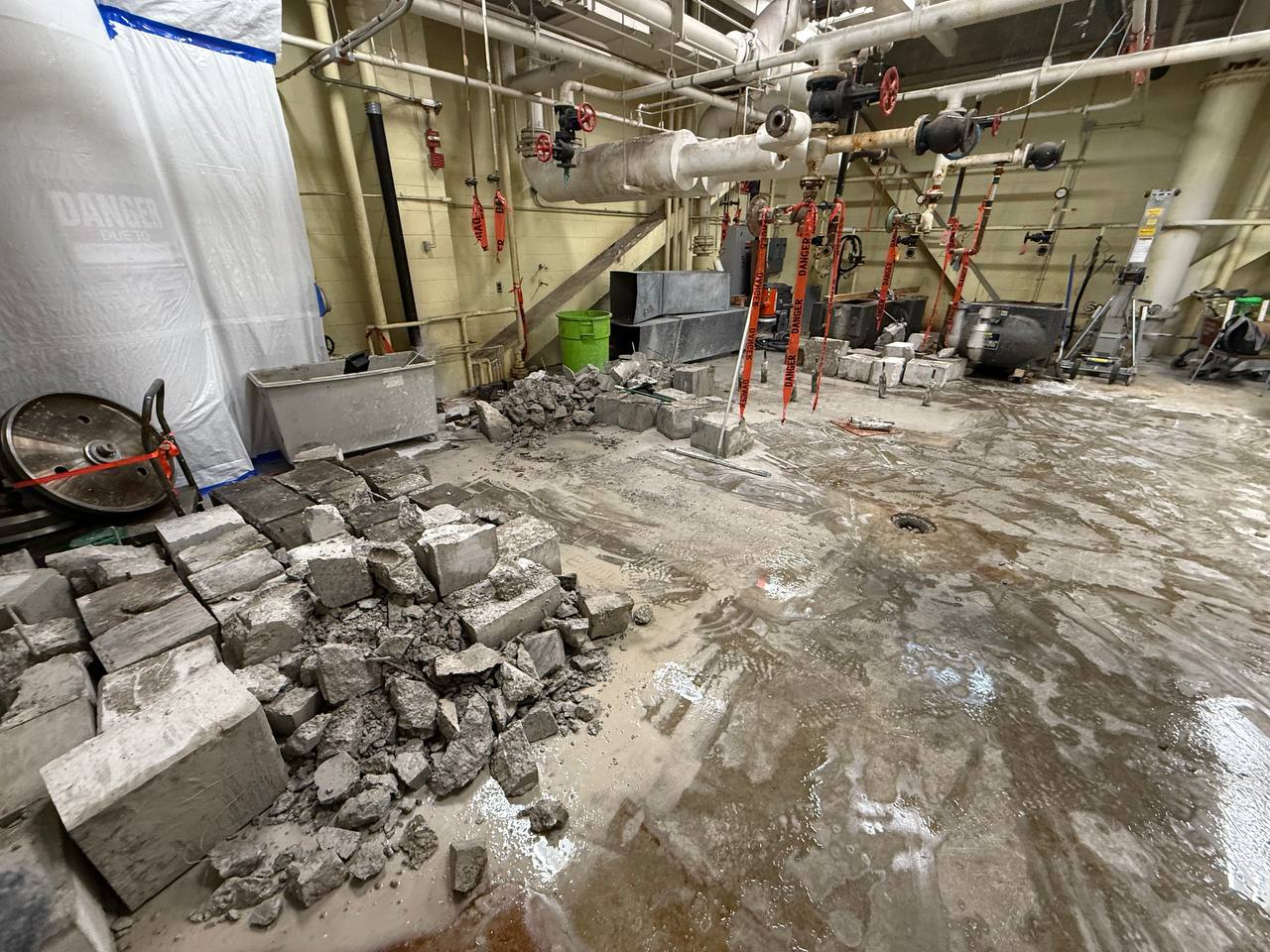
We cut both pads into manageable pieces for hand removal:
- Pad footprint: approximately 2 m × 4 m (≈ 6 ft 7 in × 13 ft 1 in)
- Pieces targeted: 30–40 kg per piece for safe two-person handling
- Output: ~50 pieces from one pad, and ~60 pieces from the second pad (~110 total)
In a live facility, this segmentation is what keeps the workflow stable: predictable piece weights, predictable handling, and no uncontrolled breakage.
Preserving embedded steel pins
During removal, we encountered protruding steel pins/elements. The client requested these be preserved, so we did not flush-cut them to slab level. This is a common “live facility” requirement: not everything is removed just because it’s removable—scope and operational needs dictate the finish.
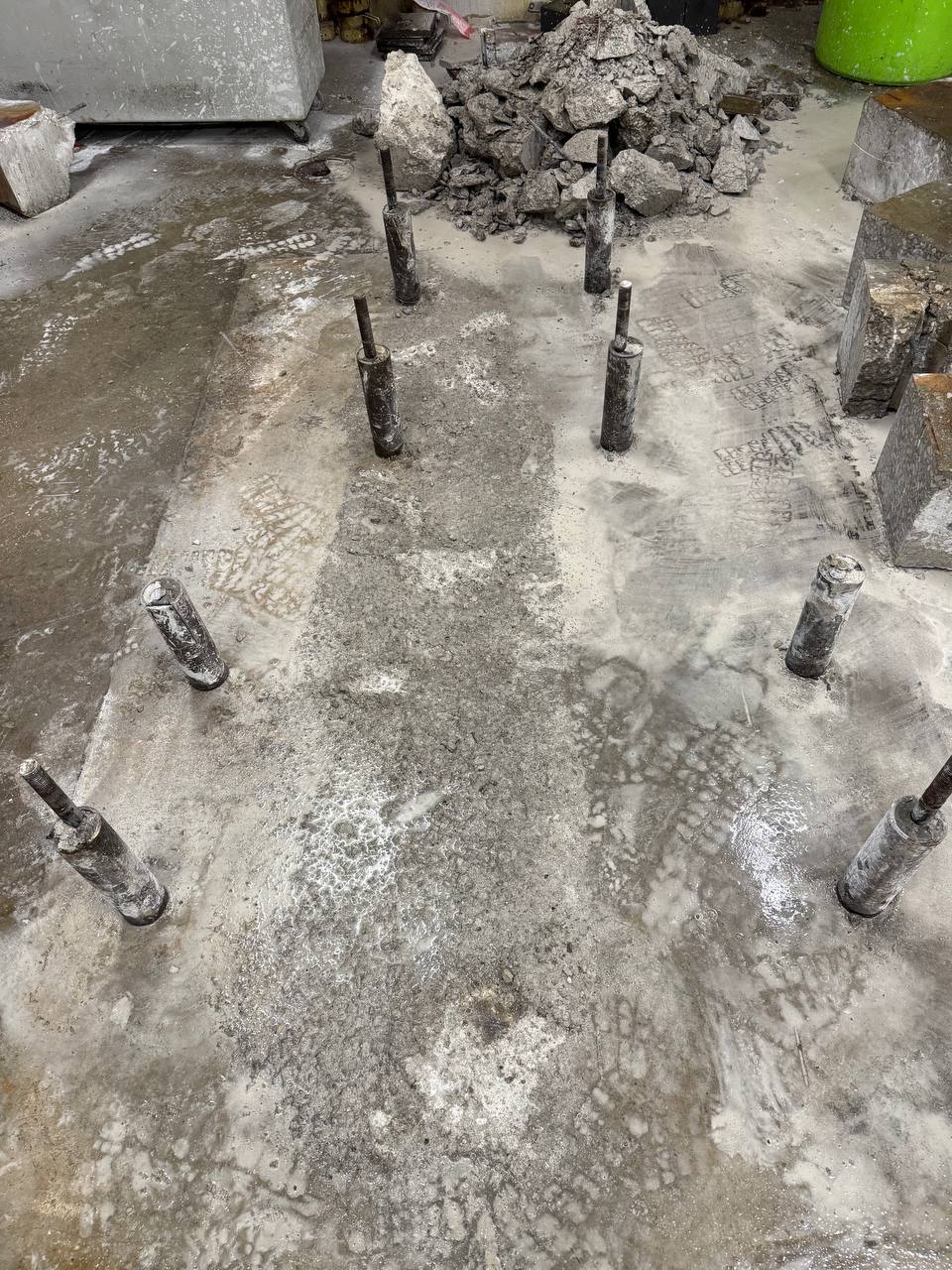
“Embedded steel pins preserved per client request—scope-driven finish in a live facility.”
Time on hydraulic blade cutting
This work was completed in a separate day-shift visit, with approximately 8 hours spent on the hydraulic blade cutting work (excluding access/security and initial staging).
Safety & Control: What Made This Work Inside an Airport
This scope succeeded because we executed around constraints—not against them:
- Mandatory GPR scanning before any drilling or cutting
- Wet cutting to control dust and maintain predictable cutting performance
- Water management to an approved floor drain (with backup extraction equipment on standby)
- Floor protection to prevent wire-related contact damage
- Disciplined sequencing to keep the room functional and the work contained
- On-site coordination with the client’s technical team (including their certified lifting frame)
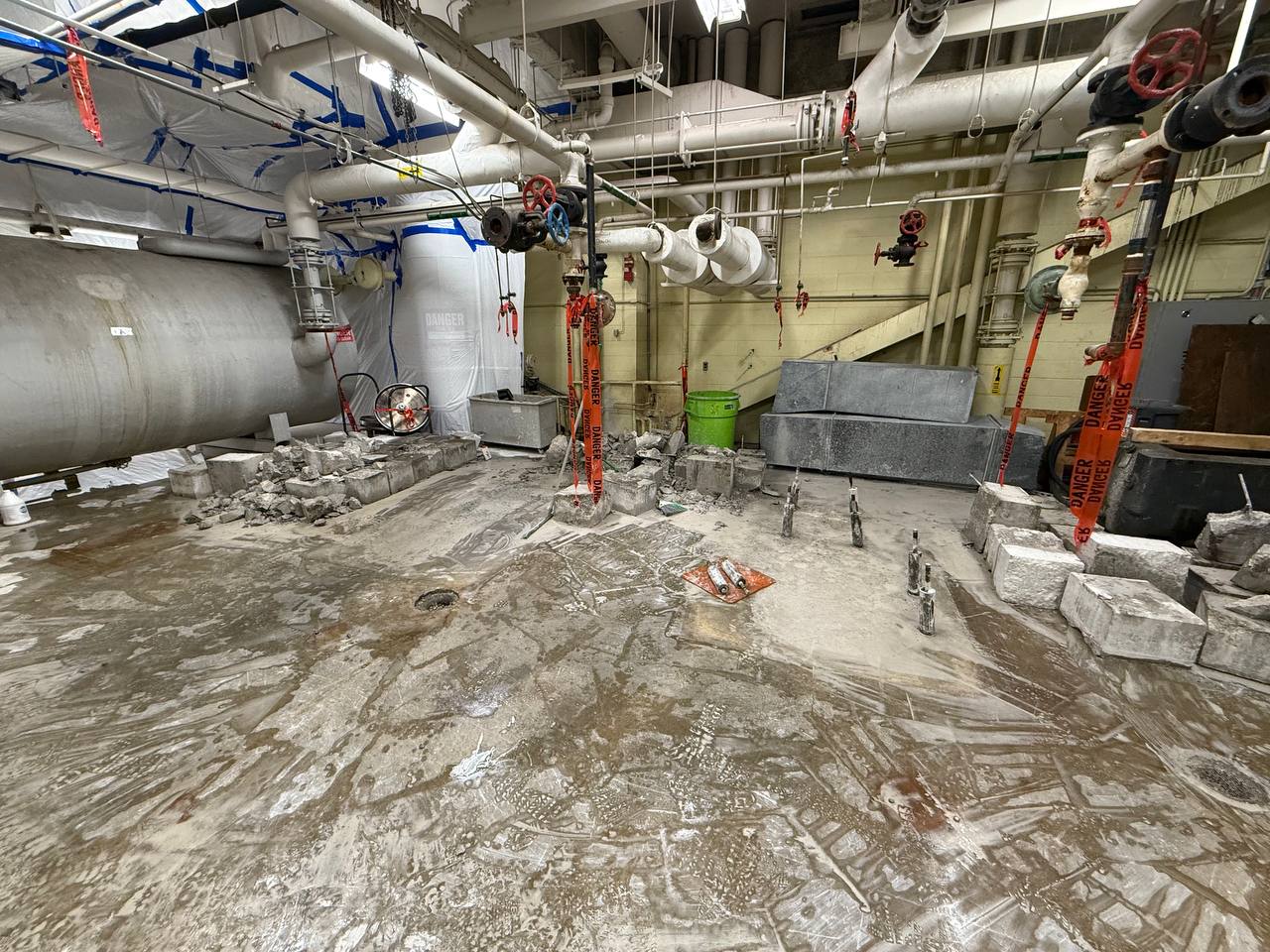
No jackhammers. No impact demolition. No “guessing.” The methods matched the environment.
Results
- Five foundations segmented and removed for reconstruction readiness
- 3 heavy foundations: 12 blocks total (4 per foundation)
- 2 low pads: ~110 hand-removal pieces total (≈50 + ≈60)
- 173 linear feet (52.7 m) of diamond wire cutting completed on the heavy scope
- Work completed across 3 day-shift visits with scanning, controlled cutting, and predictable logistics—without disrupting the mechanical room’s broader operational requirements.
What This Project Shows About Concrete Cutting
“Concrete cutting” is not one method—it’s a method selection problem.
- Diamond wire sawing wins when thickness + heavy reinforcement + steel encasement + vibration sensitivity collide.
- Hydraulic blade cutting wins when thickness is within tool capacity and the footprint is best handled by grid segmentation.
- GPR scanning is what keeps both methods safe in critical infrastructure—because the fastest cut is the one you don’t have to redo after a strike or shutdown.
That is the difference between “a crew with saws” and a contractor who can execute inside live, high-control facilities.
Need Concrete Cutting in a Sensitive Facility?
If your scope is inside an active facility (airport, plant, transit, data centre, or live commercial space), send drawings/photos and constraints. We’ll scan where required, select the correct method, and execute a cut plan built for control.