
Drilling Into Concrete Case Study — Municipal Site (Winter, 1 Day)
Location: Ontario (municipal facility, “Building 600”)
Area: Halton Region, ON (can be kept as Ontario/GTA if you prefer)
Client: municipal / GC team
Services: GPR scanning + diamond core drilling + cleanup
Crew: 2 people
Schedule: day shift (winter conditions)
Scope: 8 core holes (plumbing / sewer line penetrations)
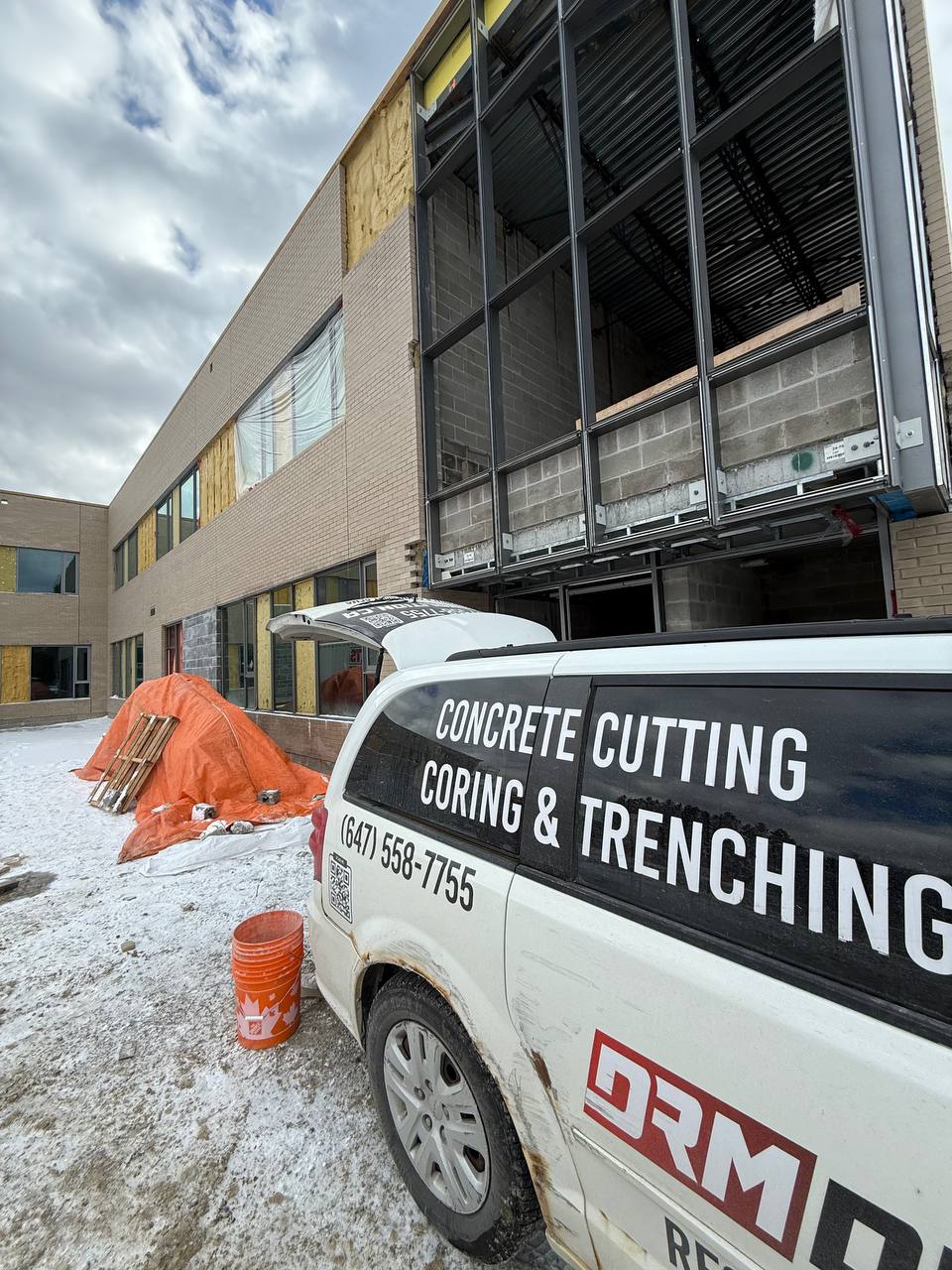
Project overview
This was a winter drilling into concrete scope at a municipal building under construction. The goal was to create plumbing penetrations for a sewer line while protecting existing piping already installed in the area.
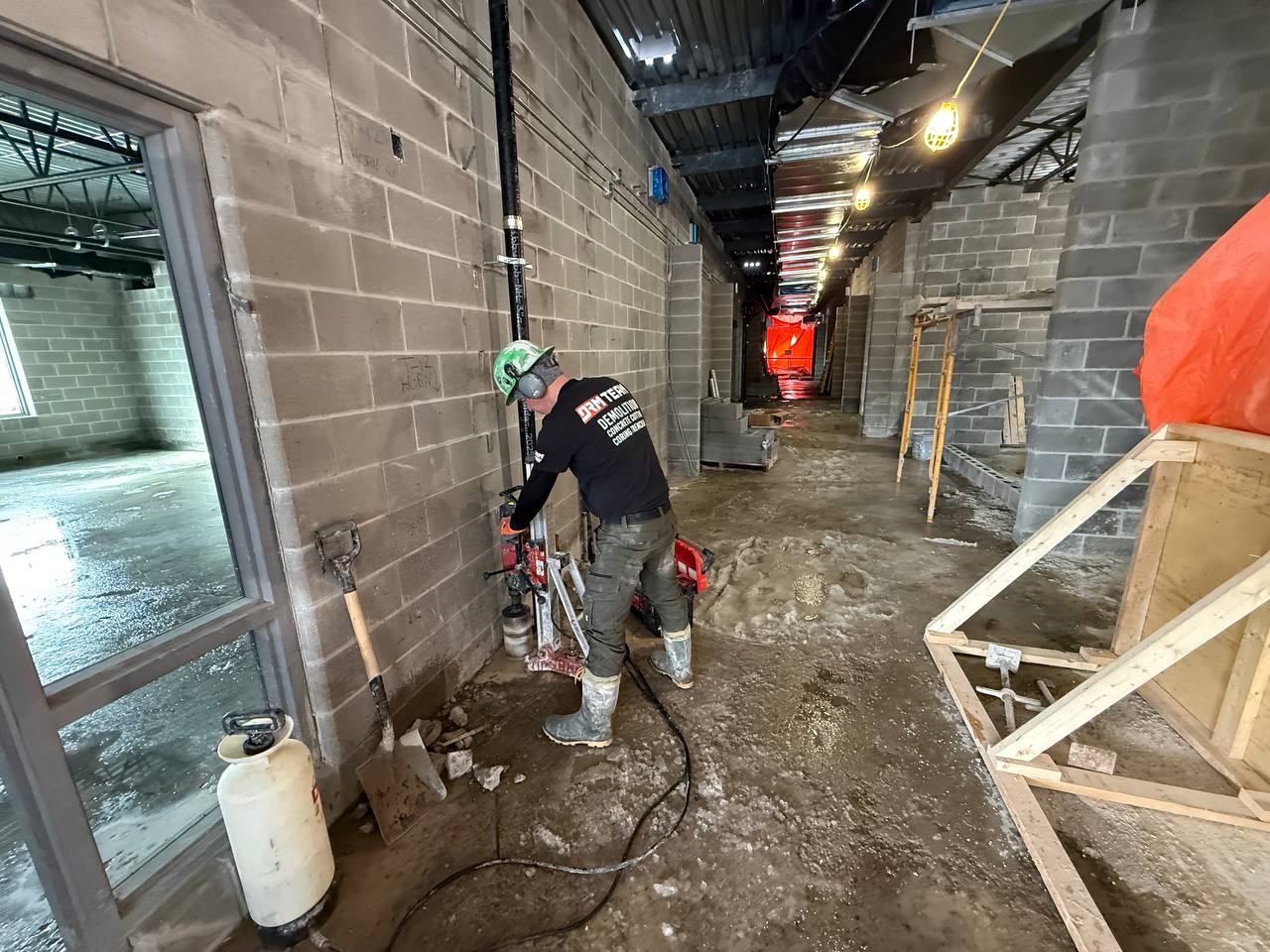
The photos show a typical “live build” condition: CMU corridors, overhead services, tight working zones inside framed areas, and limited room to set up the coring rig. That’s where scanning, positioning, and cleanup discipline matter.
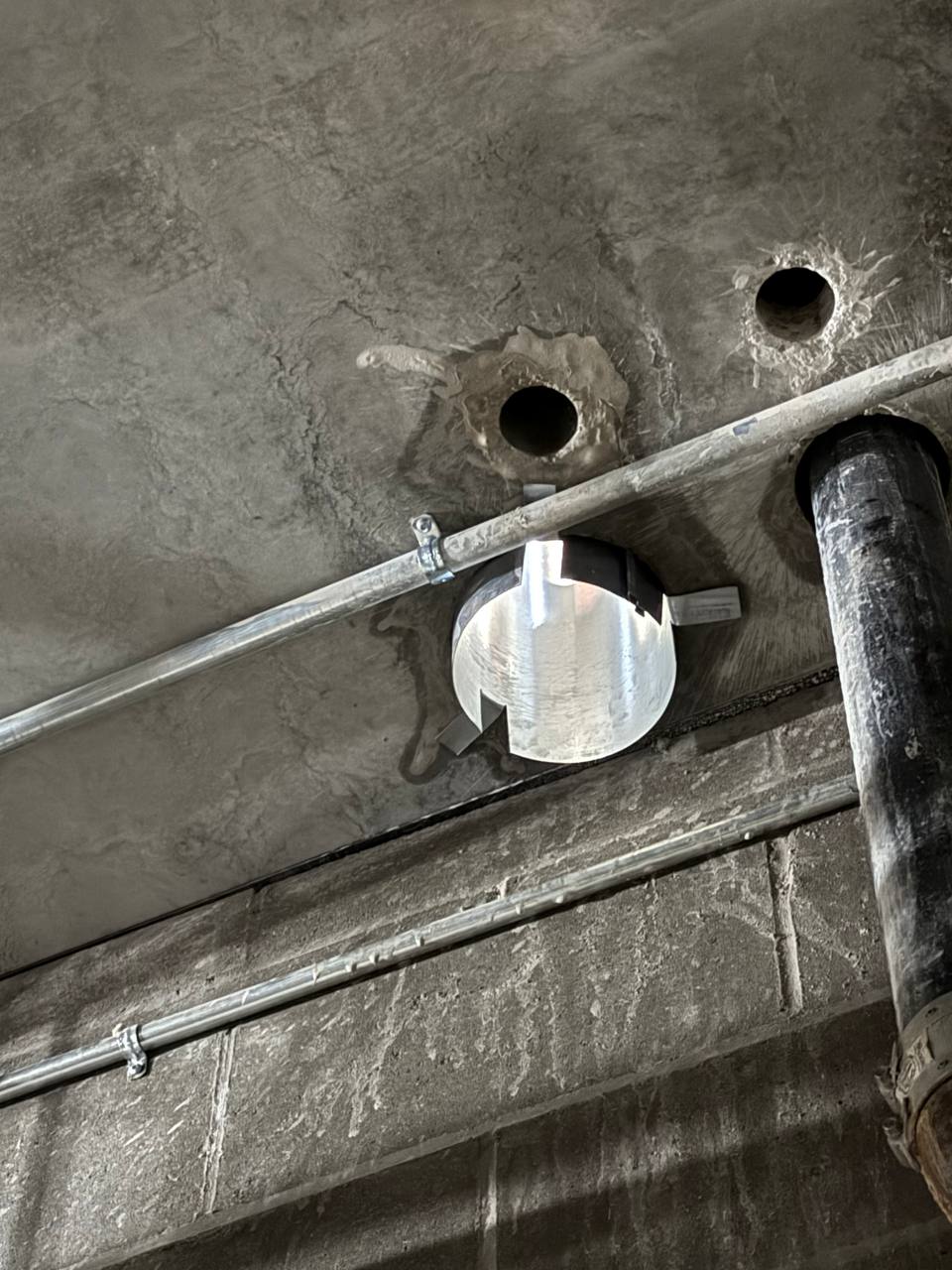
What the photos show (details you didn’t say, but they matter)
- Active new-build municipal site in winter (snow on site, exterior staging, unfinished envelope).
- Coring performed in a service corridor / mechanical-side environment with CMU walls and overhead pipe runs.
- Tight drilling positions near existing pipes and close to wall framing lines.
- Pressurized water canister used for wet coring (common when site water is limited or winter logistics are messy).
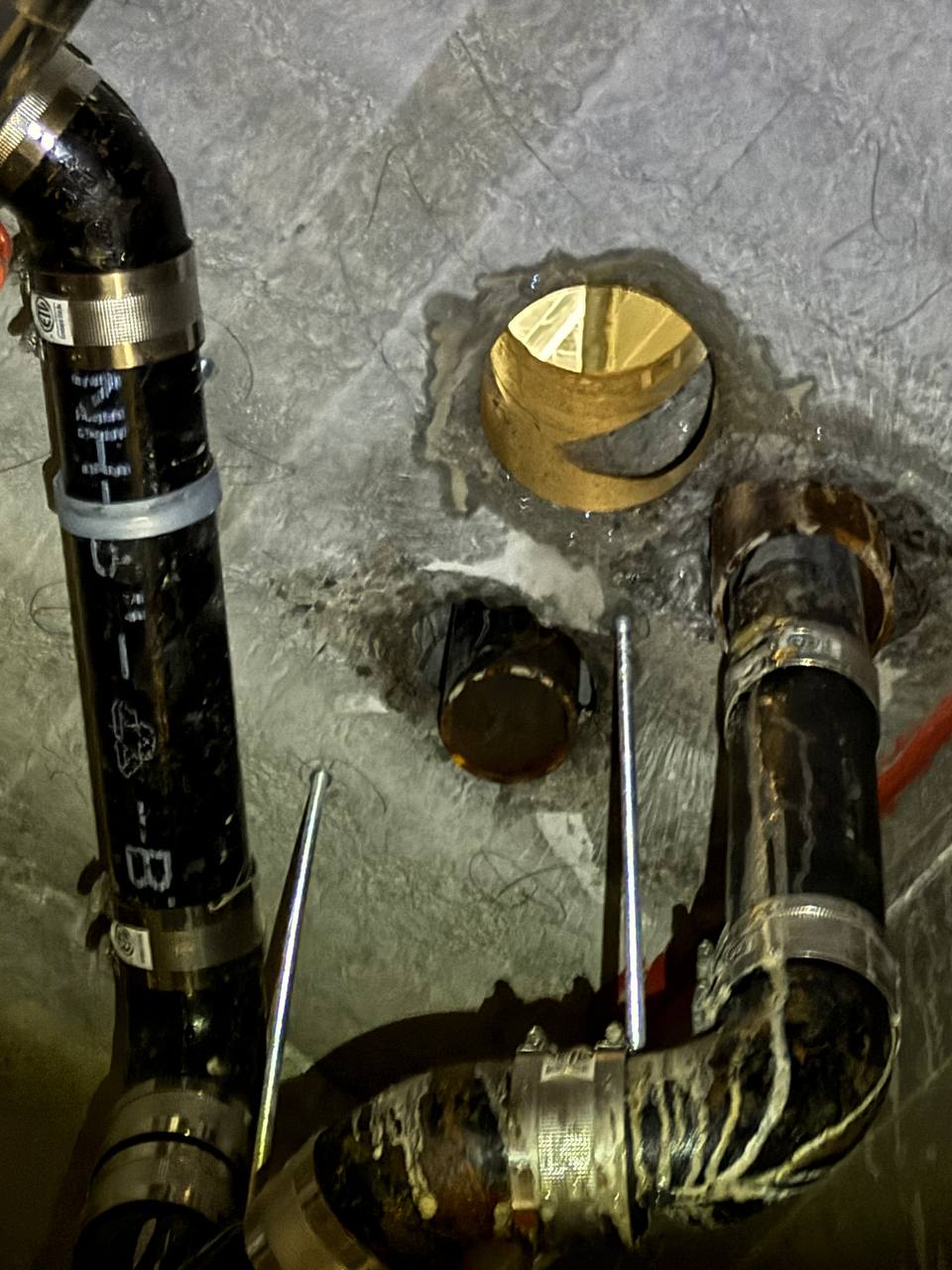
- Finished penetrations visible from below near existing plumbing, confirming why “no blind drilling” was the right approach.
The challenges
Existing pipes and services nearby: penetrations had to be accurate so nothing got clipped or cracked.
Core control: cores had to be managed so they didn’t drop onto piping or finished runs below.
Winter conditions: cold, wet surfaces, and faster slurry build-up on the floor increase slip risk and cleanup time.
Short, efficient execution: one-day scope with a 2-person crew means the sequence must be simple and repeatable.
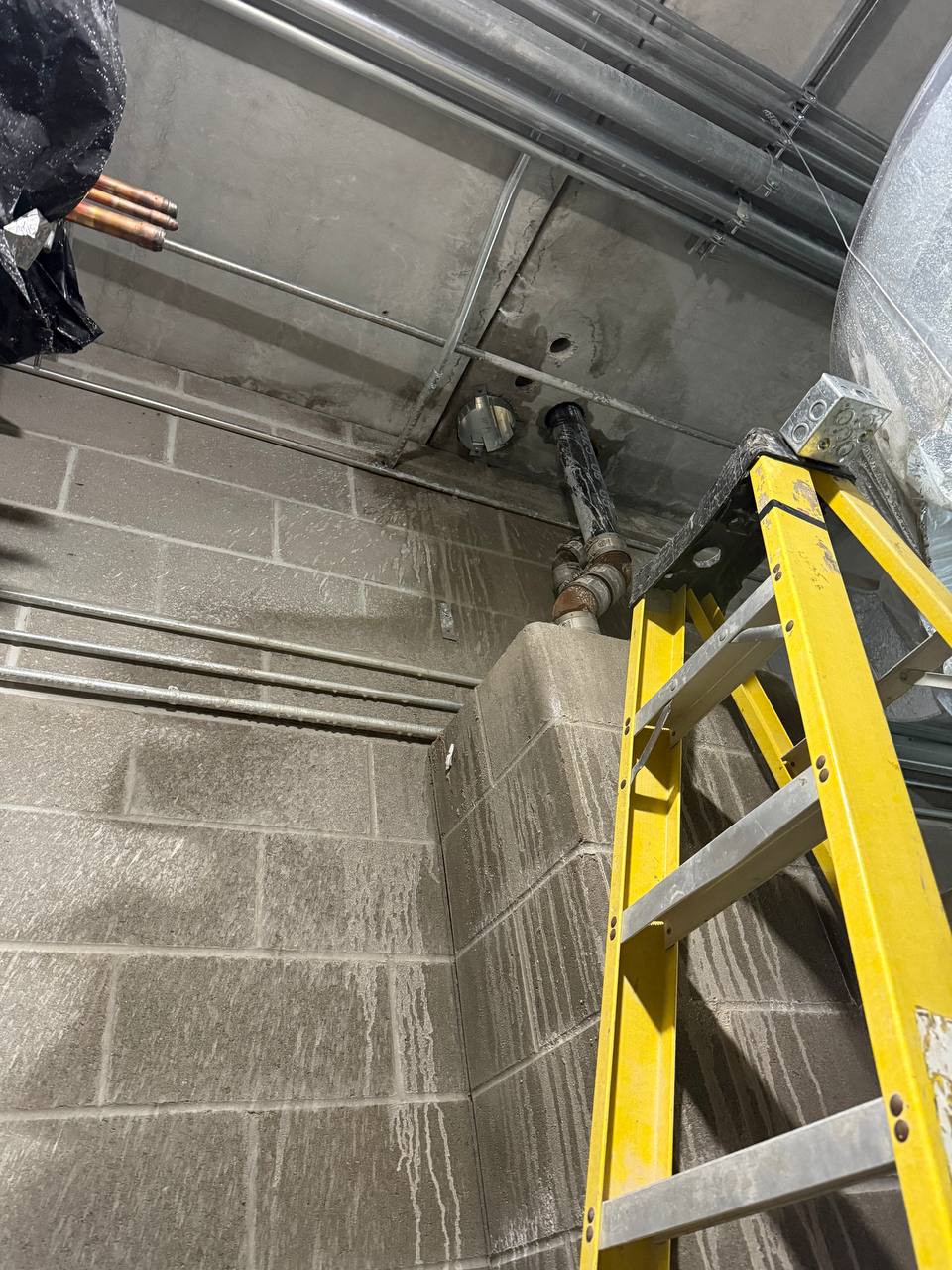
Our work
- Pre-scan (GPR)
We scanned the drilling locations before coring to reduce blind risk and confirm safe drill points around existing services. - Diamond core drilling
We completed 8 plumbing penetrations aligned to the sewer run. The rig was set up in tight corridor conditions, including wall drilling positions. - Water and slurry control + cleanup
Wet coring was controlled with a managed water feed and cleanup to keep the corridor safe and ready for the next trade.
Result
All penetrations were completed in a single day, with scanning done first, drilling executed cleanly, and the area left controlled for follow-on plumbing work. No damage to nearby piping, and a clean handoff to the client.
Drilling Into Concrete FAQ
Short answers about winter coring, scanning, working around existing pipes, and water/slurry control on active construction sites.