
Coring Concrete in Scarborough, ON
Project at a glance
Location: Scarborough, Ontario
Site: commercial unit above parking garage
Service: coring concrete / diamond core drilling
Scope: 4-inch slab penetration for new pipe routing
Structure: suspended slab between commercial unit and parking garage
Slab thickness: over 20 inches
Method: two-side GPR scanning + wet coring + core catch below
Access condition: active parking garage below
Project overview
This coring concrete project was completed inside a commercial unit in Scarborough. The work area was located above an active parking garage, and the new opening was required for pipe routing through the suspended slab.
The slab thickness was over 20 inches, which made standard one-side scanning less reliable. To reduce blind risk, we scanned the area from both sides: from the commercial unit above and from the parking garage below.
The final opening was cored through the slab for a standard pipe penetration, with protection below for vehicles, existing services, and the active parking area.
Why this job needed extra control
On simple coring jobs, the main question is usually hole size and slab thickness. Here, the bigger issue was what was inside and below the concrete.
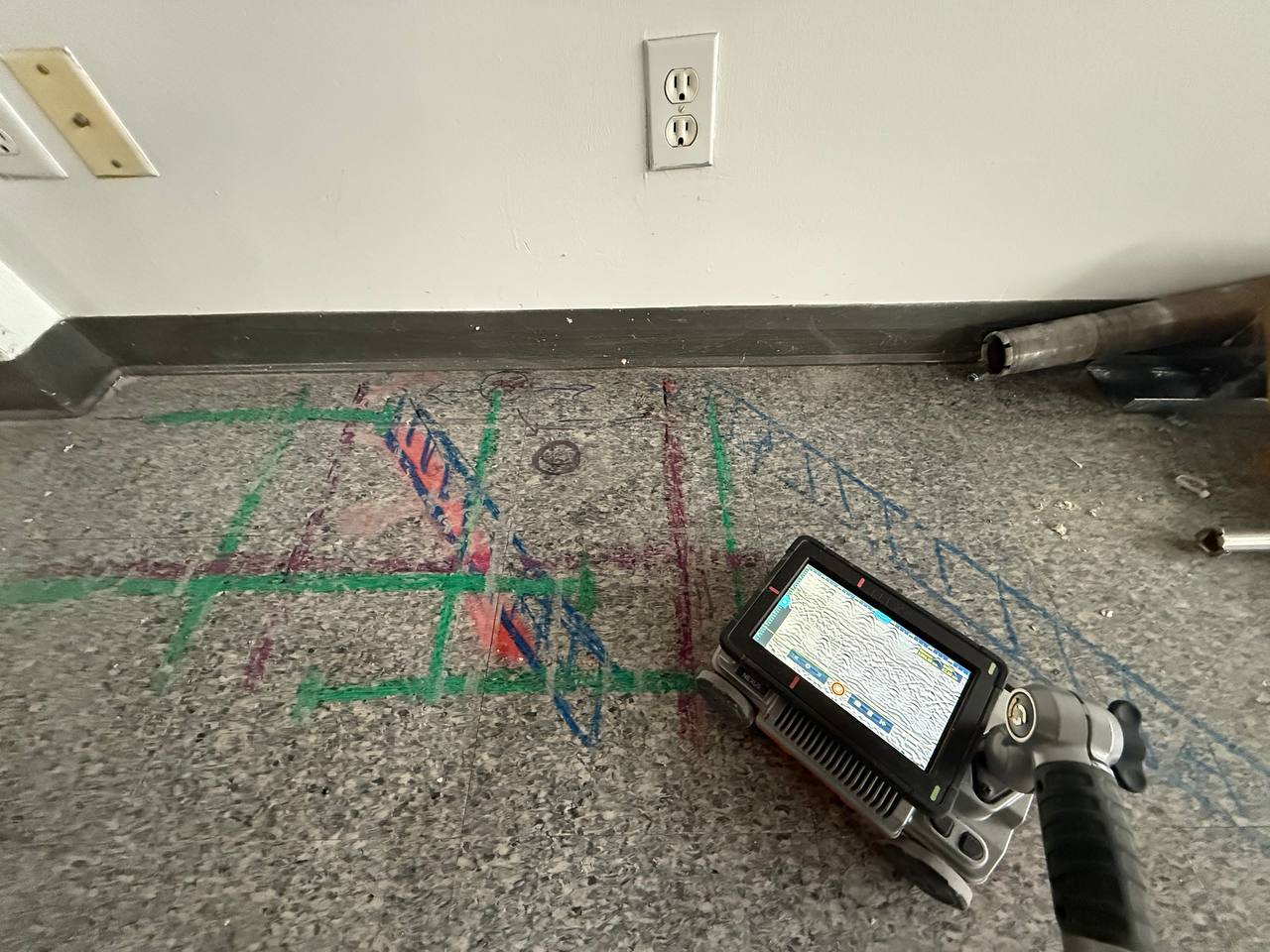
The GPR scan showed multiple risk zones: upper reinforcement, lower reinforcement, and an electrical cable route. The parking level below also had parked vehicles and existing overhead services close to the drop zone.
That meant the job could not be treated as a blind drill. The scan, layout, drilling position, core catch, and water control all had to work together.
What the photos show
The photos show the real site conditions clearly:
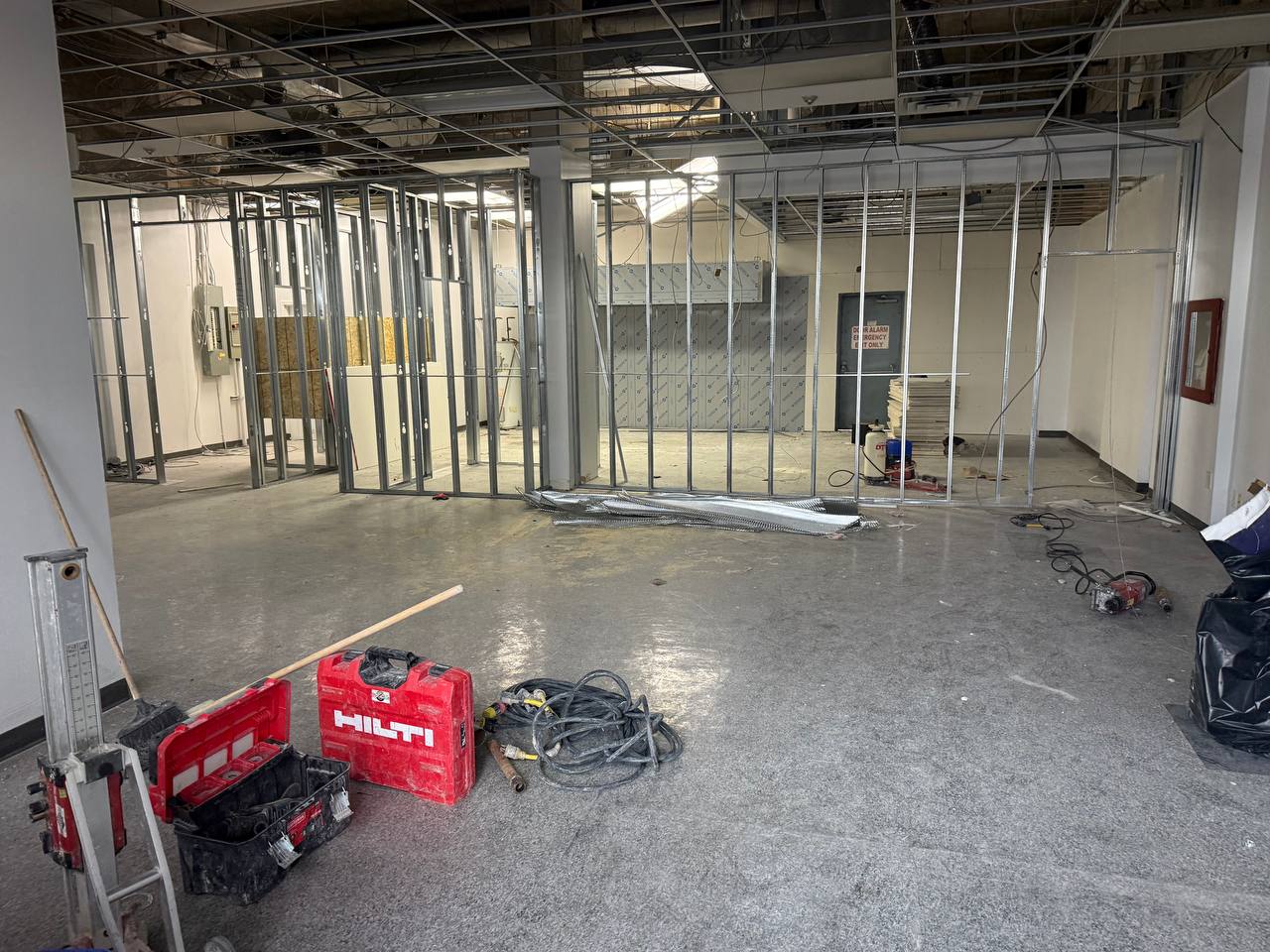
- commercial tenant build-out with metal stud framing already installed
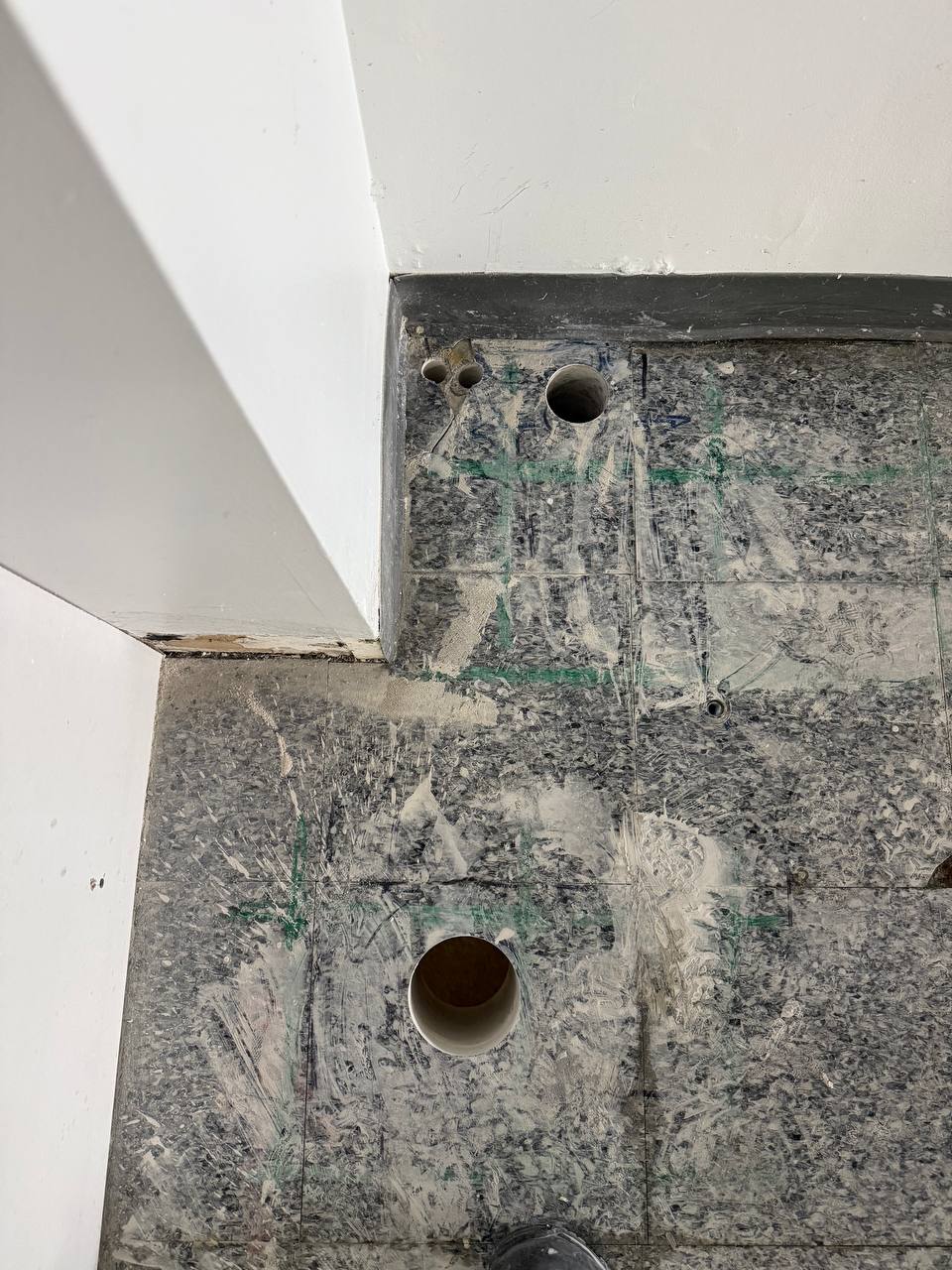
- drilled opening positioned close to wall layout and pipe routing marks
- marked GPR scan results on the slab surface
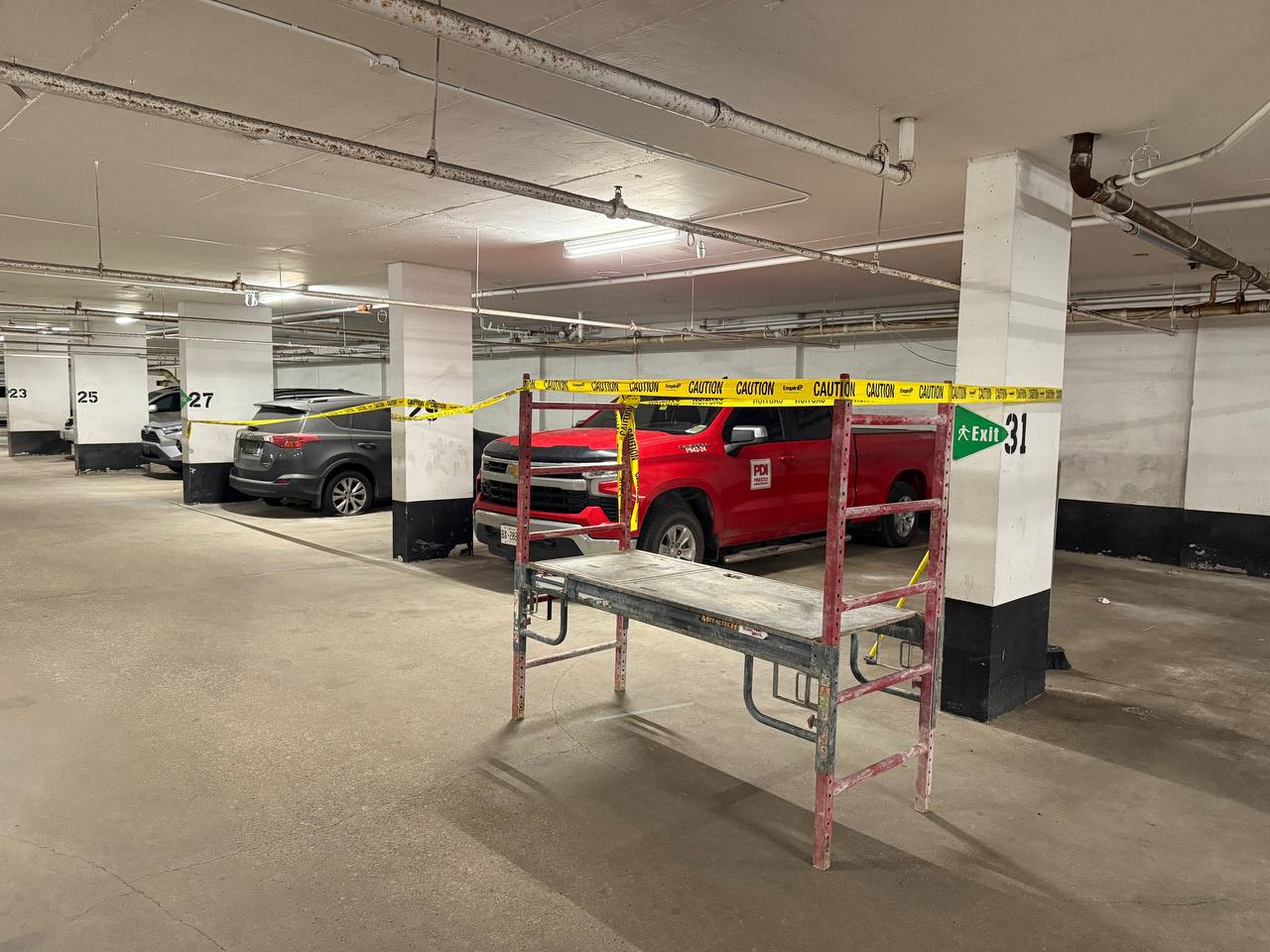
- parking garage below with vehicles still in the area
- caution tape used to isolate the work zone below
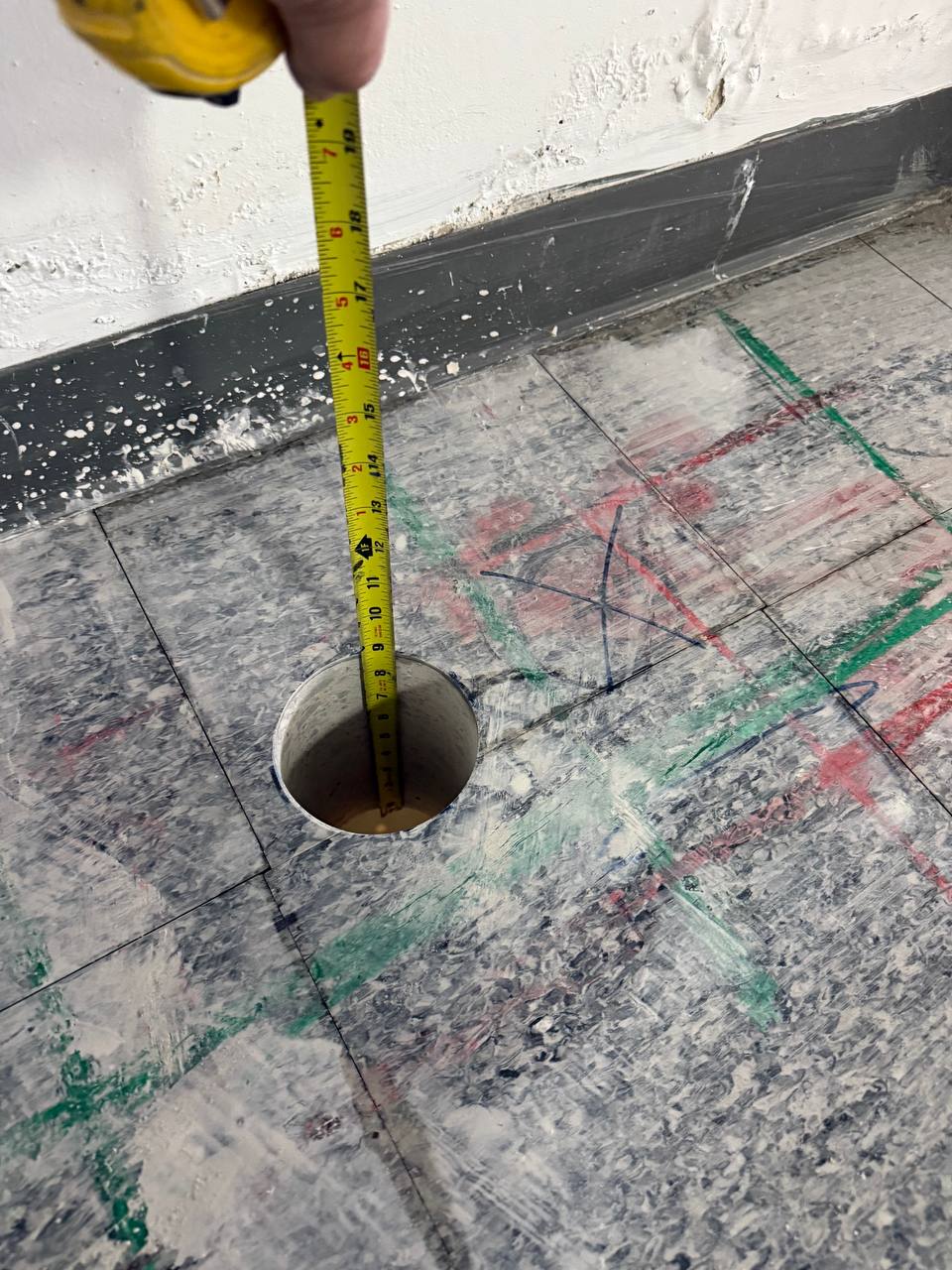
- suspended slab thickness checked at the completed opening
- GPR scanner used at the floor level to verify embedded risks
- existing pipes and garage services below the work area
These details matter because they show why scanning and protection were part of the job, not optional extras.
The challenges
Thick suspended slab
The slab was over 20 inches thick. This required a stable drilling setup and careful scanning from both sides.
Embedded risk inside the slab
The scan identified upper reinforcement, lower reinforcement, and an electrical cable route. The drilling location had to be confirmed before coring.
Active parking garage below
Cars were parked below the work area. The team isolated the area with caution tape and controlled the drop zone.
Core catch required
The concrete core had to be controlled so it would not fall into the garage area or damage vehicles, pipes, or existing services.
Water control
Wet coring was used, so water and slurry had to be managed during the drilling process.
Our work
1. Two-side GPR scanning
We scanned the slab from the top side inside the commercial unit and from the underside in the parking garage. This helped confirm reinforcement layers and identify the electrical cable route.
2. Layout confirmation
The drilling point was checked against the client’s pipe layout and the scan markings before coring started.
3. Parking protection below
The drop zone in the garage was isolated with caution tape to keep vehicles, people, and existing services away from the drilling area.
4. Diamond core drilling
We completed the 4-inch slab penetration through the 20+ inch suspended concrete floor.
5. Core catch and cleanup
The core was controlled from below, and the water from wet coring was managed for a clean handoff.
Result
The opening was completed safely through the thick suspended slab. The drilling location was verified from both sides, the embedded cable risk was avoided, and the parking area below was protected during the work.
The client received a clean pipe penetration ready for the next trade.
Why this matters for commercial coring concrete work
Coring concrete in commercial buildings is not just about making a hole. When the work is above parking, tenants, equipment, or active building services, the planning matters as much as the drilling.
Before coring, the key questions are:
- How thick is the slab?
- What is inside the concrete?
- Is there electrical conduit or cable in the drilling zone?
- What is below the slab?
- Can the core be caught safely?
- Does the area below need to be closed or protected?
This job is a good example of why scan-first coring helps reduce risk on commercial projects.
Coring Concrete FAQ
Short answers about thick slab coring, two-side GPR scanning, electrical cable risk, parking protection, and core catch.