
Coring Company Case Study — Scarborough, ON
Project at a glance
Location: Scarborough, Ontario
Site type: commercial / residential building with parking garage below
Service: GPR scanning + diamond core drilling + cleanup
Scope: 20 slab penetrations for new heating and water supply lines
Structure: suspended concrete slab between the first floor and parking garage
Thickness: approximately 25 inches
Crew: 2 people
Schedule: 1 day
Method: wet coring with water collection and core catch below
Project overview
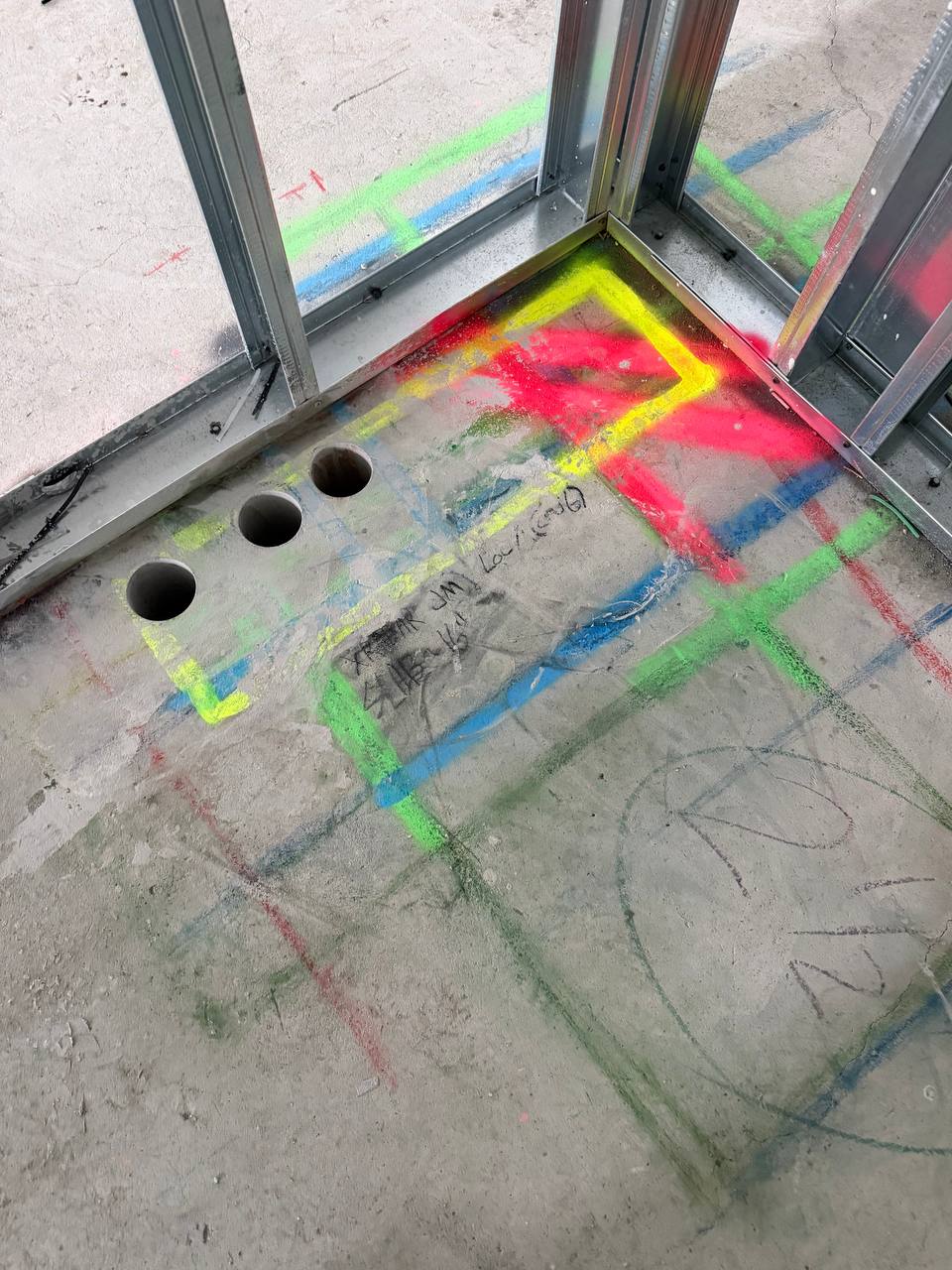
This coring company project in Scarborough involved drilling 20 penetrations through a thick suspended concrete slab between the first floor and the parking garage below. The openings were needed for new heating and domestic water supply lines.
The main difficulty was not the drilling itself — it was what was happening below. Existing pipes were already installed in the garage ceiling area, and vehicles were parked in the work zone. That meant every opening had to be scanned, drilled, and controlled with no blind risk and no dropped cores.
What the photos show
The photo set shows a few important details that define this job:
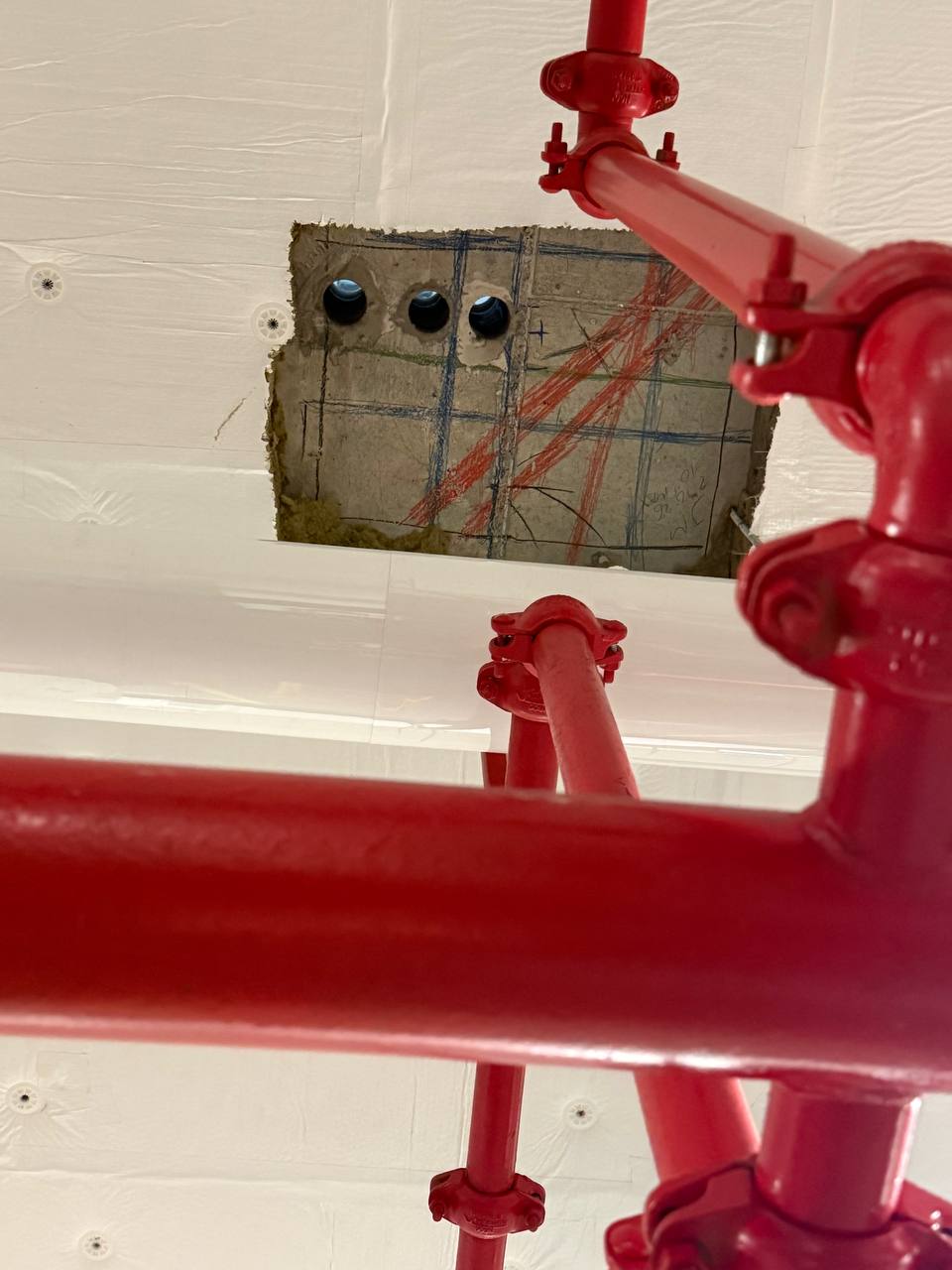
- grouped penetrations laid out along new service routes
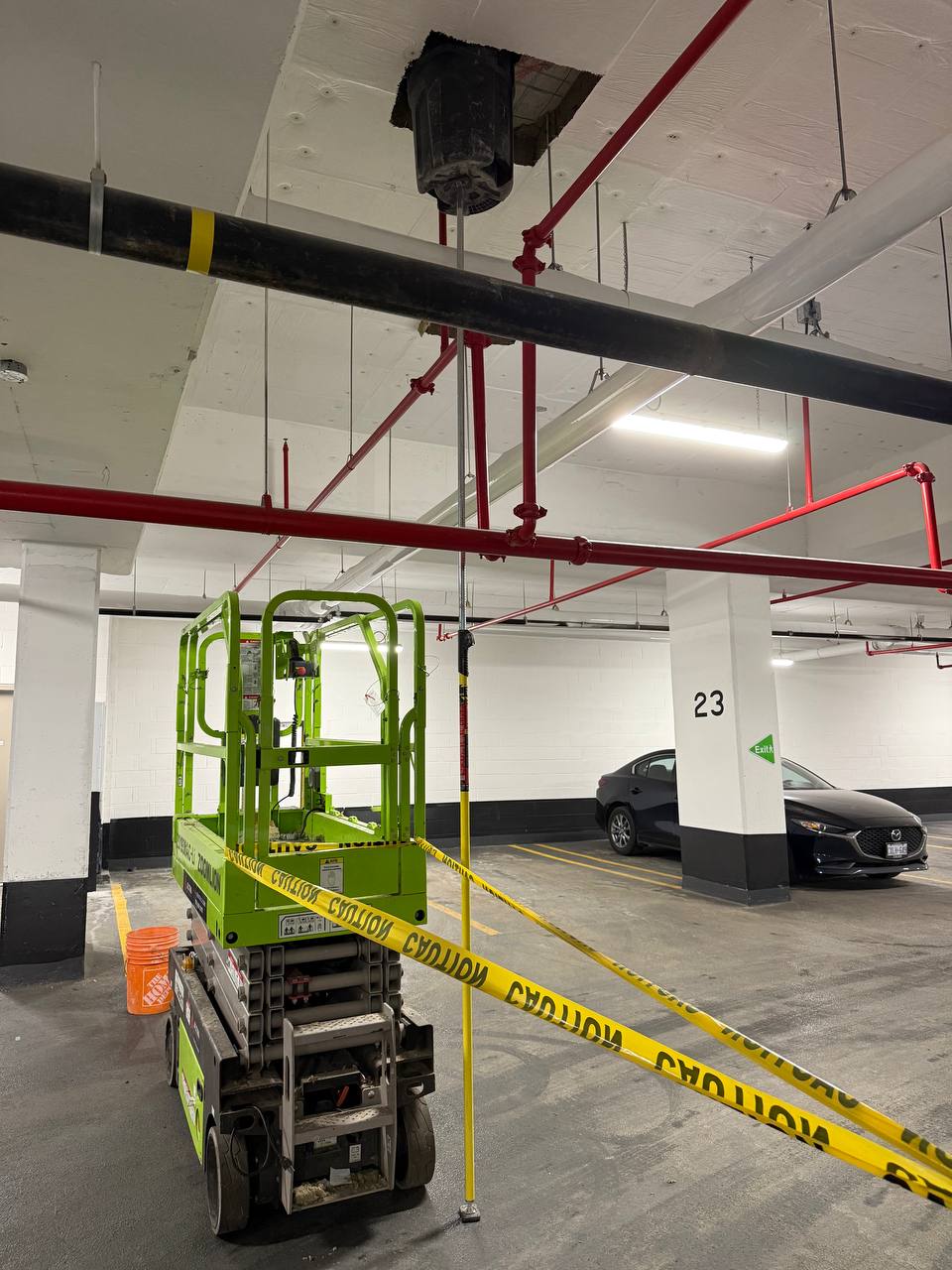
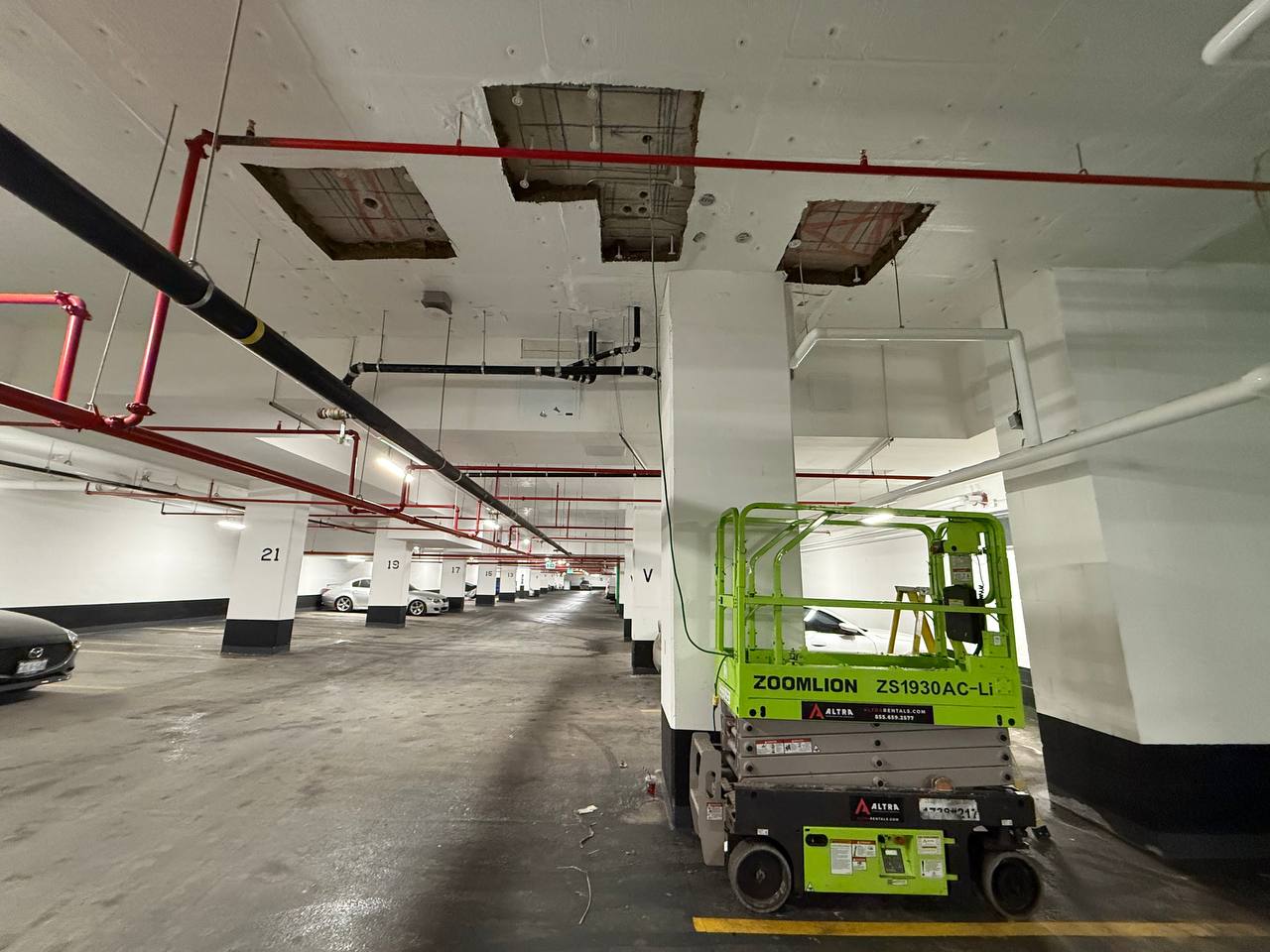
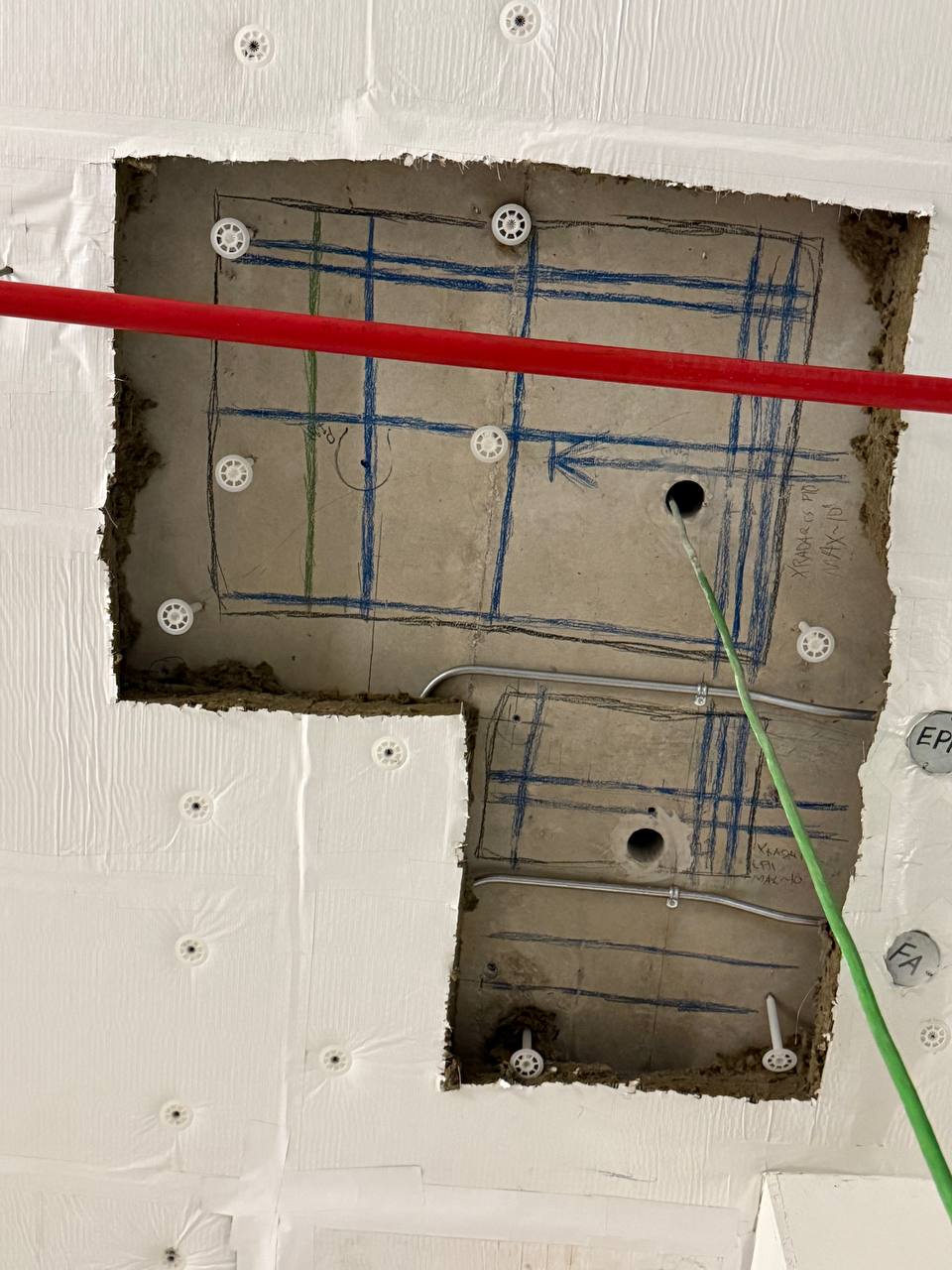
- exposed ceiling pockets below for verification and core reception
- a scissor lift used in the parking garage to access the underside safely
- caution-taped protection zones around parked vehicles
- active sprinkler and service lines below the slab
- tight coordination between drilling above and core catching below
This is exactly the kind of work where precision matters more than speed.
The challenges
Thick slab
At approximately 25 inches thick, this was not a light coring scope. Every penetration required a stable setup and consistent drilling.
Existing pipes below
There were already installed pipes in the parking garage ceiling zone, so the drill points had to be positioned carefully to avoid damage.
Parked vehicles below
Because the garage remained in use, the work area had to be isolated and the cores had to be caught safely without debris dropping into the open parking area.
Water and slurry control
All drilling was completed with water feed, so runoff had to be managed and vacuumed up to leave the area controlled and clean.
Our work
- GPR scanning before drilling
We scanned all drilling locations before coring to reduce blind risk and confirm safe positions around embedded items and surrounding services. - Diamond core drilling through the slab
We completed 20 penetrations through the suspended slab for new heating and water supply lines. - Core catch and underside coordination
Because of the existing pipes and vehicles below, we coordinated from both sides and controlled the core drop from the parking garage side. - Water and slurry cleanup
Wet drilling water was collected and vacuumed, and the work area was cleaned before handoff.
The result
All 20 openings were completed in one day by a two-person crew. The slab was scanned first, the cores were controlled from below, and the water was collected with vacuum cleanup. The client received clean, ready-to-use penetrations for the next stage of mechanical installation.
Coring Company FAQ
Short answers about thick slab drilling, GPR scanning, core catch, and wet coring above active parking areas.