
Core Cutting in East York, ON
Project at a glance
Location: East York, Ontario
Site: commercial plaza / fitness club building
Service: core cutting / diamond coring
Scope: 10 slab penetrations
Diameter: 4 inches
Structure: slab between the second floor and first-floor fitness area
Schedule: night shift
Method: wet coring with water collection and controlled core catch below
Project overview
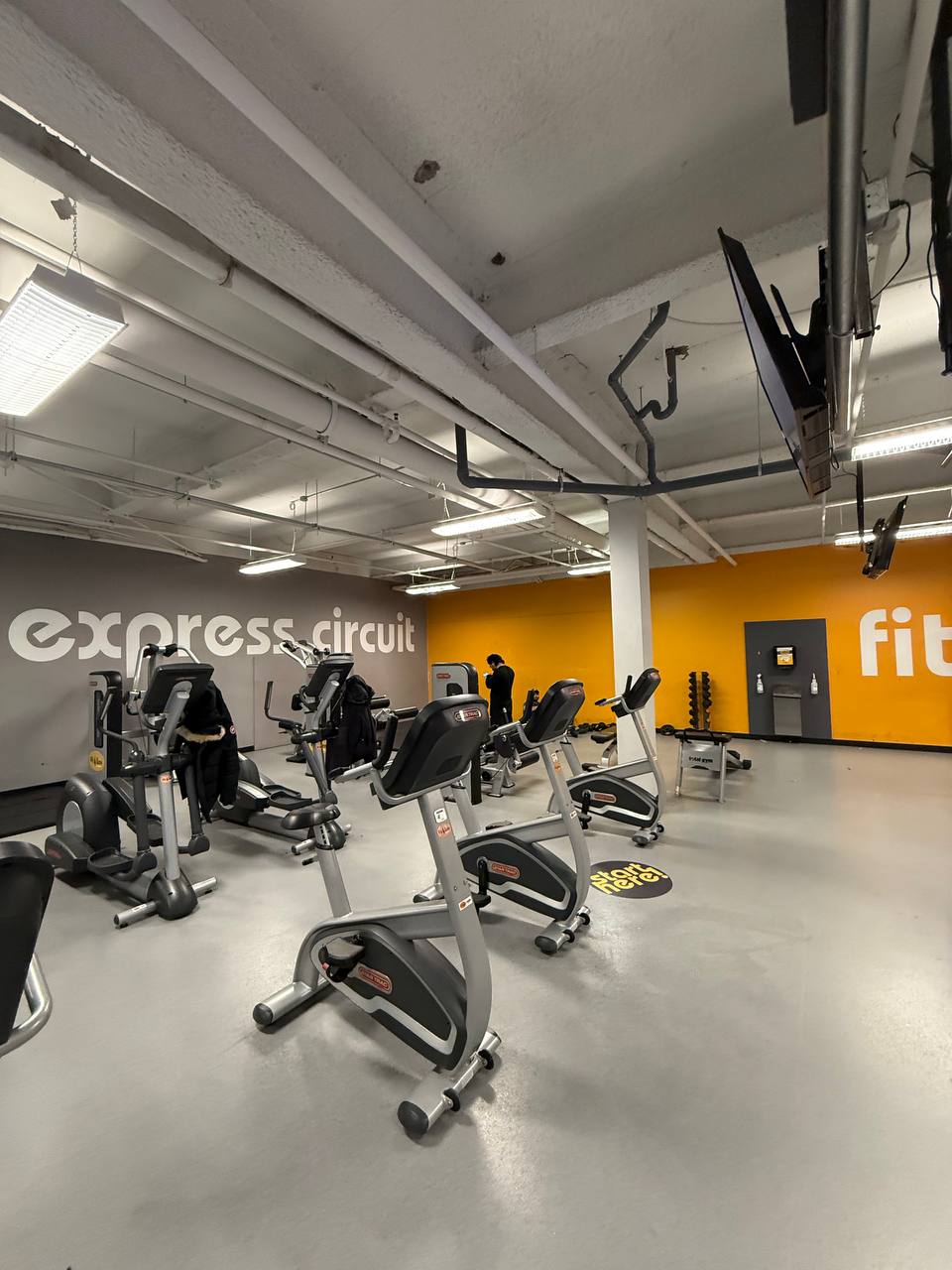
This core cutting project in East York involved drilling 10 slab penetrations through the floor between the second level and an active fitness club below.
The openings were required for new piping runs. On paper, this was a straightforward coring scope: 10 holes, 4 inches each, through a concrete slab. But the space below changed the job.
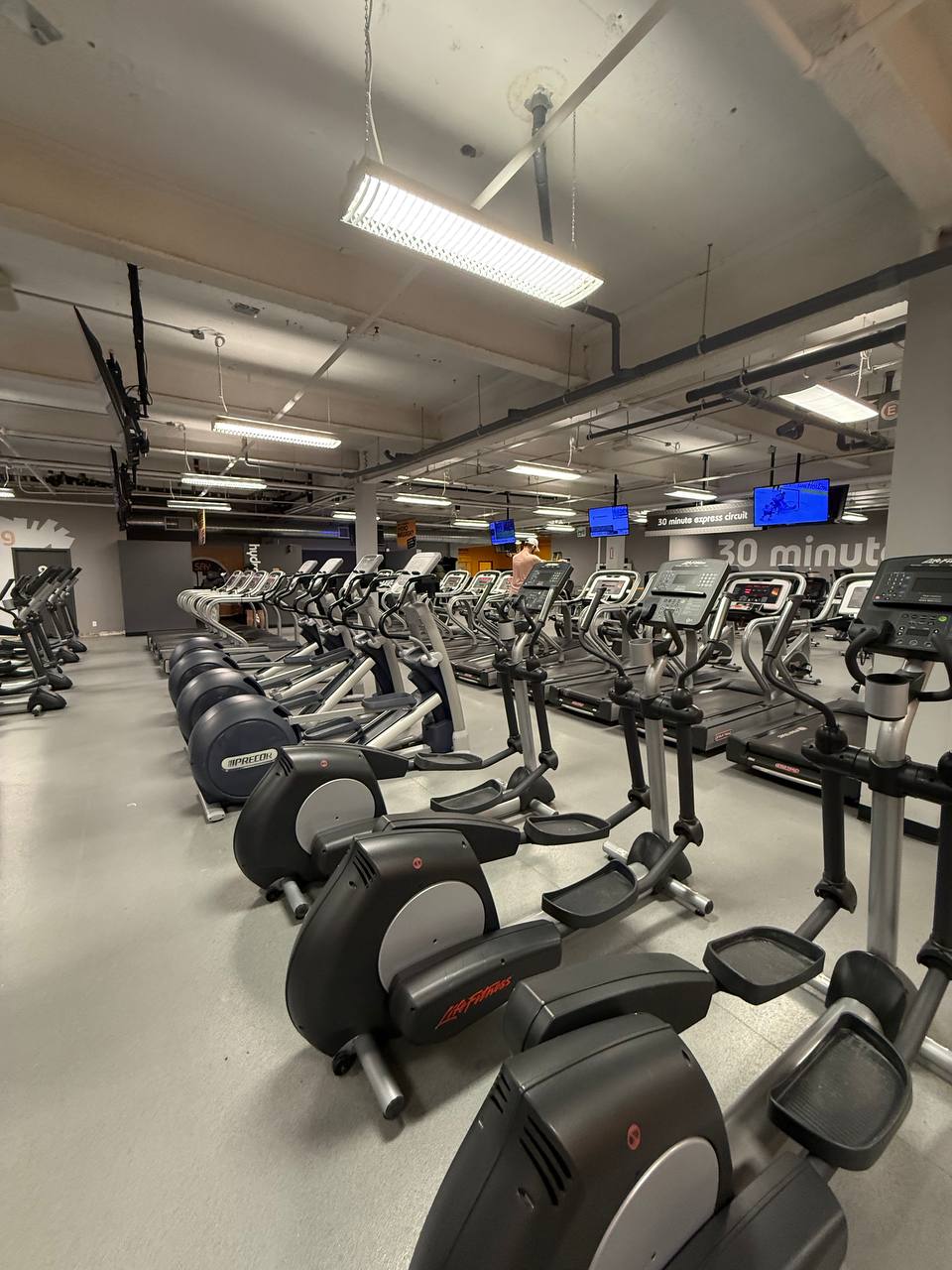
The first floor was an active fitness area with exercise equipment, finished flooring, open ceiling services, and customer access during business hours. That meant the work could not be treated like rough construction. Every core had to be controlled, every water line had to be managed, and the area below had to be protected before drilling started.
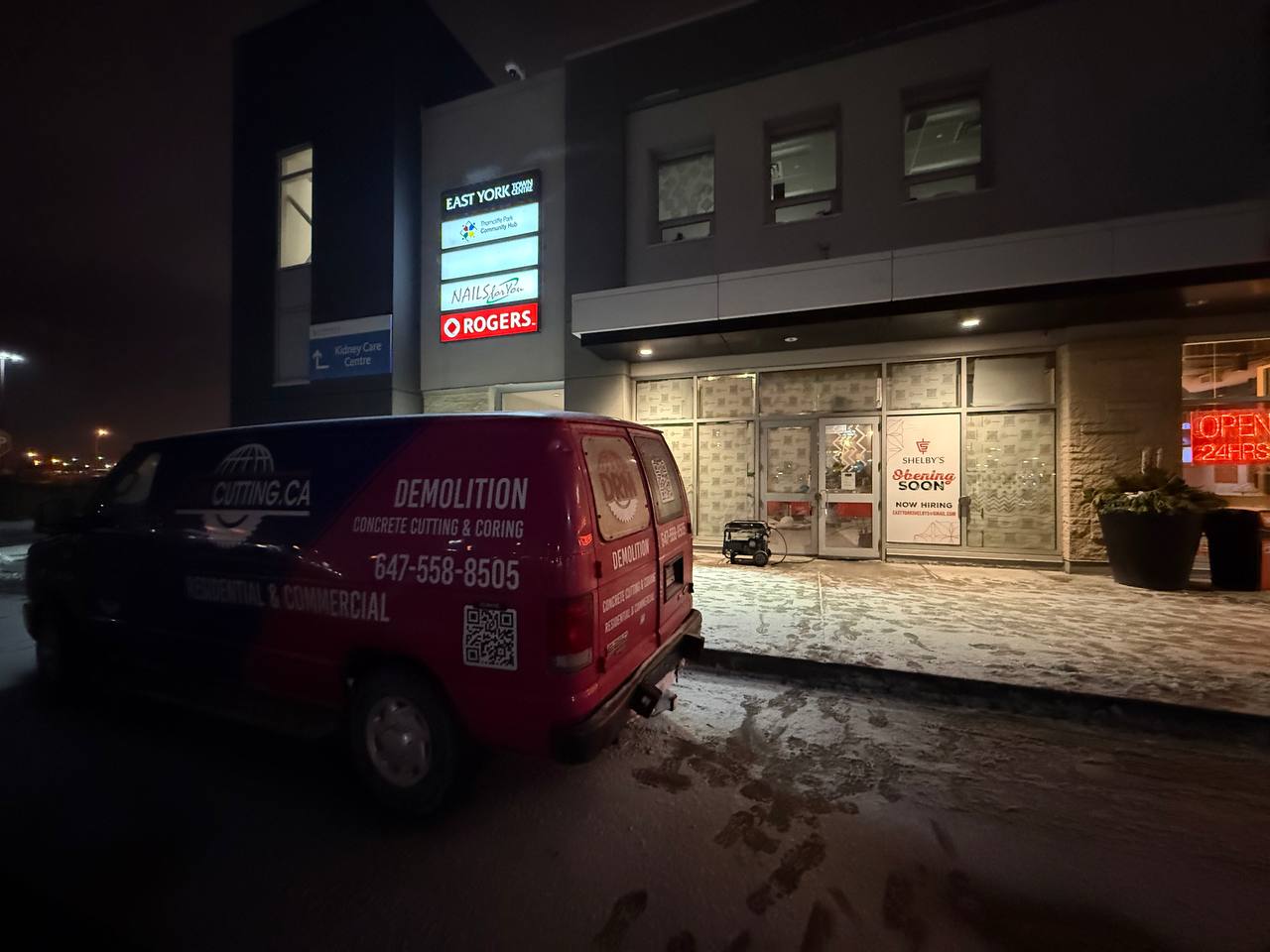
To avoid disrupting the business, the work was completed during a night shift.
What made this job sensitive
The biggest risk was not the concrete. It was the occupied space below.
When core cutting is done above a finished tenant space, the concrete core can drop through when the cut is complete. If that drop is not controlled, it can damage flooring, equipment, ceiling systems, or anything located below the opening.
Wet coring also creates water and slurry. In a raw construction area, that is easier to manage. In a finished fitness club, water has to be collected immediately and kept away from equipment and public areas.
This is why the job required more than just drilling. It required coordination from both sides of the slab.
What the photos show
The photo set shows the real working conditions:
- active fitness club directly below the drilling area
- exercise machines and finished flooring close to the work zone
- open ceiling space with existing mechanical and fire protection lines
- caution tape used to isolate the work area below
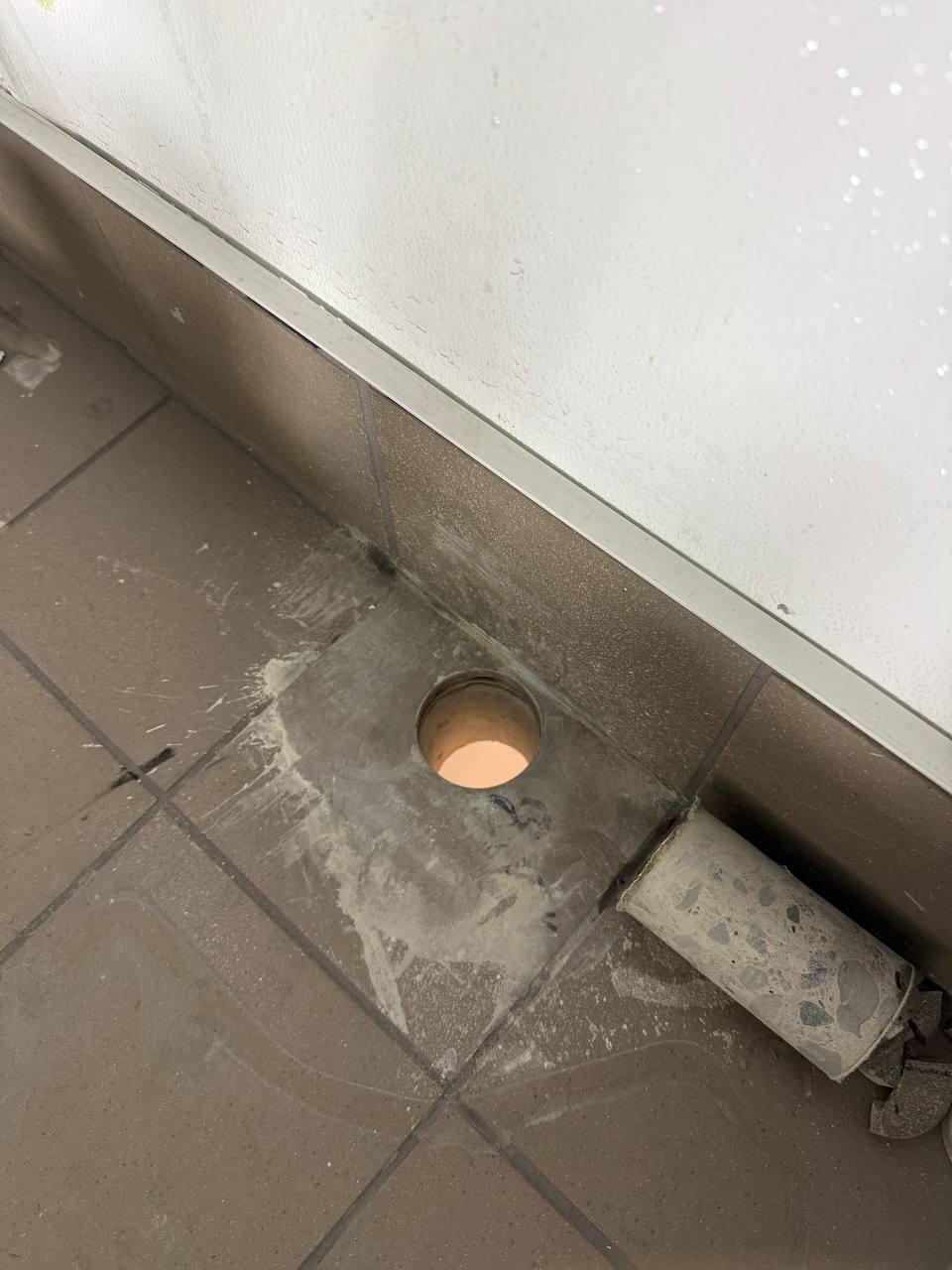
- visible wet coring slurry on the finished floor
- completed 4-inch slab penetrations
- night access at East York Town Centre
These details matter because they show the difference between basic coring and controlled coring in an occupied commercial building.
The challenges
Active commercial space below
The first-floor fitness club was operating during regular hours. The work had to be done after hours, and the team had to prevent dropped cores, water spread, and debris from affecting the space.
Night-only work window
The crew had one overnight window to set up, drill, catch cores, collect water, clean the area, and hand off the space.
Core catch required
Each concrete core had to be caught and controlled from below so it would not fall into the fitness area.
Water and slurry control
Wet coring was used to keep the drilling clean and controlled, but the water had to be collected throughout the process.
Finished environment
Because the work happened above a commercial tenant space, cleanup was part of the job, not an afterthought.
Our work
1. Site setup and protection
The team isolated the area below with caution tape and prepared the floor area for water collection and core catch.
2. Layout confirmation
The drilling locations were confirmed for the new piping route before coring started.
3. Core cutting through the slab
We drilled 10 slab penetrations, each 4 inches in diameter, through the concrete structure between the second floor and the fitness club below.
4. Controlled core catch
The underside team caught and controlled the concrete cores as each hole was completed.
5. Water collection and cleanup
Water from the wet coring process was collected and cleaned during the shift, leaving the space ready for normal use and for the next trade.
Result
All 10 slab penetrations were completed during the night shift. The cores were controlled from below, the water was collected, and the work area was cleaned before handoff.
The client received clean 4-inch openings for the next phase of piping installation without disrupting the fitness club below.
Why this matters for commercial core cutting
Small coring jobs can still carry real risk when the work is done above an occupied space.
For PMs, facility managers, and contractors, the important questions are not only “how many holes” and “what diameter.” The real questions are:
- What is below the slab?
- Can the area below be accessed?
- Do the cores need to be caught?
- How will water be collected?
- Can the work be done after hours?
- Is the space finished, occupied, or sensitive?
Answering those questions before drilling prevents damage, delays, and complaints from tenants.
Core Cutting FAQ
Short answers about slab coring above occupied spaces, night work, water collection, and core catch.