
Core Cut in Richmond Hill, ON
Project at a glance
Location: Richmond Hill, Ontario
Site: townhouse complex / basement renovation
Service: core cut / diamond core drilling
Scope: 1 wall penetration
Diameter: 4 inches
Purpose: dryer vent opening
Wall type: block wall / masonry wall
Access: drilled from outside
Duration: approximately 2 hours
Method: wet diamond coring
Project overview
This core cut project was completed in a townhouse complex in Richmond Hill. The client needed a new 4-inch wall penetration for a dryer vent so warm, moist air from the dryer could exhaust outside.
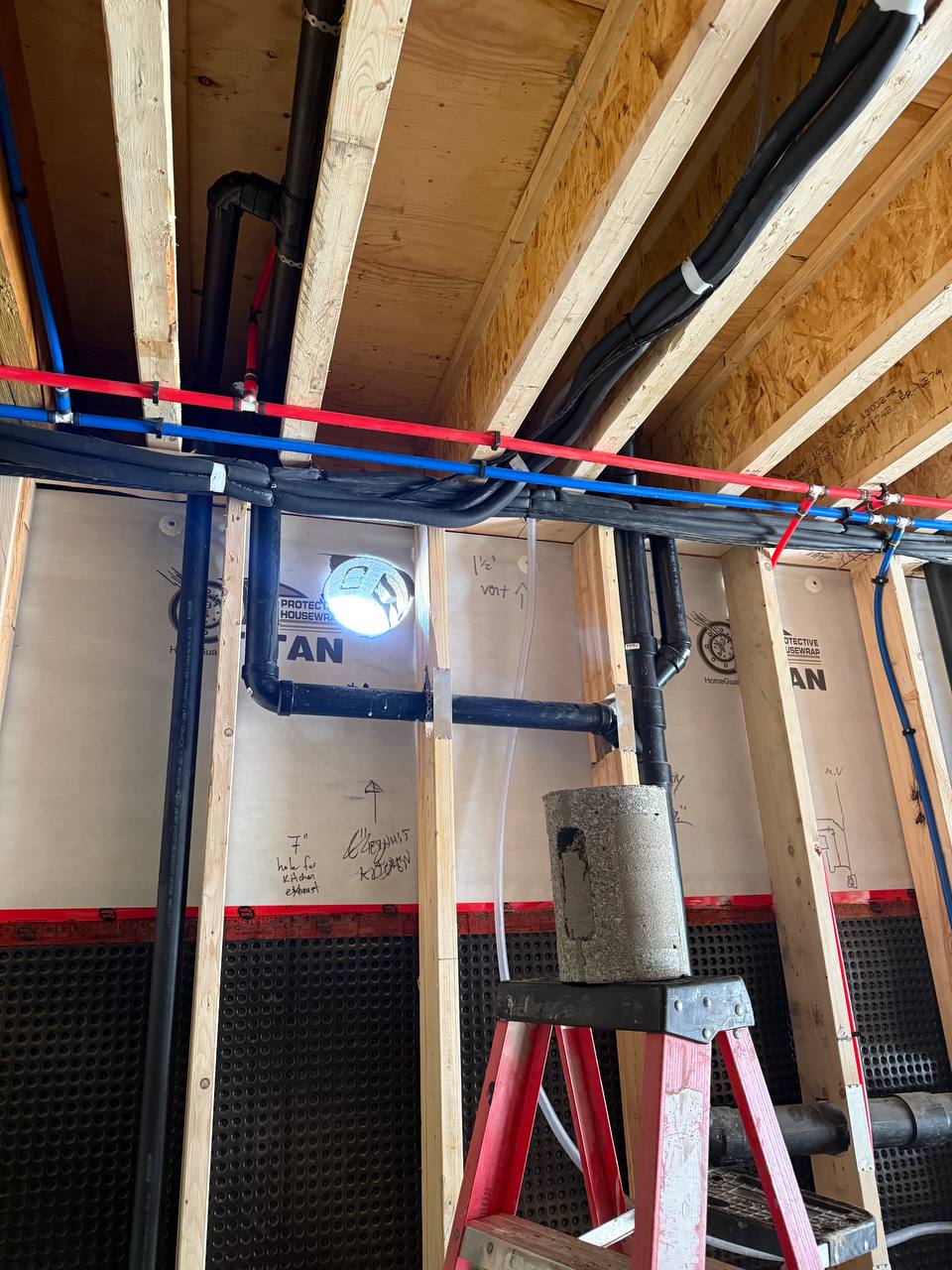
At first, this sounds like a small job: one hole, standard dryer vent size, simple wall penetration. But the inside of the basement was already framed, and new plumbing/mechanical lines were installed close to the drilling area. That made interior setup difficult and increased the risk of damaging nearby work.
The clean solution was to drill from the outside of the building.
Why we drilled from outside
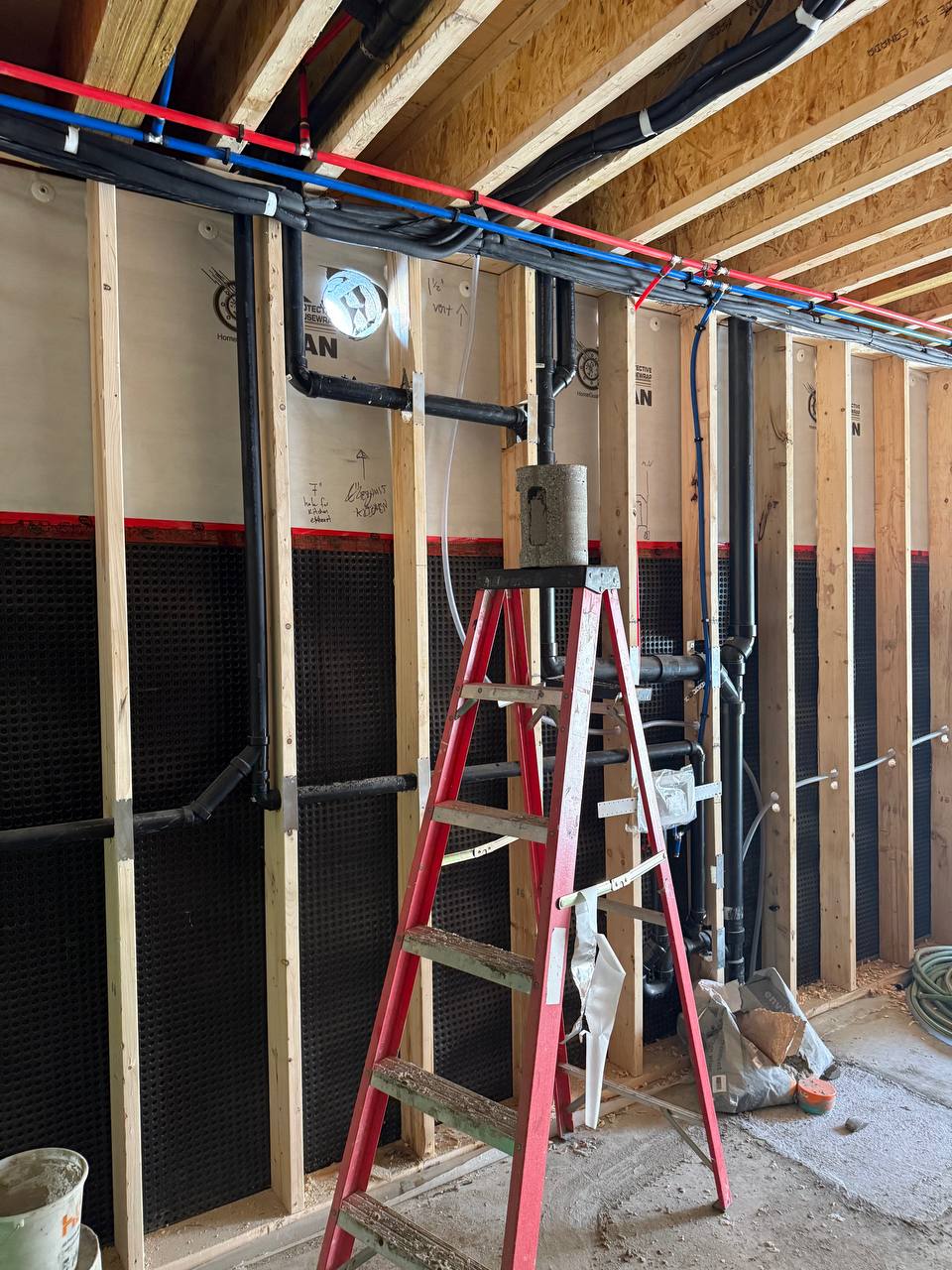
Inside the basement, the wall area was already crowded with wood framing, drain lines, water lines, and other rough-ins. Setting the core drill properly from inside would have been awkward and less controlled.
Drilling from outside gave the operator a cleaner setup, better alignment, and more working room. It also helped avoid contact with the new framing and mechanical lines inside the wall cavity.
This is the kind of decision that keeps a small job from turning into a messy repair.
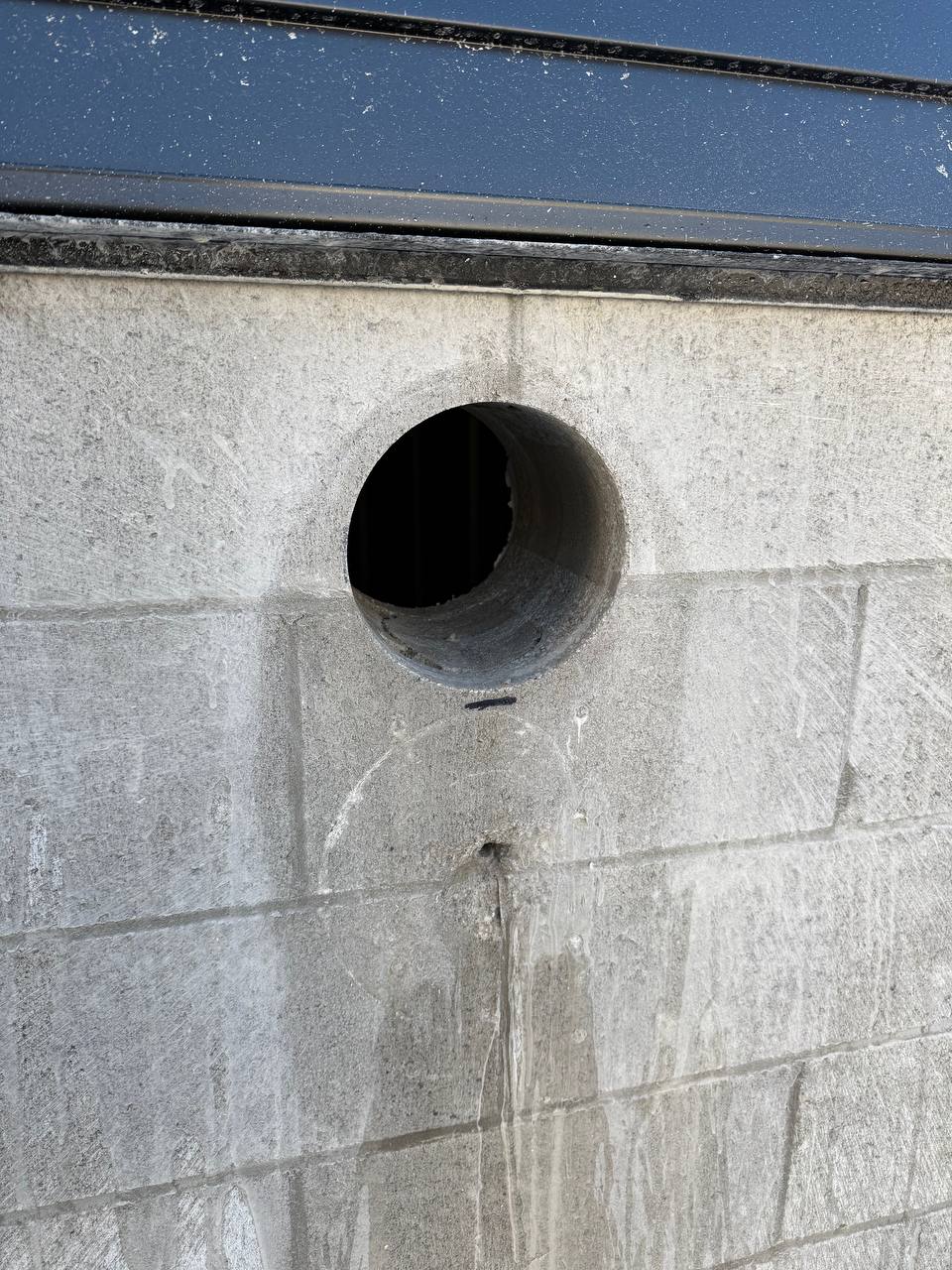
What the photos show
The photos show several useful jobsite details:
- finished exterior wall with snow on the ground
- 4-inch core opening placed through the exterior block wall
- water marks from wet coring visible below the opening
- interior basement framing already installed
- plumbing and mechanical rough-ins close to the drilling area
- limited interior access for a drill stand
- clean round opening ready for dryer vent installation
- concrete core removed and visible on site
These details explain why the drilling direction mattered.
The challenges
Limited interior access
The inside wall was already framed, and several pipes were installed close to the target location. This limited space for setting up the drill from inside.
Protecting existing rough-ins
The new plumbing and mechanical lines had to be avoided. The drilling plan had to work around what was already installed.
Exterior winter conditions
The job was done from outside with snow on the ground. Wet coring in cold conditions requires attention to water control and cleanup.
Clean vent opening
A dryer vent needs a clean, round penetration so the sleeve can be installed correctly and sealed properly.
Our work
1. Site review
We checked both sides of the wall and confirmed that drilling from outside was the better setup.
2. Exterior drill setup
The coring rig was positioned outside to avoid interference with the basement framing and pipes.
3. Wet diamond core drilling
We completed one 4-inch core cut through the block wall for the dryer vent.
4. Core removal and cleanup
The concrete core was removed, and the opening was left ready for vent sleeve installation.
Result
The 4-inch dryer vent opening was completed in approximately 2 hours. Drilling from outside allowed the work to be done cleanly without disturbing the new framing or mechanical rough-ins inside.
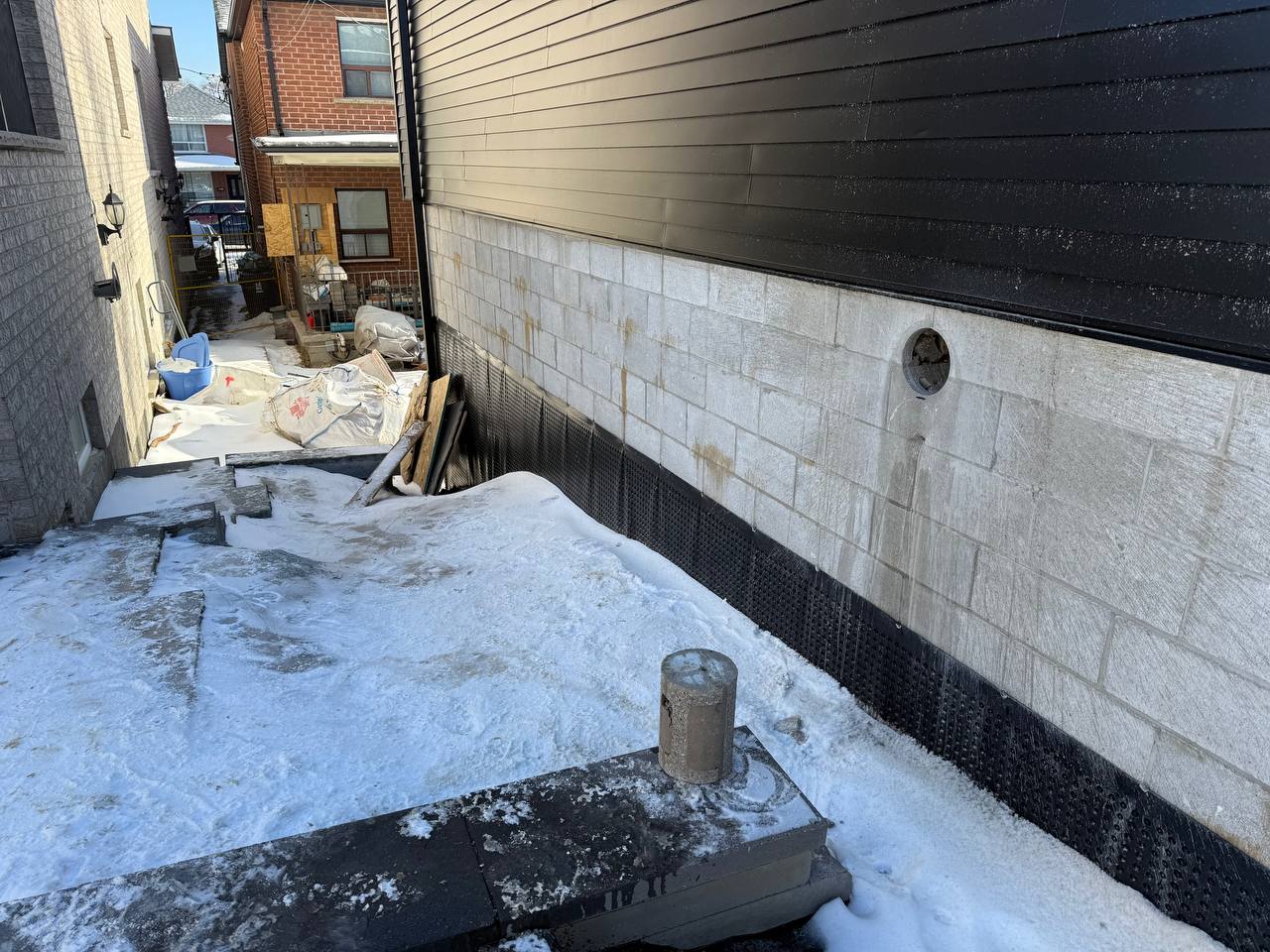
The client received a clean round opening ready for dryer vent installation and exterior sealing.
Why this matters for small core cut jobs
Small openings can still create problems when the wall is already framed or packed with mechanical lines.
Before drilling, the important questions are:
- What is on the other side of the wall?
- Is there enough room to set the drill inside?
- Are there pipes, wires, or framing close to the target location?
- Should the hole be drilled from inside or outside?
- Does the opening need to line up with a specific fixture or vent route?
Choosing the right drilling side prevents damage and keeps the work clean.
Core Cut FAQ
Short answers about dryer vent openings, exterior wall drilling, wet coring, and choosing the right drilling side.