
Concrete Cutting and Coring Case Study: Load-Bearing Column Removal in Downtown Toronto (110 Spadina Ave)
Removing a load-bearing concrete column in a live multi-storey building is not a typical demolition task. It’s a sequencing job: shoring first, controlled access, predictable debris handling, and a removal method that protects the structure—especially when the column is in a corner zone supporting upper loads.

In Downtown Toronto (110 Spadina Ave), a new tenant layout required the removal of a corner structural column. The building team (Capital Building) proceeded through engineering review and shoring design, then hired DRM Cutting (Diamond Rope Machines Inc.) to execute the concrete cutting and coring scope that enabled the load transfer and the safe removal.

This case study shows how concrete coring enabled the shoring install, and why the final removal required a last-minute method pivot—from planned wire sawing to a controlled score-and-break sequence due to revised shoring geometry.
Project Snapshot
- Client / Site Team: Capital Building (building owner / project team)
- Location: 110 Spadina Ave, Toronto, ON
- Service: Concrete cutting and coring (structural modification support scope)
- Site Constraints: Downtown logistics, upper-floor access, live environment
- Phase 1 (Coring): 4 × 12-inch (305 mm) core holes through roof slab
- Roof slab thickness: ~12 inches (1 ft) (shown on tape-measure photo)
- Column size: 600 × 600 mm (≈ 24" × 24")
- Height removed: ~3.5 m (≈ 11 ft 6 in) + ~1 ft chased into the shoring zone for full clearance
- Reinforcement: heavy cage; perimeter verticals incl. six 1-inch bars
- Blade used: 24-inch hydraulic blade for scoring/cuts where accessible
- Removal output: ~4.6 tonnes (concrete + steel) removed and disposed
- Haul-out route: buckets → freight elevator → disposal
- Schedule: coring (1 shift), column removal executed Saturday + Sunday (full weekend days)
Background: Why the Column Had to Go
A tenant requirement created a structural modification: the tenant needed a clear corner zone on an upper floor, which meant a load-bearing corner column had to be removed. Because this column supported upper loads near the roof corner, the work required engineering design, a shoring plan, and controlled sequencing.
Initial site review was completed in May, followed by design/approvals and shoring preparation, then field execution—where coring and controlled concrete removal become the enabling steps.

The Constraints: What Made This a High-Control Scope
1) Structural risk and sequence discipline
The column could not be “broken out” arbitrarily. Shoring had to be installed first, then the column removed according to the engineered plan.
2) Downtown Toronto logistics + upper-floor access
Staging, equipment movement, and debris handling were constrained. Not every tool is practical when access depends on elevators and tight routes.
3) Weekend execution
The noisy portion of the work was scheduled for Saturday and Sunday, allowing full workdays without disrupting neighboring office occupancy.
4) Power limitations
The roof/work-area supply could not reliably support coring loads, so a generator was mobilized for stable power during the coring phase.
Phase 1 — Concrete Coring: 4 × 12" Holes Through a 12" Roof Slab
The first execution step was concrete coring to enable the shoring installation and load transfer.

Scope:
- 4 core holes, 12 inches (305 mm) diameter
- Through a roof slab approximately 12 inches thick (confirmed by tape-measure photo)
- Completed in one shift with a two-person crew
- Generator used for reliable power

Containment: capturing cores and keeping the building clean
Large-diameter core plugs are heavy, and coring produces wet slurry. We used capture/containment so cores and water did not damage finished areas below—keeping the work controlled and preventing unnecessary mess in a live building environment.
Result: the coring phase enabled the shoring contractor to install the engineered load-transfer system.
Phase 2 — Column Removal: Method Pivot + Controlled Score-and-Break (Weekend Work)
The original plan: wire sawing
Wire sawing was initially planned because it’s often the cleanest method for heavily reinforced structural elements.
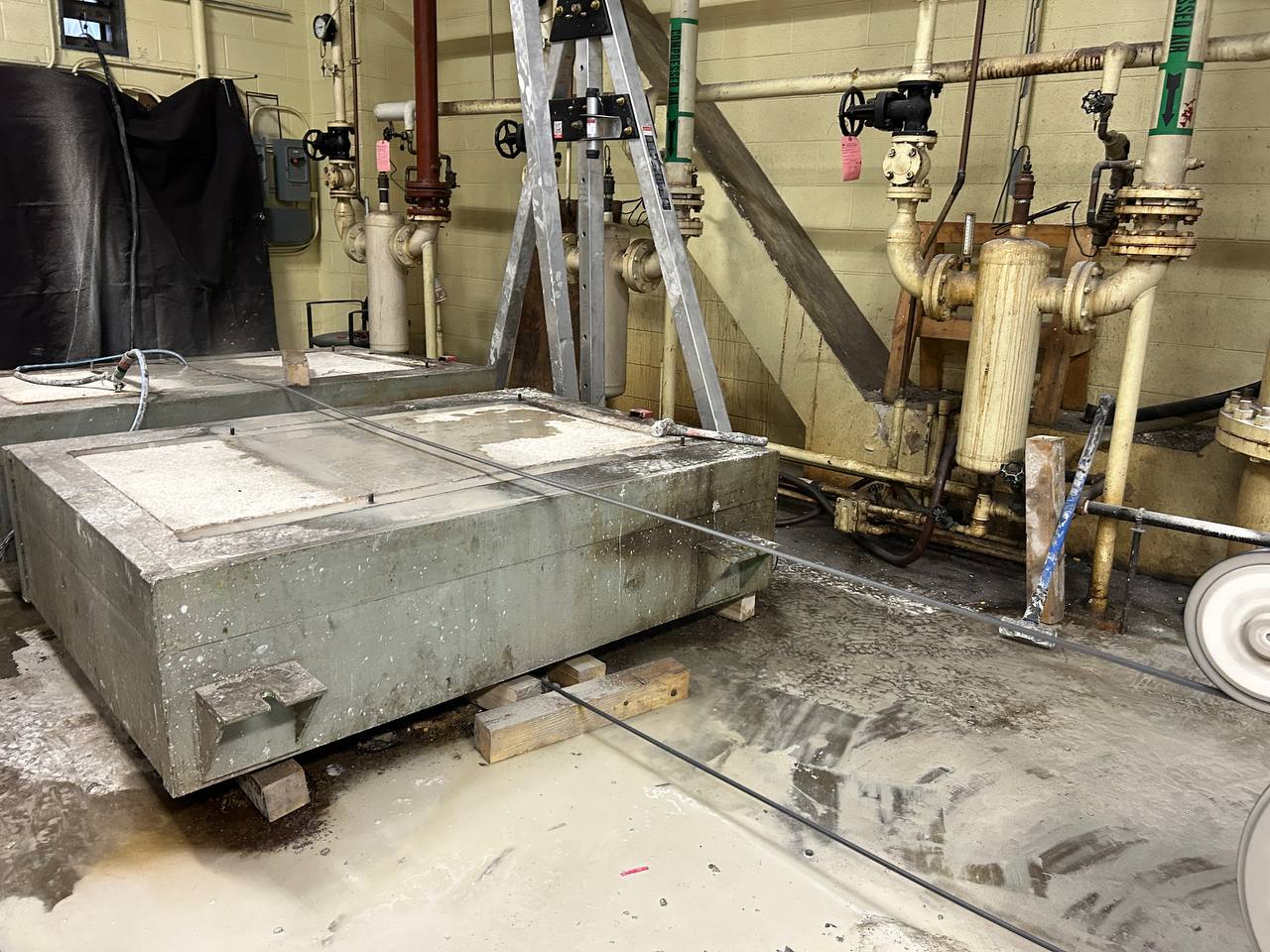
The reality: revised shoring geometry eliminated safe wire access
As the engineering team revised the shoring design, steel framing and connections at the top of the column covered/blocked the upper zone, removing the safe wire path and preventing any temporary removal of shoring components. We also could not set up the cut geometry needed to “finish” the top in a clean, continuous sawed separation.

So we pivoted to a method that could be executed safely without touching or compromising the shoring:
Final method: hydraulic scoring + controlled breakout in small pieces
- We mobilized a hydraulic power unit (roof zone) and routed hoses to the work area.
- Using a 24-inch hydraulic blade, we created controlled cuts/relief scoring where access allowed.
- The remaining mass was removed using a controlled breaker sequence, reducing the column into small, manageable pieces—protecting shoring steel, surrounding structure, and access routes.

This approach is slower than a perfect wire saw setup, but when geometry and shoring restrictions remove the safe wire path, the priority becomes structure protection and sequence integrity—not theoretical speed.
Reinforcement reality: heavy cage + large perimeter bars
The column contained a heavy reinforcement cage, including perimeter verticals with six 1-inch bars. Removal required patience and disciplined breakout so steel and concrete could be managed without uncontrolled tearing or shock.
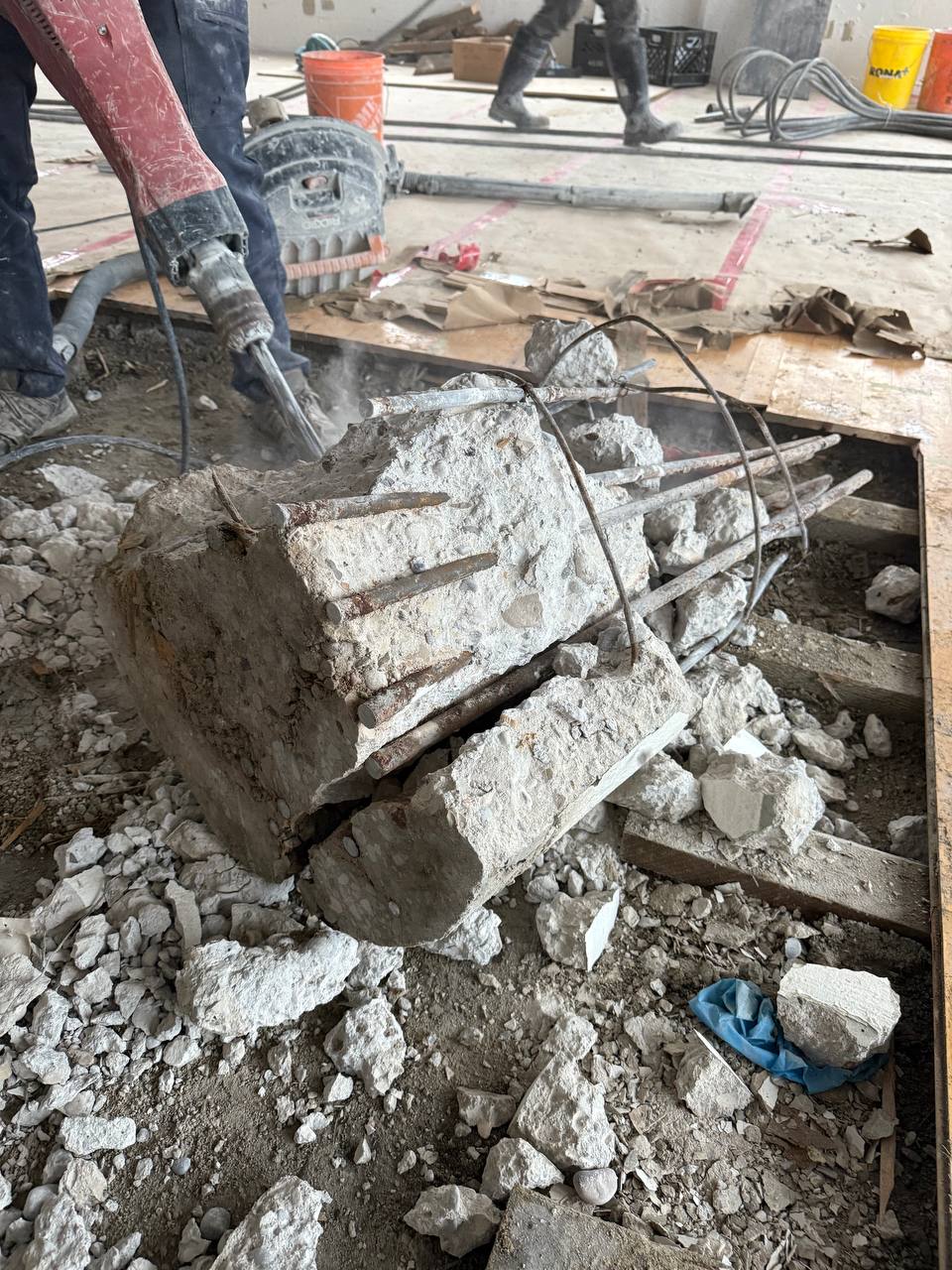
Finish condition and “extra foot” into the shoring zone
To achieve the required clearance/finish, we chased the remaining column stub an additional ~1 ft into the upper zone under/into the shoring area—removing the concrete as needed while keeping the shoring undisturbed and the structure protected.

Debris Handling, Cleanup, and Downtown Logistics
Because the work was on an upper floor in a downtown building, debris handling was a major part of the plan:
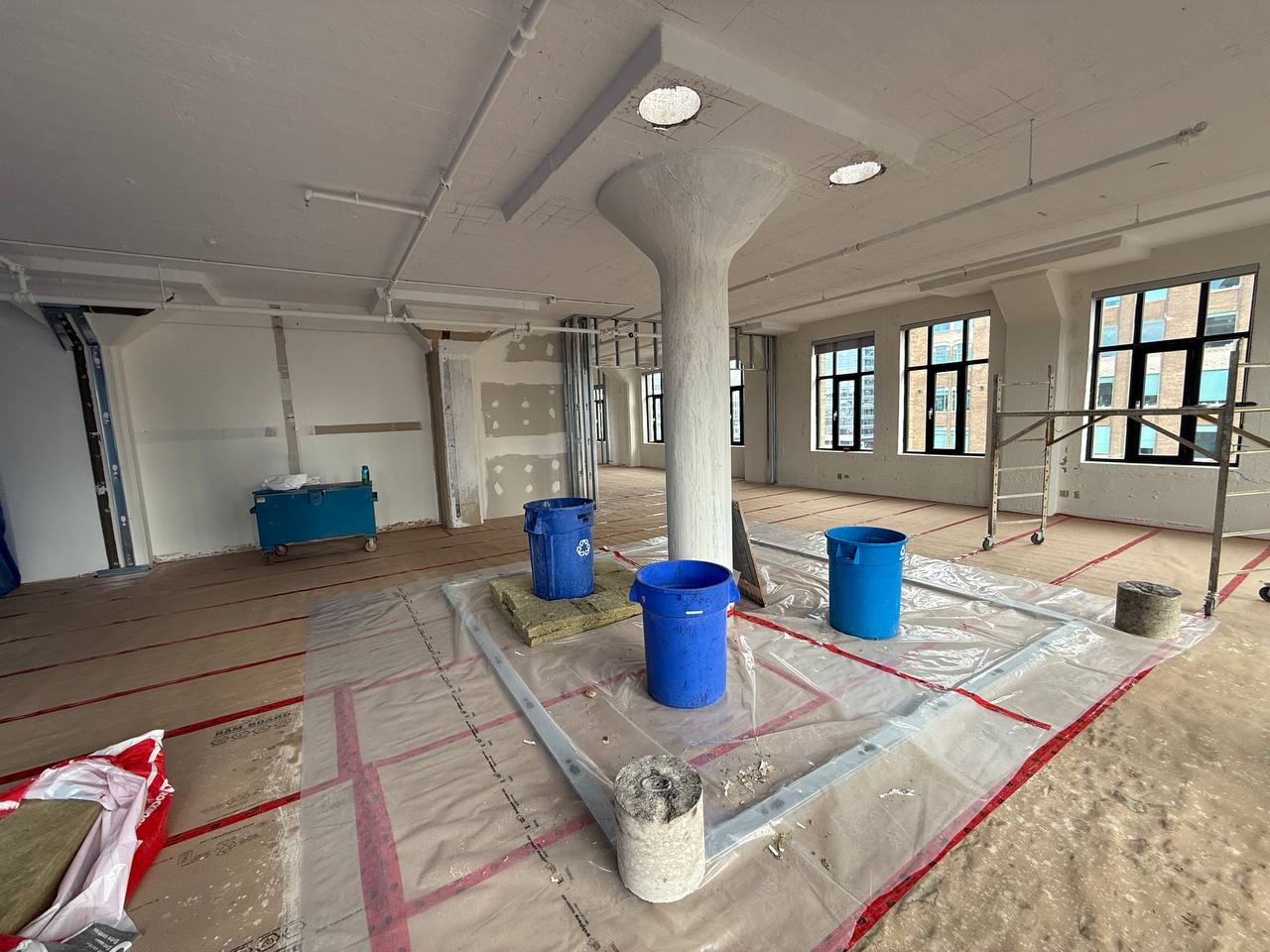
- concrete and steel were collected in buckets/containers,
- moved via freight elevator,
- removed for disposal in accordance with site requirements,
- and the work area was left clean, including water/slurry control from cutting operations.
Results
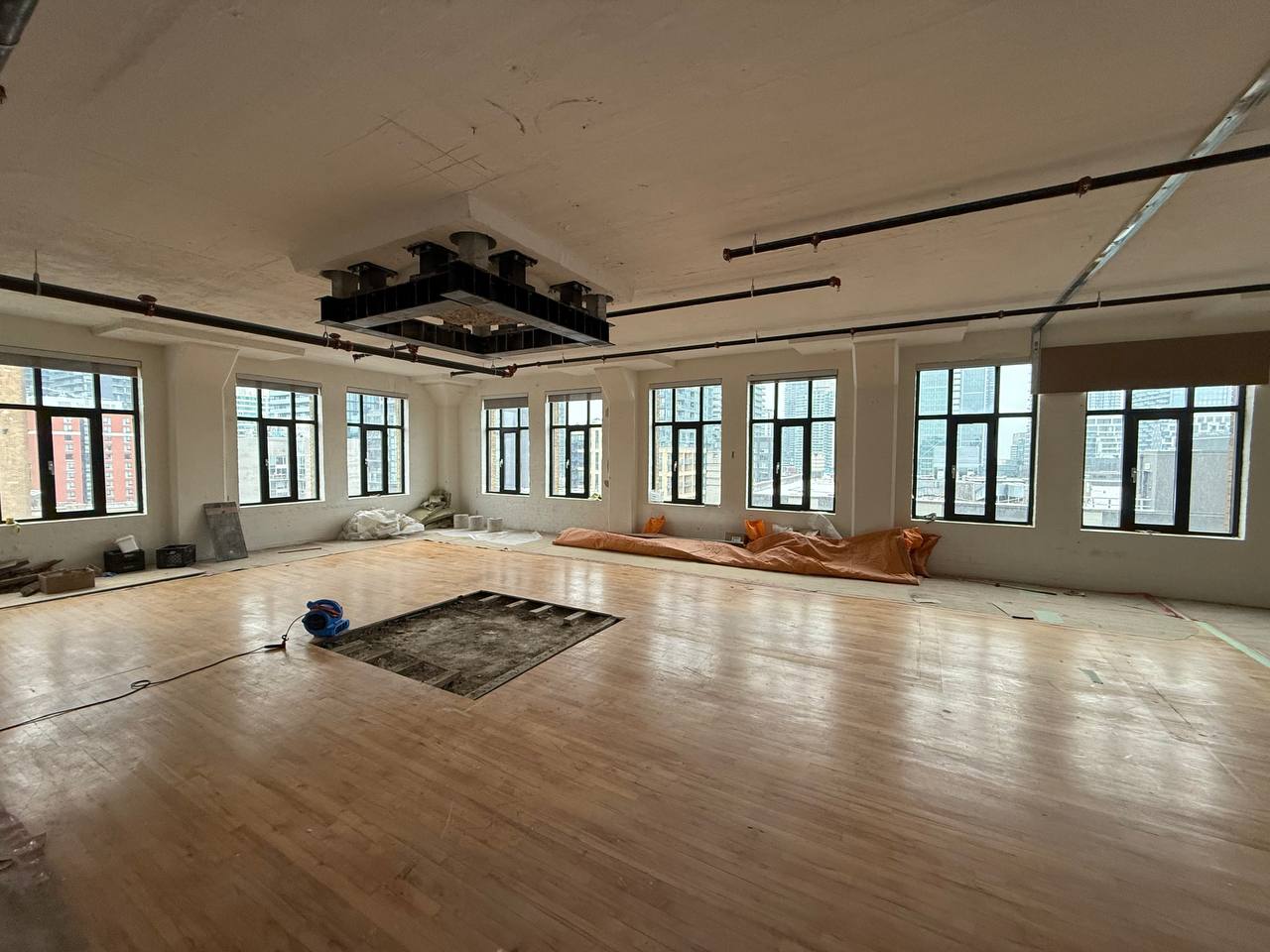
- Concrete coring: 4 × 12" holes through a ~12" roof slab completed in one shift
- Column removal: 600×600 mm (≈24"×24"), ~3.5 m height removed + ~1 ft chased under shoring zone
- Reinforcement handled: heavy cage incl. six 1-inch perimeter vertical bars
- Method pivot executed safely: wire sawing planned → revised shoring geometry forced controlled score-and-break removal
- Total removed: ~4.6 tonnes (concrete + steel)
- Schedule: main removal completed across Saturday + Sunday full workdays
- Haul-out: buckets → freight elevator → disposal, full cleanup
What This Project Shows About Concrete Cutting and Coring
This is what “concrete cutting and coring” looks like on real structural modifications:
- Coring enables engineering. Precision penetrations make shoring installs possible without unnecessary damage.
- Cutting is only half the job. The other half is containment, debris handling, and finish conditions in a live building.
- Method selection must adapt to the shoring geometry. You don’t “force” wire sawing when revised shoring removes safe access—you pivot to the method that protects the structure and the sequence.
If your scope involves load-bearing elements, downtown constraints, or live occupancy, the difference is not marketing—it's whether the work is executed with control, containment, and discipline.
Need Concrete Cutting and Coring in Downtown Toronto?
If you have a structural modification scope that requires concrete cutting and coring, send drawings/photos, floor level, access notes (freight elevator route), and the engineer’s intent. We’ll confirm the safest method and execute clean.