
Concrete Coring for a Toronto-Area Townhouse Development
Project at a glance
Location: 2200 Marine Drive, Burlington, Ontario
Client: Feis9 Construction / Five9 Construction
Site: townhouse development above an active parking garage
Service: concrete coring / diamond core drilling
Scope: 200+ holes across multiple mobilizations
Mobilizations: 7+ visits, with work still continuing
Diameters: 4", 5", 6", 8", and 12"
Systems: plumbing, gas, electrical, ventilation, fire protection / sprinkler
Typical slab thickness: approximately 20"
Deep drilling areas: up to 37"–42" in thickened slab / column-support zones
Crew: 2–3 people
Schedule: daytime work
Key controls: core-drop control, water collection, parking protection, traffic management
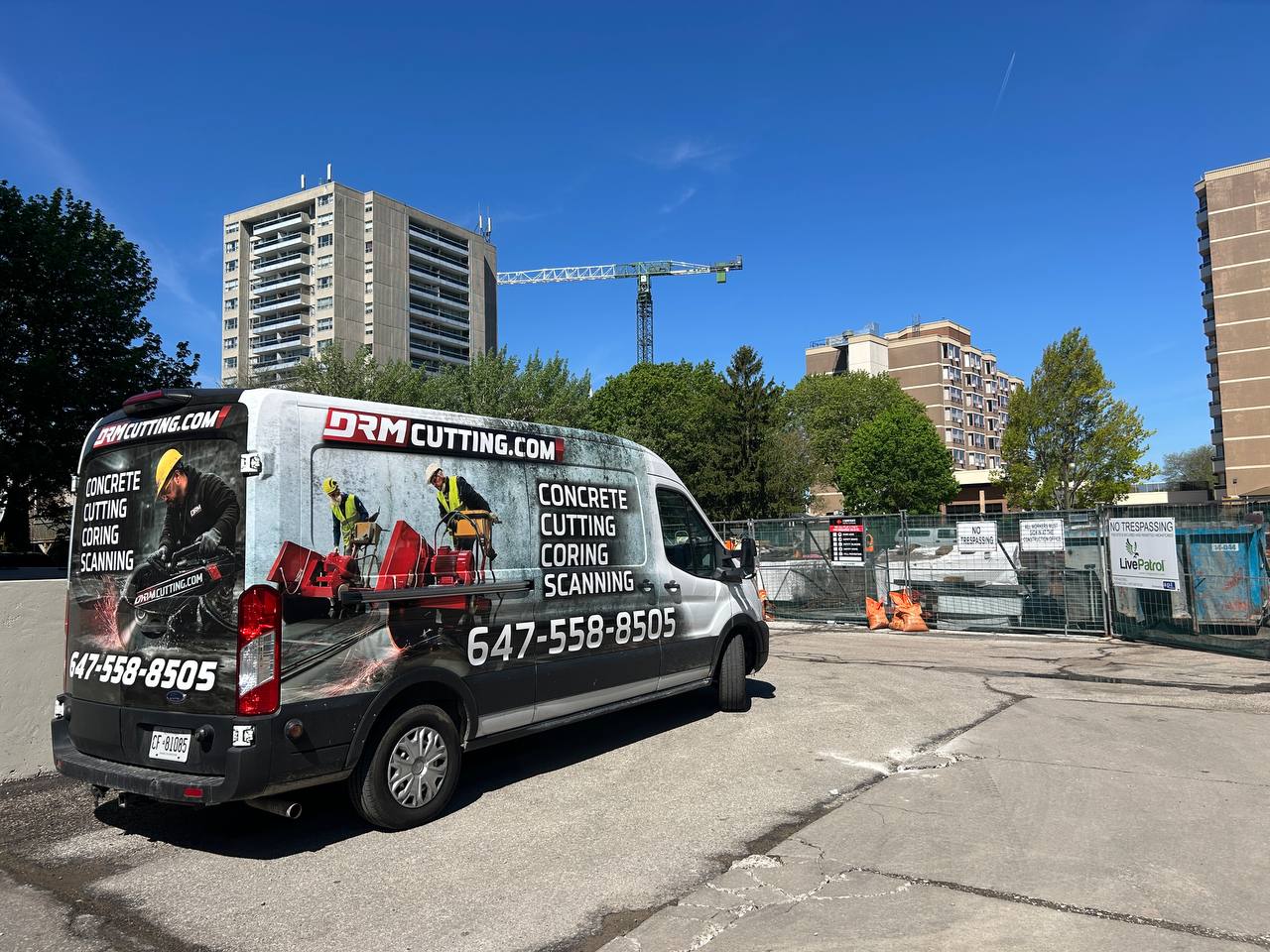
Project overview
This concrete coring project was completed for a townhouse development at 2200 Marine Drive in Burlington, west of Toronto. The new townhouse complex was built over a parking structure, and the construction required multiple service penetrations through suspended concrete slabs.
The scope included concrete coring for plumbing, gas, electrical, ventilation, and fire protection lines. Over several mobilizations, our team drilled more than 200 holes through the slabs between Level 1 and P1, and between P1 and P2.
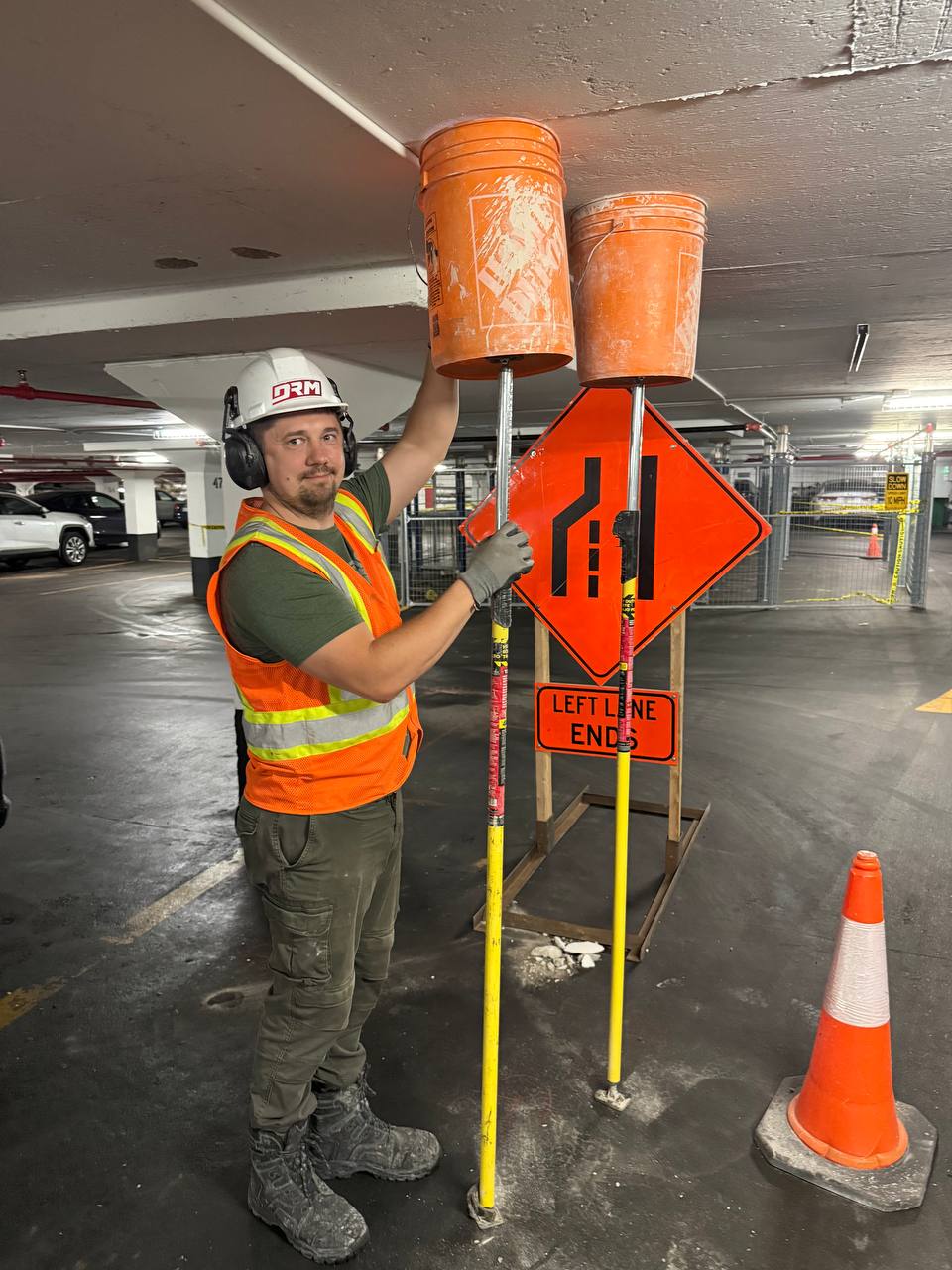
This was the type of repeat commercial coring work we like: multiple visits to the same site, known access conditions, clear trade coordination, and a large enough scope to build rhythm and efficiency over time.
Why this was a heavy coring project
The project was not difficult because of one single hole. It was difficult because of the total volume and the environment below.
The parking garage remained active. Vehicles were parked below the slab, and they were not always moved out of the work area. That meant every hole required planning for the falling core, wet coring water, and the area below.
A typical shift included 10 to 50 holes, depending on access, layout readiness, trade coordination, and which level we were drilling through.
Some holes were standard 20" suspended slab penetrations. Others became much deeper after additional floor buildup was installed. In several fire protection / sprinkler locations, drilling depth reached 37". In one thickened support area near a column/drop panel, the drilling depth reached approximately 42".
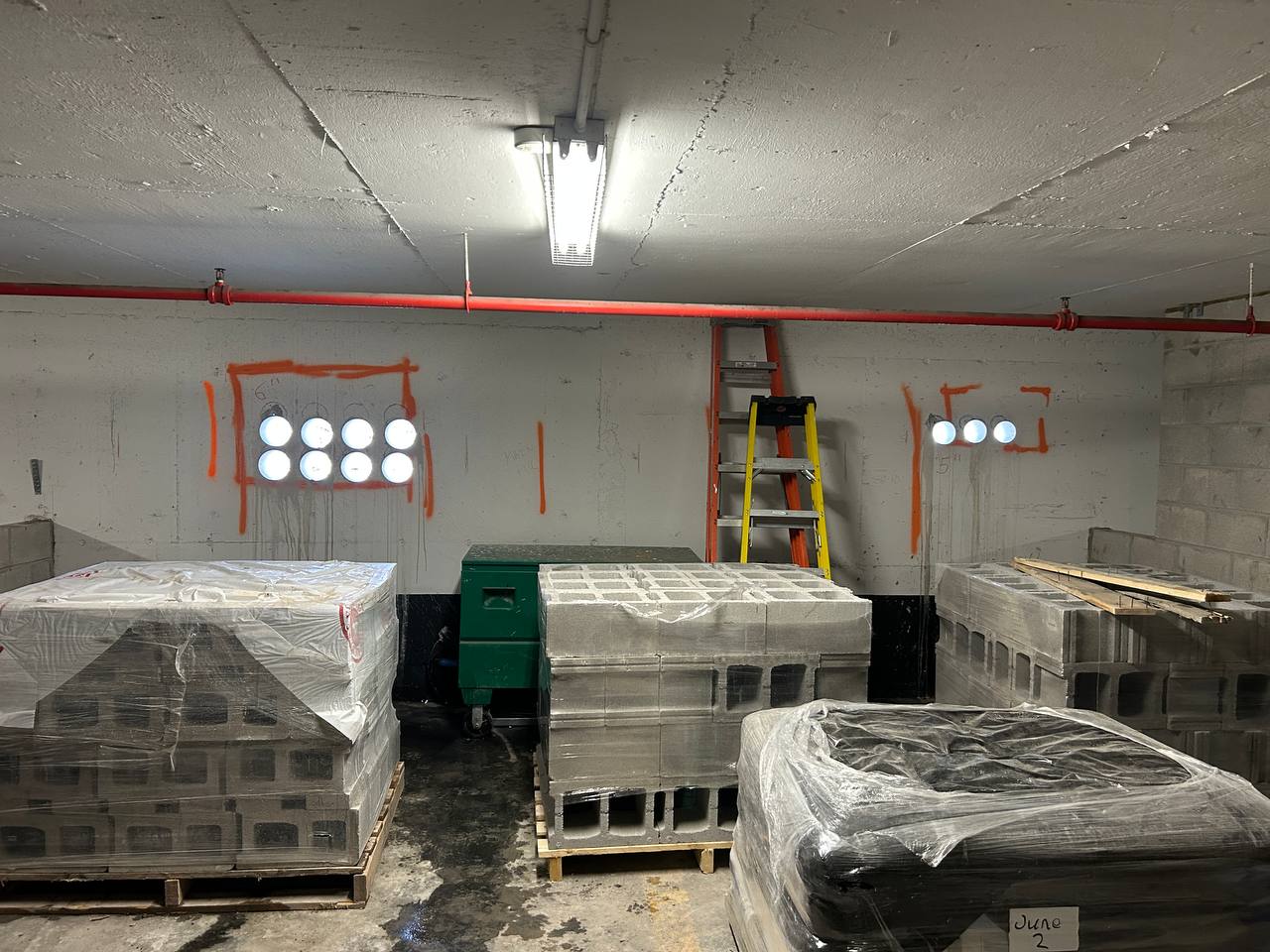
Scope by system
The holes supported several building systems:
Plumbing
4", 5", and 6" penetrations for new plumbing lines.
Gas
4" penetrations for gas service routing.
Electrical
6" penetrations for electrical runs.
Ventilation
12" penetrations for larger duct / ventilation routes.
Fire protection / sprinkler
Additional 4" and 6" penetrations, including late-stage holes after the floor buildup had already increased the total drilling depth.
The main challenges
Active parking below
The work was done above a parking garage with vehicles below. Some cars stayed in place, so the team had to isolate areas, cover vehicles when needed, and control the drop zone from underneath.
Core-drop control
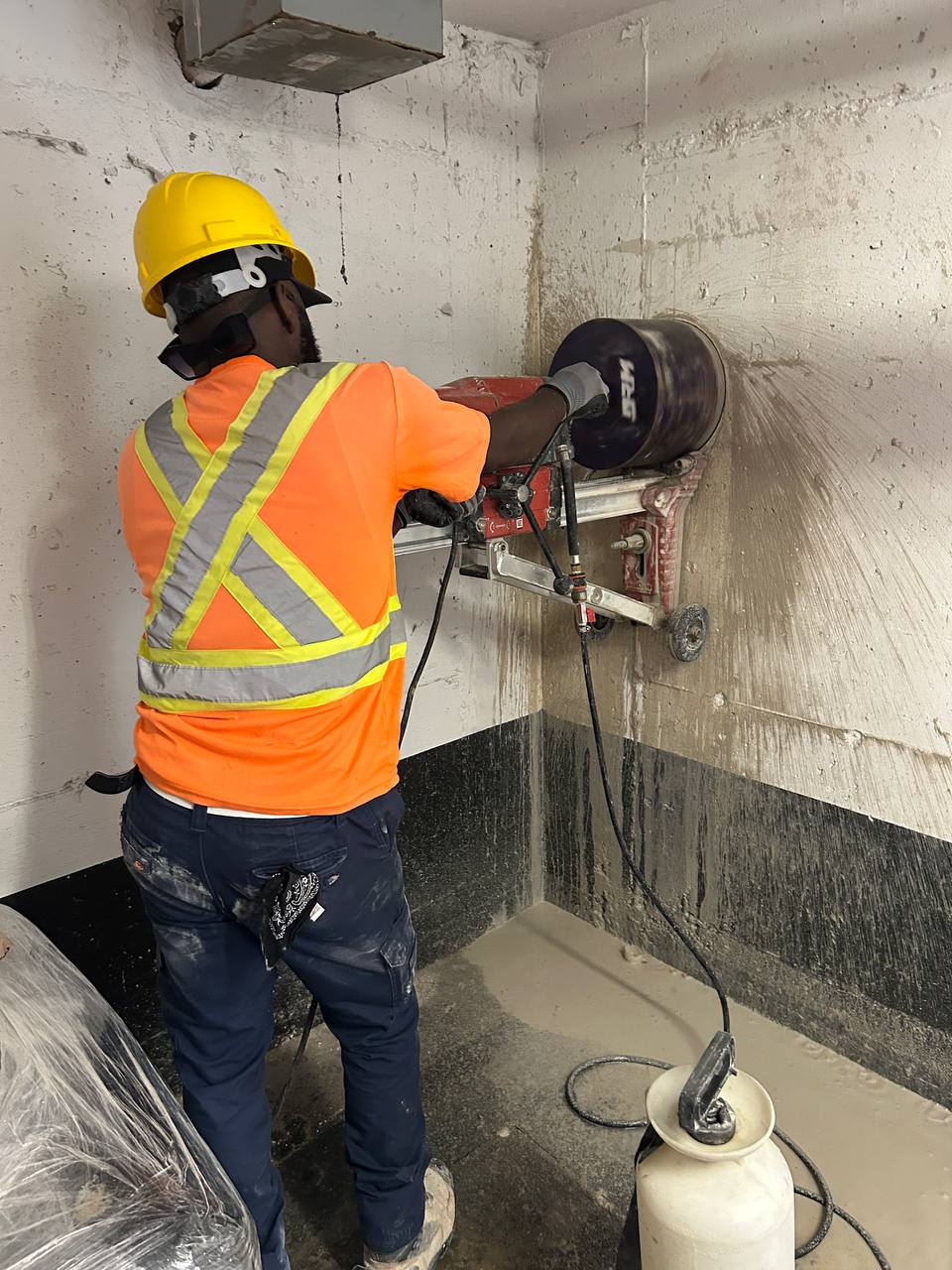
Every concrete core had to be controlled. A falling core can damage vehicles, existing services, or the parking area below. We used a core-catching setup and had a team member controlling the underside during drilling.
Water and slurry control
All coring was completed with water feed. Water had to be collected from above and below, then cleaned with a wet vacuum. At the end of shifts, the team cleaned the parking level and work areas so the site stayed usable.
Deep drilling after floor buildup
After insulation, reinforcement, and an additional concrete layer were installed above the slab, some missed fire protection penetrations had to be drilled through a much deeper build-up. Those holes reached 37" and up to approximately 42" in a thickened support area.
Adjacent trades
Framers, concrete crews, and other trades were active on site at the same time. Our team had to work around their sequence and adjust as areas became available.
Power interruptions
There were occasional power issues on site, so we used our own generator when needed to keep the work moving.
Traffic management
The parking garage was not fully cleared. The team had to manage the work zone so no core, water, or equipment created a hazard for vehicles or people moving through the garage.
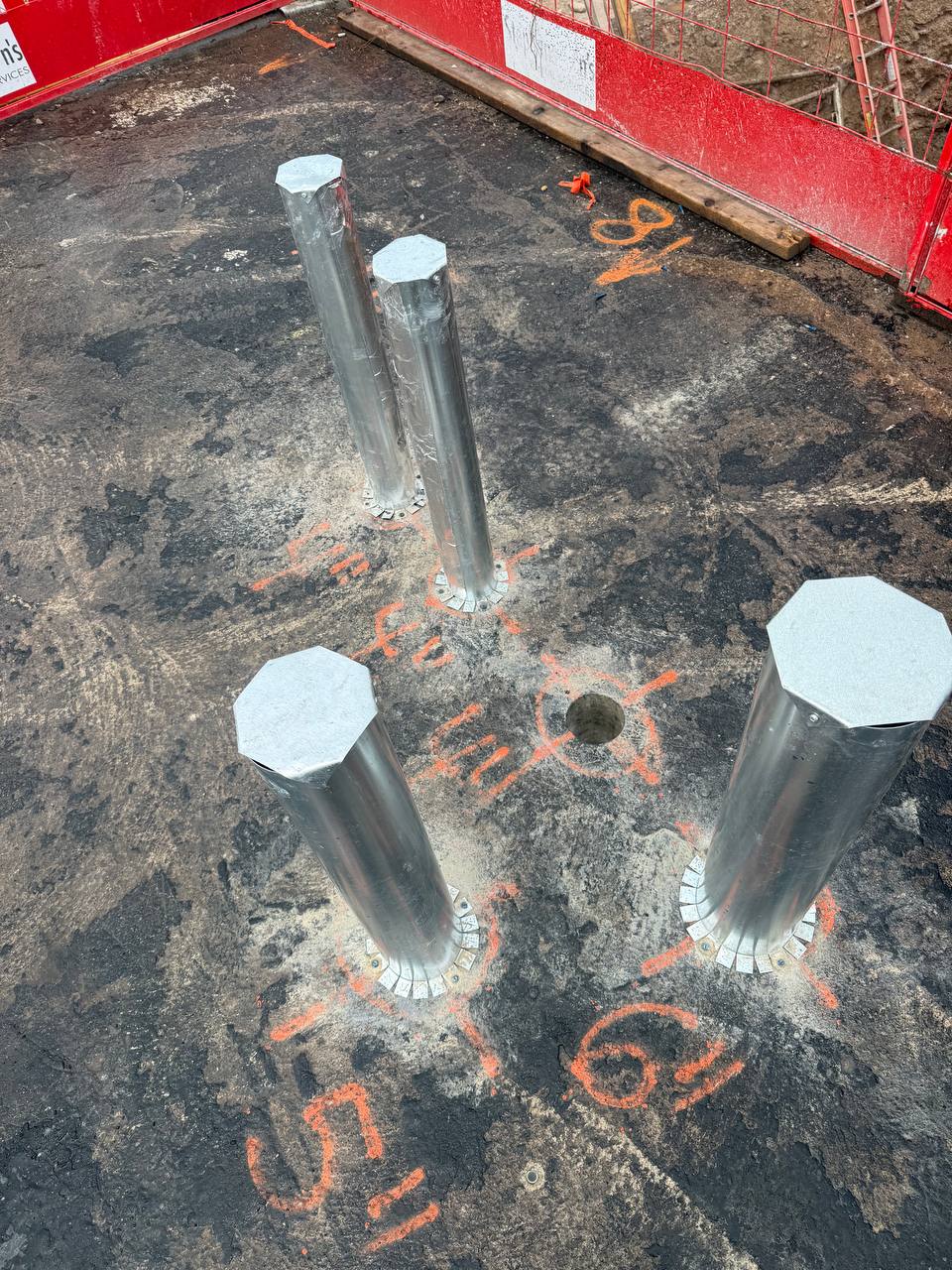
Our work
1. Multi-visit coring plan
The work was completed over 7+ mobilizations. Each visit focused on the available areas and the current trade priority.
2. Layout-based drilling
The GC and trades provided marked locations. We drilled to the approved layout and coordinated with the site team as conditions changed.
3. Diamond core drilling
We drilled 200+ holes in diameters from 4" to 12" through suspended slabs and thickened areas.
4. Core-drop control from below
For each penetration, the underside was monitored and controlled. When vehicles were below, we isolated the area, protected what we could, and caught the cores before they could drop into the parking area.
5. Water collection and vacuum cleanup
Wet coring water was collected during the drilling process. The team cleaned both the drilling area and the garage level below with vacuum equipment.
6. Generator support when needed
When site power was not reliable, we used our own generator to continue the work without waiting on temporary power.
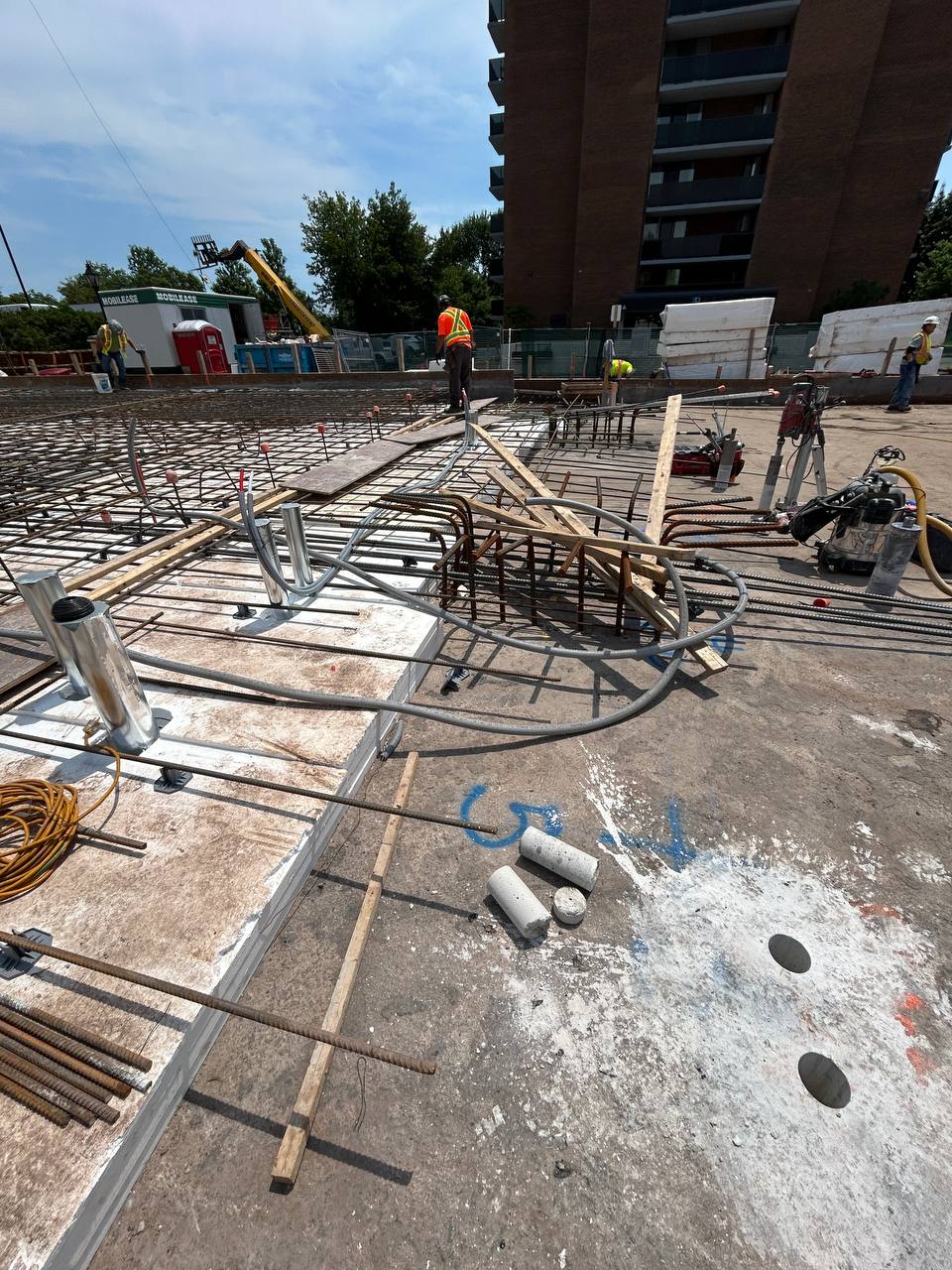
Result
More than 200 penetrations were completed across multiple visits for plumbing, gas, electrical, ventilation, and fire protection systems.
The work was completed above active parking without damage to vehicles or surrounding services. Cores were controlled, water was collected, and the site stayed workable for other trades.
The GC could keep moving with rough-ins and service routing across the townhouse development.
Why this matters for concrete coring in Toronto-area projects
Large concrete coring scopes are not just about hole count.
For a GC or mechanical contractor, the real risk is coordination:
- Are the holes ready when the trade needs them?
- Can drilling continue while other trades are working?
- What is below the slab?
- Can the parking level stay active?
- How will cores be caught?
- How will water be collected?
- What happens if site power drops?
- Can the crew return multiple times without relearning the site each visit?
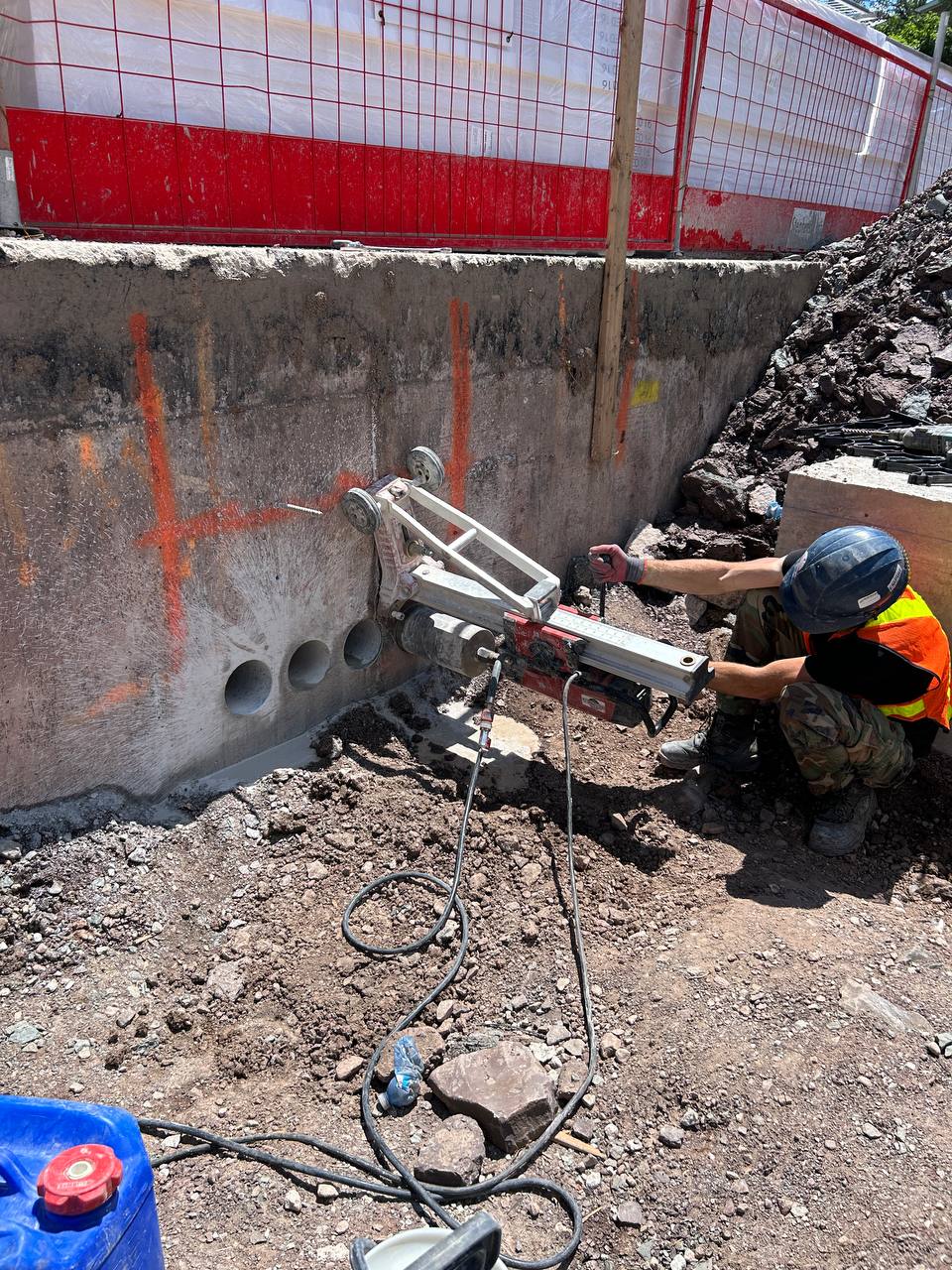
This project is a good example of repeat commercial concrete coring done in a live construction environment: large volume, multiple trades, active parking, and controlled execution over several mobilizations.
Concrete Coring Toronto FAQ
Short answers about commercial concrete coring, suspended slabs, deep drilling, core-drop control, and active parking conditions.