
Concrete Coring Case Study — Mississauga, ON (2024)
Project at a glance
- Location: Mississauga, Ontario
- Site: Esso gas station renovation (below-grade trench work)
- Client: General Contractor
- Service: Concrete coring
- Scope: 2 cores @ 12” diameter (305 mm)
- Structure: Precast reinforced concrete sewer manhole / chamber
- Wall thickness: ~10” (254 mm)
- Elevation correction: new core center 30” (2.5 ft / 762 mm) lower than the factory opening center
- Crew / setup: 2-person crew, one coring rig, wet coring, generator power, water brought in jerry cans
- Duration: 1 shift / 8 hours
Project overview
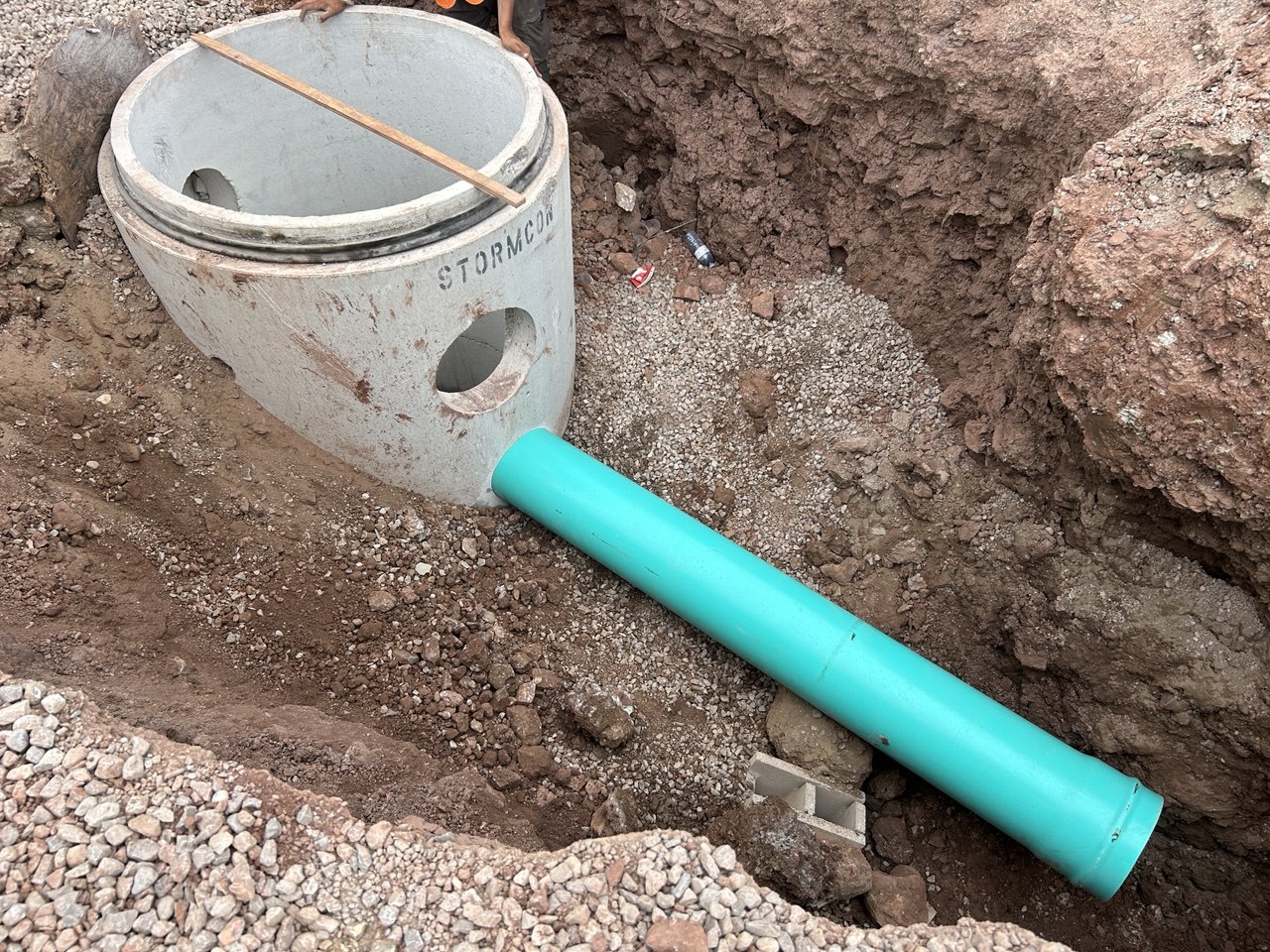
During an Esso gas station reconstruction in Mississauga, the GC installed a new precast concrete sewer manhole (chamber). The factory opening in the new unit did not match the new sewer pipe connection: the existing opening was positioned too high and didn’t allow the correct tie-in.
The fix required a new, perfectly round 12” opening cored lower in the new manhole, plus a second 12” opening cored into the existing collector so the pipe crew could complete the connection.
The constraints
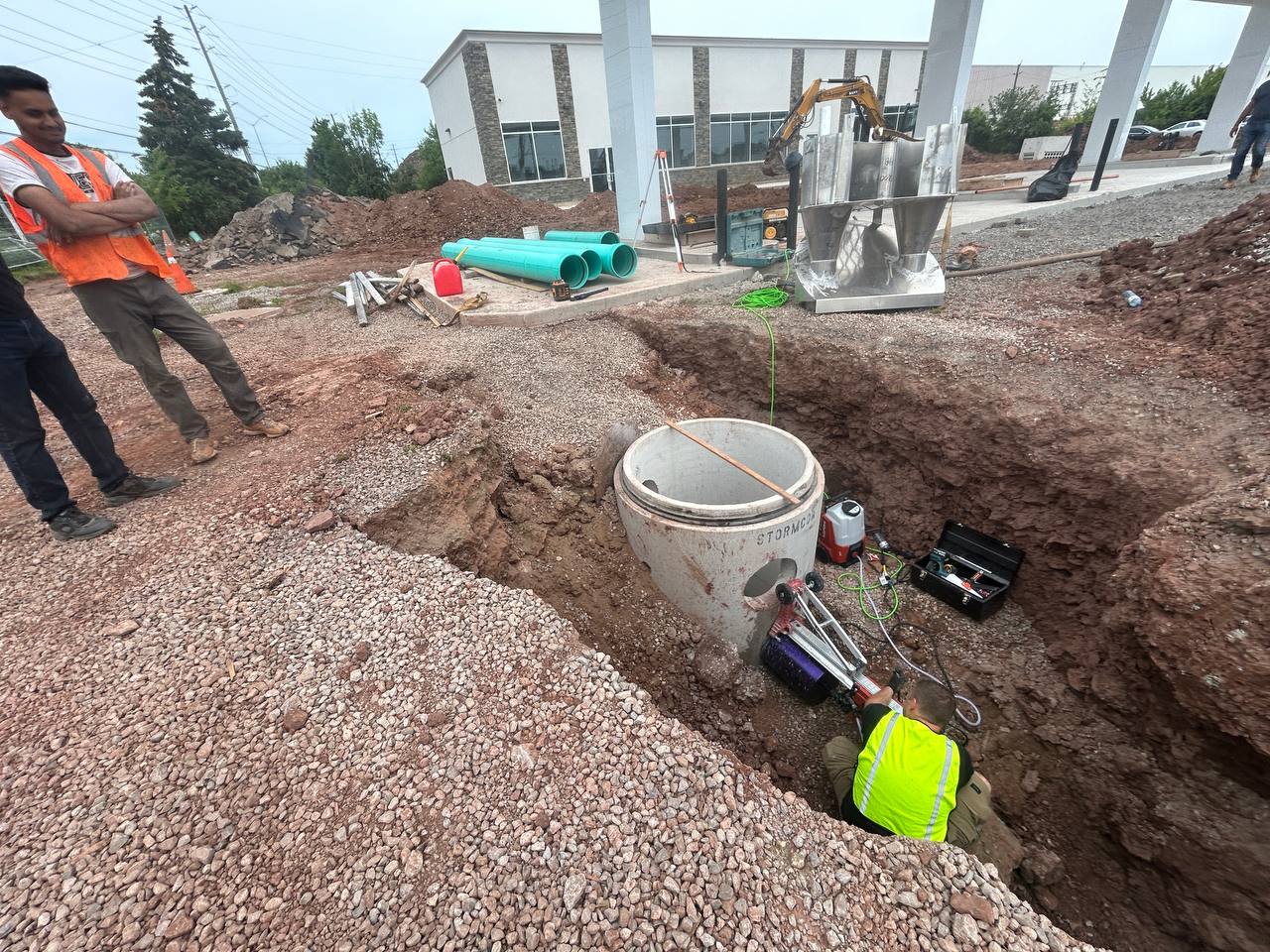
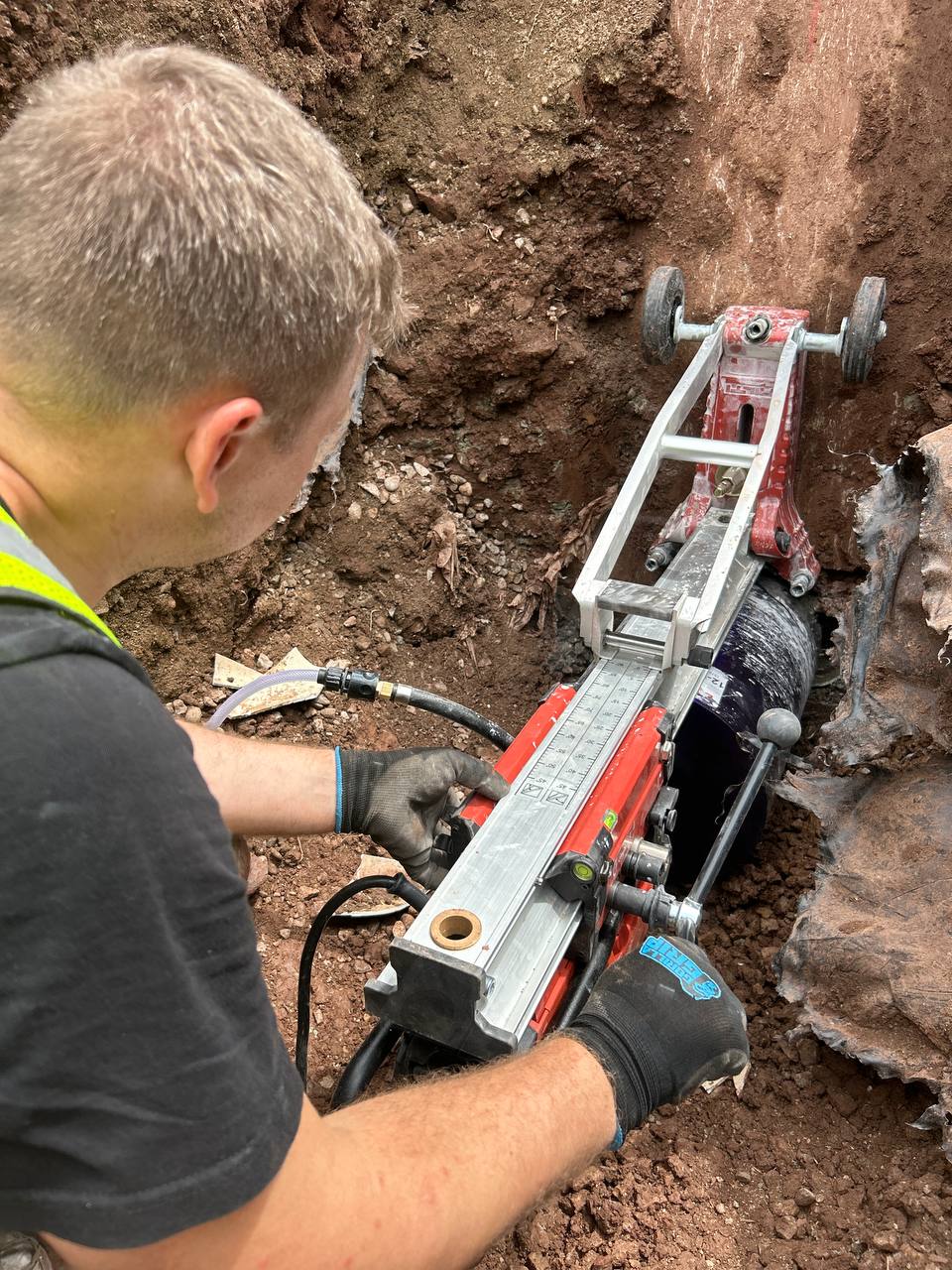
- Tight trench conditions: limited working room—space for the rig only.
- Mud + water: below-grade work in wet soil; slurry quickly becomes a handling issue.
- Reinforced concrete: light-to-moderate reinforcement, including 3–4 bars around ½” encountered during coring.
- Self-sufficient utilities: we supplied our own generator and brought water in containers.
What we did
- Coordinated layout on site with the GC/pipe crew to confirm the correct connection point and elevation.
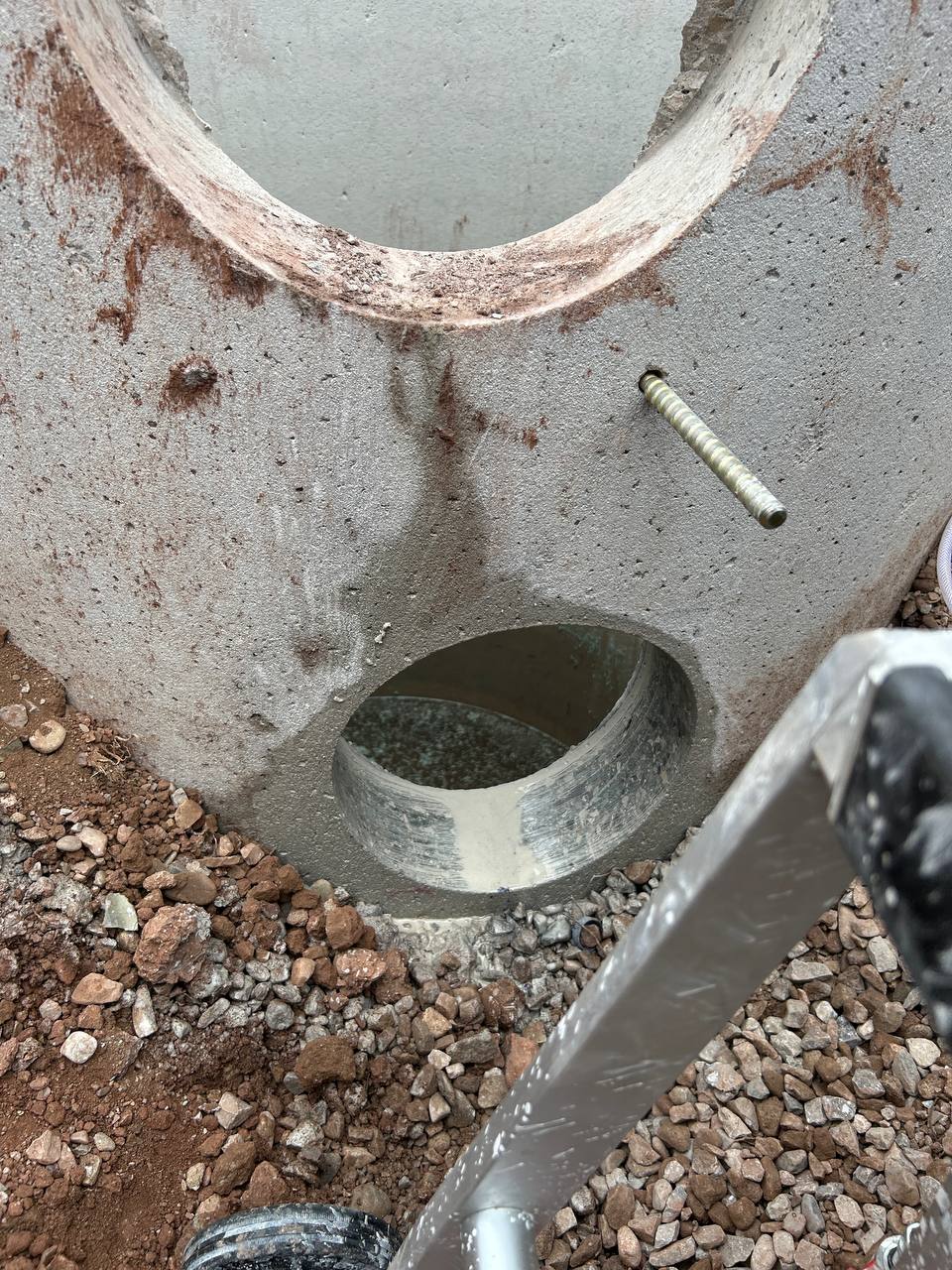
- Set the coring rig inside the trench and completed the first 12” wet core on the new manhole at the corrected elevation.
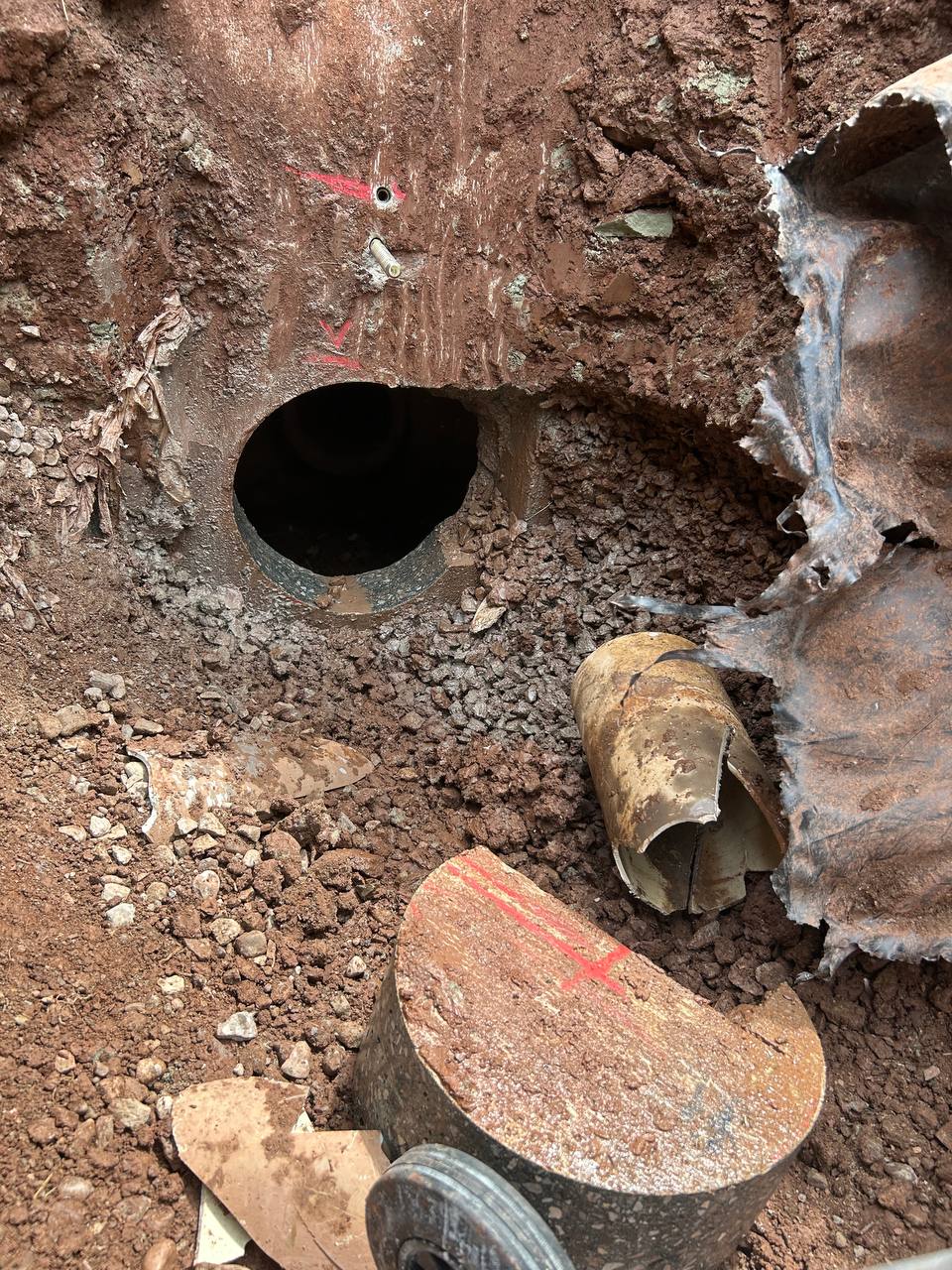
- Relocated and cored the second 12” opening at the tie-in point to the existing collector.
- Managed wet coring water and slurry in muddy conditions and kept the area workable for the next trade.
Result
- Two clean 12” round openings completed in reinforced concrete—ready for immediate pipe installation.
- The pipe contractor installed the sewer pipe successfully (clear before/after photo opportunity: factory opening vs corrected opening + pipe in place).
- Completed in one 8-hour shift without delays from tooling or reinforcement.
What this job proves (for PMs / GCs)
Full job site video is
Concrete coring in trench work isn’t “just drilling.” The win is delivering:
- Correct elevation (field coordination + accurate layout)
- True round opening for proper pipe fit
- Self-sufficient execution (generator + water)
- Clean handoff so the next trade can install immediately
Fast quote checklist (Concrete Coring)
Send:
- Address + access notes (trench depth / space / working hours)
- Core list (diameter + qty + target locations)
- Approx thickness + any embed risk notes
- 2–3 photos with locations marked
Concrete Coring for Sewer Tie-Ins (Mississauga Case)
Quick answers about 12” coring in precast reinforced concrete manholes, trench conditions, and what information is needed to quote.
The factory opening in the newly installed precast manhole was positioned too high for the required sewer connection. We cored a new 12” round opening with the center 30” (2.5 ft) lower to match the correct pipe elevation, then cored a second 12” opening for the tie-in point.
Yes. Concrete coring can cut through reinforced concrete, including rebar. In this case, reinforcement was light-to-moderate, and we encountered several bars (about ½”), with no delays or tooling issues.
Wet coring keeps the bit cool, improves cut quality, and reduces airborne dust. In trenches, it also helps produce a clean cut, but it requires planning for water and slurry—especially in muddy ground where slurry can turn into heavy “soup” fast.
It depends on core size, wall thickness, and access, but we can work with very limited room when the trench is tight. On this job, the trench had space only for the rig and a two-person crew, and we still delivered two clean 12” cores in one shift.
Send the address + access notes (trench depth/working room), a core list (diameter + quantity + locations), and the approximate thickness. Add 2–3 photos with the locations marked and any embed risk notes (rebar, utilities, unknown services), and we’ll confirm the safest setup and a workable time window.