
Cutting Concrete Wall — International Retaining Wall Removal in a Deep Excavation
Date: Nov–Mar (winter work) | Project type: Multi-building residential complex | Location: International (confidential)
Client: Engineering-led reconstruction | Services: Cutting concrete wall (retaining walls), hydraulic wall sawing, controlled section drop
Duration: 4–5 months | Crew: 8 specialists | Equipment: 4 wall-saw machines | Cutting method: wet cutting (water-fed)
Overview
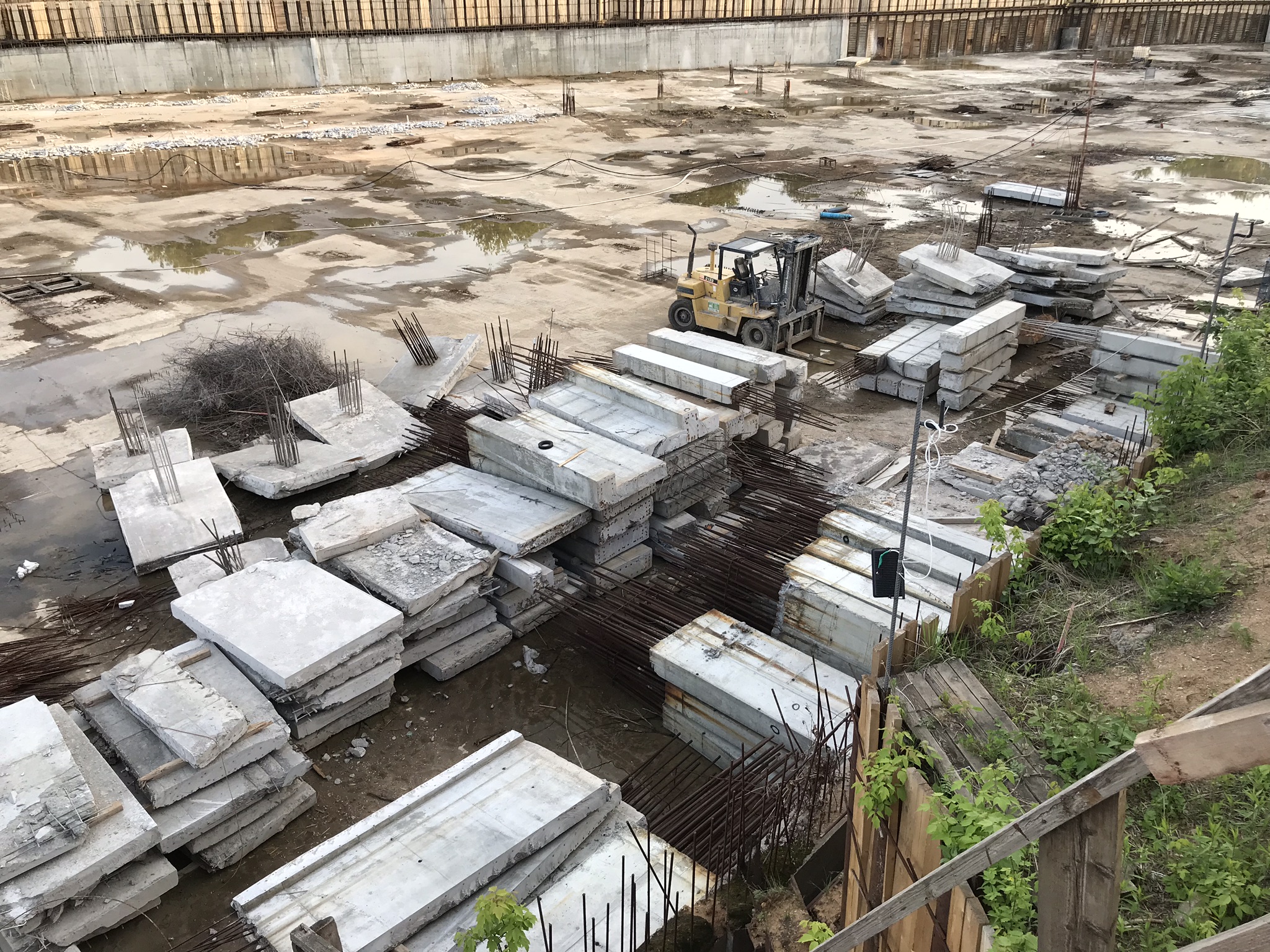
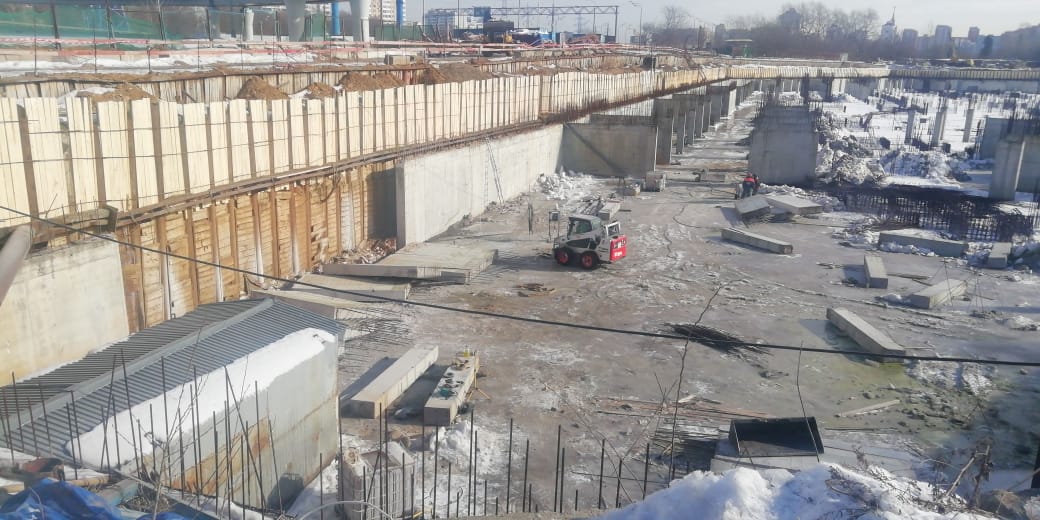
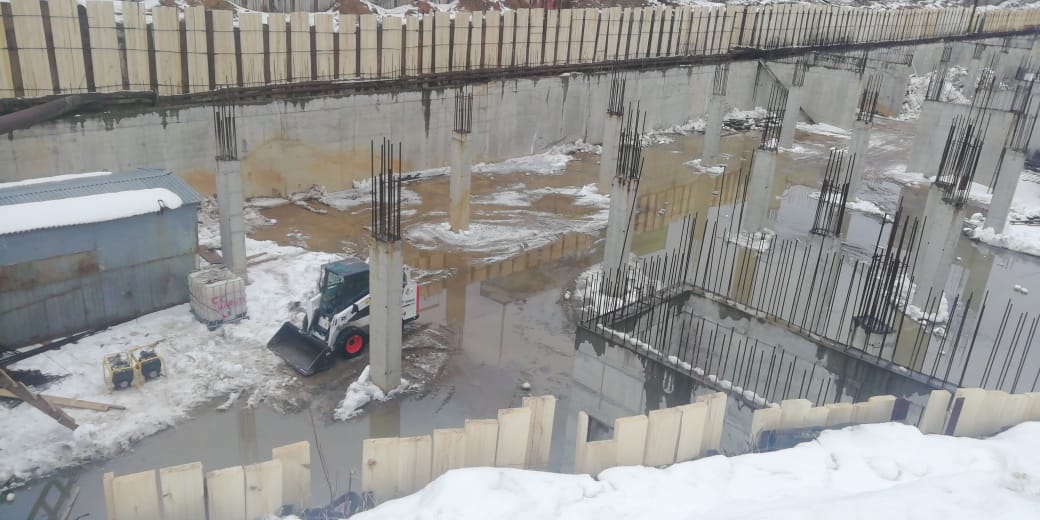
Diamond Rope Machines Inc. was brought into an international reconstruction project inside a large excavation pit. The site already had a poured foundation base slab (“pad”) and perimeter retaining walls. Engineers required the retaining walls to be removed to expand and reconfigure the excavation footprint for the next construction phase.
Our scope was strictly focused on cutting concrete wall elements and executing controlled drops. Material handling and relocation within the pit were performed by another contractor.
Scope (quantified)
- Total wall length removed: ~2 km (≈ 6,562 ft / 1.24 miles)
- Wall thickness: 40 cm (≈ 15.75 in / ~16”)
- Wall height: 8 m (≈ 26.25 ft)
- Reinforcement: heavy rebar; internal grid/spacing reported at 25 cm (≈ 9.84 in)
- Additional structural cuts: vertical columns and connecting elements where a slab/beam zone had already been poured overhead (beam/“rigel” + slab conditions)
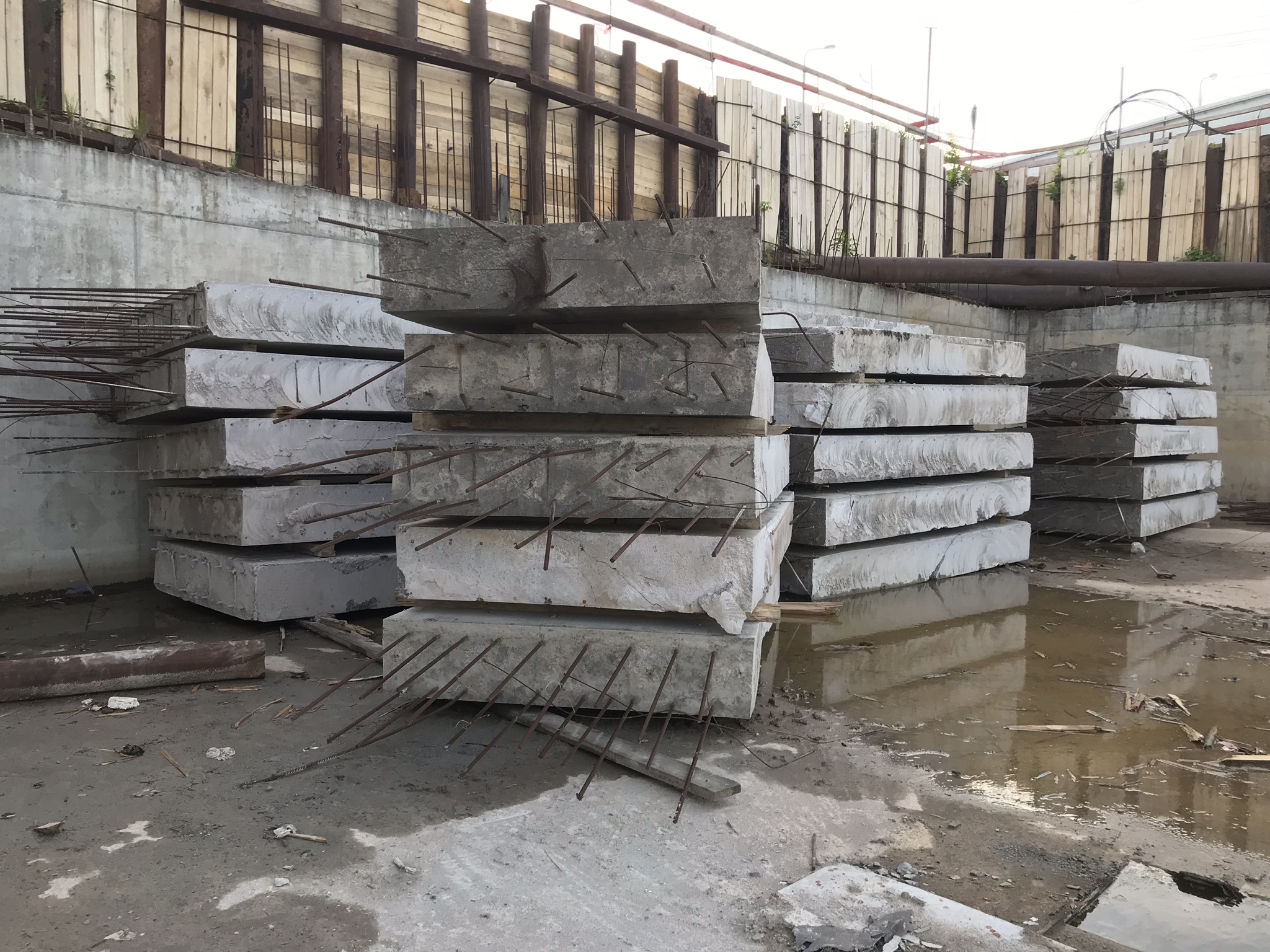
Key constraints (what made this non-standard)
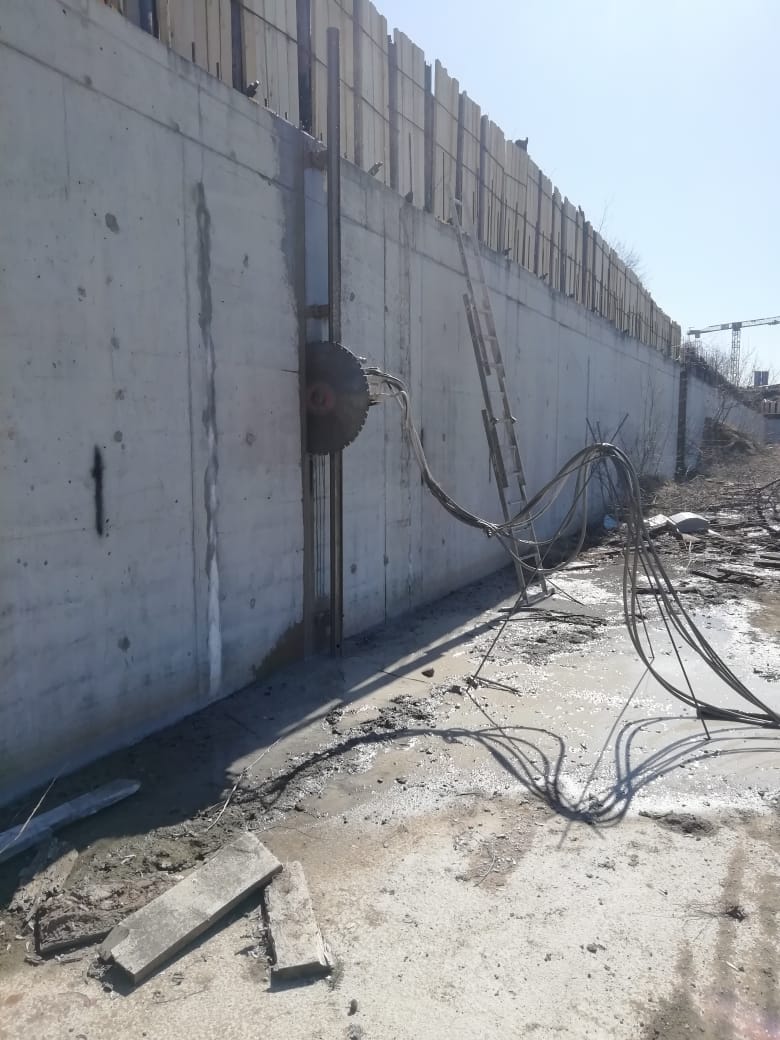
- One-side access only: shoring was installed extremely close to the back side of the wall—approximately 30–40 cm (11.8–15.7”) clearance—eliminating rear access. Every cut had to be executed from a single face.
- Variable load conditions: in some areas, shoring had already been removed and soil pressure was acting on the wall. On those limited sections, cut pieces could be pushed by the ground—creating a real risk to people and equipment if the drop sequence wasn’t controlled.
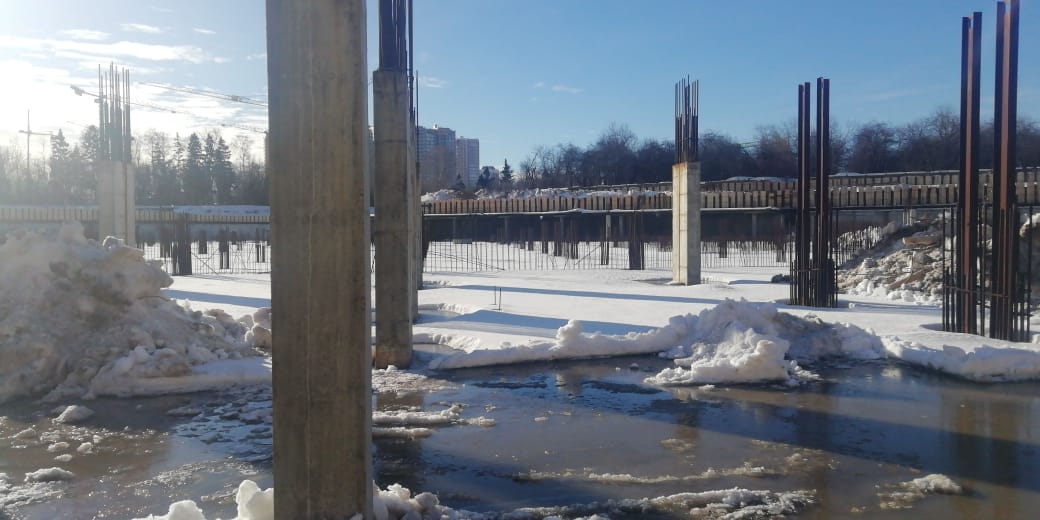
- Winter execution: work ran through freezing conditions (Nov–Mar), requiring stable water-fed cutting practices and disciplined safety controls.
Our work (how we executed)
- Deployed 4 hydraulic wall-saw machines and an 8-person specialist crew to maintain consistent production over a multi-month schedule.
- Performed cutting concrete wall segments using diamond blades with continuous water feed (wet cutting) to control dust and maintain cutting stability.
- Used two blade sizes based on depth and staging:
- 800 mm blade (31.5”) for initial passes and controlled sequencing
- 1000 mm blade (39.4”) to complete full-depth cuts through thick reinforced sections
- Executed controlled drops of cut wall sections into the excavation pit, maintaining a safe exclusion zone and ensuring pieces did not damage equipment or create uncontrolled movement near shoring.

Safety & control
This project required “control-first” execution:
- strict work zoning and communication,
- controlled cut-and-drop sequencing (especially where soil pressure was present),
- continuous monitoring of clearance and piece behavior near shoring,
- wet cutting to reduce airborne dust and manage blade temperature.

Result

Over 4–5 months, Diamond Rope Machines Inc. completed the cutting concrete wall scope across the excavation: perimeter retaining walls, internal wall runs, and select columns/connecting elements. The excavation pit was fully prepared for the next reconstruction contractor to mobilize and continue structural work in the summer season.