
Concrete Core Scanning Before Core Drilling
Intro
Core drilling looks simple from the outside: mark the spot, set the drill, make the hole.
On a commercial jobsite, it is rarely that simple.
A core hole may need to pass through a slab, wall or foundation near rebar, electrical conduit, plumbing, sprinkler lines, framing, finished areas or active building systems. If the location is wrong, the problem may not show up until the core bit is already inside the concrete.
That is why concrete core scanning is often used before core drilling.
At DRM Cutting, we provide GPR concrete scanning and diamond core drilling for general contractors, plumbers, electricians, mechanical contractors and commercial renovation teams in Toronto and the GTA.
What Is Concrete Core Scanning?
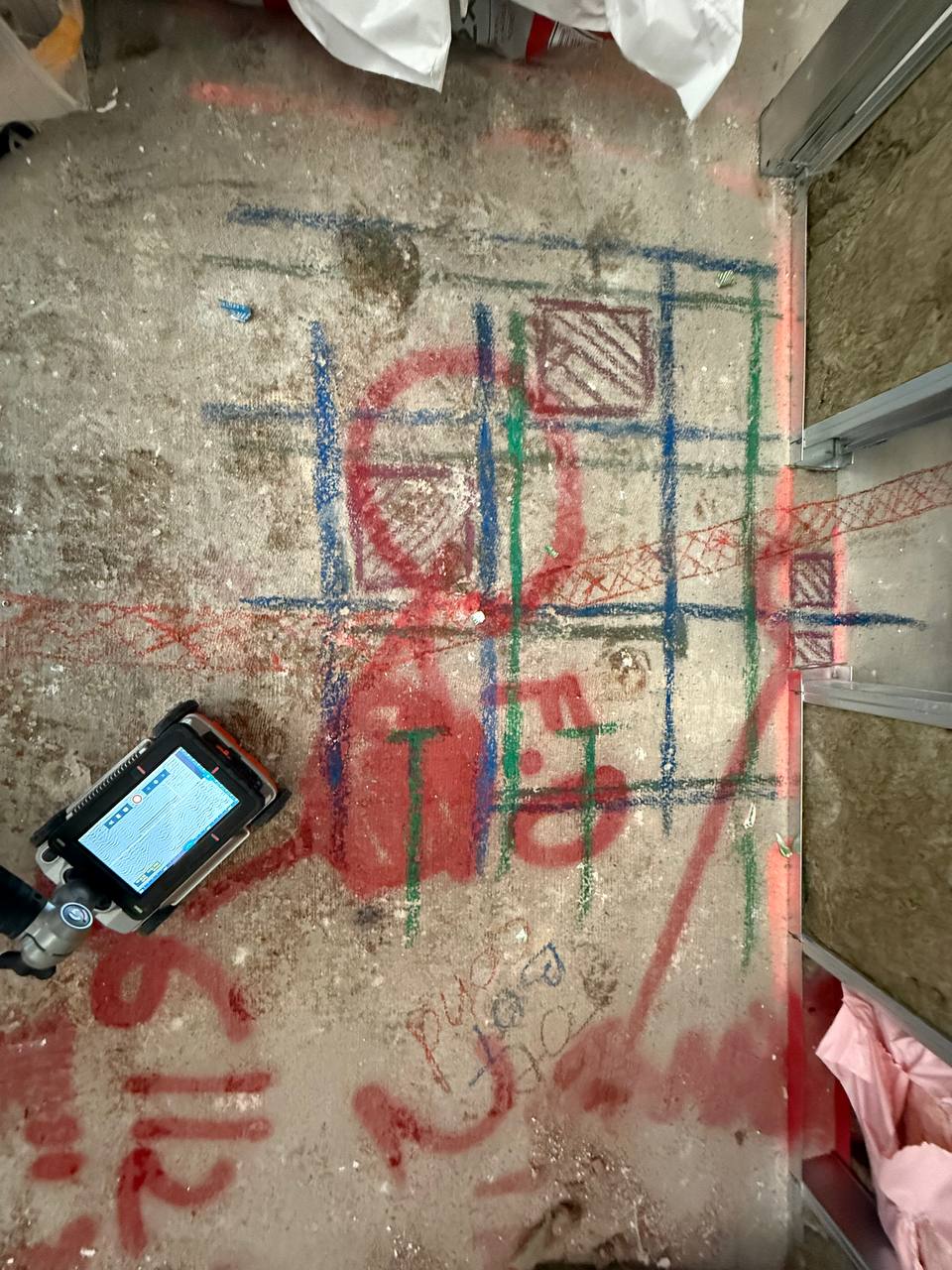
Concrete core scanning means checking the concrete before drilling a core hole.
In most cases, this is done with GPR — Ground Penetrating Radar. The scanner helps locate possible rebar, conduits and other embedded items before the core drill is set.
The scan does not replace the trade layout. The general contractor, plumber, electrician or mechanical contractor still decides where the pipe, conduit, sleeve or drain needs to go.
Our role is to check the concrete side of the work:
- Can the drill physically fit in that location?
- Is the hole too close to a wall, stud, pipe or ceiling obstruction?
- Is there visible conflict with rebar or possible hidden services?
- Can the hole shift slightly without affecting the trade layout?
- Does the site need vacuum collection for water and slurry?
- Is the access safe for the operator and equipment?
That short review can prevent a lot of job site frustration.
Why Core Scanning Matters Before Drilling
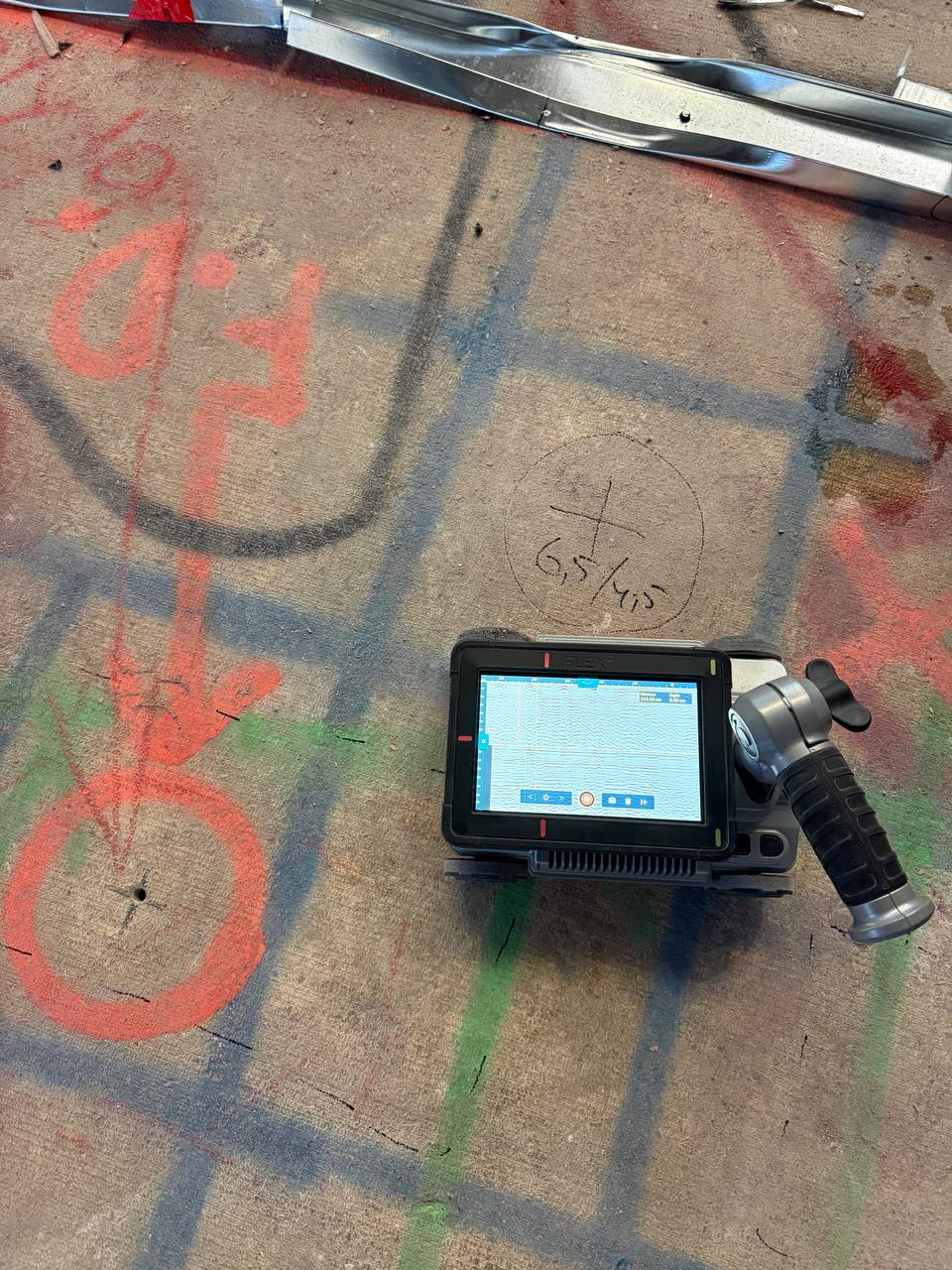
A commercial slab or wall can carry more than concrete.
It may contain rebar, electrical conduit, old sleeves, abandoned lines, active services or embedded items that are not obvious from the surface. Even when drawings exist, the real site conditions can be different.
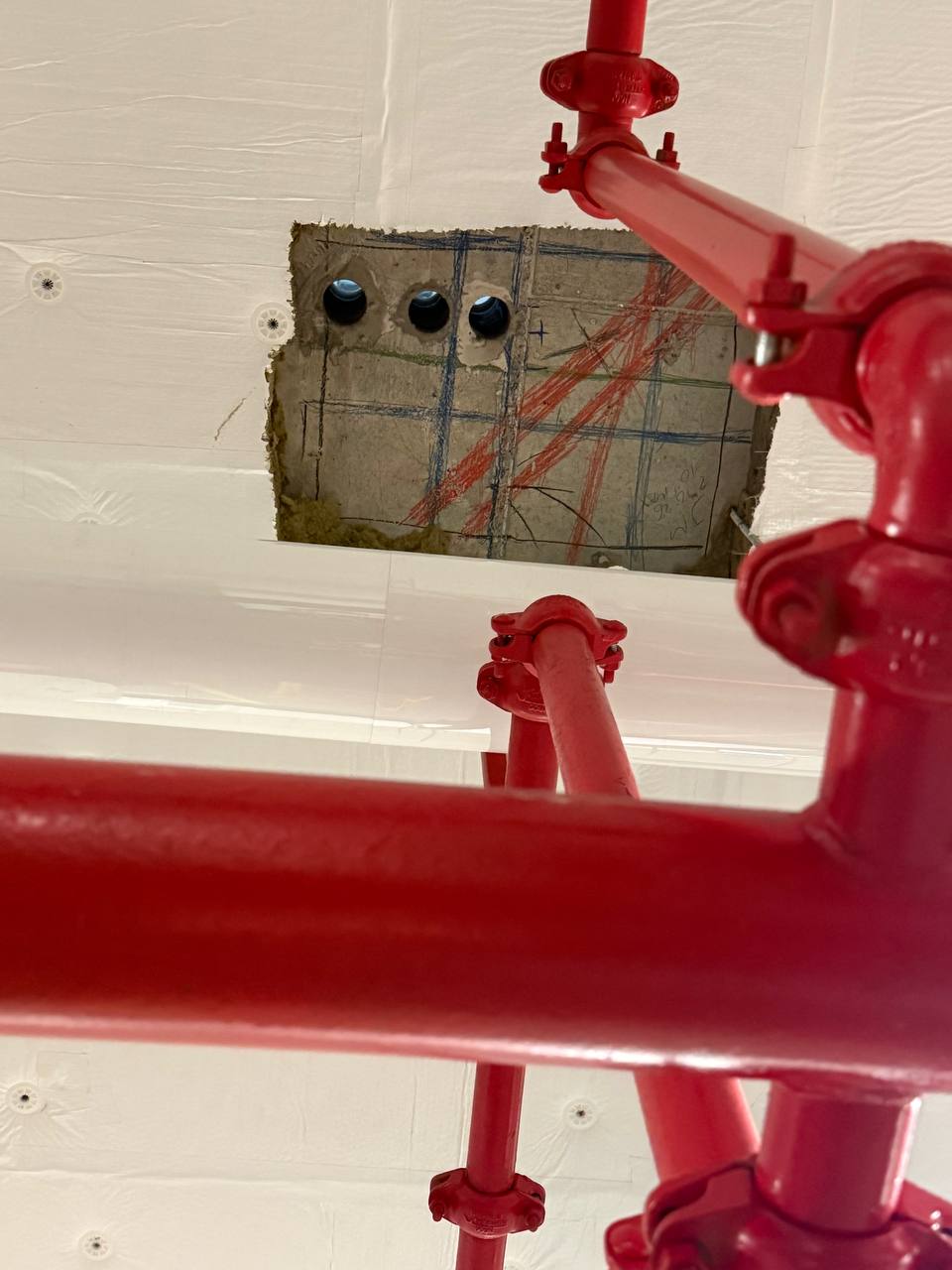
Core scanning helps the GC and trades make better decisions before drilling starts.
The goal is not to make the job complicated. The goal is to avoid drilling blind when the risk is real.
For example, if a plumber marks a drain location and the scan shows heavy rebar in that exact spot, the team may be able to shift the hole slightly. If an electrician needs a conduit penetration near a wall, scanning can help check whether the proposed location is clean enough to drill.
Sometimes the hole stays where it is. Sometimes it moves an inch or two. Sometimes the location needs to be reviewed with the trade before anyone drills.
That is the point: make the decision before the concrete is opened.
Core Drilling for Plumbing and Electrical Lines
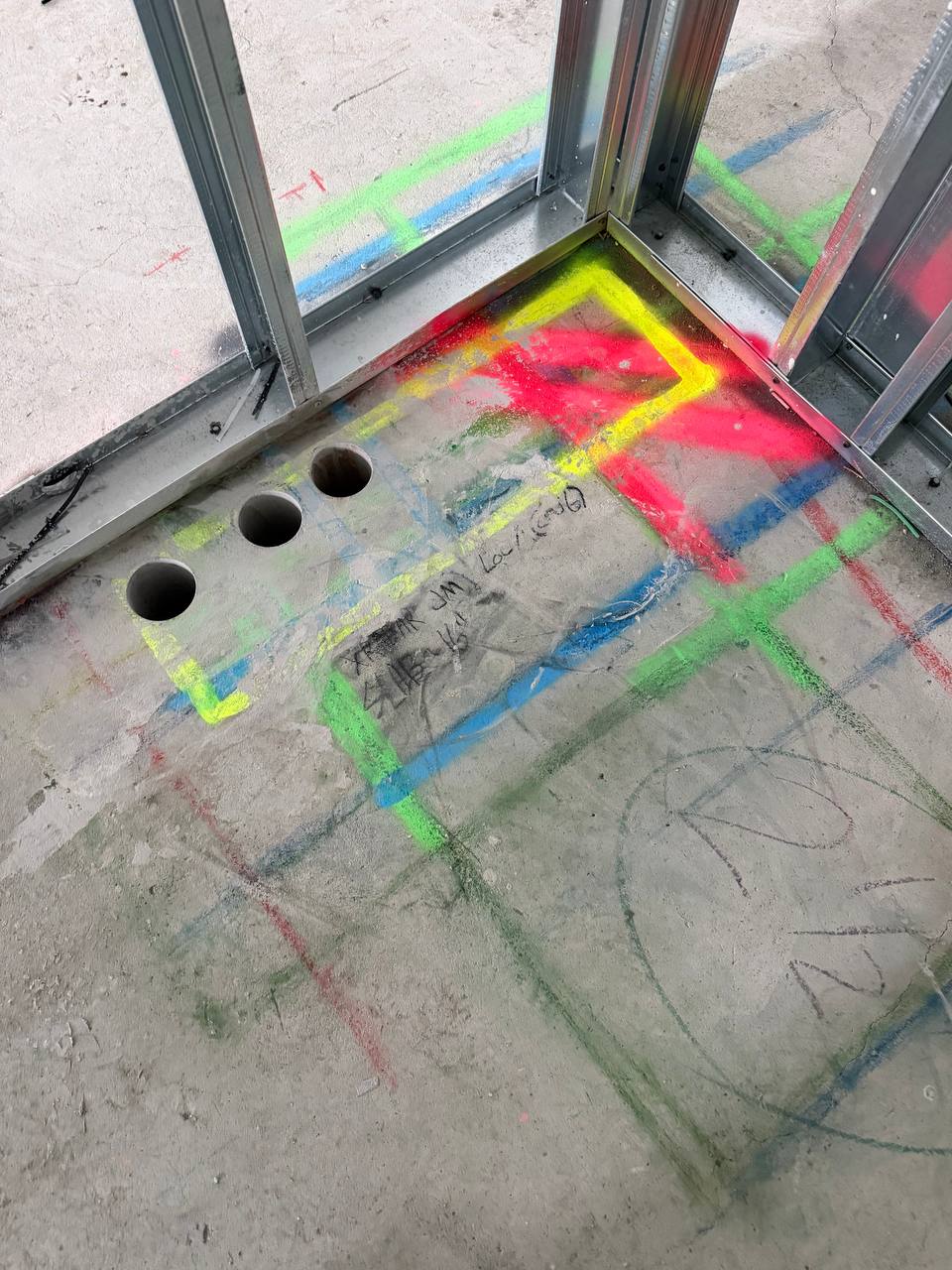
Most commercial core drilling is tied to building services.
Common uses include:
- plumbing penetrations;
- drain lines;
- electrical conduit;
- HVAC sleeves;
- sprinkler and fire protection lines;
- mechanical room penetrations;
- floor cores through slabs;
- wall cores through concrete or foundation walls.
On many jobs, the general contractor coordinates several trades at the same time. The plumber may need one group of holes. The electrician may need another. The mechanical contractor may need sleeves through a wall or slab.
When all of that is handled as one concrete coring scope, the site is easier to manage.
The layout still comes from the trades. DRM helps confirm how the coring can be done with the equipment, access and concrete conditions on site.
Core Scanning Helps Protect the Remaining Structure
Core drilling is controlled, but it still removes concrete.
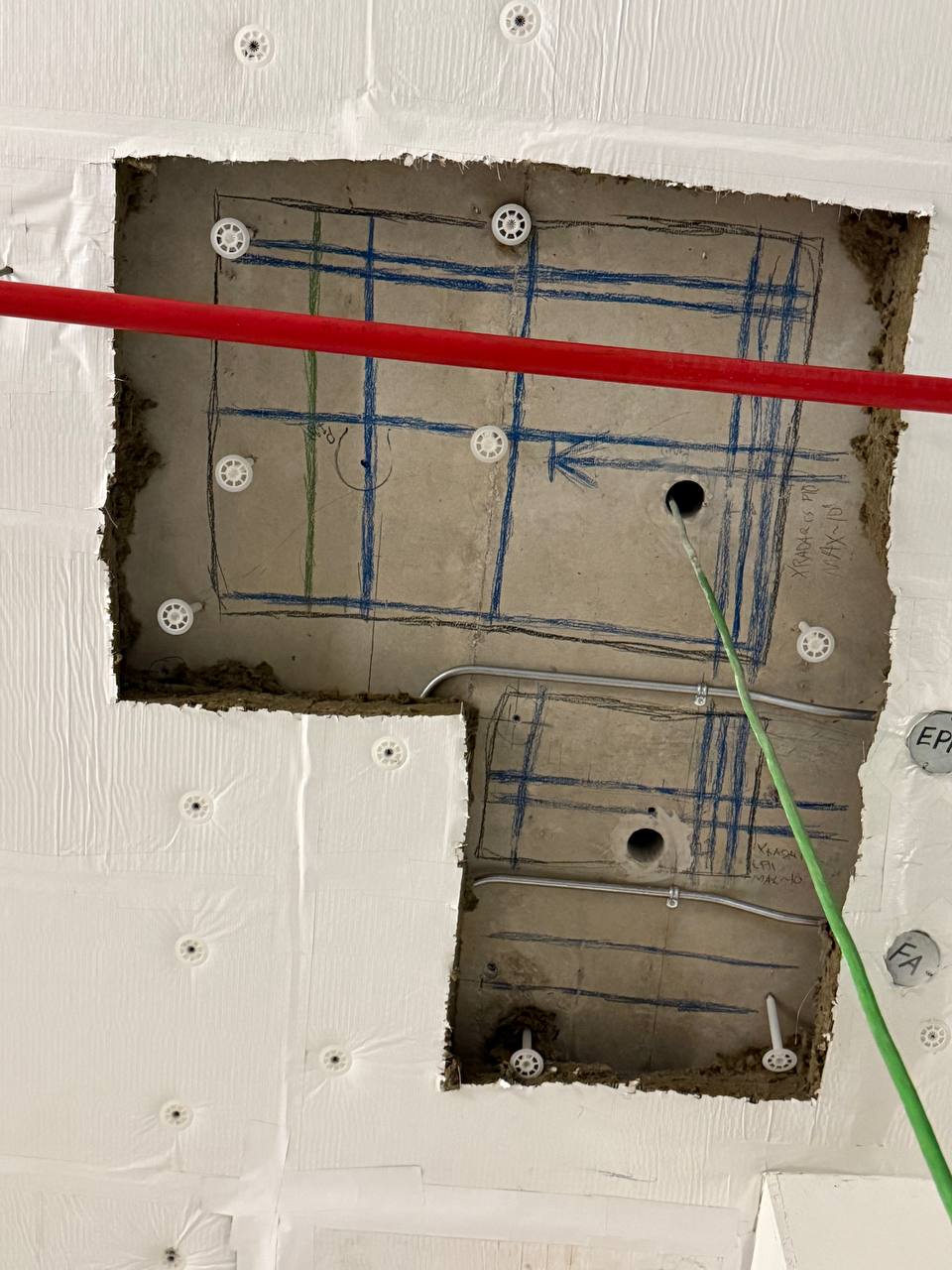
When the hole passes through a slab or wall, the goal is to make the penetration without causing unnecessary damage around it. Scanning helps identify rebar patterns so the team can avoid cutting reinforcement where possible.
This matters when multiple holes are grouped together.
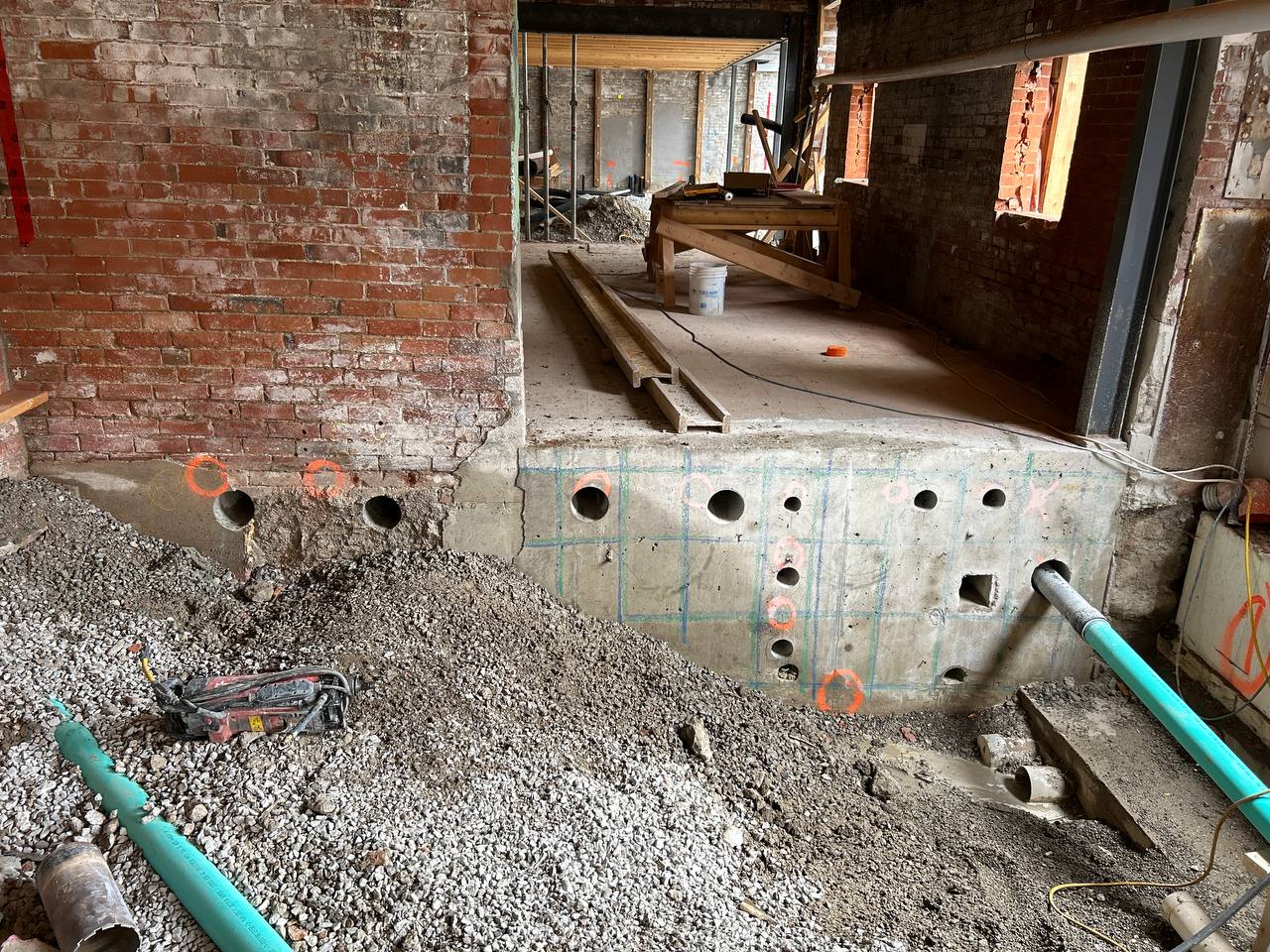
One core hole may not look like much. But a row of holes through a slab or wall can create a bigger structural conversation, especially when the holes are close together or near columns, beams, walls or slab edges.
DRM does not redesign the structure. But we can scan, mark what we see and work with the GC or trade to find a more practical drilling location when the layout allows it.
That is the difference between “just drill here” and a more controlled coring process.
When GPR Scanning Is Recommended
GPR scanning is not mandatory for every hole.
Some coring locations are simple. The site may already be open. The GC may know what is inside the wall or slab. The project may not require scanning.
But scanning is recommended when:
- the slab or wall contains unknown services;
- the hole is near electrical rooms or mechanical areas;
- several holes are grouped together;
- the work is inside a commercial renovation;
- the GC wants to reduce the chance of hitting rebar or conduit;
- the building owner or project team requires a scan before drilling;
- the layout may still be adjusted before coring starts.
In those cases, scanning is a practical step before drilling.
It gives the team more information, and information is what keeps concrete work from turning into a guessing game.

Core Drilling in Tight Commercial Areas
Many core holes are not drilled in open space.
They are drilled near walls, framing, ceilings, pipes, columns, door tracks, mechanical rooms or partially finished interiors. That affects the setup.
The core drill needs room for:
- the drill stand;
- the motor;
- the core bit;
- water connection;
- operator access;
- anchoring or vacuum setup;
- safe handling of the concrete core.
A hole may look possible on a drawing but become difficult once the framing is installed or the ceiling is low. That is why site photos and a short access review are important before scheduling the work.
On some jobs, the drilling location is fine. On others, the location needs to move slightly so the drill can be mounted safely.
That is not a problem if the conversation happens before the crew arrives.
Water and Slurry During Core Drilling
Diamond core drilling usually uses water to cool the bit and control dust.
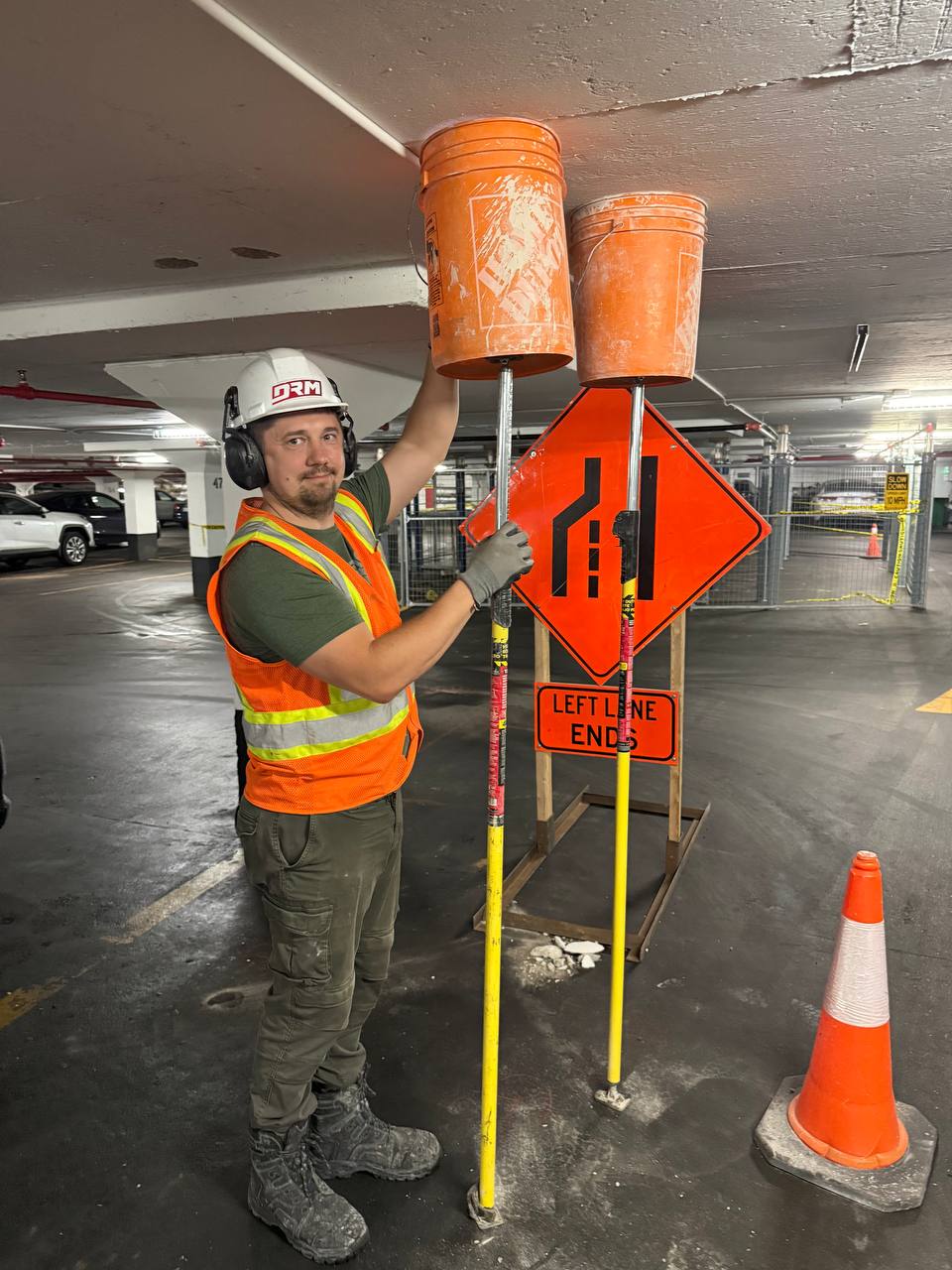
That water mixes with concrete dust and creates slurry. On a commercial site, slurry cannot just run wherever it wants. It may need to be controlled, vacuumed or kept away from finished areas, framing, electrical rooms, tenants or sensitive spaces.
DRM can use vacuum collection where site conditions allow.
The exact setup depends on the location, access, hole size, slab or wall thickness and what is below the drilling area.
For suspended slabs, it is also important to understand what is underneath the hole. If there is a finished ceiling, office, parking area, equipment room or active tenant space below, the coring plan has to account for that before drilling starts.
One Team for Scanning and Core Drilling
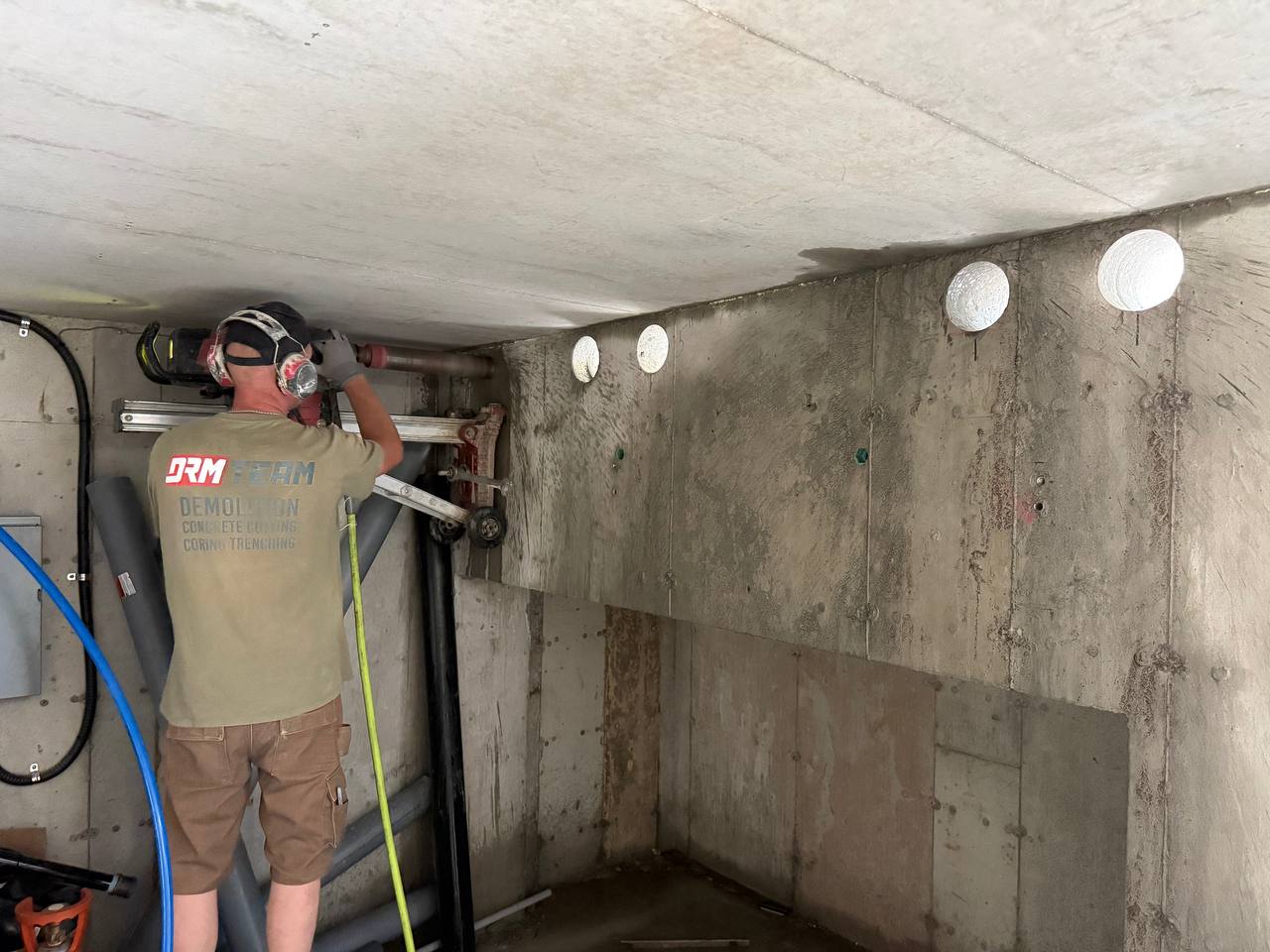
The simplest workflow is often this:
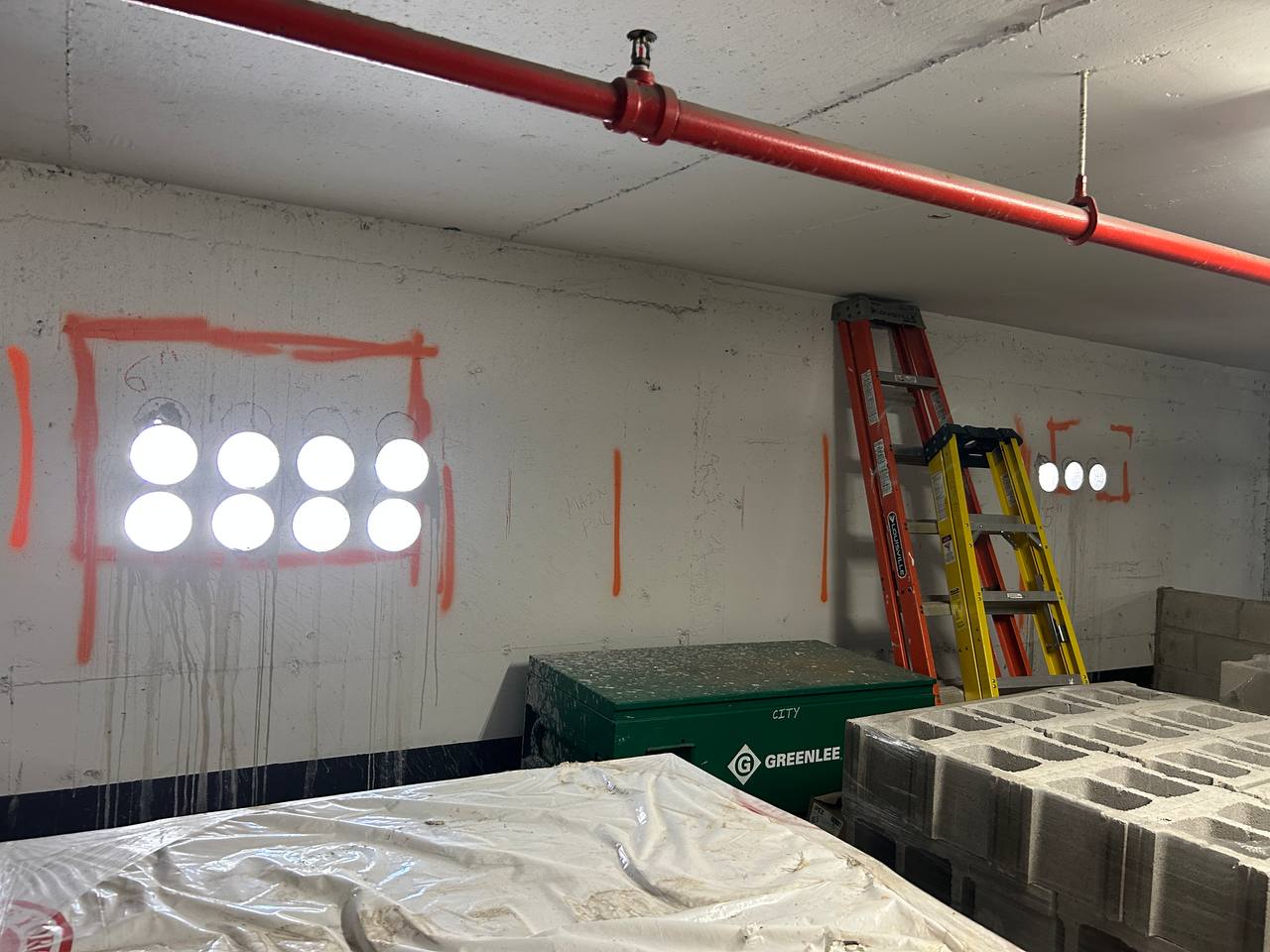
- The GC or trade marks the required core locations.
- DRM reviews access and drilling conditions.
- GPR scanning is completed where needed.
- Possible conflicts are marked and discussed.
- The location is confirmed or adjusted by the responsible trade.
- DRM drills the core holes.
- Water/slurry is managed based on site conditions.
That keeps the scope clean.
The GC does not need to chase one company for scanning and another company for drilling. The trades do not need to explain the same layout twice. The concrete side of the work is handled in one coordinated process.
What We Need for a Core Scanning and Drilling Estimate
For a fast quote, send:
- site address in Toronto/GTA;
- floor or level;
- photos of the exact core locations;
- number of holes;
- hole diameters;
- slab or wall thickness if known;
- what the holes are for: plumbing, electrical, drain, HVAC, sprinkler or mechanical;
- what is below the slab or behind the wall;
- whether GPR scanning is required or preferred;
- access notes: parking, loading, stairs, elevator, working hours;
- any finished areas that need protection.
If the scope is simple, photos and dimensions may be enough.
If the work is inside a busy commercial renovation, mechanical room, framed area or unknown slab, a site visit may be the better first step.
Final Thought
Concrete core drilling is not just about making a round hole.
On a commercial site, every core hole connects to a trade, a layout, a schedule and a risk. Plumbing, electrical, HVAC, drain and sprinkler lines all need accurate penetrations through existing concrete.
Core scanning helps make those penetrations with more information and less guessing.
Send us the layout, photos and hole sizes. DRM can review the scanning and coring scope and confirm the practical next step.
Concrete Core Scanning and Drilling FAQ
Common questions from general contractors, plumbers, electricians and mechanical contractors before drilling through existing concrete.