
Canadian concrete cutting and coring is not a single “service.” It’s a set of methods used to remove, modify, or access concrete without turning the jobsite into a demolition problem.

Below is a practical breakdown of how cutting and coring is typically executed on Canadian jobsites, what changes from project to project, and how to evaluate a contractor beyond a price over the phone.
- What “cutting and coring” usually includes in Canada
Concrete cutting and coring scopes are commonly built from these building blocks:
Slab sawing (walk-behind saws) for floor openings, trenching, joints, and removals.
Wall sawing (track saws) for door/window openings, controlled wall removal, and structural modifications.
Wire sawing for thick, heavily reinforced, or vibration-sensitive structures where conventional blades struggle.
Core drilling for pipe penetrations, anchors, mechanical/electrical runs, and testing.
Selective controlled removal when the cut must end with clean sections removed from the building, not rubble left behind.
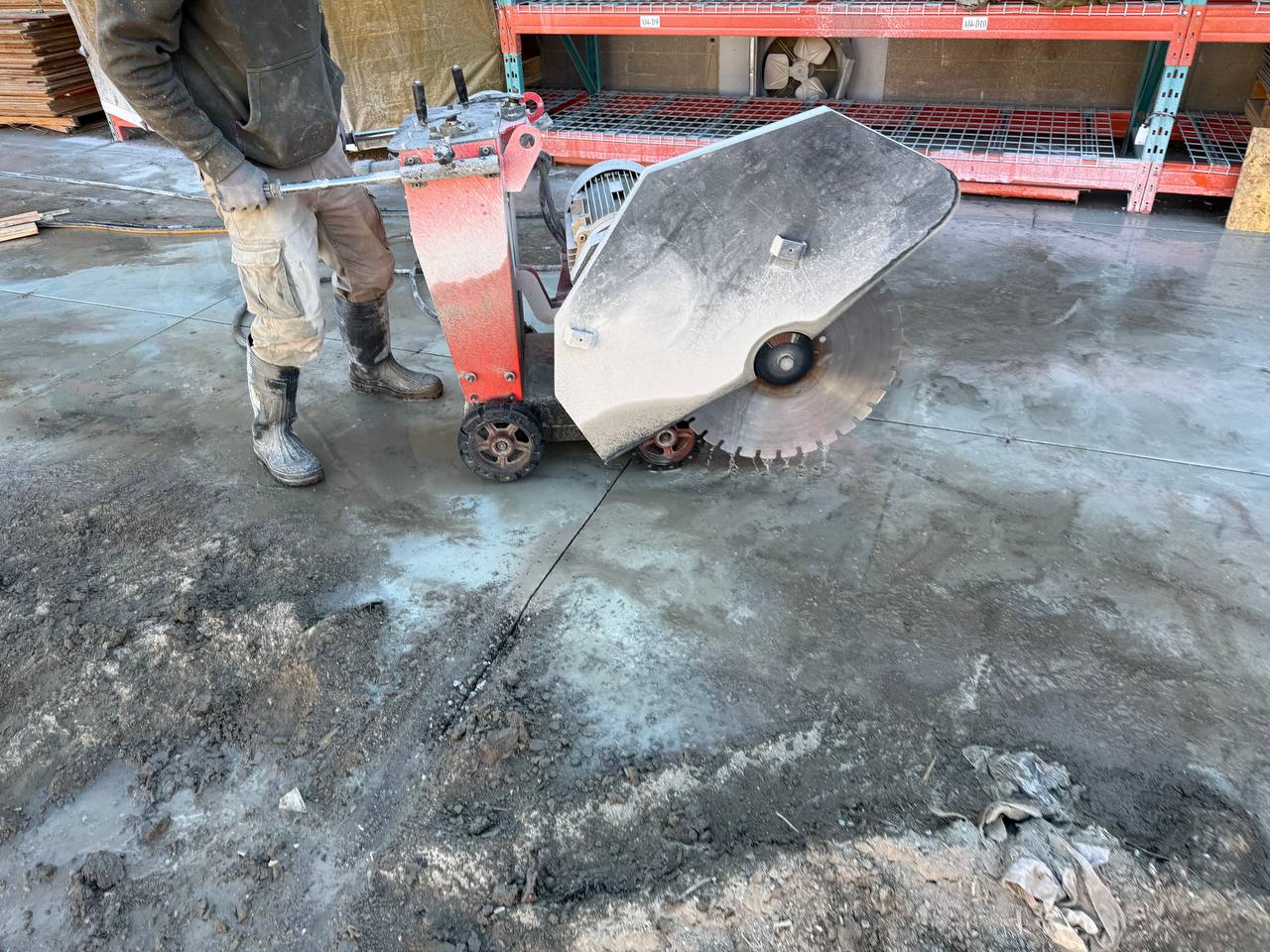
On real sites, you often combine multiple methods. That is usually faster and safer than forcing a single technique onto every condition.
- Jobsite realities that define the method (and the cost)
A clean cut is the easy part. The job is defined by constraints:
Live-site restrictions: occupied buildings, active production, public areas, sensitive tenants.
Noise and vibration limits: condos, hospitals, transit corridors, equipment rooms.
Access and haul-out: elevators, stairs, narrow corridors, no indoor excavator.
Embedded risk: conduits, post-tension cables, fire lines, unknown reinforcement, existing damage.
Water and slurry control: wet cutting is standard, but the containment plan matters.

If your contractor does not ask about these constraints, the quote is not a quote. It is a guess.
- Why “No-Blind-Cuts” is not a slogan
Many concrete failures on projects start as “simple cuts” where someone assumed the slab was clear. In Canada, the most expensive mistake is cutting into:
electrical conduits,
data lines,
fire protection,
unknown rebar layouts,
post-tension systems.

A professional approach is simple: confirm before you cut. Sometimes that means drawings and site marks are enough. Sometimes it means GPR scanning to verify thickness, reinforcement, and embeds so the cutting plan is based on reality, not hope.
- What a proper cutting & coring scope should look like
A good scope is measurable. It avoids the “we’ll see on site” trap.
Look for:
quantities (linear feet of cutting, number and diameter of cores, thickness ranges),
method selection (slab saw, wall saw, wire saw, drilling),
segmentation plan if removal is included (section sizes tied to rigging/haul-out),
protection and containment plan (wet cutting, slurry management, barriers),
clear boundaries (what is included, what is excluded, what triggers a change).
This is how you avoid surprise invoices and trade conflicts.
- How to choose a contractor (fast checklist for PMs and estimators)
Ask these five questions and you will filter most problems:
What are the site constraints (noise, vibration, access, windows)? Repeat back what you heard.
How do you confirm embeds before cutting (drawings, scanning, site verification)?
How will you control water and slurry in this specific space?
If removal is required, what is the segment size and how will it be hauled out?
What information do you need from us to lock a real price (photos, plans, thickness, access)?
If you want fewer surprises, you want a contractor who treats the cut as a controlled operation, not a “show up and saw” task.
If you’re scoping a cutting and coring package, send photos, drawings, and the key constraints. A contractor who can explain the plan in plain language before mobilizing is the one who will protect your schedule on site.
Ready for Your Free Quote
Contact us today for professional concrete cutting services
Get Your Free Quote
Contact Information
7:00 AM – 8:00 PM Monday to Friday
(647) 558-8505Service Area
GTA/Ontario daily. Canada-wide for wire sawing.
Why Choose DRM?
- Licensed & Insured
- Modern Equipment
- No-Blind-Cuts Policy