
Cutting Concrete: Methods, Use Cases, and How Contractors Choose the Right Cut
“Cutting concrete” is not one tool. It’s a controlled way to remove or modify concrete without turning a job into impact chaos. When you cut instead of smash, you control vibration, protect adjacent structure, and keep the site predictable for the next trade.
At DRM Cutting, the philosophy is simple: remove brute force and uncertainty from demolition and modifications, and replace it with planned diamond cutting, scanning, and controlled segmentation. That approach matters most on live sites, in tight access, and anywhere “one wrong hit” becomes downtime, rework, or a safety incident.
This guide covers the main types of cutting concrete (flat/floor sawing, slab sawing, wall sawing, wire sawing, and chain sawing), where each method is used, and how owners, GCs, developers, and facility teams choose the right cut.
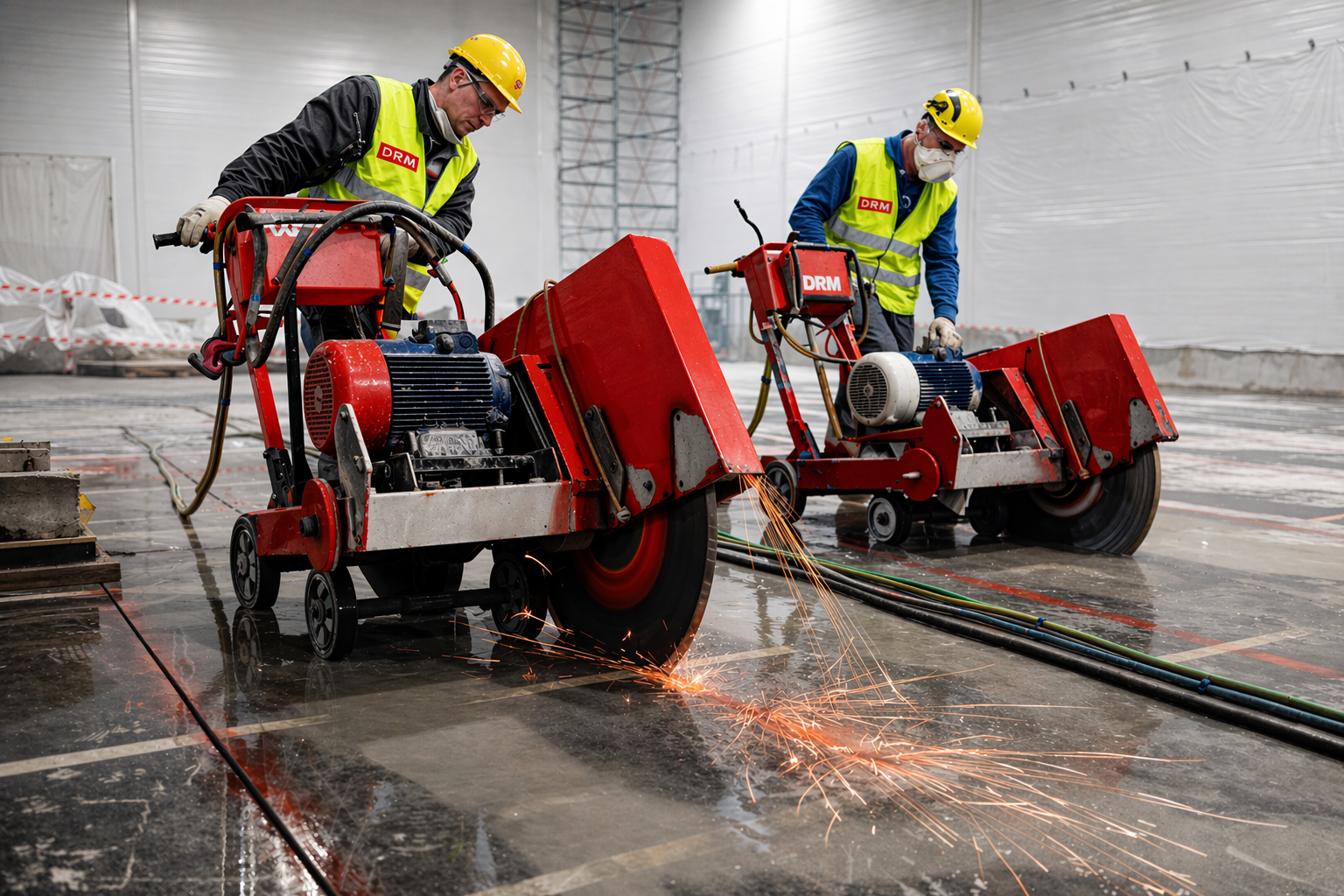
Flat/floor sawing with wet cutting for clean lines and controlled removal
Where cutting concrete is used
Most real-world scopes fall into a few repeatable buckets:
- Tenant improvements and MEP changes
New plumbing lines, drains, trenching for piping, and mechanical upgrades often need saw-cut trenches in slabs. Flat/floor sawing keeps edges clean and minimizes collateral cracking. - Openings and access
Window openings, door openings, service penetrations, and stair or shaft modifications. Wall sawing and chain sawing are common when you need straight lines, clean corners, and controlled removal. - Structural modifications and controlled demolition
When you need to remove part of a slab, curb, or wall without shock-loading what stays. Cutting isolates the “remove” zone so the remaining structure isn’t damaged by impact. - Repairs, redesigns, and corrections
Concrete gets poured wrong. Designs change. A contractor needs a clean correction without turning the surrounding area into rubble. Cutting is the controlled fix. - Sensitive sites
Transit, industrial plants, data rooms, and active commercial spaces where vibration, dust, and cleanup are non-negotiable. This is where planning, water control, and scan-first discipline matter most.
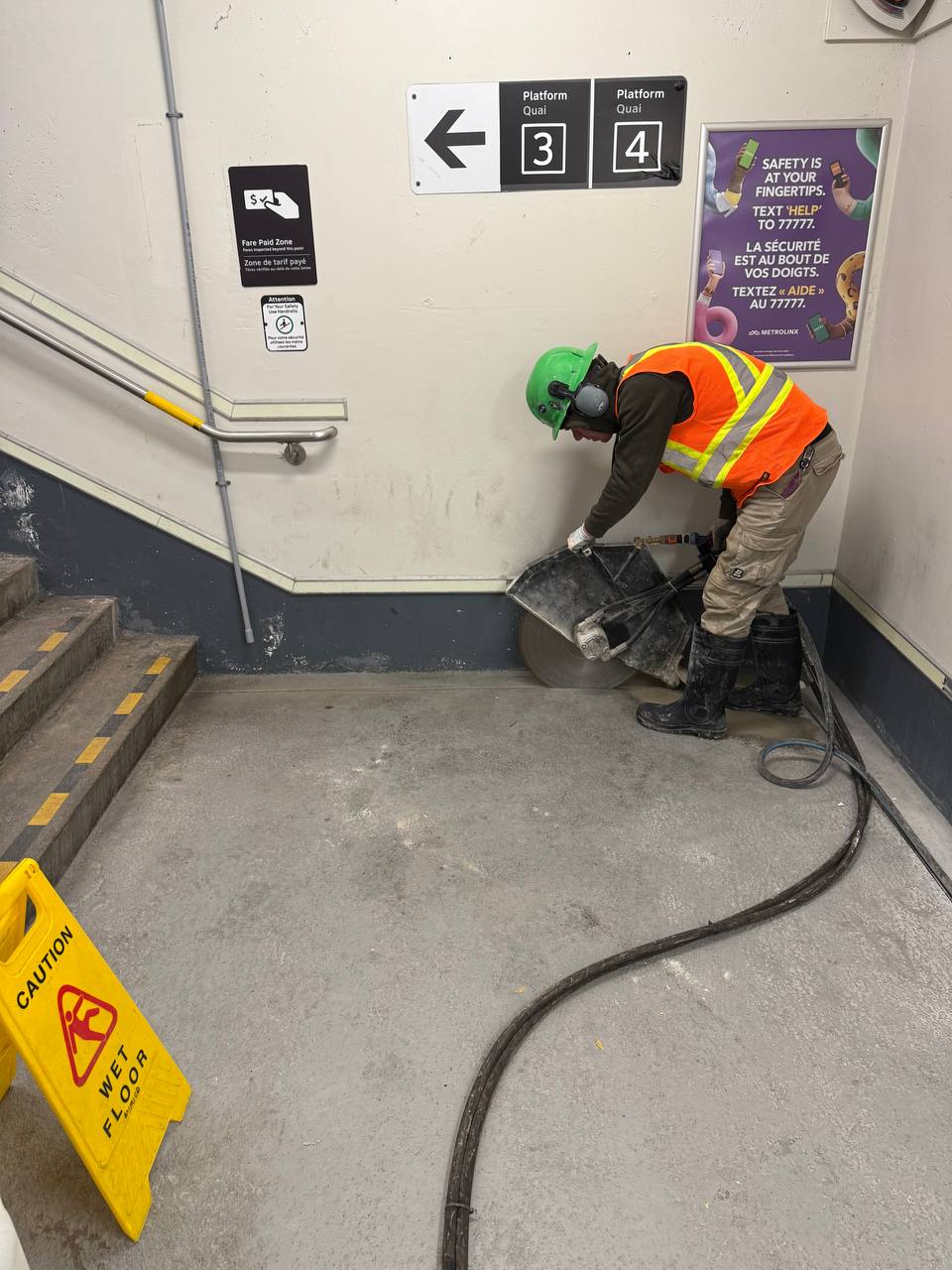
High-power saw cutting used to segment heavy material into manageable pieces.
Who orders cutting concrete work
Cutting concrete is typically ordered by:
- general contractors and construction managers (sequencing and schedule)
- developers and property owners (tenant improvements, rework, asset protection)
- facility maintenance and plant engineering teams (industrial retrofits, machine bases, trenches)
- MEP trades (plumbing and mechanical contractors who need clean trenching)
- municipal and infrastructure contractors (live-site constraints, restricted windows)
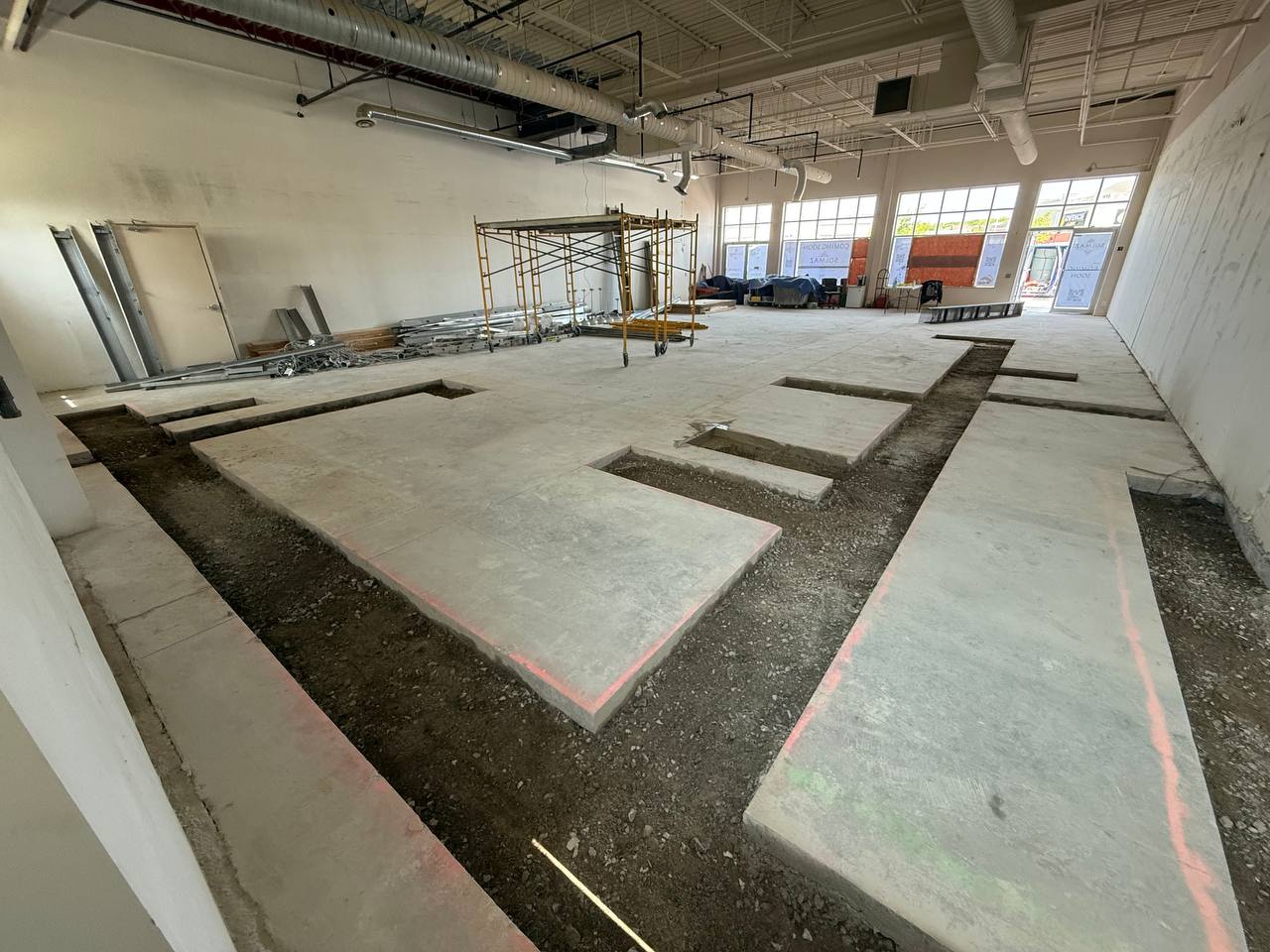
Slab sawing for trenching and controlled layout changes.
A practical rule from the field: 75% of the decision is budget and speed, but the remaining 25% is trust that the contractor won’t create a problem on the site. Cutting concrete is often chosen specifically to eliminate “surprises.”
The main types of cutting concrete
1) Flat cutting concrete (flat sawing) and floor sawing
This is the classic walk-behind / flat saw method for horizontal surfaces.
Use it when:
- cutting slabs on grade or suspended slabs (where permitted)
- trenching for plumbing lines, drains, electrical runs
- removing sections in a controlled pattern for haul-out
- creating clean edges for patching and re-pours
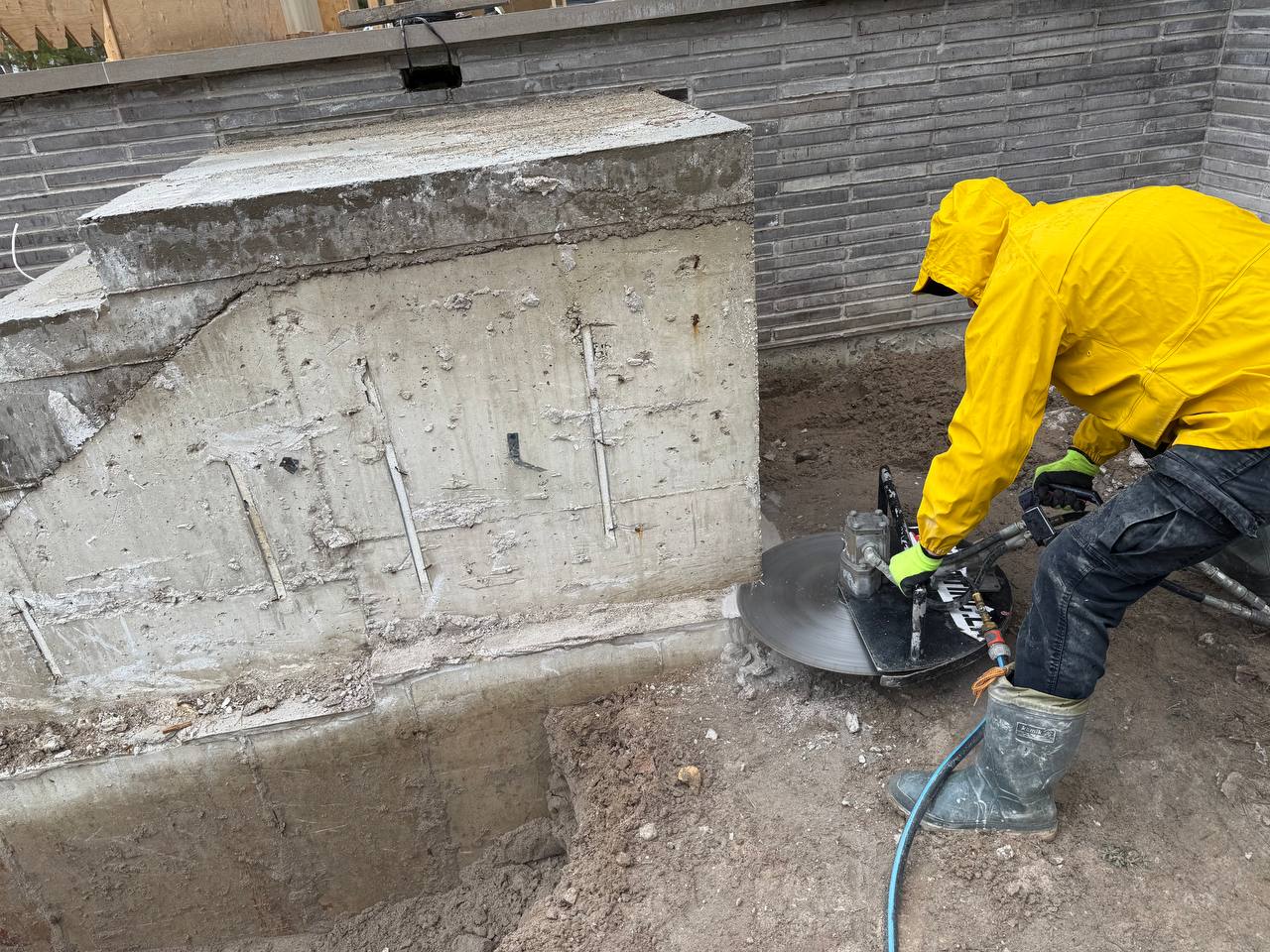
Why it works:
- straight lines and clean edges
- predictable depth and piece sizing
- lower vibration compared to impact methods
- wet cutting helps control dust and keeps the blade stable
In your photos: the indoor walk-behind saw work (two operators, wet floor, controlled zone) is a perfect example of flat/floor sawing in a contained environment.
2) Slab sawing (slab cutting)
Slab sawing overlaps with floor sawing, but the planning is different when the slab is structural or suspended.
Use it when:
- you must protect what’s underneath (parking garages, basements, occupied space)
- you need defined pieces for controlled lift-out
- you want to avoid shock transfer to beams, columns, or finishes
Key decision point:
If there’s structure underneath, cutting becomes the safest way to isolate sections before removal.
3) Wall sawing (track-mounted wall saw)
Wall sawing is for vertical and near-vertical elements: walls, retaining walls, curbs, and thick edges where a handheld saw is not enough.
Use it when:
- making window and door openings
- cutting wall sections for mechanical access
- removing thick curbs, upstands, and heavy vertical edges
- creating clean, square geometry with minimal chipping
Why it’s chosen:
- precise, straight, controlled cuts
- better control on thick reinforced concrete than handheld options
- cleaner finish and less patch work
Your photos showing large sectioning and heavy cutting are a strong visual for “controlled removal,” even when the mass is large.
4) Wire sawing (diamond wire cutting)
Wire sawing is the go-to method for thick, heavily reinforced concrete, unusual shapes, and situations where vibration must be minimized.
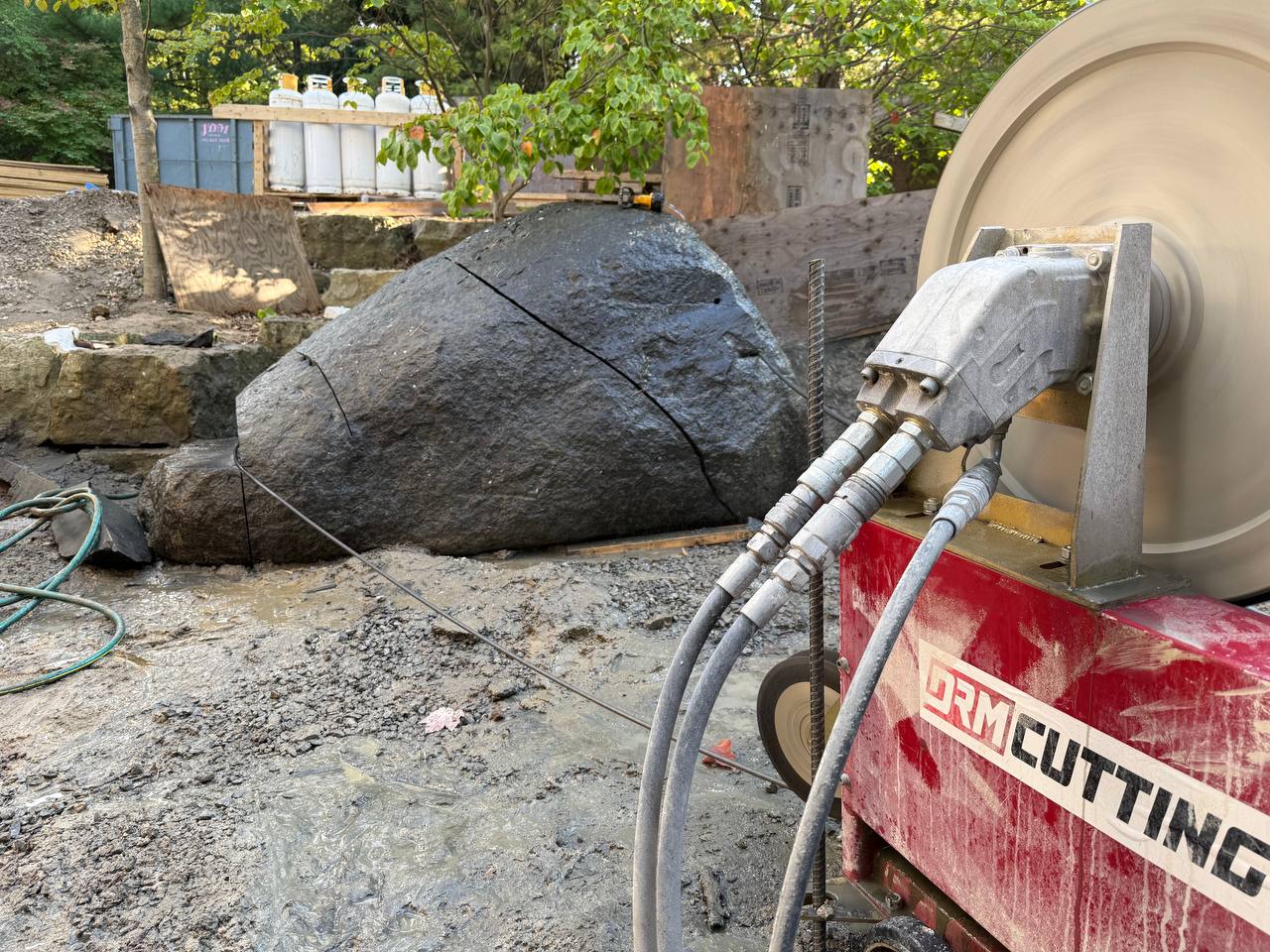
Use it when:
- thickness and reinforcement make blades inefficient
- you need to cut around obstacles or in tight geometry
- you’re segmenting foundations, blocks, or heavy structural nodes
- you need a method that handles concrete plus embedded steel effectively
This is a core part of the DRM approach: you bring the concrete problem, we choose the technology that makes the site predictable.
5) Chain saw cutting (diamond chain saw)
A diamond chain saw is a specialist tool. It’s not about speed; it’s about access and geometry.
Use it when:
- you need square corners without overcut
- you’re cutting small-to-medium openings where wall saw setup isn’t practical
- you need flush starts, tight access, and controlled corner work
Typical use cases:
- window openings
- door modifications
- interior structural adjustments where overcutting is unacceptable
6) Handheld saw cutting (cut-off saw)
Handheld saws are for small cuts, trims, and tight spaces.
Use it when:
- you need a short cut line, edge trim, or small correction
- access prevents larger equipment
- the site requires minimal mobilization
It’s useful, but it’s not the default answer for big volumes. The method must match the scope.
Why cutting concrete often beats impact demolition
If you need to remove a portion of a structure without damaging what remains, cutting is the cleanest way to “separate the problem.”
- less shock and vibration transfer
- less uncontrolled cracking
- cleaner boundaries for rework and patching
- more predictable piece sizes for haul-out
- easier coordination with other trades
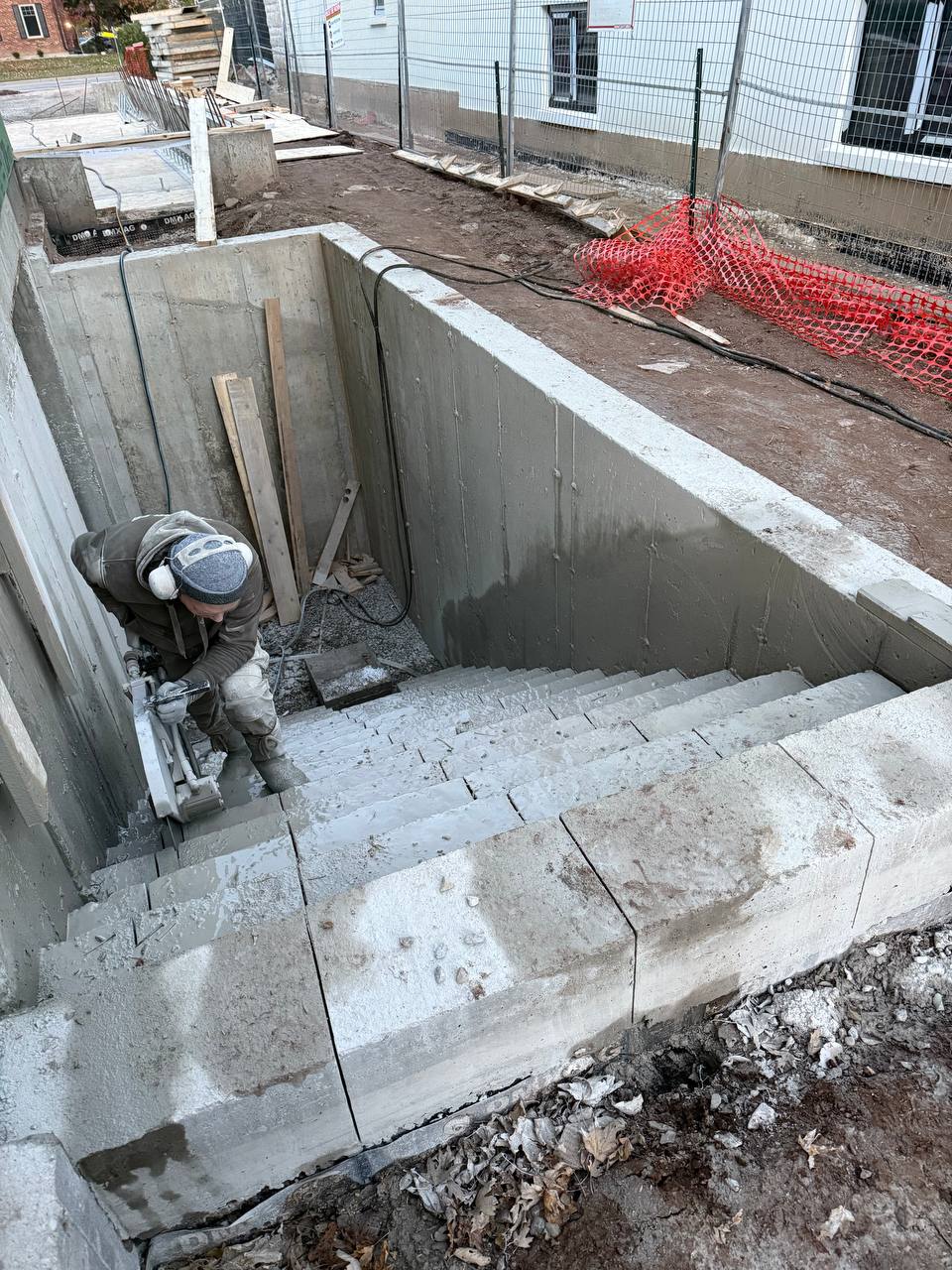
Wall sawing for clean geometry where impact demolition would damage the structure.
This aligns with DRM’s DNA: controlled demolition and planned cutting where “just smash it” is risky or not allowed.
How contractors choose the right cutting method
A good cutting plan is a sequence, not a tool choice. The deciding factors are consistent:
- Thickness and reinforcement
6 inches with standard rebar is one thing. Dense reinforcement, thick edges, or heavy nodes may push the plan toward wire or wall sawing. - Access and logistics
If you’re working through corridors, stairs, or tight spaces, the “best tool” is the one you can safely stage and operate. - What’s below / behind the cut
If there’s an underground garage, active space, or critical services nearby, impact methods can become a liability. - Embedded risk
When unknown conduits or piping are possible, scan-first planning prevents expensive hits. The goal is zero guessing. - Piece size and removal plan
Cutting is only half the job. Segment sizes must match the removal route, lift capacity, and disposal constraints. This “segmentation logic” is a core DRM differentiator.
What we typically need to quote cutting concrete work
DRM’s operating rule is simple: no volume, no real quote. The more precise the inputs, the more predictable the scope.
To price and sequence properly, we usually need:
- address and site type (slab on grade, suspended, over parking, etc.)
- what you’re trying to achieve (trench, opening, removal)
- thickness (or best guess) and reinforcement expectations
- total linear feet or area, plus target piece sizes
- access constraints (stairs, elevator, tight corridors, work windows)
- whether scanning is required or recommended
- haul-out and disposal responsibility (owner/GC vs contractor)
Cutting Concrete FAQ: Methods, Use Cases, and Planning
Straight answers for owners, GCs, and facility teams comparing floor sawing, wall sawing, slab sawing, wire sawing, and chain saw cutting.