
Low-Vibration Concrete Cutting: Why Diamond Wire Sawing Beats Impact Methods in Occupied Buildings
“Low vibration” isn’t a marketing phrase on live sites. It’s a spec.
In occupied buildings and sensitive facilities, the real requirement is usually simple and strict:
No impact demolition (no breakers, no jackhammer-heavy approaches, no “let’s try to chip it out”). That is because vibration is not just about comfort. It can become a risk to:
- sensitive equipment (servers, controls, precision machines)
- adjacent structures and finishes
- ongoing operations (tenants, security zones, passenger access, production lines)
- schedule windows that don’t allow rework or “try again tomorrow”
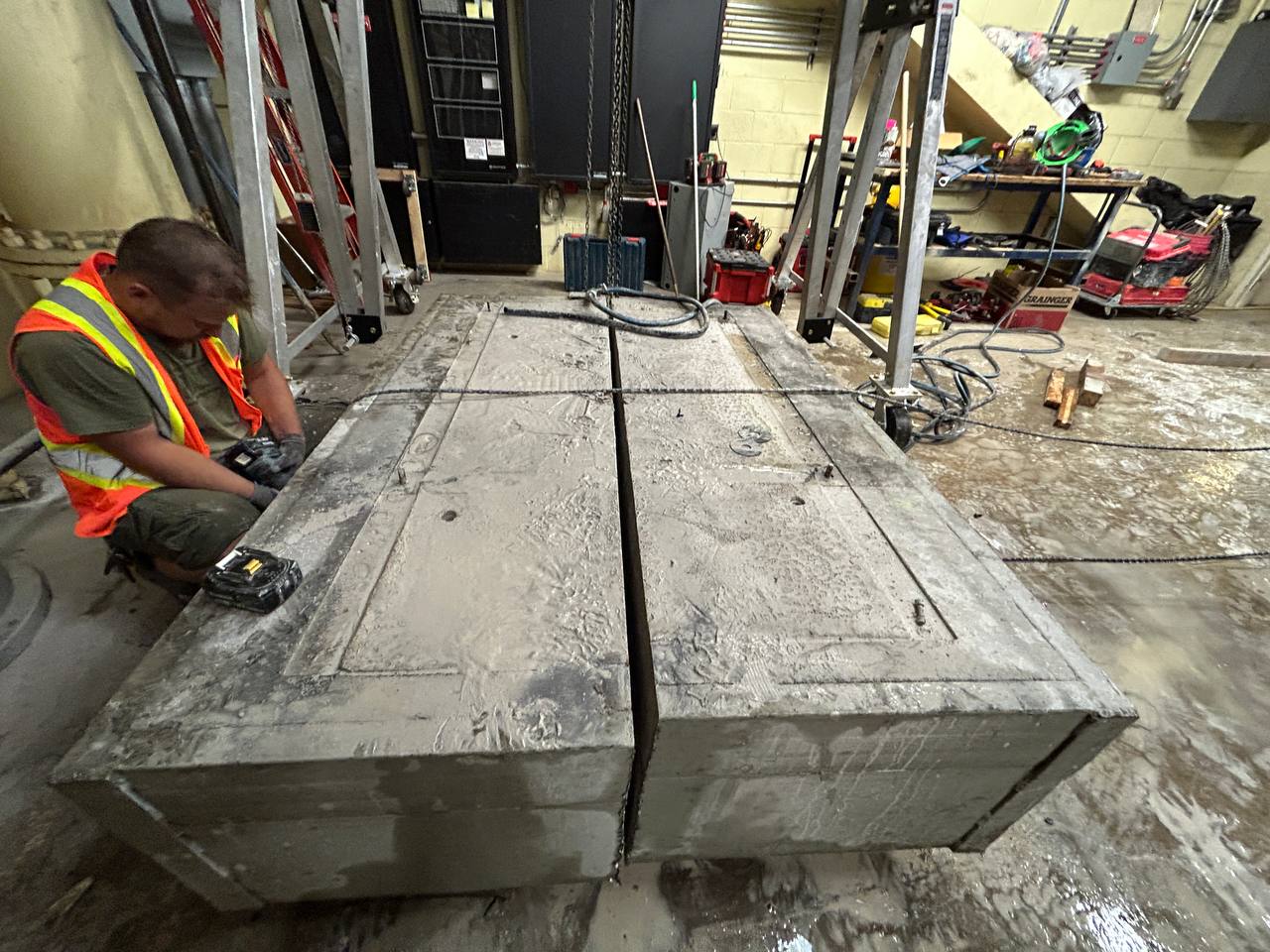
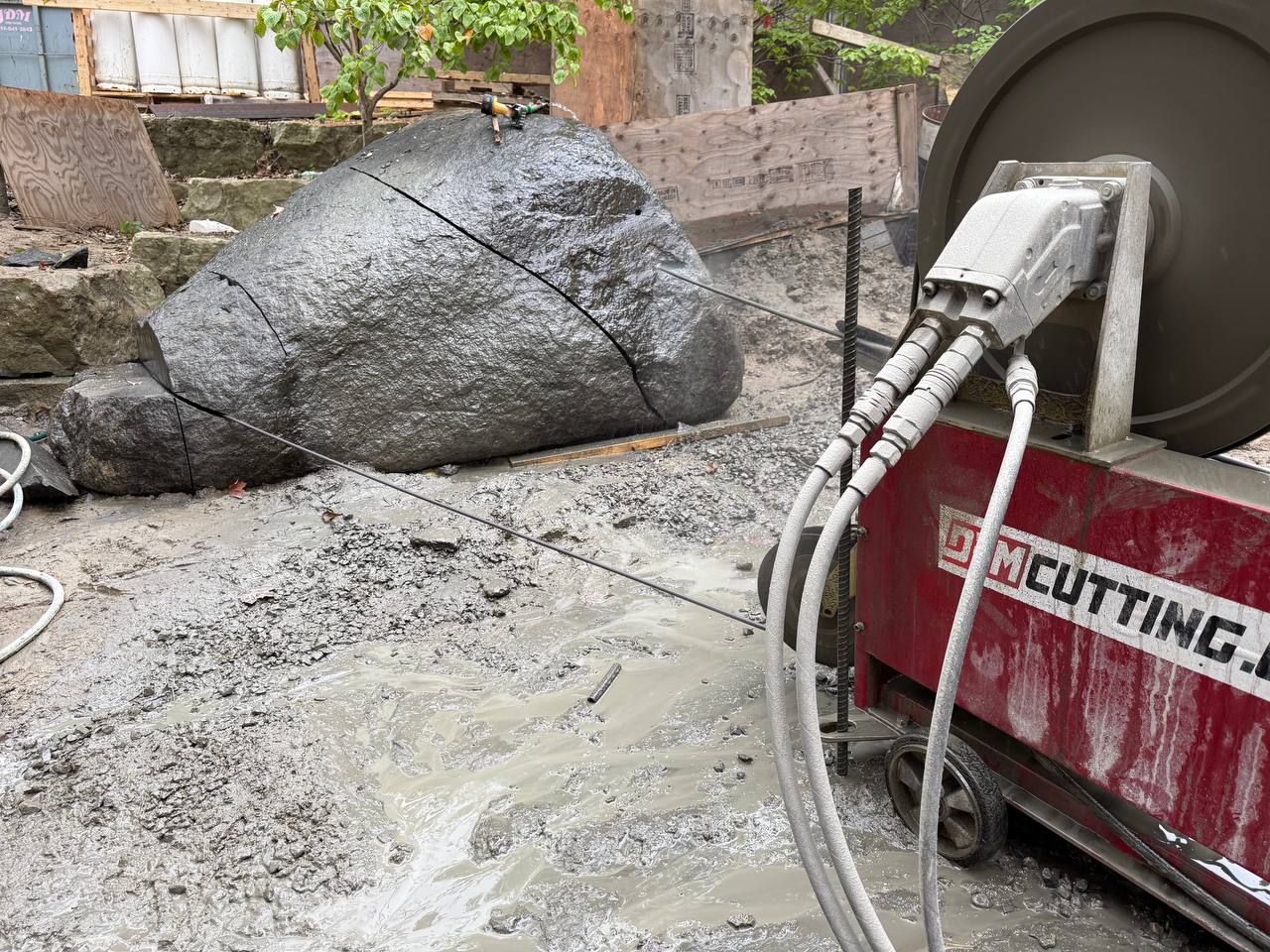
This is where Diamond Wire Sawing earns its place: it replaces impact energy with controlled abrasive cutting, enabling predictable segmentation and a safer haul-out plan.
1) Vibration in occupied buildings: the number behind the complaint
Engineers often quantify construction vibration using Peak Particle Velocity (PPV), typically in mm/s, and the allowable PPV changes with vibration frequency.
A useful local reference is City of Toronto construction vibration limits (Municipal Code Chapter 363), which list PPV thresholds by frequency:
- < 4 Hz: 8 mm/s
- 4–10 Hz: 15 mm/s
- > 10 Hz: 25 mm/s
Two practical notes for estimators:
- Many owners don’t hand you PPV numbers. They write “no impact” because they want a method-level control, not a monitoring argument.
- If the environment is sensitive enough, PPV limits can be enforced by the project team through monitoring (even if you don’t personally install sensors). The point is: your method choice is the first control.
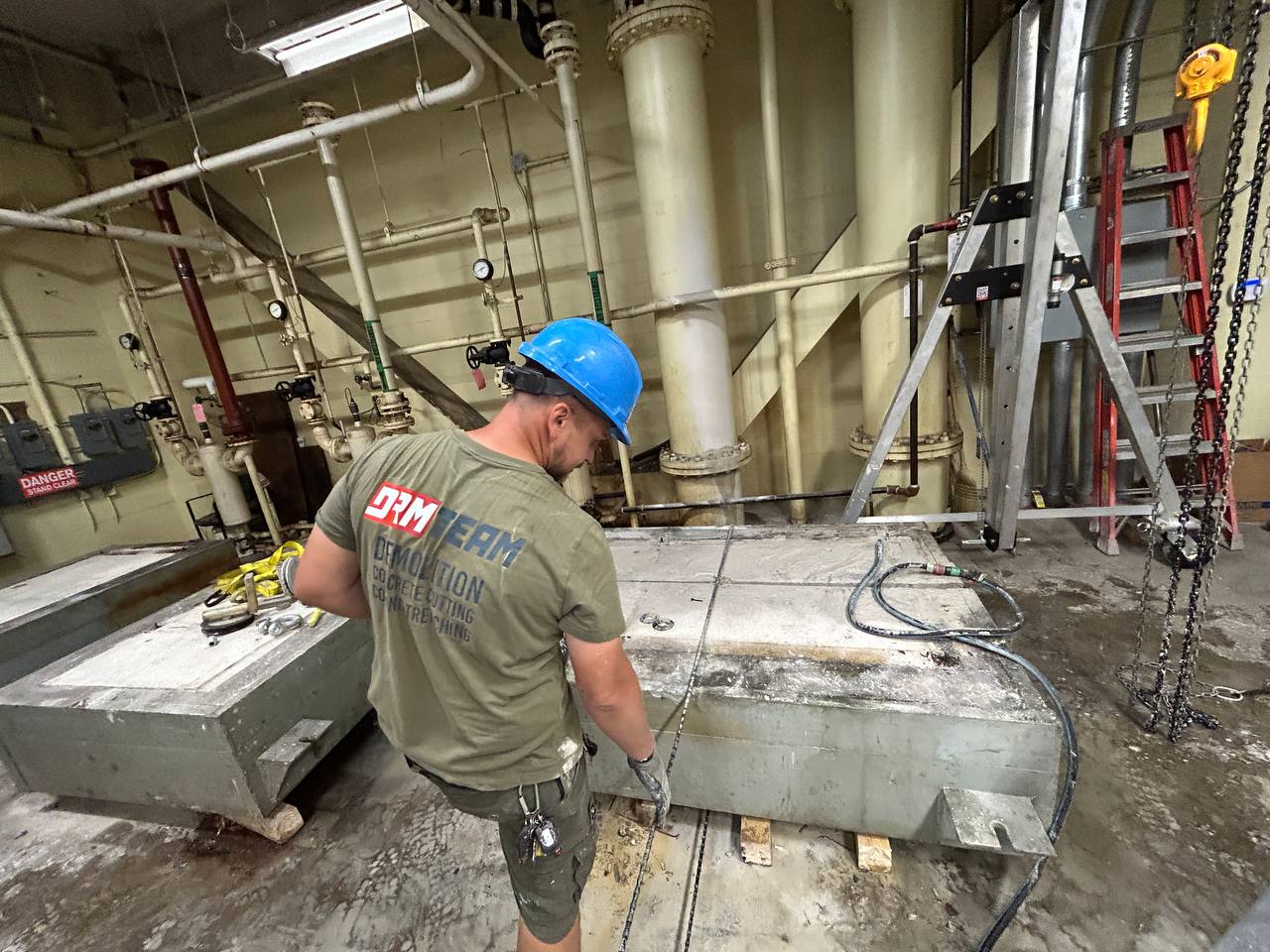
2) Why impact demolition is hard to “manage” in live facilities
Impact methods (breakers, jackhammers, hoe-ram demolition) generate impulses—repeated high-energy hits. Those impulses couple into slabs, beams, walls, and the ground as vibration.
That creates three estimator problems:
- Unpredictable peak events: you don’t always control where the energy goes (especially in reinforced, thick, or composite nodes).
- Collateral noise: impact energy doesn’t just vibrate— it also turns into airborne noise and structure-borne noise.
- Damage risk near sensitive zones: the method itself increases the chance of cracking finishes, loosening attachments, and triggering complaints.
Even in transit guidance, method selection is treated as a primary mitigation lever. The Federal Transition act guidance explicitly points out that sawing elements into sections for removal is quieter than impact demolition by breakers—because you’re eliminating repeated impacts as the dominant mechanism.
In occupied buildings, the same logic applies to vibration: if you remove impact, you remove the biggest driver.
3) What makes Diamond Wire Sawing “low-vibration” in practice
Wire sawing is not “silent.” But it is non-percussive.
The cut is formed by a diamond wire moving under tension. Instead of hammer blows, you have:
- steady abrasive removal
- controllable cutting geometry (via roller layout and attack angle)
- remote operation distance (keep people and assets out of the direct line)
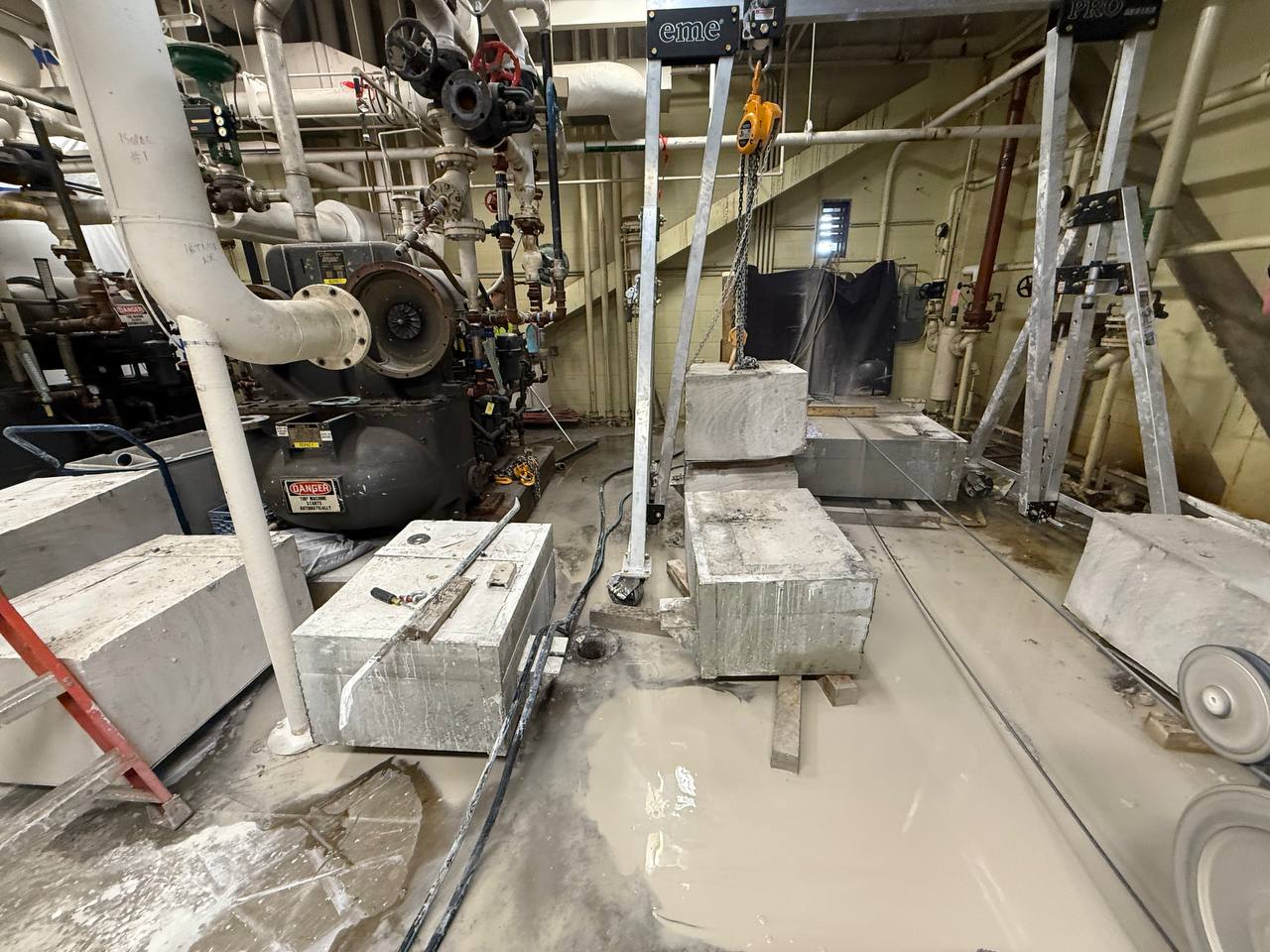
This matters indoors because a low-vibration method allows you to build a predictable plan:
Constraint → method → risk avoided → outcome
- Constraint: occupied / sensitive facility
- Method: wire sawing + segmentation plan
- Risk avoided: impact vibration, uncontrolled breakage, rework, complaints
- Outcome: controlled haul-out, clean handover, operations continue
4) “Protection stack” indoors: vibration is only one layer
In live facilities, “asset & occupant protection” is usually a stack of controls:
A) Cut planning (before tools start)
- Define what must stay live: access routes, security zones, adjacent equipment, tenant areas
- Confirm access bottlenecks (e.g., 36” doors may dictate equipment selection and segment sizing)
- Sequence demolition so nothing relies on uncontrolled breakage
B) Locate before you cut (no blind cuts)
Embedded services are a common hidden risk. Scanning is not just about “avoiding utilities”—it also reduces unnecessary rebar strikes and tool abuse, which directly affects schedule and noise.
C) Silica control: wet methods are not optional
Concrete cutting can generate respirable crystalline silica. For context, OSHA sets a PEL of 50 μg/m³ (8-hour TWA) for respirable crystalline silica.
Wet methods are a known control approach. OSHA guidance documents note that properly used wet methods can effectively control silica dust for certain cutting setups.
And controlled testing has shown why water is such a strong lever: one study found wet cutting reduced respirable dust concentration by ~85% vs dry cutting in paired comparisons.
D) Noise management: protect workers and respect occupants
Worker exposure rules are separate from “tenant comfort,” but both matter.
Ontario’s noise regulation requires protection from hazardous sound exposure. Practical summaries and guidance commonly reference Lex,8 = 85 dBA with a 3 dB exchange rate.
For comparison, NIOSH explains the 3 dB exchange concept (every +3 dB halves allowable exposure time).
And Canadian Centre for Occupation Health and Safety (CCOHS) summarizes exposure concepts and exchange rates used across jurisdictions.
Estimator takeaway: if the site is occupied, you plan “quiet windows” operationally (night windows, zone isolation), and you choose methods that don’t add impact peaks.
E) Water and slurry control (wet cutting reality)
Indoor wet cutting trades airborne dust for water/slurry logistics. Typical planning items:
- collection strategy (wet vacs, berms, contained zones)
- discharge rules (drain only if approved)
- solids handling (bucket/contained slurry → disposal with concrete waste)
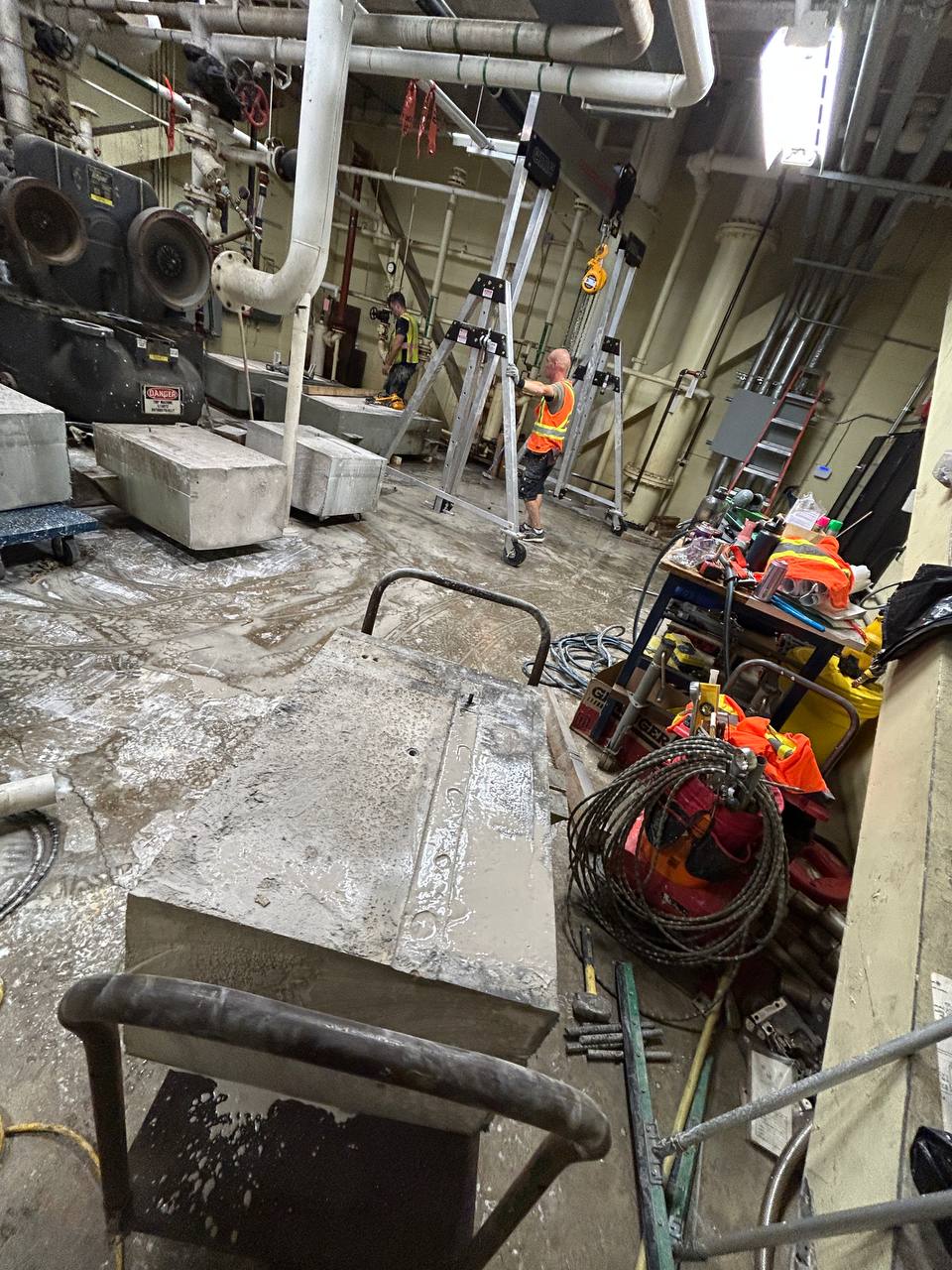
Field-typical water ranges we see indoors (site-dependent, used for budgeting/logistics):
- Diamond wire sawing: ~1.0–1.5 m³ per shift
- wall sawing: ~0.5–1.0 m³ per shift
- floor sawing / trenching: up to ~~1.0 m³ per shift
(These are operational ranges, not universal constants—actual numbers depend on cut length, depth, and housekeeping requirements.)
5) Segmentation is the real “low-vibration” advantage
Wire sawing’s practical power is not just “it cuts thick concrete.”
It lets you choose segment mass so removal can be done without heavy impact, without uncontrolled breakage, and within access limits.
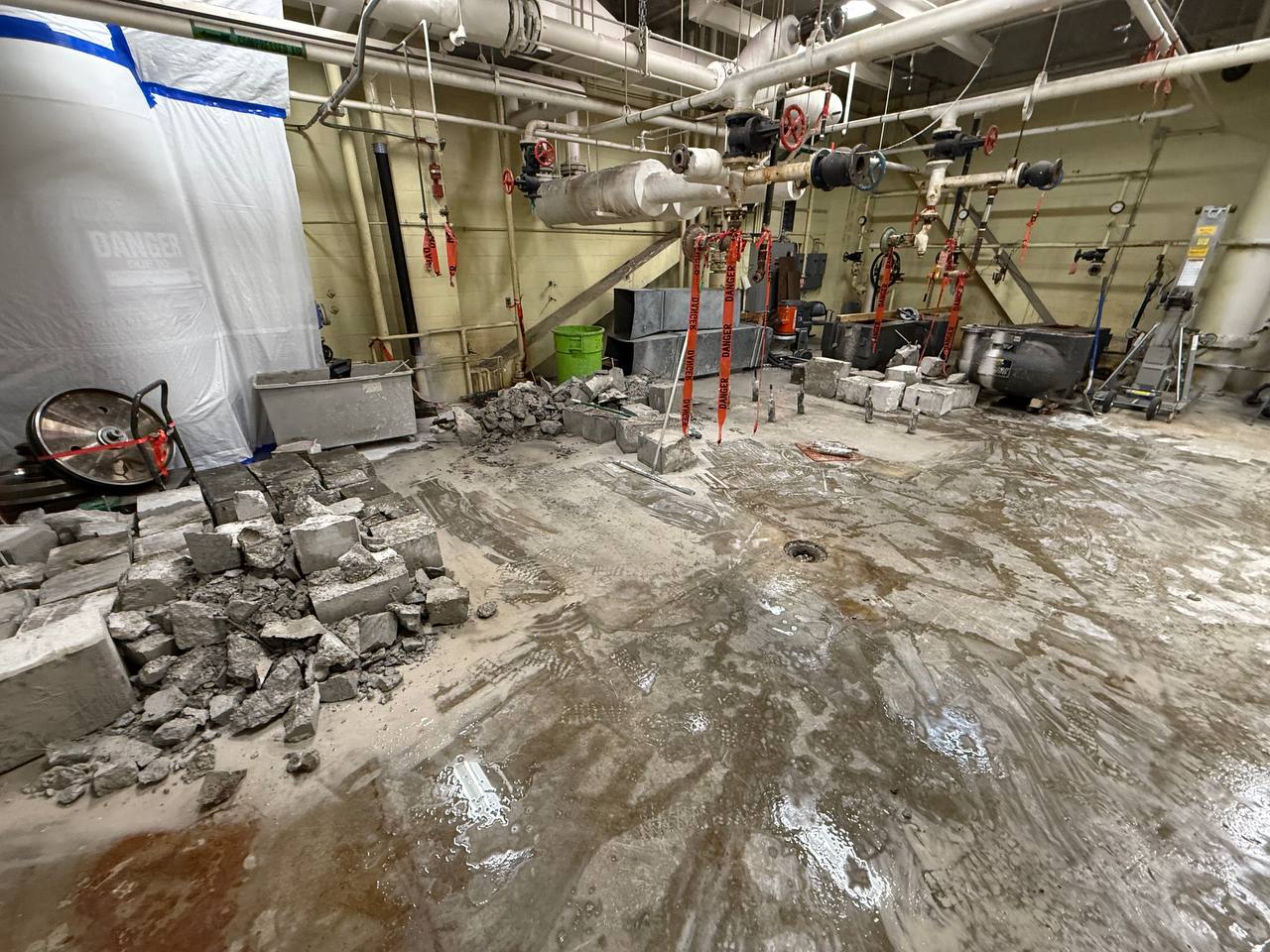
A common estimator model:
- Define segment geometry (based on access + rigging + floor capacity)
- Estimate weight using normal-weight concrete density
A widely used reference range for concrete density is about 140–150 lb/ft³ (2240–2400 kg/m³).
Quick weight formula (imperial)
Weight (lb) = Volume (ft³) × 150 (lb/ft³) (use 140–150 depending on conservatism and reinforcement)
Why it matters
- If a segment is too heavy, you’ll need bigger rigging and bigger access, or you’ll end up “breaking it smaller” (which re-introduces impact).
- If segments are too small, production slows and cost rises.
Your goal is the cheapest segment size that still eliminates impact risk.
6) Where wire sawing belongs in “occupied building” reality (and where it doesn’t)
Wire sawing is not a default condo method. In typical residential condos, you rarely need it.
But wire sawing is highly relevant in mixed-use high-rise infrastructure conditions, such as:
- basements with live retail/tenants above
- tower interfaces with transit tunnels and underground corridors
- deep excavation support walls and thick structural nodes
- equipment foundations inside live mechanical levels
The common thread is the same: you can’t hammer. You can’t shake the building. You still need production.
7) Case Snapshot #1 — Airport mechanical room foundations (no vibration tolerance)
Site type: sensitive facility mechanical room (operations ongoing)
Primary constraint: no impact vibration + tight logistics + scanning expectations
Access bottleneck: equipment had to pass through typical building chokepoints (door/corridor/lift routing)
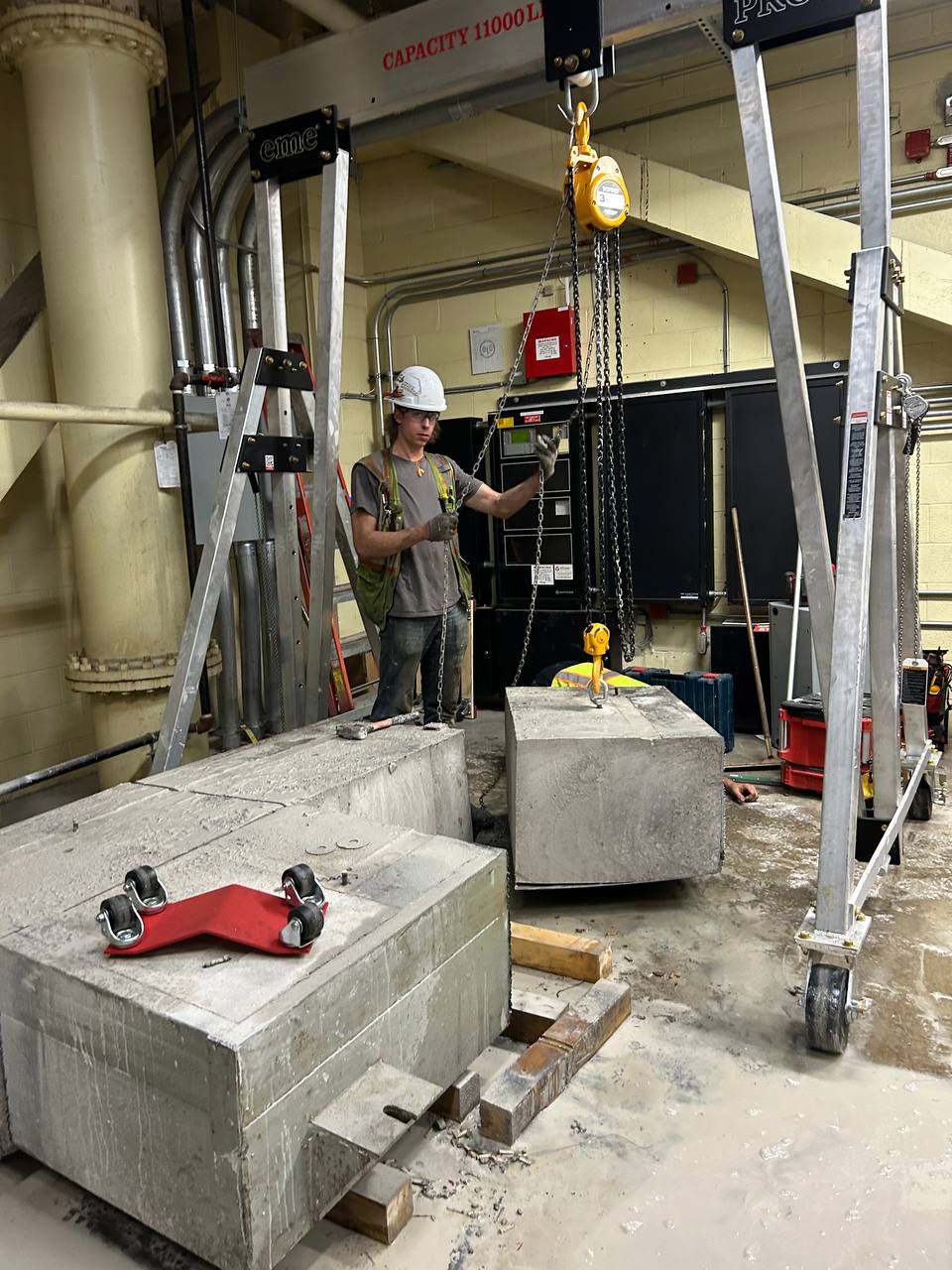
Scope (wire sawing focus):
- 3 equipment foundations removed using diamond wire sawing
- Foundation thickness: 24” (2 ft)
- Each foundation segmented into 4 blocks
- Segment size: 2 ft × 2 ft × 3 ft
- Total segments: 12 blocks
- Work window: 3 shifts, typical daytime coordination
Segment weight (estimator math):
Volume per block = 2 × 2 × 3 = 12 ft³
Estimated weight = 12 ft³ × 150 lb/ft³ ≈ 1,800 lb (≈ 816 kg)
Total removed (12 blocks) ≈ 21,600 lb (≈ 9.8 metric tonnes)
Why wire sawing was the correct control:
- No impact demolition allowed (vibration critical)
- Predictable segmentation for haul-out planning
- Controlled method near sensitive infrastructure and operating environment
Outcome: foundations removed without introducing breaker-level vibration risk, with predictable handling units and clean handover.
8) Case Snapshot #2 — Downtown Toronto hotel mechanical room (guest comfort + sensitive controls)
Site type: occupied hotel (live guests)
Constraint: minimize vibration and noise; protect nearby electrical/controls; tight access
Scope: expand a small opening in a mechanical room structure
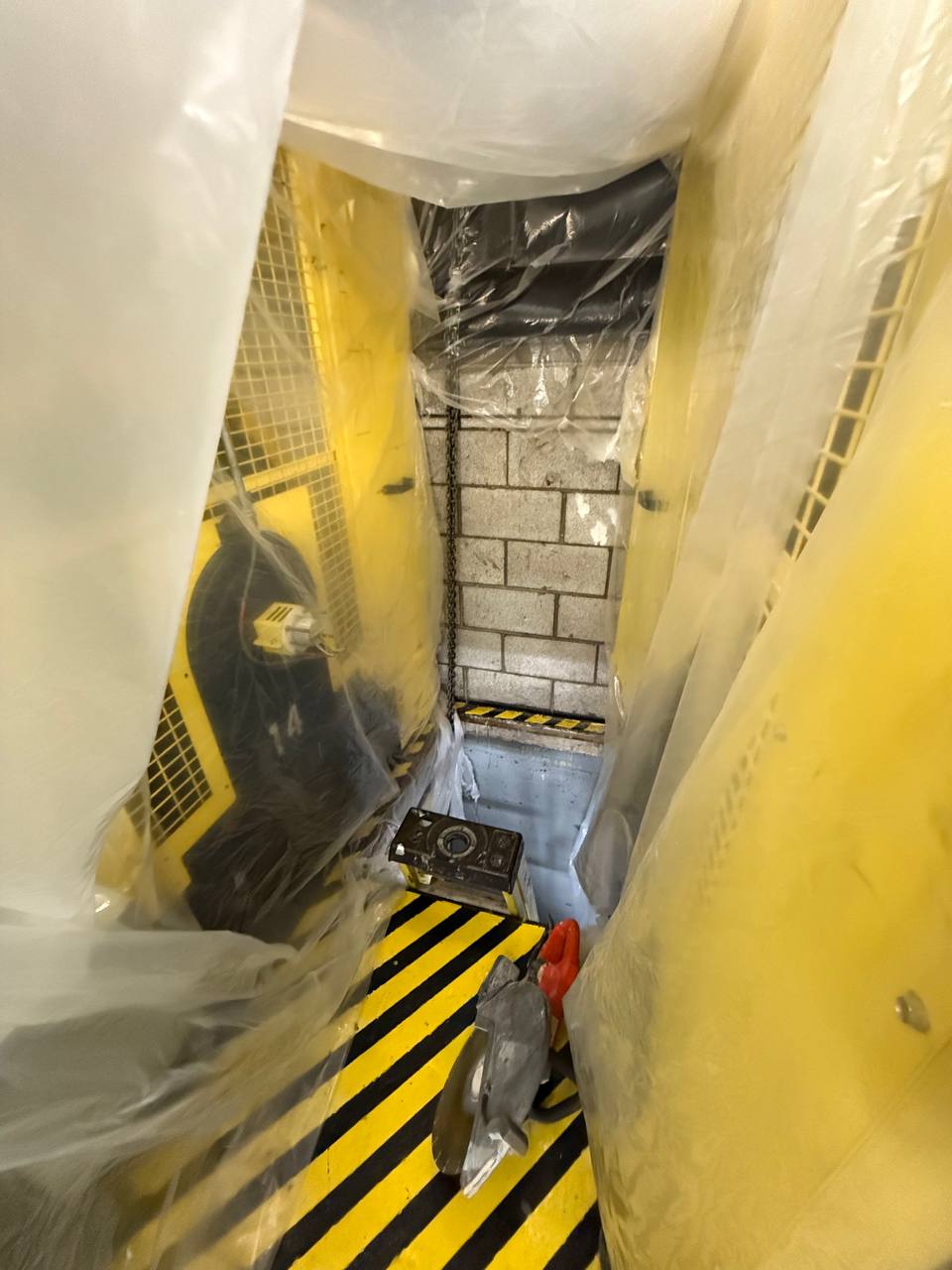
- Thickness: approx. 6"
- Crew: 2 people
- Duration: ~6 hours (single shift)
- Total removed mass: small (approx. ~60 kg combined)
Protection logic:
- isolate the work area (containment as requested)
- wet cutting to control dust and protect adjacent equipment
- strict on-time execution inside an approved window
- full cleanup so operations can continue with no follow-on disruption
Outcome: opening completed within the approved window, with controlled wet cutting and clean handover suitable for an occupied environment.
9) Case Snapshot #3 — Retail overnight trenching (operations resume at opening)
Site type: grocery retail floor (store must open normally)
Constraint: work after close; deliver a clean, ready floor before morning
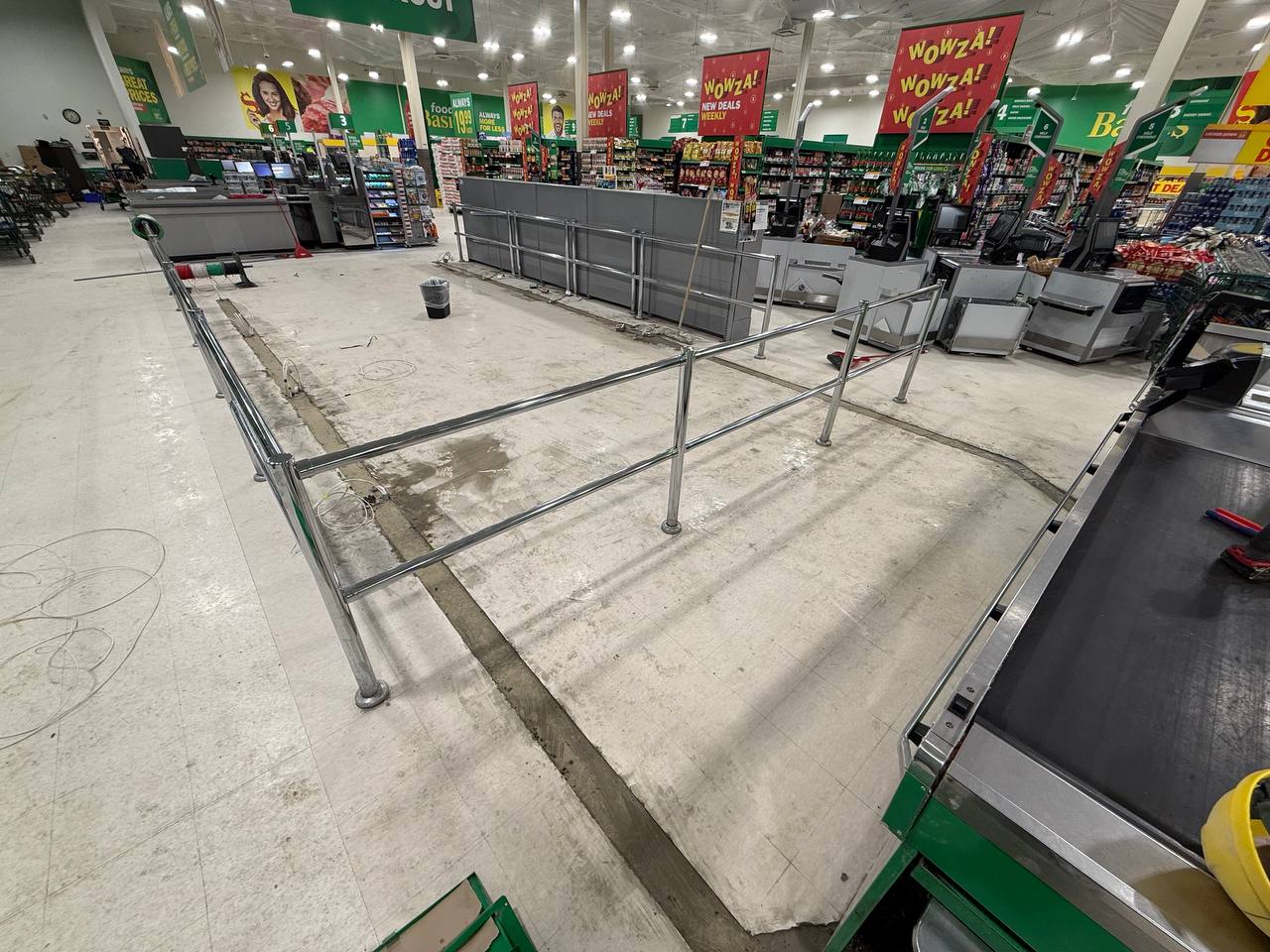
Scope:
- 80 ft of electrical trenching in slab
- Crew: 2 people
- Window: one night
- Sequence: scan/locate → wet cut → remove → patch with fast-set material → clean
Why this matters:
This pattern repeats across many live facilities: you don’t always need a shutdown—
you need a night-window execution system that protects occupants, assets, and schedule.
10) Decision rule: when wire sawing beats impact indoors
Wire sawing becomes the preferred option when any of these are true:
- Vibration is a first-order risk (occupied building, sensitive equipment, complaints risk)
- The concrete is thick / heavily reinforced and impact becomes slow, noisy, and unpredictable
- You need segmentation for haul-out through limited access without breaking
- Adjacent assets cannot tolerate percussive energy (controls, servers, mechanical systems)
Impact methods become last-resort “cleanup tools” (minor trimming, edge cleanup) — not the primary demolition engine.
11) Estimator checklist — what we need to price a low-vibration plan
Provide these, and pricing becomes fast and defensible:
- location + access route (doors, corridors, lifts, turning constraints)
- cut scope (what stays / what goes, thickness assumptions)
- live constraints (work windows, noise/vibration expectations, security restrictions)
- confirmation of embedded risk (scan expectations, known services)
- removal plan requirements (who rigs/hauls, disposal routing, staging space)
- slurry rules (drain allowed or not, containment requirements)
References:
- Toronto Municipal Code Chapter 363 PPV limits table.
- FTA guidance on selecting quieter demolition methods; sawing vs impact breakers.
- OSHA silica PEL (50 μg/m³, 8-hr TWA) + construction silica info.
- Wet cutting dust reduction (~85%) study + CPWR summary.
- Ontario noise regulation reference + Lex,8 calculation guidance; WSPS summary.
- NIOSH 3 dB exchange explanation; CCOHS overview.
- Concrete density reference range (140–150 lb/ft³).
Low-Vibration Concrete Cutting in Occupied Buildings — FAQ
Estimator-friendly answers on vibration, noise, silica, wet slurry, and why Diamond Wire Sawing is the go-to method when impact demo is off the table.