
GPR Concrete Scanning and No-Blind-Cuts: How Scanning Changes the Method and the Price
In live buildings, “unknowns” are the real schedule risk—PT cables, conduits, embedded utilities, dense rebar, and undocumented repairs. On paper, a cut looks simple. On site, one missed tendon or conduit can force an immediate stop, redesign, or emergency patch.
That’s why we run a No-Blind-Cuts policy on commercial and industrial work: when the structure is uncertain, we verify first. GPR concrete scanning doesn’t just “find rebar.” It changes:
- The method (core drilling vs wall sawing vs diamond wire sawing)
- The cut plan (offsets, sequencing, segment sizes, access routes)
- The price (tool wear, crew hours, containment, night windows, risk controls)
Below is a practical, engineering-minded breakdown for estimators and engineers—what GPR actually tells you, what it cannot, and how that translates into a scope you can price and execute without surprises.
1) What “GPR Concrete Scanning” Actually Does (And What It Doesn’t)
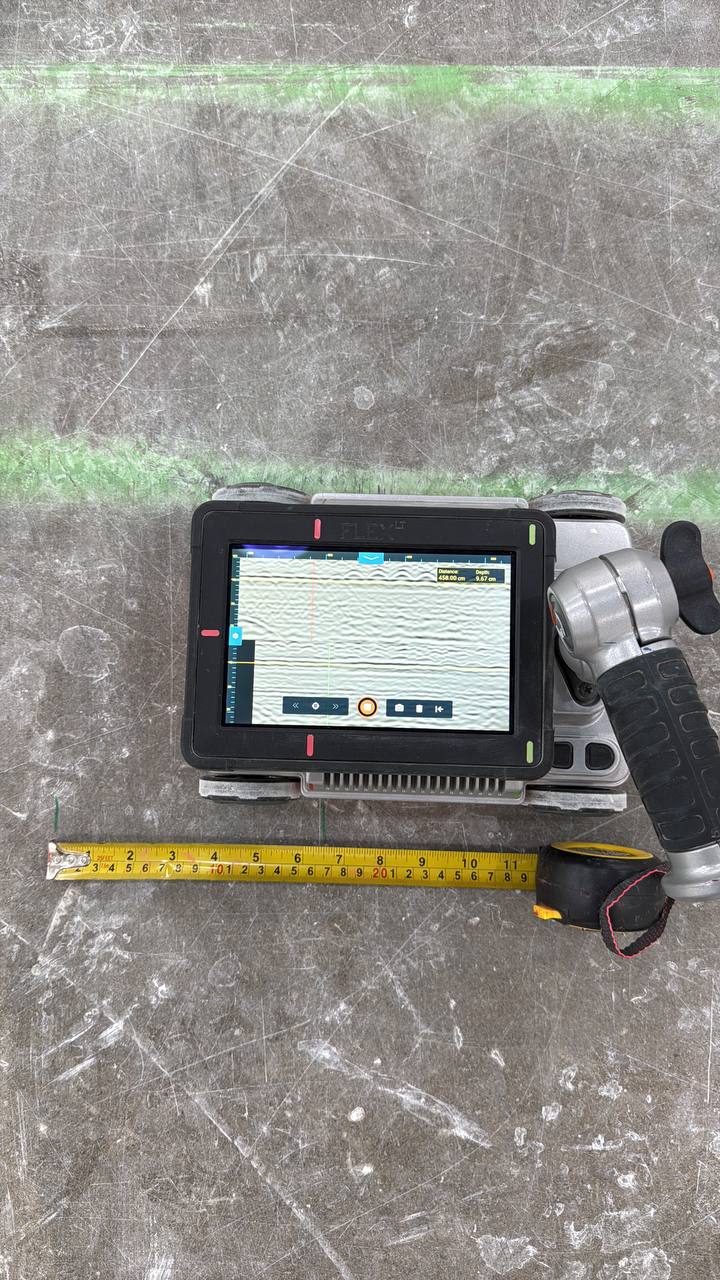
What GPR measures in concrete (high level)
GPR sends electromagnetic pulses into the concrete. When the signal hits a boundary with different electrical properties (steel, voids, conduits, layer changes), part of the energy reflects back. That reflection is what we interpret to locate embedded objects.
What we can typically identify on real jobs
On indoor cutting and coring scopes, we use GPR primarily to locate and map:
- Rebar layout (top mat, and deeper mat when conditions allow)
- PT cables/tendons (location and pattern verification)
- Conduits and embedded lines (depending on material, depth, congestion)
- Thickness checks (where scanning conditions and access support it)
What GPR cannot guarantee
A key point engineers appreciate: GPR is verification, not magic.
- Dense reinforcement can “mask” deeper targets.
- Conductive or wet concrete conditions can reduce penetration and clarity.
- Metal plates and heavy steel elements create strong reflections that can hide what’s behind them.
So we treat GPR results as actionable field data that informs method selection and offsets—then we execute with disciplined sequencing and safety controls.
2) The Tools We Use: Why We Don’t Rely on One Scanner Only
Different sensors answer different questions.
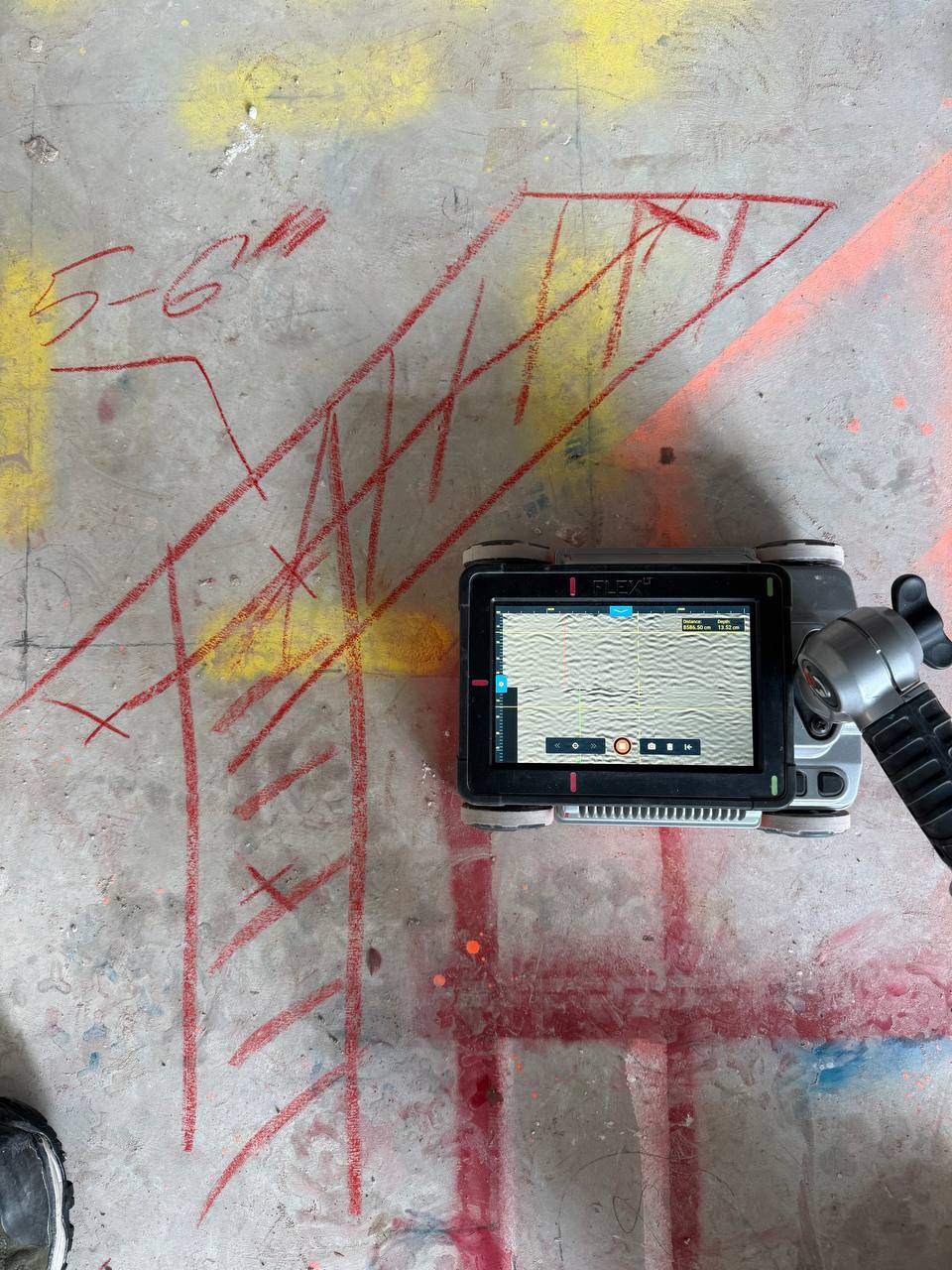
GPR scanner (primary for No-Blind-Cuts)
- GSSI FlexLT is our primary GPR platform for concrete verification.
- Real-world depth depends on structure and congestion, but GPR is the best “first pass” when you must detect more than just rebar.
Rebar/near-surface verification (fast second check)
We also use Hilti PS-series scanners (including PS 35 / PS 85) for quick localization and practical hit-prevention checks—especially when the goal is shallow confirmation before drilling/coring in walls.
Why this matters in estimating:
If the job is “shallow rebar only,” you may not need a full scan grid. If the job is “PT + conduits + heavy reinforcement,” you do.
3) No-Blind-Cuts in the Real World: When Scanning Is “Mandatory” vs “Practical”
We don’t treat scanning as a checkbox. We treat it as method engineering.
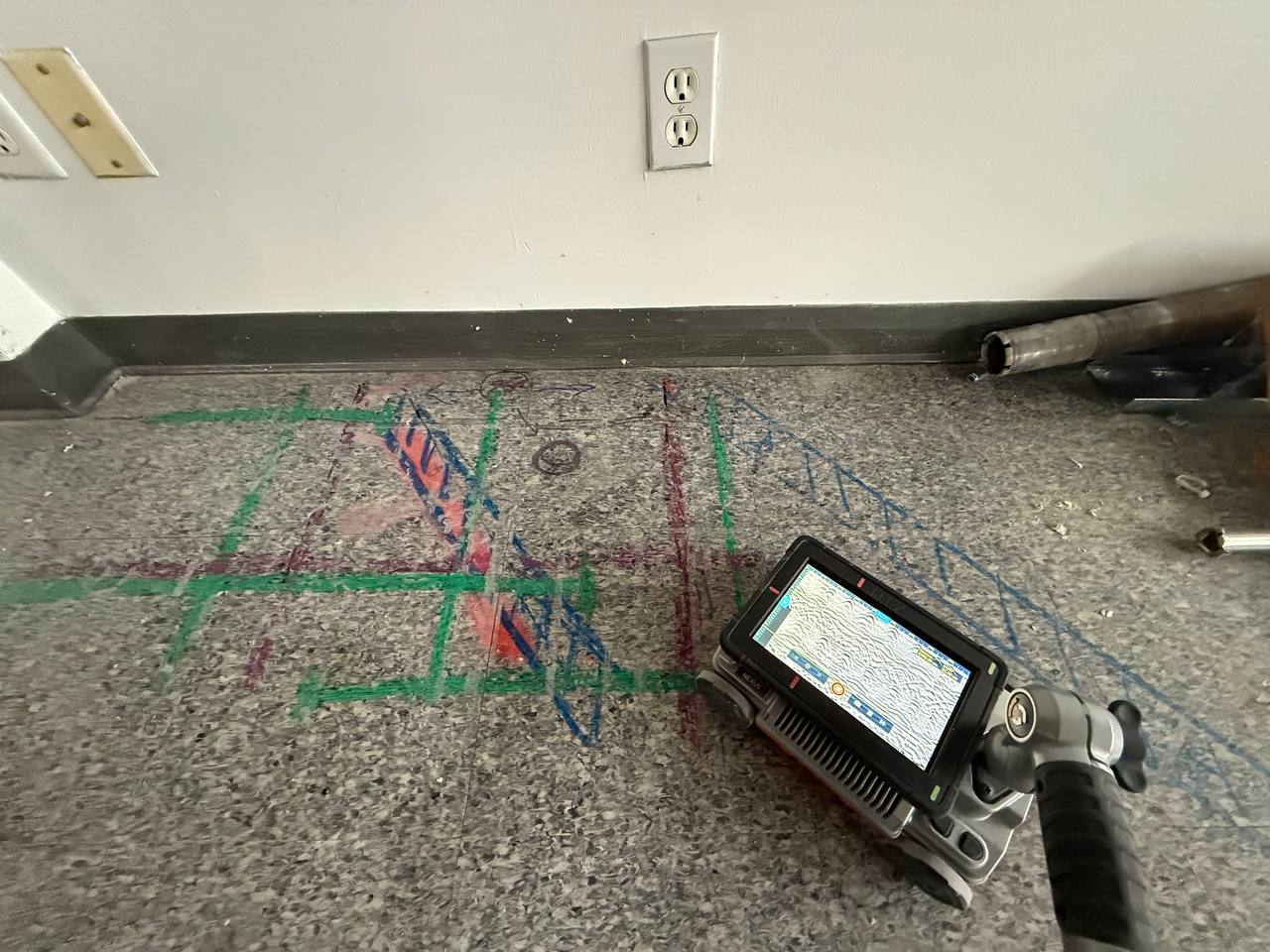
Scanning is effectively mandatory when:
- The client cannot confirm what’s inside (no reliable as-builts, remodel history, unknown routing)
- The slab/wall may contain PT tendons
- The environment is critical or sensitive (airport mechanical rooms, data/controls rooms, healthcare, live production)
- You’re cutting near known services (electrical, drainage, heating) and a strike is high consequence
- You’re doing core drilling where a rebar/PT hit would trigger stop-work
Scanning is still smart when:
- You “think it’s clean concrete” but reinforcement density affects saw choice, blade wear, and time
- You’re pricing competitive work and want to reduce contingency without increasing risk
- Access is limited and you only get one execution window (night work, short shutdown)
Our standard deliverable
By default, we:
- scan the target zone,
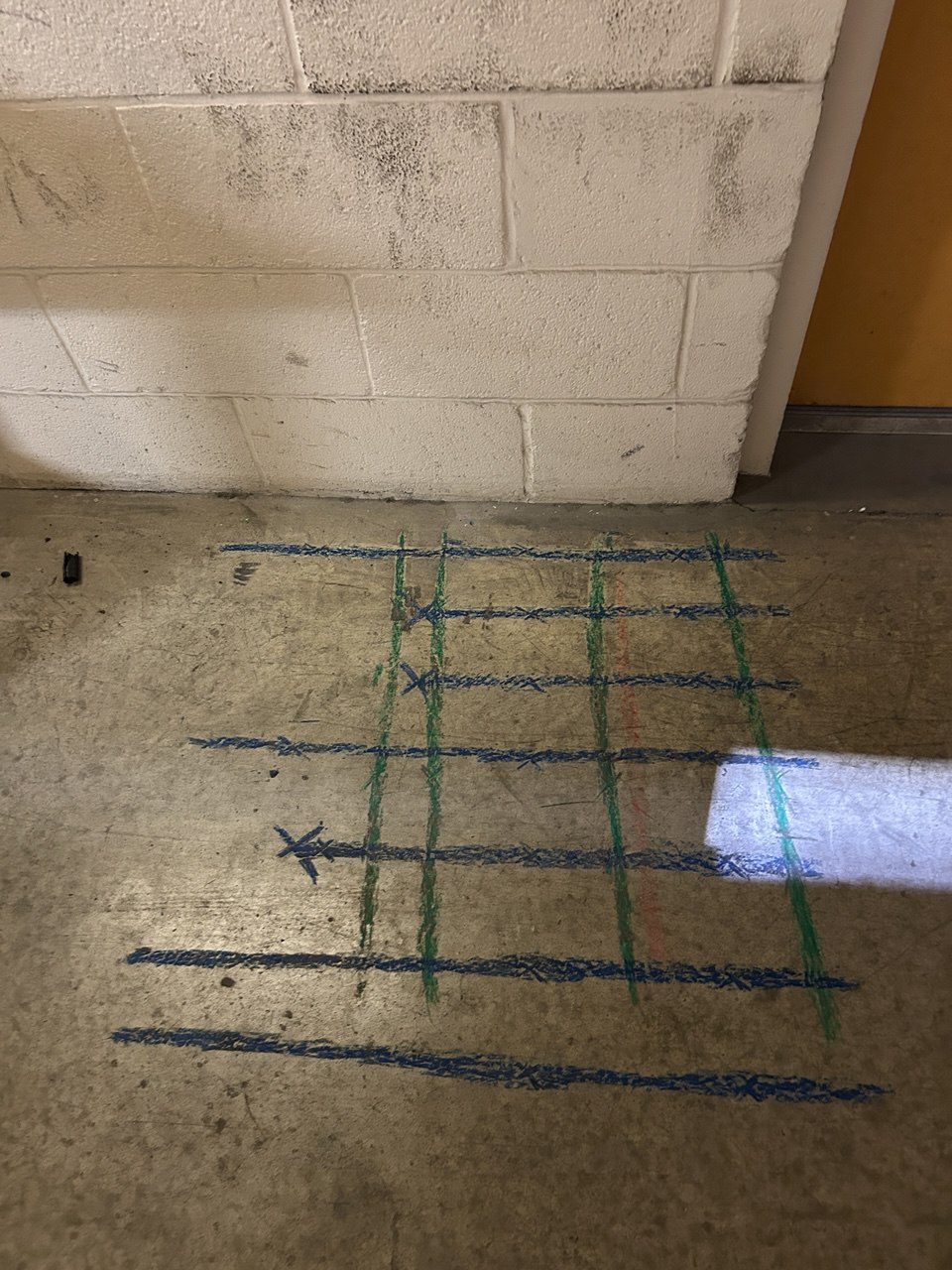
- mark findings directly on the surface (clear field layout),
- align those markings to the planned coring/cut lines.
If the client needs documentation for management/close-out, we can provide an optional written report with marked plan and notes ($200 add-on).
4) How Scanning Changes the Method (Wire Saw vs Wall Saw vs Core Drilling)
This is where GPR directly changes the scope.
A) Core drilling: fewer surprises, fewer tool-killing hits
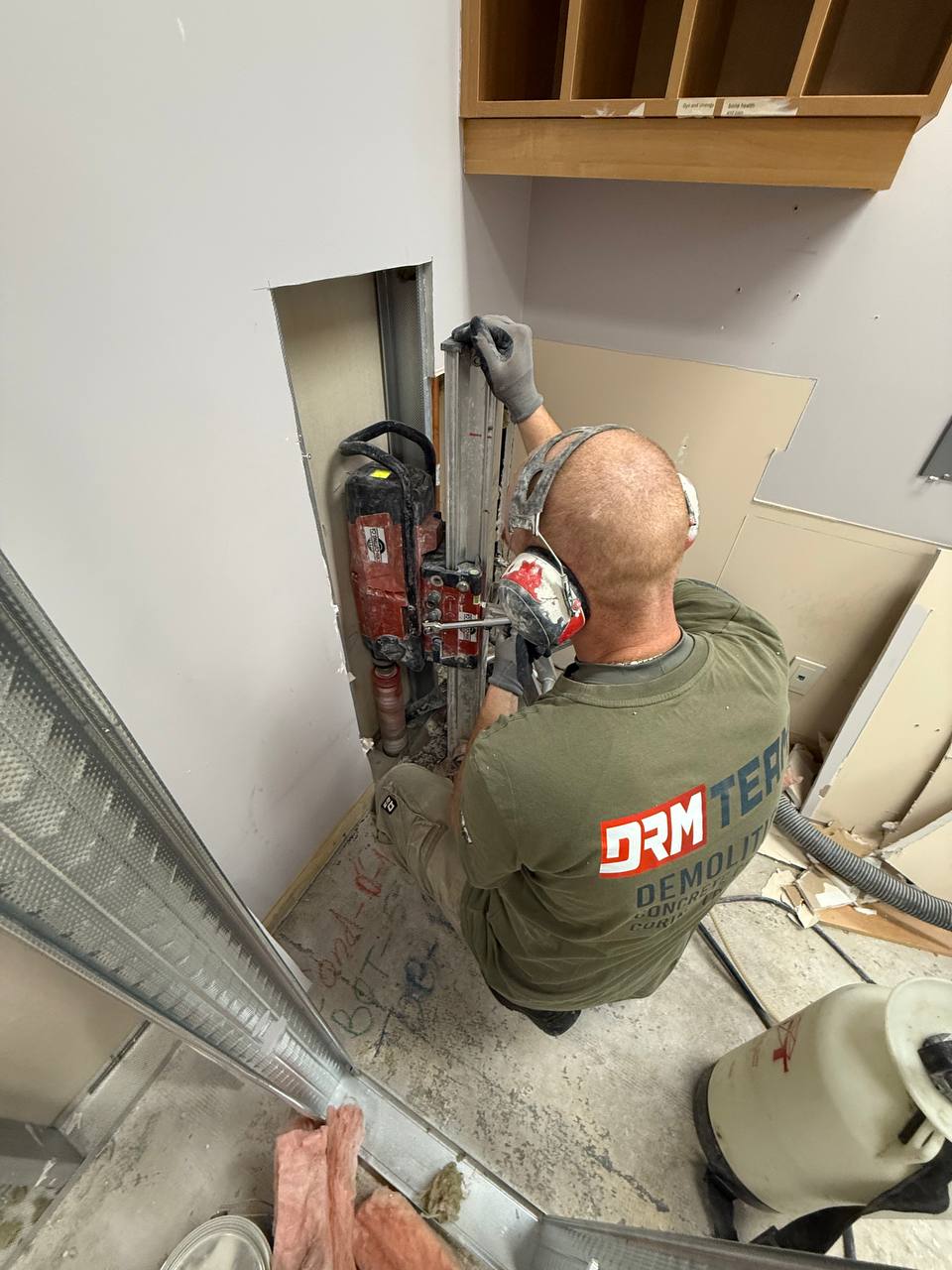
Core drilling is efficient—until you hit the wrong thing.
GPR helps you:
- shift hole locations to avoid dense rebar zones,
- avoid PT paths (where “just drill it” is not an option),
- reduce time lost to stuck bits, rebar cutting, and patch repairs.
Estimator impact: tighter production rates, less contingency, fewer change events.
B) Wall sawing: clean cuts, but reinforcement density drives the plan

Wall sawing works well up to typical structural thicknesses. But:
- dense rebar changes speed and consumables,
- unknown embedded services change offsets,
- restricted access changes mounting and setup time.
GPR gives you the rebar map you need to choose:
- blade size and sequence,
- cut segmentation,
- anchor points and safe drilling zones for mounts.
C) Diamond wire sawing: the “method of last resort” that becomes the best method indoors
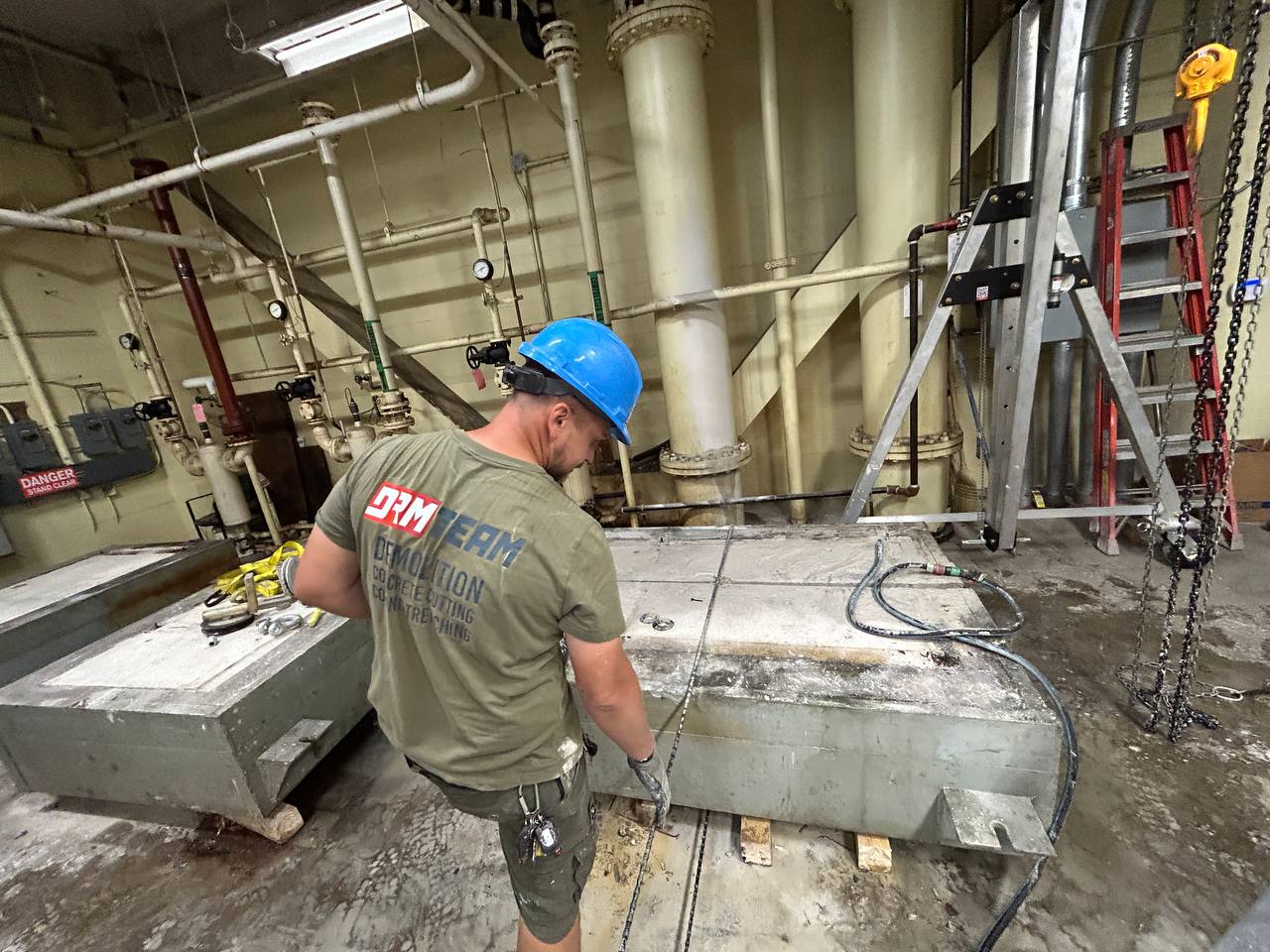
Wire sawing is often the correct choice when:
- thickness and reinforcement are heavy,
- there are embedded steel elements, plates, or complex geometry,
- access is limited and you need a controlled, low-vibration removal approach.
GPR’s role here is strategic:
It tells you where you can safely core entry holes (for threading wire), how reinforcement is layered, and whether the node includes “surprises” that should push you to wire sawing instead of forcing a wall saw into a bad setup.
5) How Scanning Changes the Price (What Actually Moves the Number)
Estimators don’t need marketing. They need cost drivers.
Here’s how GPR concrete scanning typically changes price—up or down.
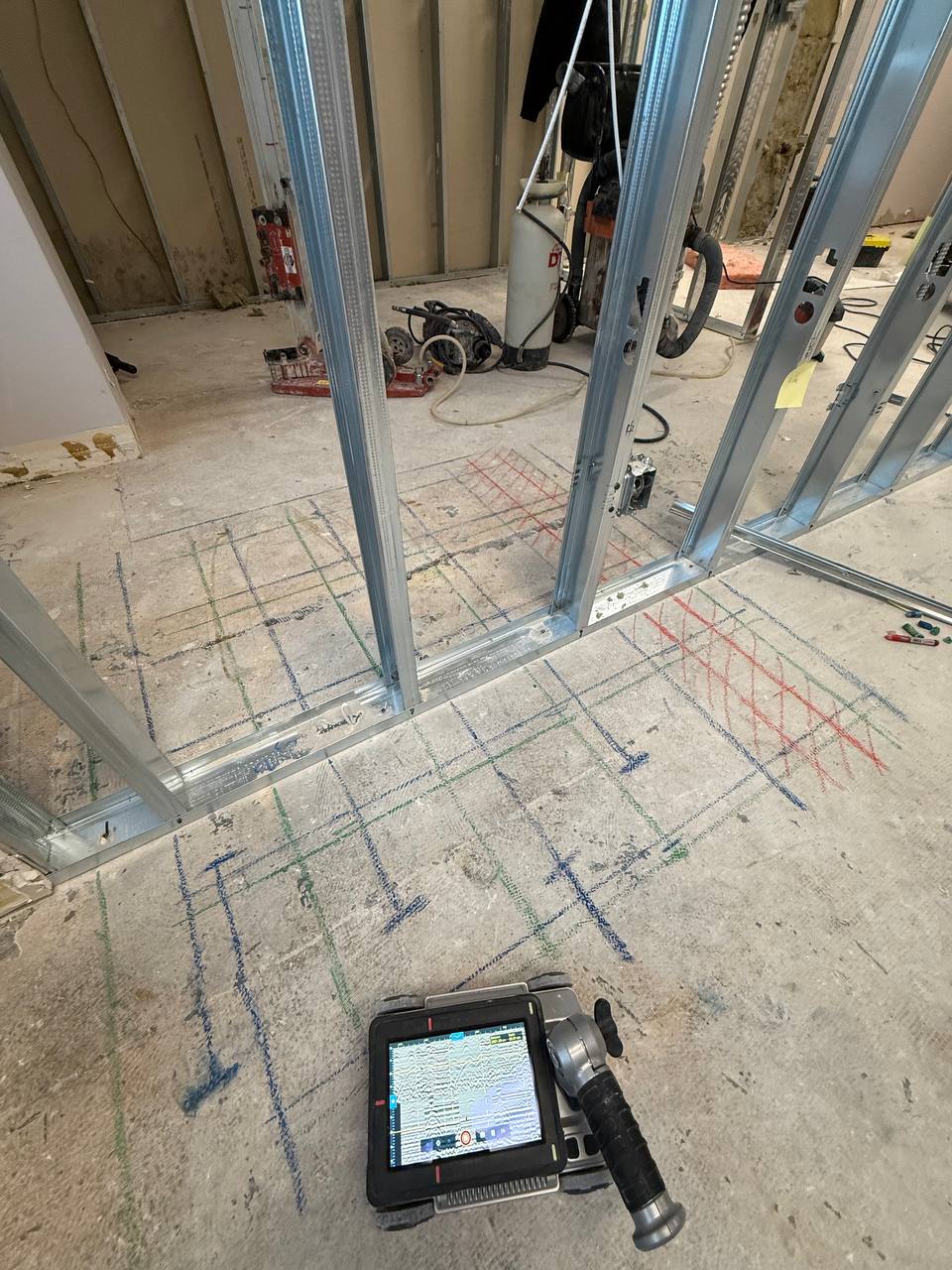
Price driver 1: Reduced strike risk and rework
Unknown PT or conduits force conservative pricing. Verified layout allows:
- fewer contingency hours,
- fewer emergency stops and redesign,
- cleaner sequence and close-out.
Price driver 2: Consumables and production rate
Rebar density and steel elements change:
- blade wear,
- wire wear,
- cutting speed,
- number of passes and setup moves.
Scanning gives you the information to price those variables realistically.
Price driver 3: Access + execution window constraints
If the site requires night work or tight windows, scanning up front reduces:
- “discoveries” mid-shift,
- time lost to decision loops,
- risks that push work outside the allowed window.
Price driver 4: Documentation requirements
Some facilities need a formal close-out package.
That’s where our optional $200 report can simplify approvals and internal sign-off.
6) Field Workflow: The Practical No-Blind-Cuts Sequence
This is the execution system we follow on indoor cutting/coring projects:
- Pre-task review
- confirm scope (holes/cuts), boundaries, sensitive zones, access limits
- GPR scan of the target zone
- scan passes aligned to the planned cut/coring grid
- Surface marking
- rebar/PT/conduit marking + “safe lanes” for drilling and anchors
- Method selection
- core vs wall saw vs wire saw based on verified structure
- Cut plan engineering
- segmentation, rigging/haul-out, access route, slurry and cleanup logic
- Execution
- wet cutting, controlled removal, no blind drilling
- Close-out
- cleanup + optional report if required for management/records
For many ICI sites, we can start with a free test-scan of the target zone during the site walk to confirm constraints before finalizing method and price.
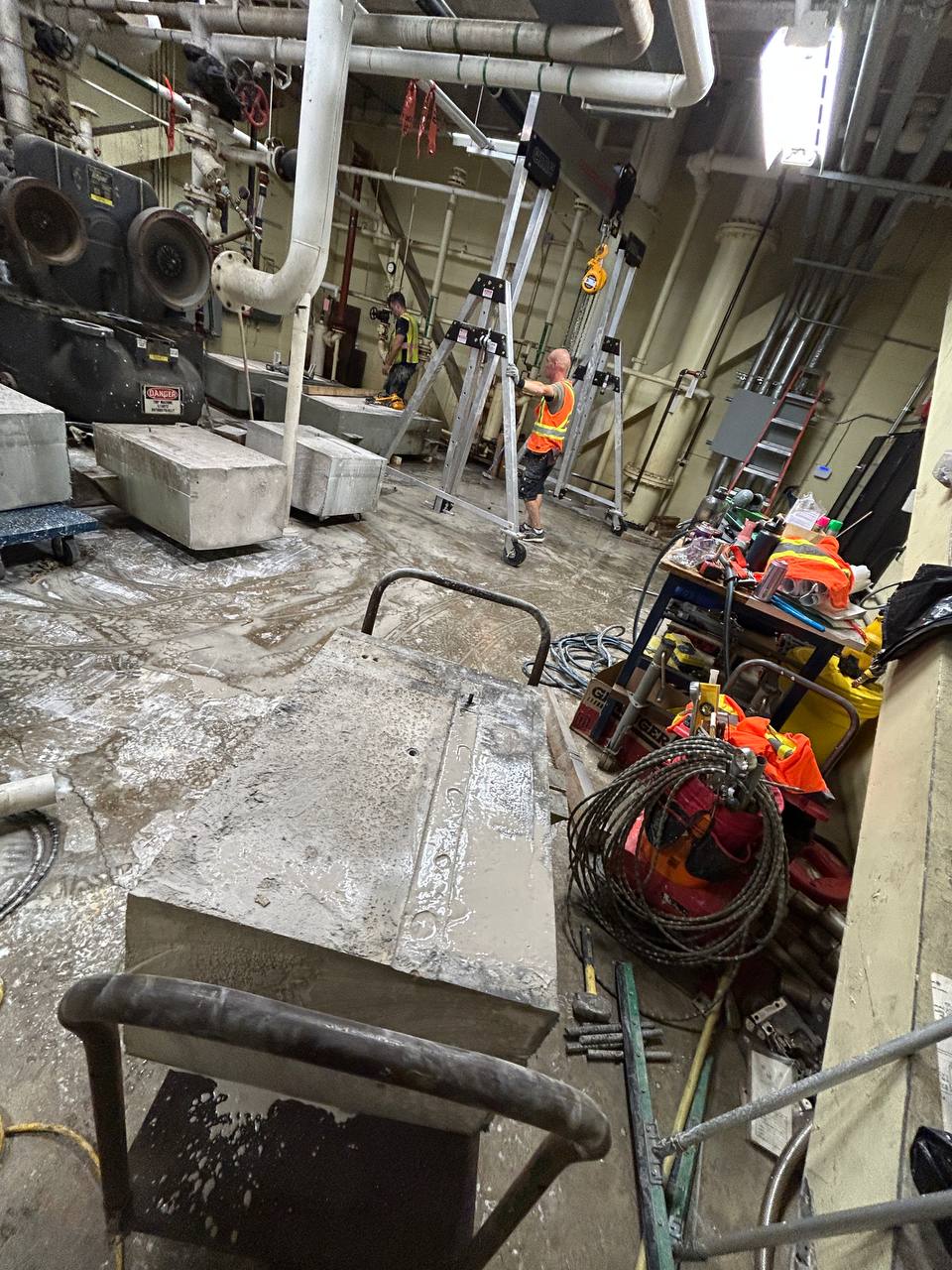
7) Case Snapshot #1 — Airport Mechanical Room Foundations (Wire Sawing + Verified Layout)
Site type: airport mechanical room
Constraint: sensitive environment; no vibration approach; verified routing required
Scope: remove three equipment foundations, each approx. 24 in thick
Method: diamond wire sawing with controlled segmentation
Segmentation plan (haul-out driven):
- Each foundation cut into 4 blocks
- Block size: 2 ft × 3 ft × 2 ft (thickness included)
- Total: 12 blocks across three foundations
Why this plan works indoors
- Each block is a predictable handling unit for safe movement and rigging logic.
- Verified layout reduces the chance of a “hidden hit” that would force stop-work inside a restricted facility.
Approximate mass (for estimating and planning)
Using typical reinforced concrete density (~2,500 kg/m³), each 2×3×2 ft block is ~850 kg (~1,870 lb). Total material handled is ~10.2 metric tons (~22,500 lb) across the three foundations.
8) Case Snapshot #2 — Fitness Center Overnight Coring (GPR → Mark → Drill)
Site type: occupied building (night window)
Constraint: protect occupants and equipment below; control cores and debris
Scope: 20 holes, 4 in diameter, through approx. 10 in slab
Approach: scan → mark safe drill points → overnight coring with controlled core capture
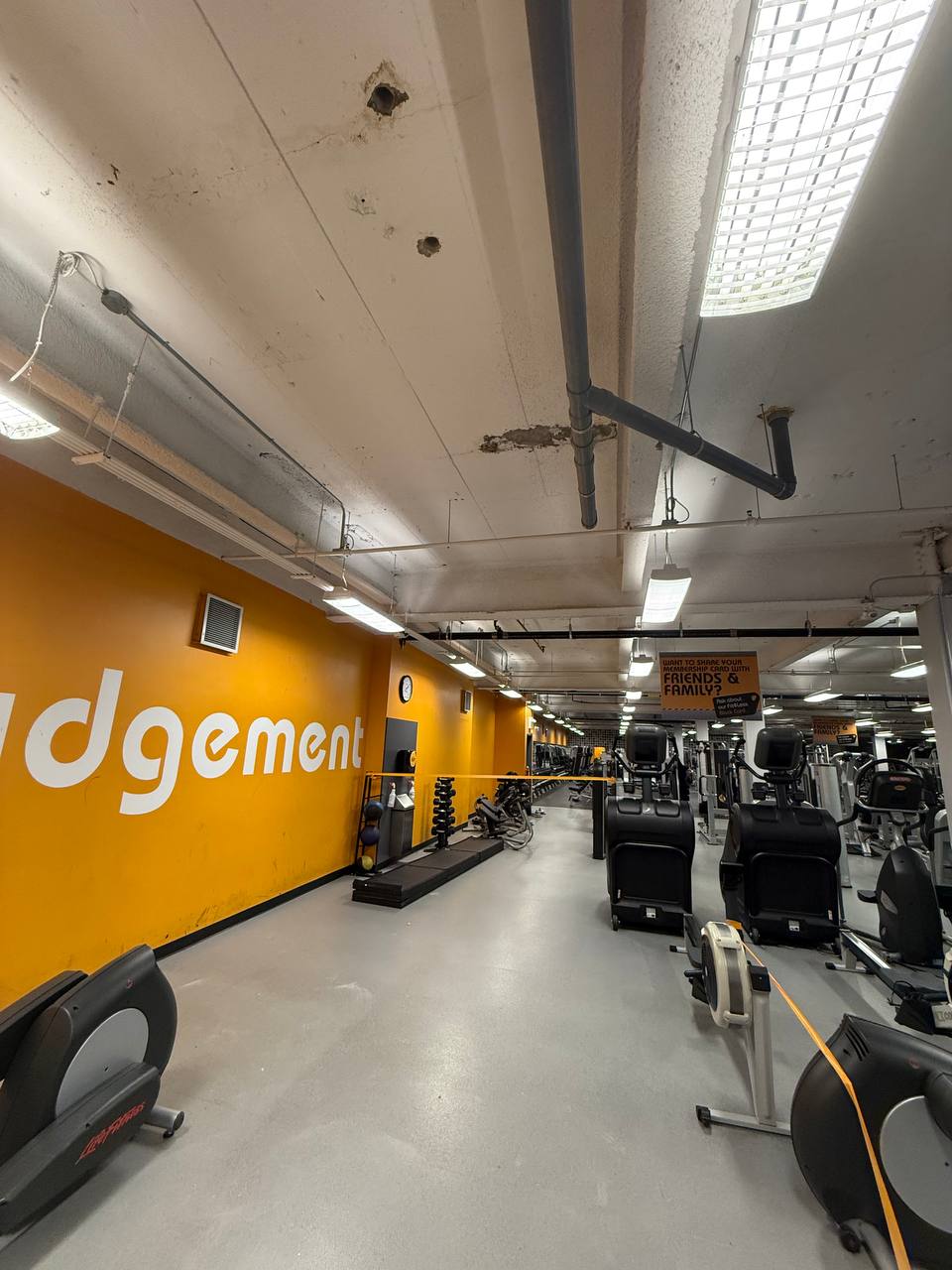
Why GPR mattered
Even when the holes are small, the consequences of striking rebar/PT/services in a live building are not. Scanning allowed clean, predictable production—and reduced the chance of an unexpected hit at night.
9) Case Snapshot #3 — Retail Overnight Trenching (Operations Resume at Opening)
Site type: grocery retail (Food Basics, Ottawa)
Constraint: daytime operations; deliver a clean, ready floor before morning
Scope: approx. 80 ft of trenching for electrical/cabling runs
Crew/time: 2 people, one overnight shift
Approach: scan → wet cut → remove → reset for morning operations
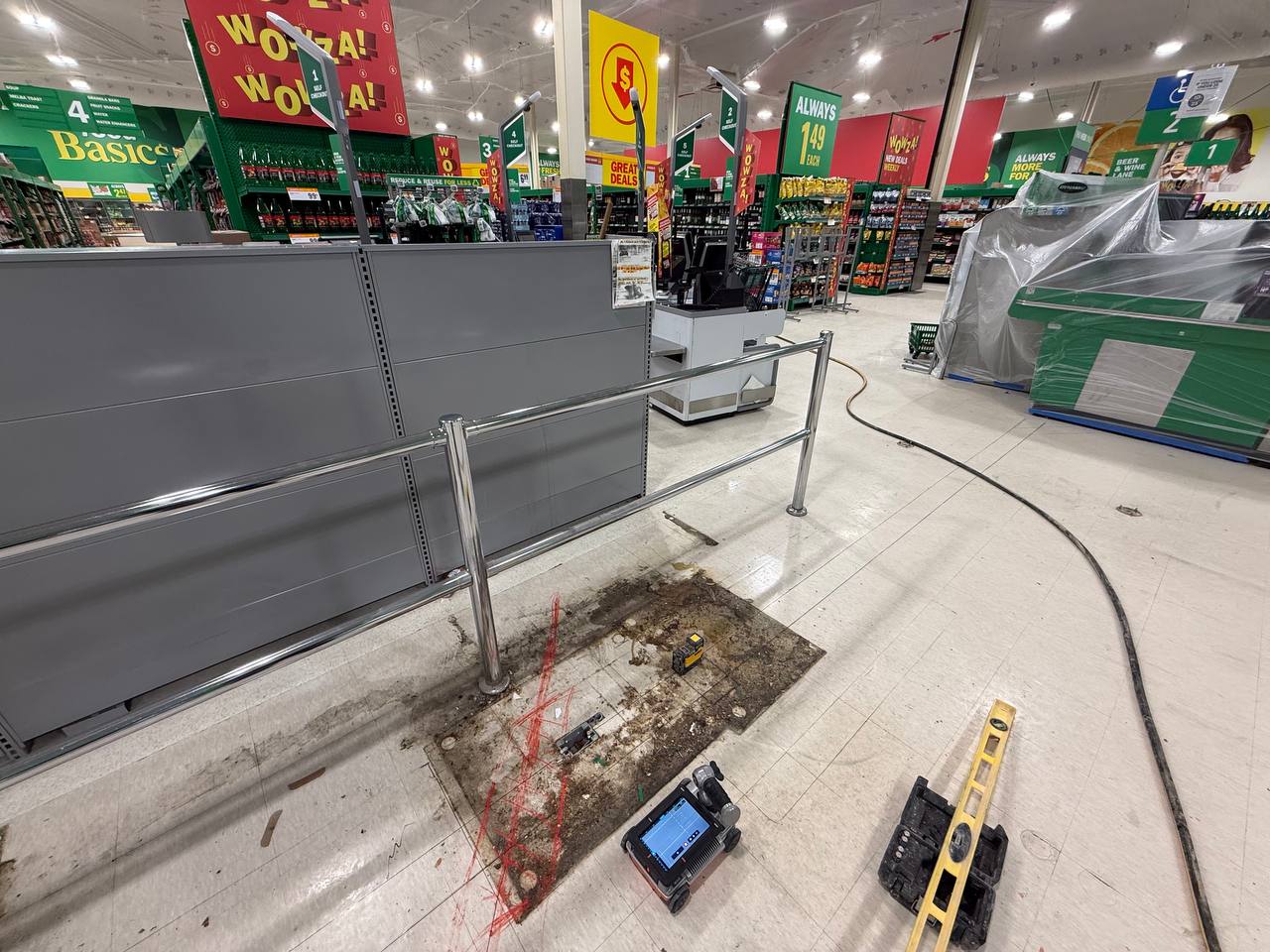
This pattern repeats across many live facilities: you don’t need a shutdown—you need a night-window execution system. GPR helps you keep the trench line safe and avoid embedded conflicts that would blow the schedule.
10) What We Need From You (Estimator/Engineer Checklist)
To price and execute cleanly, we typically ask for:
- Address + access notes (doors, elevators, security rules)
- Scope intent (holes/cuts, dimensions, tolerances)
- Any known drawings/as-builts (helpful, not always reliable)
- Facility constraints (night windows, live equipment zones, noise/vibration sensitivity)
- Disposal and restoration expectations (haul-out, patching, finish)
The goal is simple: verify first, cut once, haul out safely.
Frequently Asked Questions About GPR Concrete Scanning and No-Blind-Cuts
Search-intent answers for indoor cutting, coring, and wire sawing in GTA/Ontario