
Concrete Cutting and Coring for Plumbing, Electrical and Mechanical Lines
Intro
Concrete cutting and coring usually show up on the same job for one simple reason: new building services need a clean path through existing concrete.
On commercial and industrial renovation projects, a general contractor may need a trench cut in the slab for new plumbing, then wall cores for pipe penetrations, then floor cores for drains, conduit or mechanical sleeves. One trade marks the route. Another trade needs access. The concrete still has to be opened safely, cleanly and in the right sequence.
That is where concrete cutting and coring work together.
At DRM Cutting, we help general contractors, plumbers, electricians, mechanical contractors and commercial renovation teams cut and core concrete for new lines in Toronto and across the GTA.
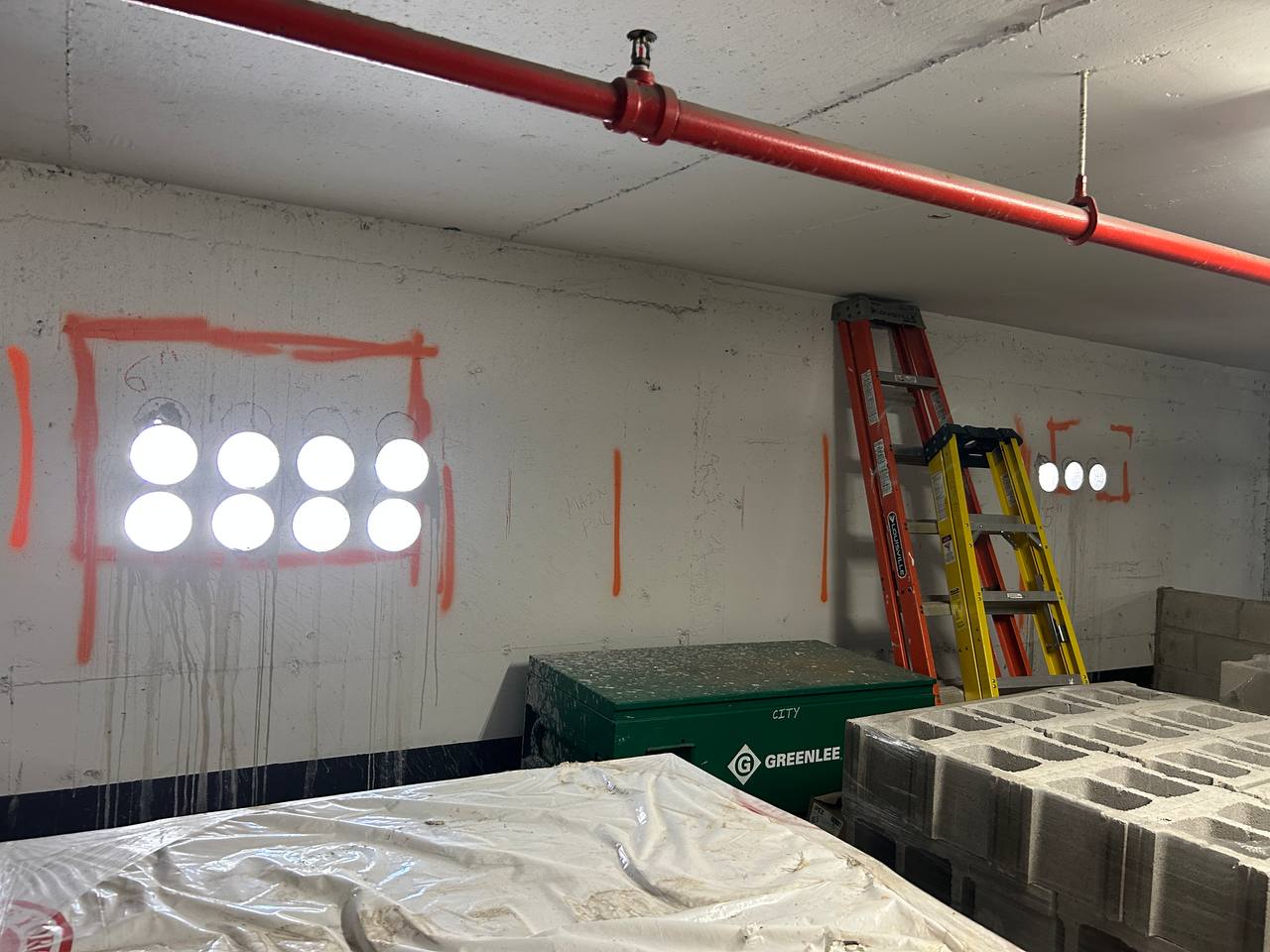
Why Concrete Cutting and Coring Go Together
Concrete cutting and concrete coring are different methods, but they often solve the same problem: getting through concrete without destroying more than necessary.
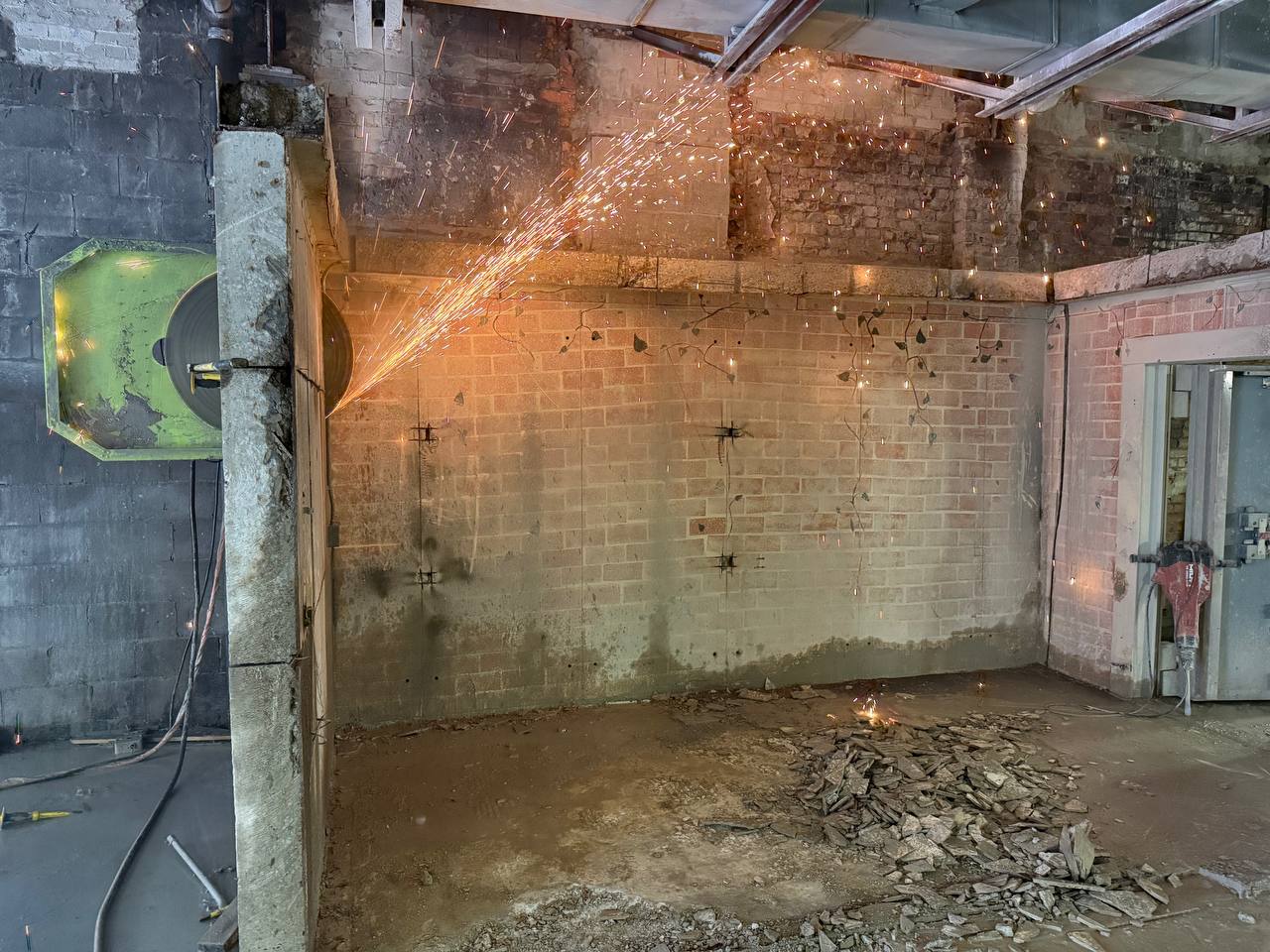
Concrete cutting is used when the job needs a straight opening, trench, channel, slab cut, wall opening or controlled removal section.
Concrete coring is used when the job needs a round penetration for a pipe, conduit, drain, sleeve, duct or mechanical line.
On many commercial sites, both are required.
A typical example:
A plumber needs to run new underground lines through an existing slab. The route is marked on the floor. Before the concrete is removed, the slab may need GPR scanning to check for rebar, conduit or other hidden items. Then the slab is cut with a floor saw. After the trench is opened, the same project may also need wall coring or floor coring where the new line passes through a foundation wall, mechanical room wall or suspended slab.
That is not two unrelated services. It is one coordinated concrete scope.
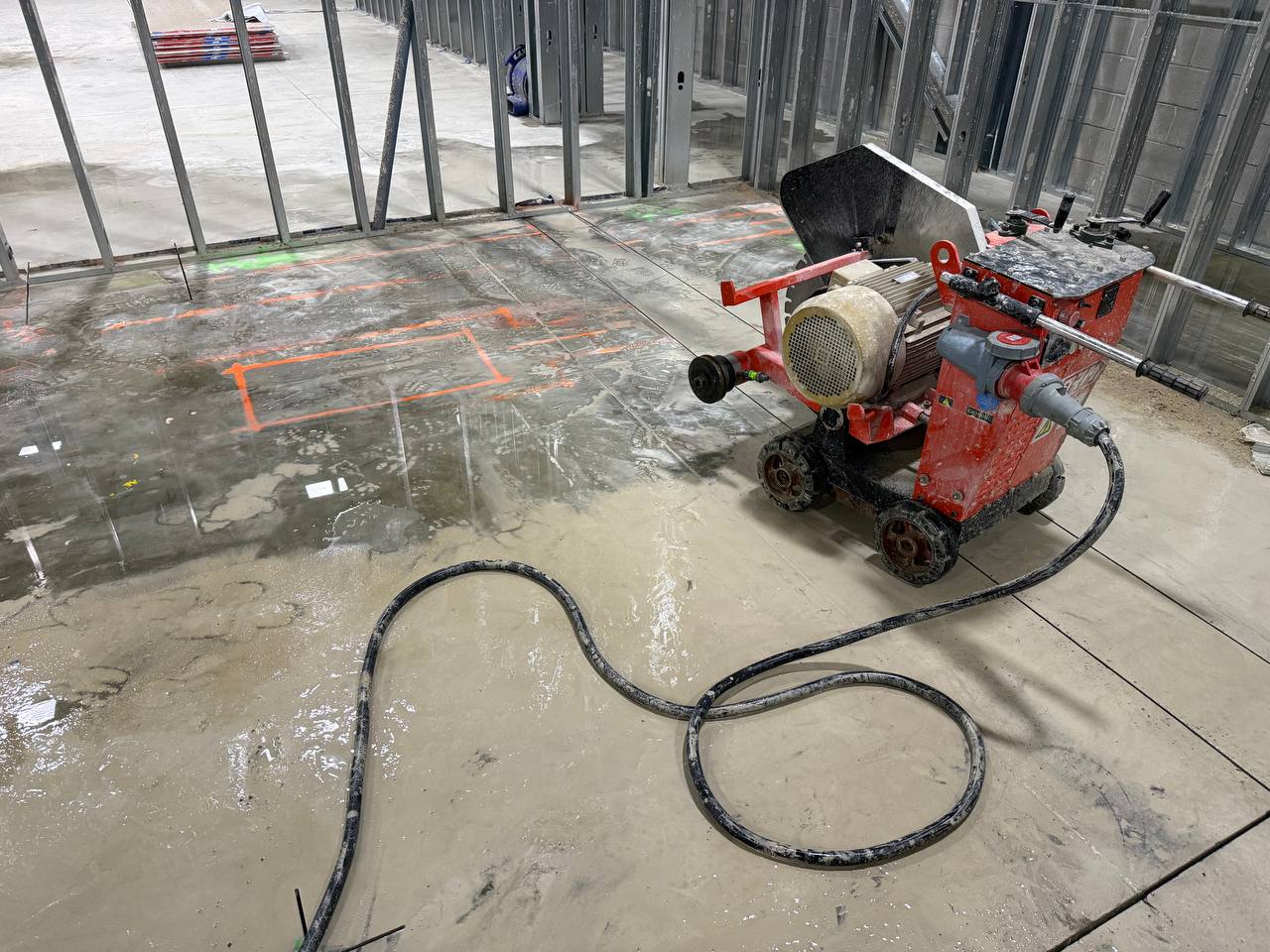
Common Uses for Concrete Cutting on Commercial Sites
Concrete cutting is used when a clean, controlled line matters.
For plumbing and electrical work, cutting is often required for:
- slab trenching for new plumbing lines;
- slab trenching for electrical conduit;
- drain line access;
- mechanical room modifications;
- floor openings;
- wall openings;
- controlled concrete removal;
- access cuts in tight commercial spaces.
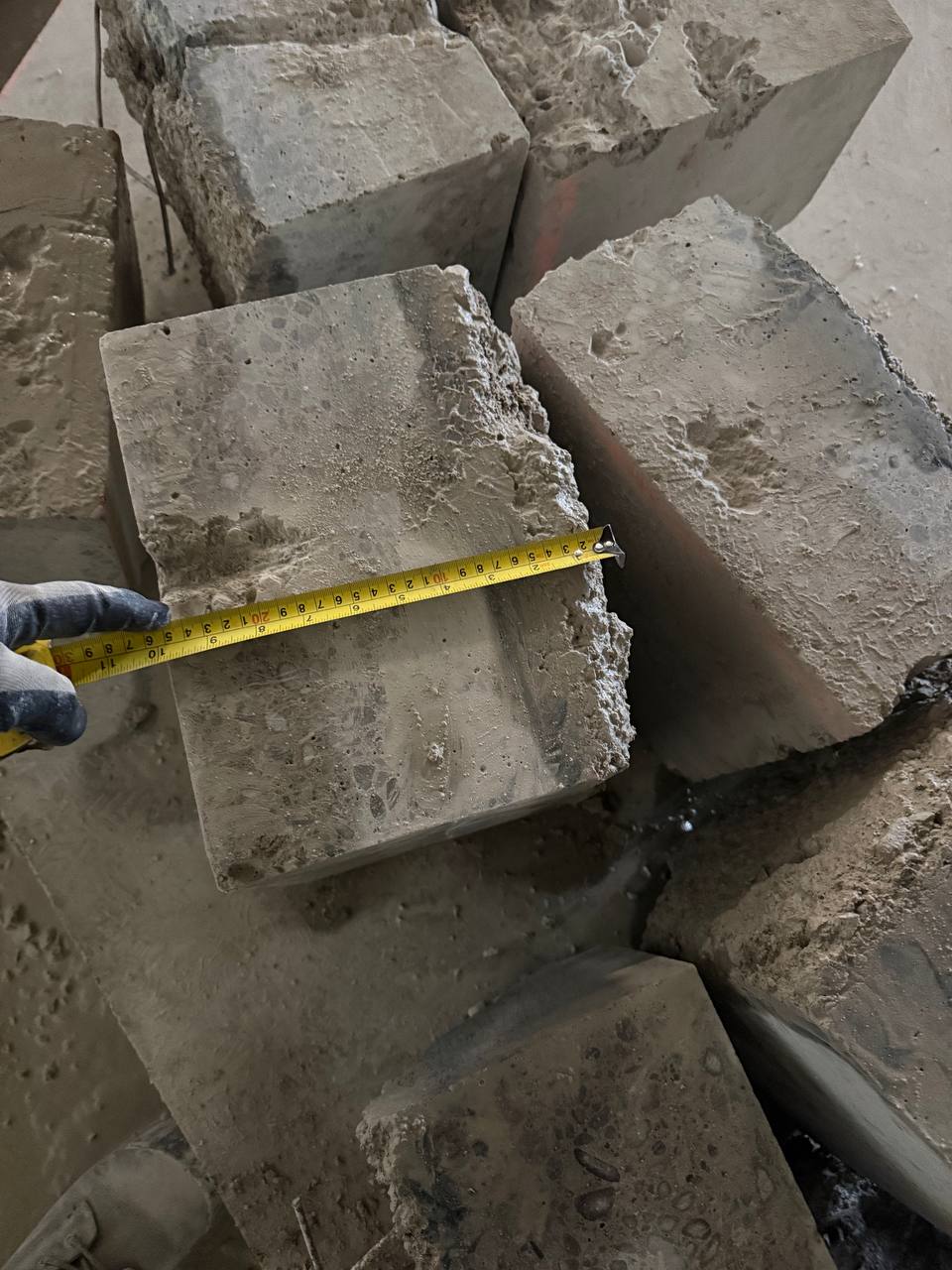
The goal is not to “break concrete.” The goal is to separate the right section with less vibration, fewer cracks and a cleaner edge for the next trade.
That matters on commercial renovations because the rest of the building often has to stay intact. Existing walls, slabs, floors, tenants, fire systems, electrical rooms and finished areas may be close to the work zone.
A hammer can remove concrete. Diamond cutting gives more control.
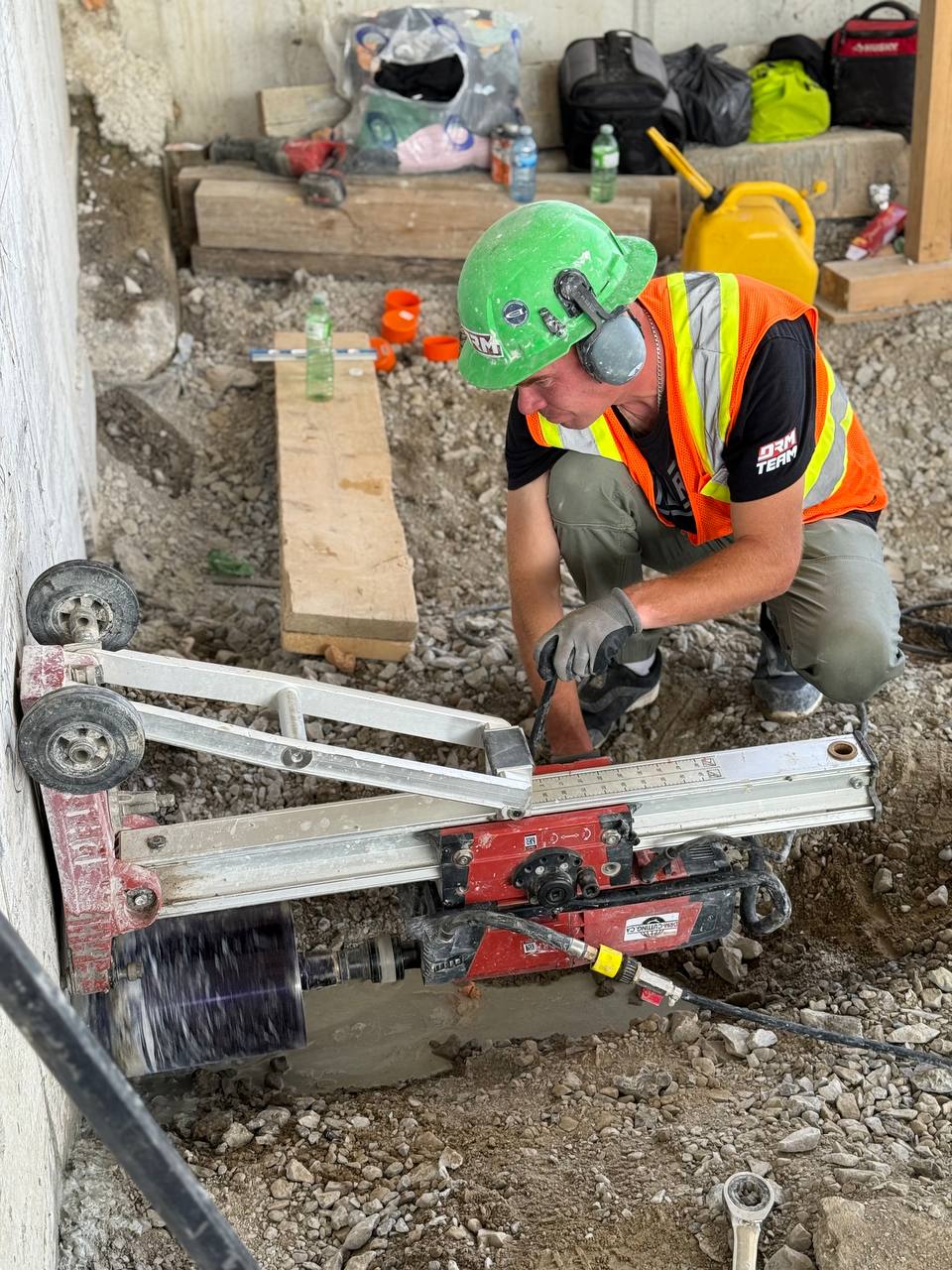
Common Uses for Concrete Coring
Concrete coring is used when the project needs a round opening through concrete.
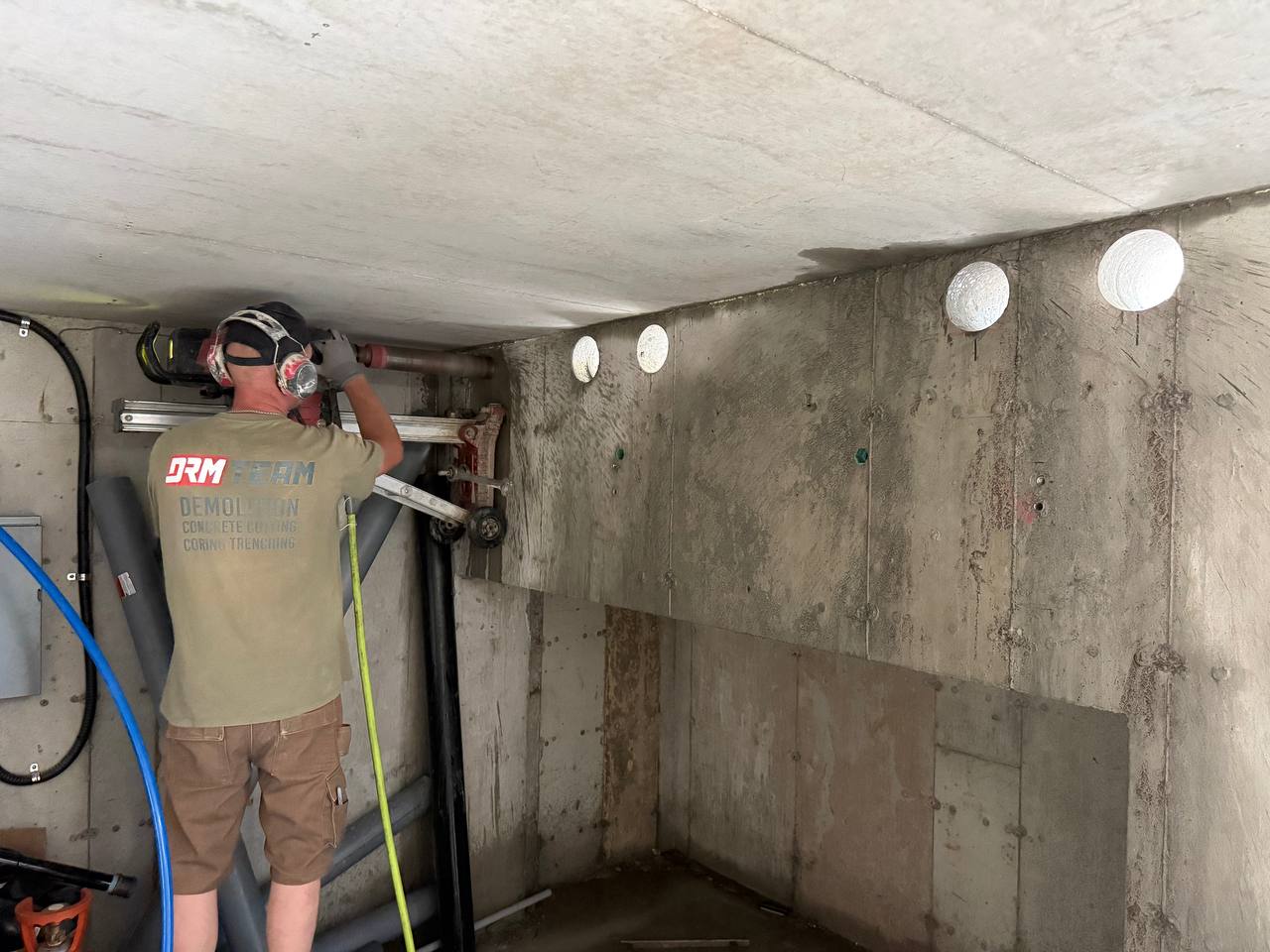
On commercial and industrial projects, diamond core drilling is commonly used for:
- plumbing pipe penetrations;
- electrical conduit;
- drain lines;
- HVAC sleeves;
- sprinkler and fire protection lines;
- mechanical penetrations through walls or slabs;
- angled holes where the line cannot pass straight through.
Core drilling is often cleaner and more accurate than chipping a rough hole through a wall or slab. The opening is round, controlled and sized for the line or sleeve.
This is especially important when multiple holes are grouped together. If the holes are too close, too low, too high or poorly aligned, the next trade may have problems installing the pipe or conduit. If the holes are drilled without checking the area, the job can run into rebar or hidden services.
A good coring layout protects both the trade work and the concrete around it.
GPR Scanning Before Cutting and Coring
GPR scanning is not required on every single cut or hole, but it is often the smart first step when hidden services may be present.
Commercial slabs and walls can contain rebar, conduits, plumbing, radiant lines, sprinkler lines or other embedded items. Cutting or coring blind can create delays, damage or safety issues.
GPR scanning can help identify:
- rebar direction and spacing;
- slab thickness;
- possible electrical conduits;
- possible pipes or hidden lines;
- areas where a hole or cut may need to shift.
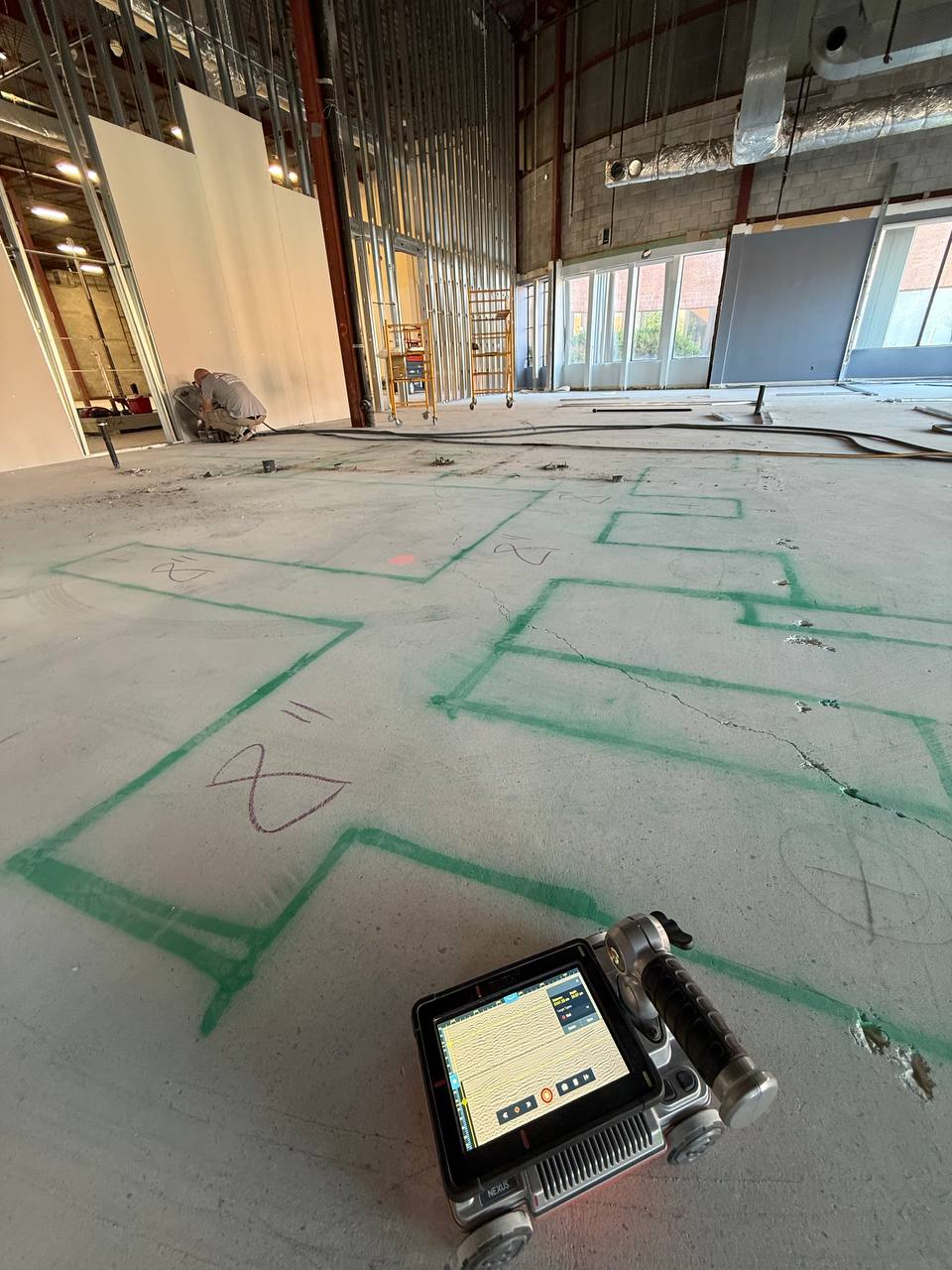
Sometimes the layout is already clear. Sometimes the project documents and site conditions make scanning less critical. But when the risk is real, scanning gives the general contractor and trades better information before concrete is opened.
The final hole or trench location is usually provided by the general contractor, plumber, electrician or mechanical contractor. DRM does not design the plumbing or electrical route. Our role is to review the concrete side of the work: access, equipment setup, cutting method, coring method and scanning results where required.
When we scan and lay out the work together with the trades, small adjustments can sometimes make a big difference. A hole may move slightly to miss heavy rebar. A trench line may shift to give the saw better access. A wall core may need a different setup because of ceiling height, nearby piping or limited working room.
That coordination helps the job move faster with fewer surprises.
Why Diamond Cutting Is Better Than Rough Breaking
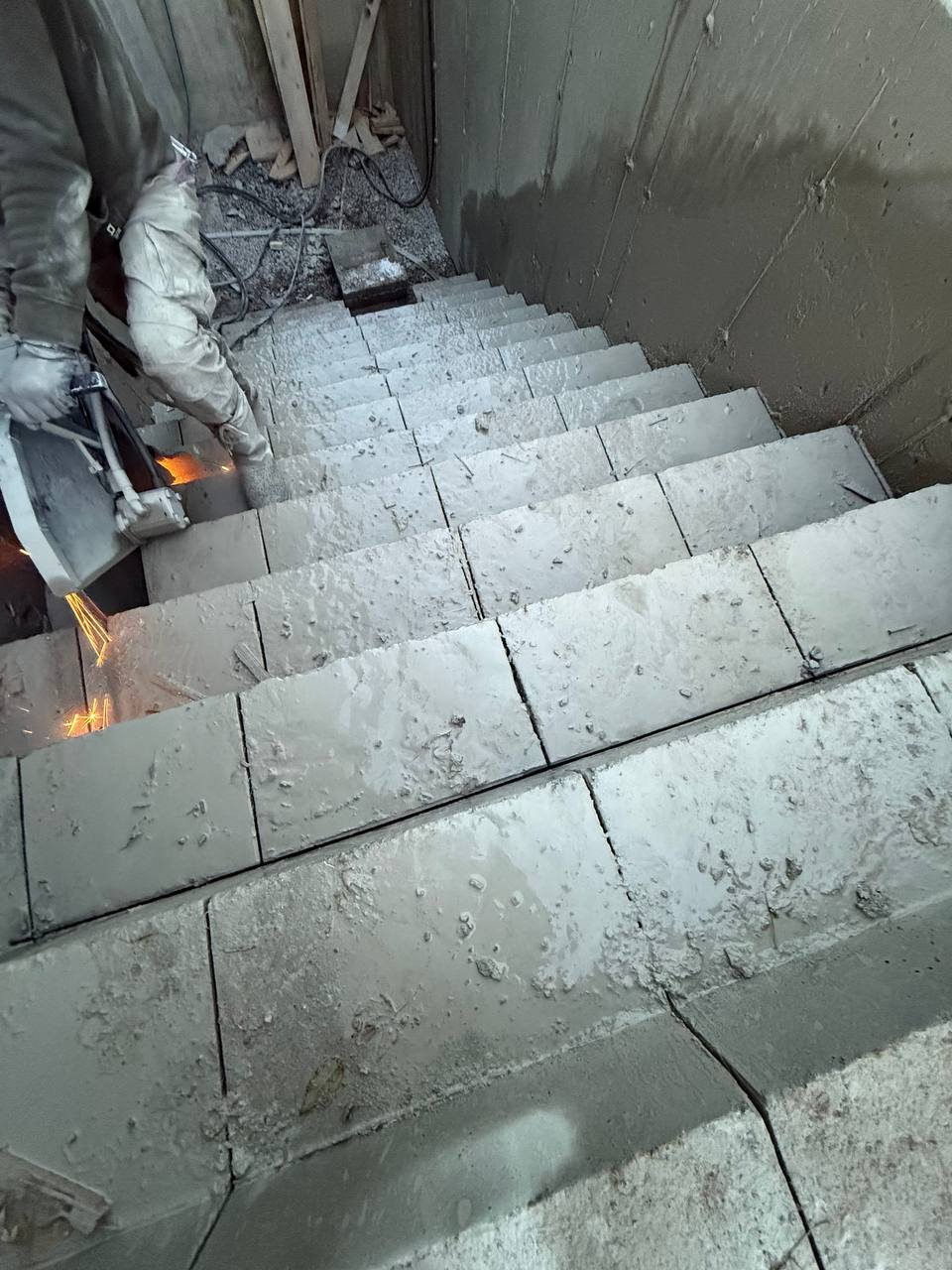
There are times when demolition with a breaker makes sense. But for plumbing, electrical and mechanical penetrations, rough breaking is often the wrong first move.
Diamond cutting and coring give more control.
Cleaner edges: The cut or hole is easier for the next trade to work with.
Less vibration: This matters near existing walls, slabs, equipment and finished areas.
Less unnecessary damage: The goal is to remove only what needs to be removed.
Better fit for commercial renovations: Many jobs happen inside active or partially active buildings where chaos creates problems.
Easier sequencing: Cutting and coring can be planned around other trades instead of turning the work zone into a guessing game.
This is the practical difference between controlled concrete work and brute force.
One Contractor for Cutting, Coring and Scanning
A common problem on commercial renovations is coordination.
The general contractor may have one company scanning, another company cutting, another company coring and several trades waiting for access. When something changes, everyone points at someone else.
DRM can handle concrete scanning, cutting and coring as one coordinated scope.
That can include:
- GPR scanning where required;
- layout review with the general contractor and trades;
- floor saw cutting for slab trenches;
- wall coring for pipe and conduit penetrations;
- floor coring for drains, sleeves and services;
- wet cutting with vacuum collection where site conditions allow;
- practical site feedback before the work starts.
This does not replace the plumber, electrician or mechanical contractor. They still decide where their lines need to go. We help make sure the concrete work can be done safely, cleanly and with the right equipment.
What We Need to Estimate Concrete Cutting and Coring
For a fast estimate, send the basic information first.
Useful details include:
- site address or area in Toronto/GTA;
- floor or level;
- photos of the exact work area;
- trench length and width if slab cutting is needed;
- number and diameter of core holes;
- wall or slab thickness if known;
- whether the work is for plumbing, electrical, HVAC, drain or sprinkler lines;
- access notes: parking, loading, stairs, elevator, working hours;
- whether GPR scanning is required by the project or preferred by the GC;
- whether water/slurry control is important for the work area.
If the scope is simple, photos and dimensions may be enough for a quick quote.
If the scope is more complex, a site visit may be the better first step. That allows us to look at access, concrete thickness, equipment setup, scanning requirements and the best sequence for cutting and coring.
Who We Usually Work With
For this type of work, the general contractor is often the main point of contact.
The GC sees the full picture: plumber, electrician, mechanical contractor, fire protection, schedule, access, tenants and site restrictions. One concrete cutting and coring scope may support several trades on the same project.
We also work directly with:
- plumbing contractors;
- electrical contractors;
- mechanical contractors;
- commercial renovation teams;
- industrial facility teams;
- property managers;
- project managers and site supervisors.
The best projects start with a clear layout and a short conversation before cutting starts.
Final Thought
Concrete cutting and coring are not just “holes and lines.”
On a real commercial renovation, they are the bridge between the existing concrete structure and the new building services. Plumbing, electrical, HVAC, drains and sprinkler lines all need a controlled path through concrete.
The cleaner that path is, the easier the next trade can do their work.
Send us the photos, dimensions and layout. We can review the cutting, coring and scanning scope and tell you the practical next step.
Concrete Cutting and Coring FAQ
Common questions from general contractors, plumbers, electricians and mechanical contractors planning new lines through existing concrete.